Civilisation · Americas and Oceania

Maya civilization

2001 BCE – 1521 CE · 3,522 years

Became Kingdom of New Spain

A Mesoamerican civilization of temples and city-states, remembered for the most sophisticated script of the pre-Columbian Americas and its calendar.

The Maya built a civilization in what is now southeastern Mexico, Guatemala, Belize and the west of Honduras and El Salvador, lasting from antiquity into the early modern period. They raised temples, wrote in the most developed script of the pre-Columbian Americas, and developed mathematics, a calendar and astronomy. Divine kings ruled rival city-states such as Tikal and Calakmul until a collapse in the 9th century CE, and Spanish conquest stripped the civilization of its defining features.

What the record holds

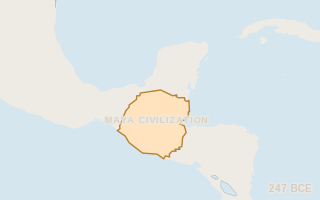
The record dates its beginning to the 21st century BCE.↑ When the borders dataset first draws it, in 247 BCE, it held 198,700 km².↓

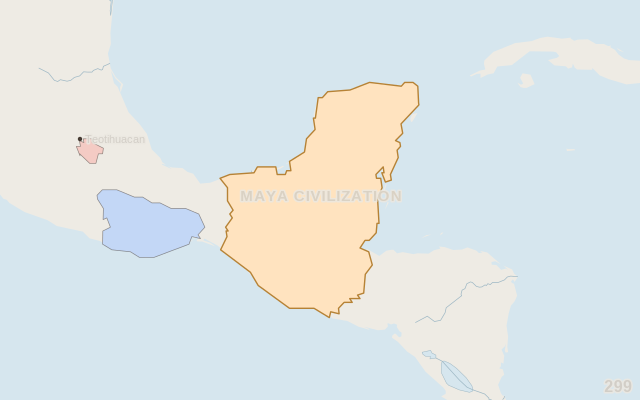
At its largest, in 299, it held 379,800 km².↓ Most of the 3 rows the atlas files under it are people.↓

The Kingdom of New Spain replaced it in 1521, after 3,522 years.↓

From Wikipedia’s article, retold · CC BY-SA 4.0

3,522 years

Longer than Troy, shorter than Sumer

380,000 km²

At its height in 299 · about the size of Zimbabwe

1 war or battle

3 entries in all

Map: Maya civilization in 299, its borders in gold among its neighbours
150010001500
Beside it on the map in 299: Zapotec civilization and Teotihuacan.How far it reached, year by year: its ground inside the borders Cliopatria draws (CC BY 4.0), measured on an equal-area grid; the map shows it at its largest, with the cities of the year.

The story

Four acts, 2001 BCE – 1521 CE

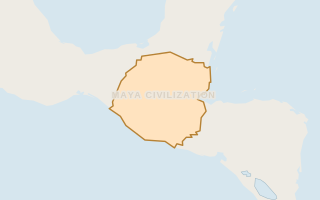
Maya civilization in 249, at the end of act I
I2001 BCE – 250 CE

From villages to cities

Settlements appear on the Pacific coast of Soconusco c. 1800 BCE, already growing maize, beans, squash and chili pepper, and making pottery. Villages grow into cities: Nakbe in the Petén is the earliest well documented, the first cities rise c. 750 BCE, and by the 3rd century BCE the Maya are writing in hieroglyphs. Kaminaljuyu rises in the Guatemalan Highlands.

Watch this act on the live map, from 2001 BCE
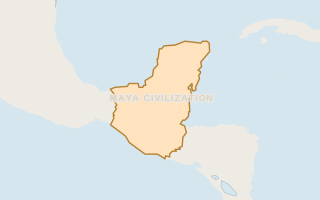
Maya civilization in 1510, at the end of act III
III800 – 1511380,000 → 188,000 km²

Collapse and the northern shift

In the 9th century CE the central Maya region falls apart: cities are abandoned, dynasties end and people move north, probably driven by war, overpopulation and drought. Chichen Itza and Uxmal flourish in the north until Chichen Itza declines in the 11th century, and the aggressive Kʼicheʼ kingdom expands in the Guatemalan Highlands.

Watch this act on the live map, from 800
Maya civilization in 1520, at the end of act IV
IV1511 – 1521188,000 → 188,000 km²

Spanish ships on the coast

In 1511 a Spanish caravel is wrecked and its survivors reach the coast of Yucatán, where a Maya lord seizes them and sacrifices most. Three Spanish expeditions explore that coast between 1517 and 1519 and fight the Maya. In 1521 Tenochtitlan, the Aztec capital, falls to the Spanish.

Watch this act on the live map, from 1511
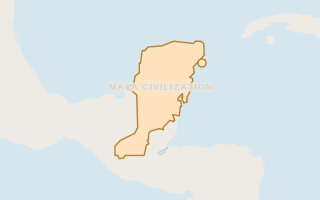
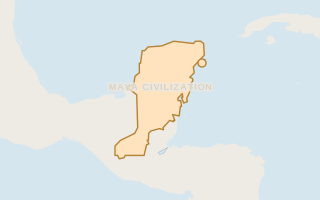
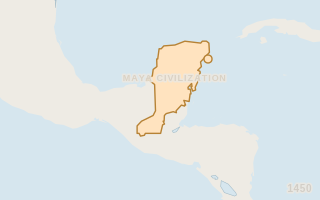
Maya civilization in 1450, last mappedMaya civilization in 247 BCE, first mapped
The rise and the fall in one frame: drag across it from 247 BCE, first mapped at 198,700 km², to 1450, last mapped at 188,300 km². Open the live map in 247 BCE or 1450.

Before and after

After it

  • Kingdom of New Spain · replaced by

Where it sits in time

3000 BCE2000 BCE1000 BCE110002000Maya civilization: 2001 BCE – 1521

Five thousand years, 3000 BCE to 2026; the state in gold.

Its world

Who else stood

Meanwhile, elsewhere

The best-known states of other regions that stood while it did; the band is the Maya civilization’s own years.

2000 BCE1000 BCE110002000

How it compares

Among 3,073 states

Stood longer than 99% of 3,073 states
Maya civilization · 3,522 yearsTroySumerHow long it stood, among the states with a recorded end or still standing.
Held more ground at its peak than 69% of 1,464 states
Maya civilization · 379,800 km²GermanyZimbabweThe most ground it held, among the states with a border in Cliopatria.

Why it fell

Why did the Maya civilization fall?

Historians still argue. Here is what the atlas records about its last century:

1

wars and battles in its last century, more than in any before it

What led to it, and what came of it

Maya civilization · 2001 BCE – 1521Maya civilizationKingdom of New Spain · Linked · 1521 – 1535Kingdom of New Spain2000 BCE1000 BCE11000
linked

Open the investigation: every row with its evidence, the conditions at the time, the theories condition by condition, and the succession analysed.

Its centuries in the record

2100 BCE – 2001 BCE: 0 recorded — 0 wars and battles, 0 risings, regime changes and massacres, 0 other2100 BCE2000 BCE – 1901 BCE: 0 recorded — 0 wars and battles, 0 risings, regime changes and massacres, 0 other1900 BCE – 1801 BCE: 0 recorded — 0 wars and battles, 0 risings, regime changes and massacres, 0 other1800 BCE – 1701 BCE: 0 recorded — 0 wars and battles, 0 risings, regime changes and massacres, 0 other1700 BCE – 1601 BCE: 0 recorded — 0 wars and battles, 0 risings, regime changes and massacres, 0 other1700 BCE1600 BCE – 1501 BCE: 0 recorded — 0 wars and battles, 0 risings, regime changes and massacres, 0 other1500 BCE – 1401 BCE: 0 recorded — 0 wars and battles, 0 risings, regime changes and massacres, 0 other1400 BCE – 1301 BCE: 0 recorded — 0 wars and battles, 0 risings, regime changes and massacres, 0 other1300 BCE – 1201 BCE: 0 recorded — 0 wars and battles, 0 risings, regime changes and massacres, 0 other1300 BCE1200 BCE – 1101 BCE: 0 recorded — 0 wars and battles, 0 risings, regime changes and massacres, 0 other1100 BCE – 1001 BCE: 0 recorded — 0 wars and battles, 0 risings, regime changes and massacres, 0 other1000 BCE – 901 BCE: 0 recorded — 0 wars and battles, 0 risings, regime changes and massacres, 0 other900 BCE – 801 BCE: 0 recorded — 0 wars and battles, 0 risings, regime changes and massacres, 0 other900 BCE800 BCE – 701 BCE: 0 recorded — 0 wars and battles, 0 risings, regime changes and massacres, 0 other700 BCE – 601 BCE: 0 recorded — 0 wars and battles, 0 risings, regime changes and massacres, 0 other600 BCE – 501 BCE: 0 recorded — 0 wars and battles, 0 risings, regime changes and massacres, 0 other500 BCE – 401 BCE: 0 recorded — 0 wars and battles, 0 risings, regime changes and massacres, 0 other500 BCE400 BCE – 301 BCE: 0 recorded — 0 wars and battles, 0 risings, regime changes and massacres, 0 other300 BCE – 201 BCE: 0 recorded — 0 wars and battles, 0 risings, regime changes and massacres, 0 other200 BCE – 101 BCE: 0 recorded — 0 wars and battles, 0 risings, regime changes and massacres, 0 other100 BCE – 1 BCE: 0 recorded — 0 wars and battles, 0 risings, regime changes and massacres, 0 other100 BCE0 – 99: 0 recorded — 0 wars and battles, 0 risings, regime changes and massacres, 0 other100 – 199: 0 recorded — 0 wars and battles, 0 risings, regime changes and massacres, 0 other200 – 299: 0 recorded — 0 wars and battles, 0 risings, regime changes and massacres, 0 other300 – 399: 0 recorded — 0 wars and battles, 0 risings, regime changes and massacres, 0 other300400 – 499: 0 recorded — 0 wars and battles, 0 risings, regime changes and massacres, 0 other500 – 599: 0 recorded — 0 wars and battles, 0 risings, regime changes and massacres, 0 other600 – 699: 2 recorded — 0 wars and battles, 0 risings, regime changes and massacres, 2 other700 – 799: 0 recorded — 0 wars and battles, 0 risings, regime changes and massacres, 0 other700800 – 899: 0 recorded — 0 wars and battles, 0 risings, regime changes and massacres, 0 other900 – 999: 0 recorded — 0 wars and battles, 0 risings, regime changes and massacres, 0 other1000 – 1099: 0 recorded — 0 wars and battles, 0 risings, regime changes and massacres, 0 other1100 – 1199: 0 recorded — 0 wars and battles, 0 risings, regime changes and massacres, 0 other11001200 – 1299: 0 recorded — 0 wars and battles, 0 risings, regime changes and massacres, 0 other1300 – 1399: 0 recorded — 0 wars and battles, 0 risings, regime changes and massacres, 0 other1400 – 1499: 0 recorded — 0 wars and battles, 0 risings, regime changes and massacres, 0 other1500 – 1599: 1 recorded — 1 wars and battles, 0 risings, regime changes and massacres, 0 other1500

Wars and battles in red, risings, coups and massacres beside them, everything else in grey, by the century each began in. A tall bar is partly a fact about Wikipedia: better-documented centuries hold more.

Each century’s own page:2100 BCE – 2001 BCE2000 BCE – 1901 BCE1900 BCE – 1801 BCE1800 BCE – 1701 BCE1700 BCE – 1601 BCE1600 BCE – 1501 BCE1500 BCE – 1401 BCE1400 BCE – 1301 BCE1300 BCE – 1201 BCE1200 BCE – 1101 BCE1100 BCE – 1001 BCE1000 BCE – 901 BCE900 BCE – 801 BCE800 BCE – 701 BCE700 BCE – 601 BCE600 BCE – 501 BCE500 BCE – 401 BCE400 BCE – 301 BCE300 BCE – 201 BCE200 BCE – 101 BCE100 BCE – 1 BCE0 – 99100 – 199200 – 299300 – 399400 – 499500 – 599600 – 699700 – 799800 – 899900 – 9991000 – 10991100 – 11991200 – 12991300 – 13991400 – 14991500 – 1599

Keep exploring

Share this page
Copy link
Embed the map
Cite this page

How this page is made

Drawn from Wikidata (Q28567, CC0), the opening and history of its English Wikipedia article retold by the atlas (CC BY-SA 4.0), borders from Cliopatria (CC BY 4.0), coast and rivers from Natural Earth, cities from Reba, Reitsma & Seto 2016 (CC BY 4.0). Data built 2026-11-26 · Pastlas v2.47.1, by Oleh Voronko; the published atlas and its data are for non-commercial use.

How to read it

Areas are measured on an equal-area grid from borders simplified to about five kilometres. “c.” marks an approximate date, and a date known to the century is never printed to the year. Counts are what the atlas holds, and they follow Wikipedia’s coverage: a busy century is partly a fact about the record.

Something wrong?

Tell us and name the entry. We fix the data, not just this page.

Report a problem