State · Europe

Roman Empire

27 BCE – 395 CE · 422 years

Came after Roman Republic and Hellenistic period · became Byzantine Empire and Western Roman Empire

The Mediterranean under emperors: two centuries of Roman peace, a near-fatal crisis, and a Christian empire ruled from two courts.

The Roman Empire was ruled by emperors from 27 BCE, when the Senate gave Octavian supreme command and the title Augustus. Its lands circled the Mediterranean, across Europe, Western Asia and North Africa. Two centuries of peace followed, and under Trajan it reached its widest extent. In the 3rd century civil war, plague and invasion nearly broke it; Diocletian restored order, and Constantine, the first Christian emperor, moved its seat to Constantinople.

What the record holds

Its record opens in 27 BCE, replacing the Roman Republic.↓ Its borders are first mapped in 26 BCE, around 3.06 million km².↓ Over the years of the Crisis of the Third Century, 235 – 284, its ground went from 4.57 million km² to 4.21 million km².↓

Its ground peaked in 117 at 5.26 million km².↓ Its line counts 100 rulers, covering 27 BCE – 395, the median reign 2 years; 64 of 82 handovers were irregular.↓ The best known of them are Augustus, Marcus Aurelius and Constantine the Great.↓ Most of the 356 rows the atlas files under it are people.↓

In 395, after 422 years, it was replaced by the Byzantine Empire and the Western Roman Empire.↓

From Wikipedia’s article, retold · CC BY-SA 4.0

422 years

Longer than the British Empire, shorter than the Han dynasty

5.26 million km²

At its height in 117

100 rulers

the Roman emperor

77 wars and battles

More per century than 97% of states · 356 entries in all

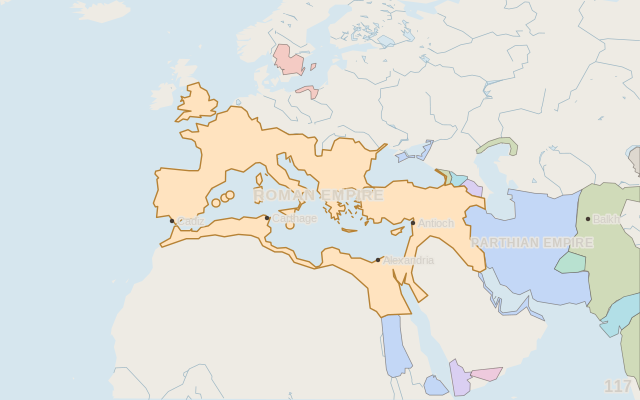
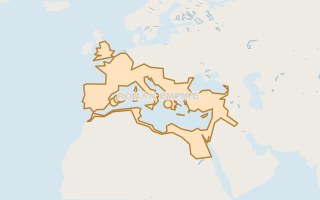
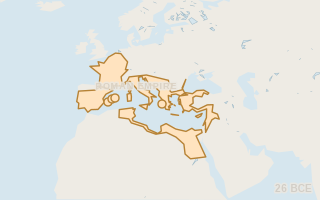
Map: Roman Empire in 117, its borders in gold among its neighbours
Battle of the Teutoburg Forest, 9First Jewish–Roman War, 66 – 74Year of the Four Emperors, 68 – 69Bar Kokhba Revolt, 132 – 136Crisis of the Third Century, 235 – 284: 4.57 million km² → 4.21 million km²1100200300
Beside it on the map in 117: Parthian Empire, Kushan Empire, Kingdom of Kush, Satavahana dynasty, Western Satraps and Goths.How far it reached, year by year: its ground inside the borders Cliopatria draws (CC BY 4.0), measured on an equal-area grid; the map shows it at its largest, with the cities of the year.

The story

Four acts, 27 BCE – 395 CE

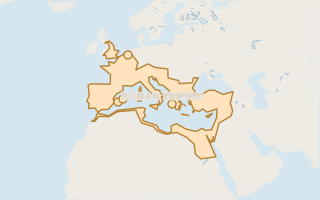
Roman Empire in 67, at the end of act I
I27 BCE – 68 CE

Augustus and his heirs

The Senate grants Octavian supreme command and the title Augustus, and the provinces are split between proconsuls chosen by lot and the emperor's legates. Four more Julio-Claudians follow him: Tiberius, Caligula, Claudius and Nero. Battles are fought in the Teutoburg Forest and at Idistaviso, and a rising under Boudica is put down.

Watch this act on the live map, from 27 BCE
Roman Empire in 179, at the end of act II
II68 – 1804.21 million → 4.65 million km²

Peace and the widest reach

The Year of the Four Emperors ends with Vespasian as victor. Jerusalem is besieged in 70 CE, and Jewish risings break out again under later emperors. Trajan wages war in Dacia and carries the empire to its greatest extent, Hadrian and Marcus Aurelius rule a realm of rare stability, and the Antonine Plague strikes from 165 CE.

Watch this act on the live map, from 68
Roman Empire in 283, at the end of act III
III180 – 2844.65 million → 4.21 million km²

From gold to iron

Cassius Dio dates the decline to the accession of Commodus. Caracalla makes every freeborn inhabitant a citizen in 212 CE, but murder ends reign after reign, and from 235 CE civil war, plague and invasion threaten the empire's survival. The Gallic and Palmyrene empires break away until Aurelian reunites them.

Watch this act on the live map, from 180
Roman Empire in 394, at the end of act IV
IV284 – 3954.21 million → 4.11 million km²

Two courts, one Christian emperor

Diocletian wins the civil wars and sets up imperial courts in the Greek East and the Latin West. Constantine, the first Christian emperor, moves his seat in 330 CE to Byzantium, renamed Constantinople. Battles follow at the Milvian Bridge in 312 CE, at Adrianople in a Gothic War in 378 CE, and at the Frigidus in 394 CE.

Watch this act on the live map, from 284
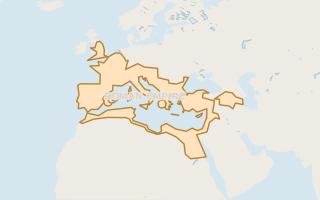
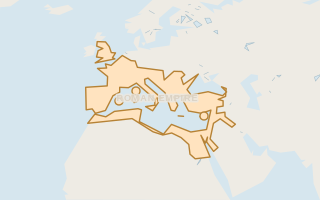
Roman Empire in 117, at its largestRoman Empire in 26 BCE, first mapped
The rise and the fall in one frame: drag across it from 26 BCE, first mapped at 3.06 million km², to 117, at its largest at 5.26 million km². Open the live map in 26 BCE or 117.

Before and after

Before it

  • Roman Republic · replaces · 509 – 27 BCE
  • Hellenistic period · follows

After it

Where it sits in time

3000 BCE2000 BCE1000 BCE110002000Roman Republic: 509 BCE – 27 BCEByzantine Empire: 330 – 1453Western Roman Empire: 395 – 476Roman Empire: 27 BCE – 395

Five thousand years, 3000 BCE to 2026; the state in gold, what it replaced or followed and what replaced or followed it in grey.

Its people

Lives across the Roman Empire

1 CE100 CE200 CE300 CE400 CE
Writers, artists and thinkersStatesmen and generalsScientists and explorersLived on after it endedAll its people on the timeline →

How it was governed

100 emperors

100 emperors on record, 27 BCE to 395; a reign lasted 2 years at the median. Each bar is a reign, as long as it lasted.

1100200300
a second row: a reign that began before the last had ended — rival claimants, or a shared throne
How their terms ended, where it is known (82 of 83):Killed 46Deposed or removed 1Died in office 32Left office alive 3Not on record 1
Every term, with how it ended and its source

Rulers

How 83 reigns ended - choose one to show only those

How they died, where the record says: killed 32 · died of natural causes 22 · executed 9 · died by suicide 8 · died in battle 5 · died by accident 1.

RulerReignLengthHow it ended · sourceTo the ruler before
1st century BCE · 1 reign
Augustus · aged 3627 BCE – 1441 yearsdied in officeWikidata's manner of deathdied of natural causes
1st century · 12 reigns · 7 killed or removed
Tiberius · aged 5614 – 3723 yearsdied in officeWikidata's manner of deathdied of natural causeschild
Caligula · aged 2537 – 414 yearskilled in officeWikidata's manner of deathgrandchild
Claudius · aged 5141 – 5413 yearskilled in officeWikidata's manner of death
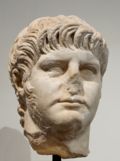
Nero · aged 1754 – 6814 yearskilled in officeWikidata's manner of deathchild
Galba · aged 7168 – 691 yearkilled in officeWikidata's manner of death
Otho · aged 3769 – 69under a yeardied by suicideWikidata's manner of deathdied by suicide
Vitellius · aged 5469 – 69under a yearkilled in officeWikidata's manner of death
Vespasian · aged 6069 – 7910 yearskilled in officeWikidata's manner of death
Titus · aged 4079 – 812 yearsdied in officeWikidata's manner of deathdied of natural causeschild
Domitian · aged 3081 – 9615 yearskilled in officeWikidata's manner of deathsibling
Nerva · aged 6696 – 982 yearsdied in officeWikidata's manner of deathdied of natural causes
Trajan · aged 4598 – 11719 yearsdied in officeWikidata's manner of deathdied of natural causeschild
2nd century · 9 reigns · 4 killed or removed
Hadrian · aged 41117 – 13821 yearsdied in officeWikidata's manner of deathdied of natural causeschild
Antoninus Pius · aged 52138 – 16123 yearsdied in officeWikidata's manner of deathdied of natural causeschild
Lucius Verus · aged 31161 – 1698 yearsdied in officeWikidata's manner of deathdied of natural causeschild
Marcus Aurelius · aged 40161 – 18019 yearsdied in officeWikidata's manner of deathdied of natural causes
Commodus · aged 16177 – 19215 yearskilled in officeWikidata's manner of deathchild
Pertinax · aged 66192 – 1931 yearkilled in officeWikidata's manner of death
Didius Julianus · aged 60193 – 193under a yearkilled in officeWikidata's manner of death
Septimius Severus · aged 47193 – 21118 yearsdied in officeWikidata's manner of deathdied of natural causes
Caracalla · aged 10198 – 21719 yearskilled in officeWikidata's manner of deathchild
3rd century · 38 reigns · 24 killed or removed
Geta · aged 20209 – 2112 yearskilled in officeWikidata's manner of deathsibling
Macrinus · aged 53217 – 2181 yearexecutedWikidata's manner of death
Diadumenian · aged 10218 – 218under a yearexecutedWikidata's manner of deathchild
Elagabalus · aged 15218 – 2224 yearskilled in officeWikidata's manner of death
Severus Alexander · aged 14222 – 23513 yearskilled in officeWikidata's manner of deathchild
Maximinus Thrax · aged 62235 – 2383 yearskilled in officeWikidata's manner of death
Gordian I · aged 79238 – 238under a yeardied by suicideWikidata's manner of deathdied by suicide
Pupienus · aged 68238 – 238under a yearkilled in officeWikidata's manner of death
Gordian II · aged 48238 – 238under a yearkilled in officeWikidata's manner of death
Balbinus · aged 60238 – 238under a yearkilled in officeWikidata's manner of death
Gordian III · aged 13238 – 2446 yearsdied in officeread off the dates alone
Sabinian · aged 40240 – 240under a yeardied in officeread off the dates alone
Philip the Arab · aged 40244 – 2495 yearsdied in battleWikidata's manner of death
Pacatian · aged 48248 – 248under a yeardied in officeread off the dates alone
Silbannacus · aged 48248 – 248under a yearleft office aliveread off the dates alone
Decius · aged 48249 – 2512 yearsdied in battleWikidata's manner of death
Herennius Etruscus · aged 24251 – 251under a yearkilled in officeWikidata's manner of deathchild
Hostilian · aged 21251 – 251under a yearkilled in officeWikidata's manner of deathsibling
Trebonianus Gallus · aged 45251 – 2532 yearskilled in officeWikidata's manner of deathparent
Volusianus · aged 21251 – 2532 yearskilled in officeWikidata's manner of deathchild
Aemilianus · aged 46253 – 253under a yearkilled in officeWikidata's manner of death
Valerian · aged 54253 – 2607 yearsdied in officeread off the dates alone
Gallienus · aged 35253 – 26815 yearskilled in officeWikidata's manner of deathchild
Ingenuus · aged 58258 – 2602 yearsdied by suicideWikidata's manner of deathdied by suicide
Saloninus · aged 18260 – 260under a yearkilled in officeWikidata's manner of death
Macrianus Major · aged 10260 – 2611 yeardied in battleWikidata's manner of death
Claudius Gothicus · aged 54268 – 2702 yearsdied in officeWikidata's manner of deathdied of natural causes
Quintillus · aged 58270 – 270under a yeardied by suicideWikidata's manner of deathdied by suicidesibling
Aurelian · aged 56270 – 2755 yearskilled in officeWikidata's manner of death
Tacitus (emperor) · aged 75275 – 2761 yeardied in officeWikidata's manner of deathdied of natural causes
Florianus · aged 44276 – 276under a yearkilled in officeWikidata's manner of deathsibling
Probus · aged 44276 – 2826 yearskilled in officeWikidata's manner of death
Carus · aged 60282 – 2831 yeardied in officeWikidata's manner of deathdied of natural causes
Numerian · aged 29283 – 2841 yeardied in officeWikidata's manner of deathdied of natural causeschild
Carinus · aged 33283 – 2852 yearskilled in officeWikidata's manner of deathsibling
Diocletian · aged 44284 – 30521 yearsleft office aliveread off the dates alonedied of natural causes
Maximian · aged 46286 – 30519 yearsabdicatedread from the ruler's own articledied by suicidechild
Domitius Domitianus297 – 297under a yearending not on record
4th century · 23 reigns · 12 killed or removed
Constantius Chlorus · aged 55305 – 3061 yeardied in officeWikidata's manner of deathdied of natural causes
Galerius · aged 47305 – 3116 yearsdied in officeWikidata's manner of deathdied of natural causes
Severus II · aged 6306 – 3071 yeardied by suicideWikidata's manner of deathdied by suicide
Maxentius · aged 28306 – 3126 yearsdied in battleWikidata's manner of death
Constantine the Great · aged 34306 – 33731 yearsdied in officeWikidata's manner of deathdied of natural causes
Licinius · aged 45308 – 32416 yearsexecutedWikidata's manner of death
Maximinus Daza · aged 41311 – 3132 yearsdied by suicideWikidata's manner of deathdied by suicide
Valerius Valens · aged 16316 – 3171 yearkilled in officeWikidata's manner of death
Martinian · aged 74324 – 324under a yearexecutedWikidata's manner of death
Constantine II · aged 21337 – 3403 yearskilled in officeWikidata's manner of death
Constans · aged 17337 – 35013 yearsexecutedWikidata's manner of deathsibling
Constantius II · aged 20337 – 36124 yearsdied in officeWikidata's manner of deathdied of natural causessibling
Vetranio350 – 350under a yearleft office aliveread off the dates alonedied of natural causes
Julian · aged 29360 – 3633 yearskilled in officeWikidata's manner of death
Jovian · aged 32363 – 3641 yeardied by accidentWikidata's manner of deathdied by accident
Valentinian I · aged 43364 – 37511 yearsdied in officeWikidata's manner of deathdied of natural causes
Valens · aged 36364 – 37814 yearsdied in battleWikidata's manner of deathsibling
Procopius (usurper) · aged 39365 – 3661 yearexecutedWikidata's manner of death
Gratian · aged 8367 – 38316 yearsexecutedWikidata's manner of death
Valentinian II · aged 4375 – 39217 yearsdied by suicideWikidata's manner of deathdied by suicidesibling
Theodosius I · aged 32379 – 39516 yearsdied in officeWikidata's manner of deathdied of natural causes
Magnus Maximus · aged 48383 – 3885 yearsexecutedWikidata's manner of death
Flavius Victor384 – 3884 yearsexecutedWikidata's manner of death

100 rulers, 83 with terms dated as terms, covering 27 BCE – 395. Median reign 2 years. 64 of 82 handovers irregular - a killing, a deposition, a rival claimant, a rising or a coup beside it. A blank in the last column means no kin on record, which is coverage, never “unrelated”.

The line also names one holder with a page of their own whose term the record gives no first year, so the table cannot place it: Marcus (son of Basiliscus).

Its world

Rivals, and who else stood

Who it fought most

Wars and battles both took part in, on whichever side: the record names who took part, not who fought whom.

Meanwhile, elsewhere

The best-known states of other regions that stood while it did; the band is the Roman Empire’s own years.

1100200300400

How it compares

Among 3,073 states

Stood longer than 82% of 3,073 states
Roman Empire · 422 yearsBritish EmpireHan dynastyHow long it stood, among the states with a recorded end or still standing.
Held more ground at its peak than 98% of 1,464 states
Roman Empire · 5,258,400 km²IndiaAustraliaThe most ground it held, among the states with a border in Cliopatria.
Had more wars on record per century than 97% of 3,073 states
Roman Empire · 2.4Wars recorded per century, among the states, counting the wars the atlas hosts under each.

Why it fell

Why did the Roman Empire fall?

Historians still argue. Here is what the atlas records about its last century:

28

wars and battles in its last century, more than in any before it

388

Magnus Maximus, killed in office

What led to it, and what came of it

Hellenistic period · Linked · 323 BCE – 100 BCEHellenistic periodRoman Republic · Linked · 509 BCE – 27 BCERoman RepublicCantabrian Wars · Linked · 29 BCE – 19 BCECantabrian WarsHispania Citerior · Coincidence · 197 BCE – 27 BCEHispania CiteriorHispania Ulterior · Coincidence · 197 BCE – 27 BCEHispania UlteriorGallia Narbonensis · Coincidence · 125 BCE – 314Gallia NarbonensisRoman Empire · 27 BCE – 395Roman EmpireWestern Roman Empire · Linked · 395 – 476Western Roman EmpireByzantine Empire · Linked · 330 – 1453Byzantine Empire500 BCE150010001500
linkedcoincidence

Open the investigation: every row with its evidence, the conditions at the time, the theories condition by condition, and the succession analysed.

Its centuries in the record

100 BCE – 1 BCE: 19 recorded — 1 wars and battles, 0 risings, regime changes and massacres, 18 other100 BCE0 – 99: 86 recorded — 20 wars and battles, 2 risings, regime changes and massacres, 64 other0100 – 199: 54 recorded — 9 wars and battles, 2 risings, regime changes and massacres, 43 other100200 – 299: 101 recorded — 19 wars and battles, 0 risings, regime changes and massacres, 82 other200300 – 399: 96 recorded — 28 wars and battles, 2 risings, regime changes and massacres, 66 other300

Wars and battles in red, risings, coups and massacres beside them, everything else in grey, by the century each began in. A tall bar is partly a fact about Wikipedia: better-documented centuries hold more.

Each century’s own page:100 BCE – 1 BCE0 – 99100 – 199200 – 299300 – 399

Keep exploring

Share this page
Copy link
Embed the map
Cite this page

How this page is made

Drawn from Wikidata (Q2277, CC0), the opening and history of its English Wikipedia article retold by the atlas (CC BY-SA 4.0), borders from Cliopatria (CC BY 4.0), coast and rivers from Natural Earth, cities from Reba, Reitsma & Seto 2016 (CC BY 4.0). Data built 2026-11-26 · Pastlas v2.47.1, by Oleh Voronko; the published atlas and its data are for non-commercial use.

How to read it

Areas are measured on an equal-area grid from borders simplified to about five kilometres. “c.” marks an approximate date, and a date known to the century is never printed to the year. Counts are what the atlas holds, and they follow Wikipedia’s coverage: a busy century is partly a fact about the record.

  • ends in 395 and 476 and 1453; the atlas draws the preferred end.

Something wrong?

Tell us and name the entry. We fix the data, not just this page.

Report a problem