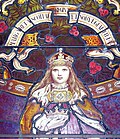
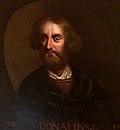
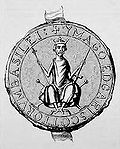
State · Europe

Kingdom of Scotland

843 – 1707 · 864 years

Became Kingdom of Great Britain and Scotland

A kingdom of the north of Great Britain that fought England for its independence, shared a king with it, and finally merged.

Tradition dates the Kingdom of Scotland to 843 CE. Over the Middle Ages it fought England again and again, above all in the Wars of Scottish Independence, and took the Hebrides from Norway in 1266 and the Northern Isles in 1472, until its lands matched those of modern Scotland. In 1603 James VI inherited the English throne, and in 1707, under Queen Anne, the Acts of Union joined the two kingdoms as the Kingdom of Great Britain.

What the record holds

The record dates its beginning to 843.↑ Its borders are first mapped in 1294, around 85,700 km².↓

At its largest, in 1579, it held 91,900 km².↓ Its highest office was held by 51 rulers, covering 843 – 1707, the median reign 15 years; 25 of 50 handovers were irregular.↓ The best known of them are Charles I of England, Mary, Queen of Scots and Charles II of England.↓ Most of the 93 rows the atlas files under it are people.↓

The Kingdom of Great Britain and Scotland replaced it in 1707, after 864 years.↓ Its end fits “Demographic-structural breakdown” and “Elite conflict”, every condition present.↓

From Wikipedia’s article, retold · CC BY-SA 4.0

864 years

Longer than the Holy Roman Empire, shorter than the Byzantine Empire

91,900 km²

At its height in 1579 · about the size of Hungary

51 rulers

the Monarch of Scotland

34 wars and battles

More per century than 89% of states · 93 entries in all

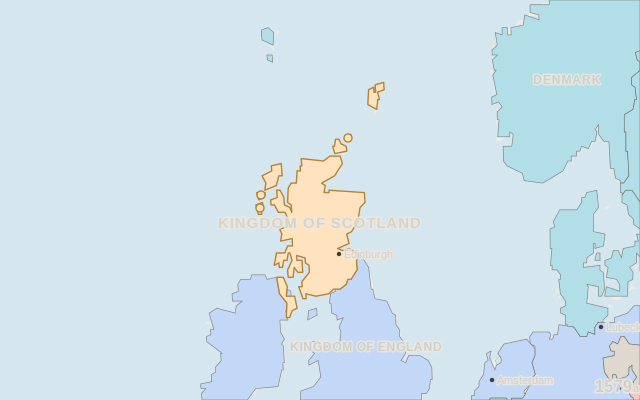
Map: Kingdom of Scotland in 1579, its borders in gold among its neighbours
13501400145015001550
Beside it on the map in 1579: Denmark, Kingdom of England, Holy Roman Empire, Union of Utrecht, Sweden and Margraviate of Brandenburg.How far it reached, year by year: its ground inside the borders Cliopatria draws (CC BY 4.0), measured on an equal-area grid; the map shows it at its largest, with the cities of the year.

The story

Four acts, 843 – 1707

I843 – 943

Picts, Scots and Norsemen

North Britain is split among petty kingdoms: the Picts, the Scots of Dál Riata, the Britons of Strathclyde and Anglian Northumbria. Viking raids fall on monasteries such as Iona and Lindisfarne, and the Norsemen take Orkney, Shetland and the Western Isles. The kings of Alba probably hold some sway over Strathclyde by the later 9th century.

Watch this act on the live map, from 843
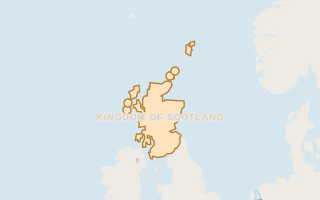
Kingdom of Scotland in 1512, at the end of act II
II943 – 1513

Expansion and the struggle with England

Malcolm I is believed to take Strathclyde, and Indulf the Aggressor wins parts of Lothian with Edinburgh from Northumbria. David I brings feudal tenure, royal burghs and the first Scottish coins. The Hebrides are won from Norway in 1266, the Scots hold off England in the Wars of Scottish Independence, and the Northern Isles follow in 1472.

Watch this act on the live map, from 943
III1513 – 1690

Reformation and the union of crowns

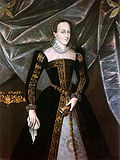
Under James V and Mary, Queen of Scots, the court takes on the style of the Renaissance through minorities, civil wars and English and French interventions. A Calvinist Reformation smashes images and sets up a Presbyterian church. In 1603 James VI inherits the thrones of England and Ireland, and Scotland is drawn into the Wars of the Three Kingdoms.

Watch this act on the live map, from 1513
IV1690 – 1707

The road to union

Severe economic hardship in the 1690s pushes Scotland toward political union with England. In 1707 the Kingdom of Great Britain comes into being: a single Parliament sits at Westminster, forty-five Scots join the Commons and sixteen the Lords, and Scotland's own currency, taxes and trade laws are replaced.

Watch this act on the live map, from 1690

Before and after

After it

Where it sits in time

3000 BCE2000 BCE1000 BCE110002000Kingdom of Great Britain: 1707 – 1801Kingdom of Scotland: 843 – 1707

Five thousand years, 3000 BCE to 2026; the state in gold, what it replaced or followed and what replaced or followed it in grey.

Its people

Lives across the Kingdom of Scotland

120014001600
Statesmen and generalsWriters, artists and thinkersScientists and explorersAll its people on the timeline →

How it was governed

51 monarchs

51 monarchs on record, 843 to 1707; a reign lasted 15 years at the median. Each bar is a reign, as long as it lasted.

Kenneth MacAlpin · 843 – 858 · died in office, manner not recordedDomnall mac Ailpín · 858 – 862 · died in office, manner not recordedCausantín mac Cináeda · 862 – 877 · killed, the article saysÁed mac Cináeda · 877 – 878 · died in office, manner not recordedGiric · 878 – 889 · left office aliveEochaid ab Rhun · 878 – 889 · died in office, manner not recordedDonald II of Scotland · 889 – 900 · died in office, manner not recordedConstantine II of Scotland · 900 – 943 · abdicated, the article saysMalcolm I of Scotland · 943 – 954 · died in office, manner not recordedIndulf · 954 – 962 · died in battleDub · 962 – 967 · killedCuilén · 967 – 971 · killedKenneth II of Scotland · 971 – 995 · died in office, manner not recordedConstantine III of Scotland · 995 – 997 · died in battleKenneth III of Scotland · 997 – 1005 · died in battleMalcolm II of Scotland · 1005 – 1034 · died in office, manner not recordedDuncan I of Scotland · 1034 – 1040 · deposed or killedMacbeth, King of Scotland · 1040 – 1057 · deposed or killedMacbeth (Gargoyles) · 1040 – 1057 · deposed or killedLulach · 1057 – 1058 · deposed or killedMalcolm III of Scotland · 1058 – 1093 · ended otherwise, as coded — neither deposed nor a natural deathDonald III of Scotland · 1093 – 1094 · deposed or killedDuncan II of Scotland · 1094 – 1094 · deposed or killedEdmund of Scotland · 1094 – 1097 · deposed or killedEdgar · 1097 – 1107 · died a natural deathAlexander I of Scotland · 1107 – 1124 · died a natural deathDavid I of Scotland · 1124 – 1153 · died a natural deathMalcolm IV of Scotland · 1153 – 1165 · died a natural deathWilliam the Lion · 1165 – 1214 · died a natural deathAlexander II of Scotland · 1214 – 1249 · died a natural deathAlexander III of Scotland · 1249 – 1286 · died a natural deathMargaret, Maid of Norway · 1286 – 1290 · died a natural deathJohn Balliol · 1292 – 1296 · abdicated, the article saysRobert the Bruce · 1306 – 1329 · died a natural deathDavid II of Scotland · 1329 – 1371 · died a natural deathEdward Balliol · 1332 – 1336 · left office aliveRobert II of Scotland · 1371 – 1390 · died a natural deathRobert III of Scotland · 1390 – 1406 · died a natural deathJames I of Scotland · 1406 – 1437 · deposed or killedJames II of Scotland · 1437 – 1460 · ended otherwise, as coded — neither deposed nor a natural deathJames III of Scotland · 1460 – 1488 · deposed or killedJames IV · 1488 – 1513 · ended otherwise, as coded — neither deposed nor a natural deathJames V · 1513 – 1542 · died a natural deathMary, Queen of Scots · 1542 – 1567 · deposed or killedJames VI and I · 1587 – 1625 · died a natural deathCharles I of England · 1625 – 1649 · deposed or killedCharles II of England · 1660 – 1685 · died a natural deathJames II of England · 1685 – 1688 · deposed or killedMary II · 1689 – 1694 · died a natural deathWilliam III of England · 1694 – 1702 · died a natural deathAnne, Queen of Great Britain · 1702 – 1707 · left office alive1000120014001600
a second row: a reign that began before the last had ended — rival claimants, or a shared throne
How their terms ended, where it is known (51 of 51):Killed 6Deposed or removed 14Died in office 25Left office alive 6
Every term, with how it ended and its source

Rulers

How 51 reigns ended - choose one to show only those

How they died, where the record says: died in battle 9 · died of natural causes 8 · killed 3 · died by accident 3 · executed 2.

RulerReignLengthHow it ended · sourceTo the ruler before
9th century · 8 reigns · 2 killed or removed
Kenneth MacAlpin · aged 33843 – 85815 yearsdied in officeread off the dates alone
Domnall mac Ailpín · aged 46858 – 8624 yearsdied in officeread off the dates alonesibling
Causantín mac Cináeda · aged 26862 – 87715 yearskilledread from the ruler's own articlenephew or niece
Áed mac Cináeda · aged 37877 – 8781 yeardied in officeread off the dates alonesibling
Giric878 – 88911 yearsleft office aliveread off the dates alone
Eochaid ab Rhun878 – 88911 yearsdied in officeread off the dates alone
Donald II of Scotland · aged 27889 – 90011 yearsdied in officeread off the dates alone
Constantine II of Scotland · aged 99900 – 94343 yearsabdicatedread from the ruler's own article
10th century · 7 reigns · 5 killed or removed
Malcolm I of Scotland · aged 46943 – 95411 yearsdied in officeread off the dates alone
Indulf · aged 53954 – 9628 yearsdied in battleWikidata's manner of death
Dub · aged 32962 – 9675 yearskilled in officeWikidata's manner of death
Cuilén967 – 9714 yearskilled in officeWikidata's manner of death
Kenneth II of Scotland · aged 39971 – 99524 yearsdied in officeread off the dates alone
Constantine III of Scotland · aged 24995 – 9972 yearsdied in battleWikidata's manner of death
Kenneth III of Scotland997 – 10058 yearsdied in battleWikidata's manner of death
11th century · 10 reigns · 7 killed or removed
Malcolm II of Scotland · aged 511005 – 103429 yearsdied in officeread off the dates alone
Duncan I of Scotland · aged 331034 – 10406 yearsdeposed or killedcoded by Kokkonen & Sundelldied in battlegrandchild
Macbeth, King of Scotland · aged 351040 – 105717 yearsdeposed or killedcoded by Kokkonen & Sundelldied in battle
Macbeth (Gargoyles)1040 – 105717 yearsdeposed or killedcoded by Kokkonen & Sundell
Lulach · aged 271057 – 10581 yeardeposed or killedcoded by Kokkonen & Sundell
Malcolm III of Scotland · aged 271058 – 109335 yearsended otherwisecoded by Kokkonen & Sundelldied in battle
Donald III of Scotland · aged 601093 – 10941 yeardeposed or killedcoded by Kokkonen & Sundelldied of natural causessibling
Duncan II of Scotland · aged 341094 – 1094under a yeardeposed or killedcoded by Kokkonen & Sundellnephew or niece
Edmund of Scotland1094 – 10973 yearsdeposed or killedcoded by Kokkonen & Sundellsibling
Edgar · aged 231097 – 110710 yearsnatural deathcoded by Kokkonen & Sundellsibling
12th century · 4 reigns
Alexander I of Scotland · aged 291107 – 112417 yearsnatural deathcoded by Kokkonen & Sundellsibling
David I of Scotland · aged 401124 – 115329 yearsnatural deathcoded by Kokkonen & Sundellsibling
Malcolm IV of Scotland · aged 121153 – 116512 yearsnatural deathcoded by Kokkonen & Sundellgrandchild
William the Lion · aged 231165 – 121449 yearsnatural deathcoded by Kokkonen & Sundellsibling
13th century · 4 reigns · 1 killed or removed
Alexander II of Scotland · aged 161214 – 124935 yearsnatural deathcoded by Kokkonen & Sundellchild
Alexander III of Scotland · aged 81249 – 128637 yearsnatural deathcoded by Kokkonen & Sundelldied by accidentchild
Margaret, Maid of Norway · aged 31286 – 12904 yearsnatural deathcoded by Kokkonen & Sundellgrandchild
John Balliol · aged 431292 – 12964 yearsabdicatedread from the ruler's own article
14th century · 5 reigns
Robert the Bruce · aged 321306 – 132923 yearsnatural deathcoded by Kokkonen & Sundelldied of natural causes
David II of Scotland · aged 51329 – 137142 yearsnatural deathcoded by Kokkonen & Sundellchild
Edward Balliol · aged 491332 – 13364 yearsleft office aliveread off the dates alone
Robert II of Scotland · aged 551371 – 139019 yearsnatural deathcoded by Kokkonen & Sundell
Robert III of Scotland · aged 601390 – 140616 yearsnatural deathcoded by Kokkonen & Sundelldied of natural causeschild
15th century · 4 reigns · 2 killed or removed
James I of Scotland · aged 121406 – 143731 yearsdeposed or killedcoded by Kokkonen & Sundellkilledchild
James II of Scotland · aged 71437 – 146023 yearsended otherwisecoded by Kokkonen & Sundelldied by accidentchild
James III of Scotland · aged 91460 – 148828 yearsdeposed or killedcoded by Kokkonen & Sundelldied in battlechild
James IV · aged 151488 – 151325 yearsended otherwisecoded by Kokkonen & Sundelldied in battlechild
16th century · 3 reigns · 1 killed or removed
James V · aged 11513 – 154229 yearsnatural deathcoded by Kokkonen & Sundellchild
Mary, Queen of Scots1542 – 156725 yearsdeposed or killedcoded by Kokkonen & Sundellexecutedchild
James VI and I · aged 211587 – 162538 yearsnatural deathcoded by Kokkonen & Sundelldied of natural causeschild
17th century · 5 reigns · 2 killed or removed
Charles I of England · aged 251625 – 164924 yearsdeposed or killedcoded by Kokkonen & Sundellexecutedchild
Charles II of England · aged 301660 – 168525 yearsnatural deathcoded by Kokkonen & Sundelldied of natural causeschild
James II of England · aged 521685 – 16883 yearsdeposed or killedcoded by Kokkonen & Sundelldied of natural causessibling
Mary II · aged 271689 – 16945 yearsnatural deathcoded by Kokkonen & Sundelldied of natural causeschild
William III of England · aged 441694 – 17028 yearsnatural deathcoded by Kokkonen & Sundelldied by accidentspouse
18th century · 1 reign
Anne, Queen of Great Britain · aged 371702 – 17075 yearsleft office aliveread off the dates alonedied of natural causes

51 rulers, 51 with terms dated as terms, covering 843 – 1707. Median reign 15 years. 25 of 50 handovers irregular - a killing, a deposition, a rival claimant, a rising or a coup beside it. A blank in the last column means no kin on record, which is coverage, never “unrelated”.

Flags and arms, in order

  • Flag of Scotland (1542–2003, sky blue)
    flag, undatedFlag of Scotland (1542–2003, sky blue) · Public domain
  • Royal Arms of the Kingdom of Scotland
    coat of arms, to 1558Royal Arms of the Kingdom of Scotland · CC BY-SA 3.0
  • Royal Arms of the Kingdom of Scotland (1558-1559)
    coat of arms, 1558 – 1559Royal Arms of the Kingdom of Scotland (1558-1559) · CC BY-SA 3.0 · Sodacan
  • Royal Arms of the Kingdom of Scotland (1559-1560)
    coat of arms, 1559 – 1560Royal Arms of the Kingdom of Scotland (1559-1560) · CC BY-SA 3.0 · Sodacan
  • Royal Arms of the Kingdom of Scotland (1560-1565)
    coat of arms, 1560 – 1565Royal Arms of the Kingdom of Scotland (1560-1565) · CC BY-SA 3.0 · Sodacan
  • Royal Coat of Arms of the Kingdom of Scotland (Variant 1)
    coat of arms, 1565 – 1603Royal Coat of Arms of the Kingdom of Scotland (Variant 1) · CC BY-SA 3.0
  • Royal Coat of arms of Scotland (1603–1651)
    coat of arms, 1603 – 1651Royal Coat of arms of Scotland (1603–1651) · CC BY-SA 3.0
  • Coat of Arms of Scotland (1660-1689)
    coat of arms, 1687 – 1689Coat of Arms of Scotland (1660-1689) · CC BY-SA 3.0
  • Coat of Arms of Scotland (1689-1694)
    coat of arms, 1689 – 1694Coat of Arms of Scotland (1689-1694) · CC BY-SA 3.0
  • Coat of Arms of Scotland (1694-1702)
    coat of arms, 1694 – 1702Coat of Arms of Scotland (1694-1702) · CC BY-SA 3.0
  • Coat of Arms of Scotland (1702-1707)
    coat of arms, from 1702Coat of Arms of Scotland (1702-1707) · CC BY-SA 3.0

Its world

Rivals, and who else stood

Who it fought most

Wars and battles both took part in, on whichever side: the record names who took part, not who fought whom.

Meanwhile, elsewhere

The best-known states of other regions that stood while it did; the band is the Kingdom of Scotland’s own years.

80010001200140016001800

How it compares

Among 3,073 states

Stood longer than 96% of 3,073 states
Kingdom of Scotland · 864 yearsHoly Roman EmpireByzantine EmpireHow long it stood, among the states with a recorded end or still standing.
Held more ground at its peak than 44% of 1,464 states
Kingdom of Scotland · 91,900 km²JordanMalawiThe most ground it held, among the states with a border in Cliopatria.
Had more wars on record per century than 89% of 3,073 states
Kingdom of Scotland · 0.6Wars recorded per century, among the states, counting the wars the atlas hosts under each.

Why it fell

Why did the Kingdom of Scotland fall?

Historians still argue. Here is what the atlas records about its last century:

1688

James II of England, deposed or removed in office

What led to it, and what came of it

Dál Riata · In the article · 498 · “Of these, the four most important were those of the Picts in the north-east, the Scots of Dál Riata in the west, the Britons of Strathclyde in the south-west …”Dál RiataVikings · In the article · 793 · “In a decisive battle in 839, the king of the Picts, Uuen, and the king of Dál Riata, Áed, were killed by Vikings.”VikingsKingdom of Scotland · 843 – 1707Kingdom of ScotlandKingdom of Great Britain · Linked · 1707 – 1801Kingdom of Great BritainScotland · Linked · 843Scotland50010001500
in the articlelinked

Open the investigation: every row with its evidence, the conditions at the time, the theories condition by condition, and the succession analysed.

Theories that apply to its ending

  • Demographic-structural breakdown

    Goldstone 1991 · Turchin & Nefedov 2009

    Applies by its own logic: 2 of its 3 conditions held here (it needs 2), and this is the kind of outcome it predicts — unrest, adverse regime change or the state's ending.

    • overlapping reigns — rival claimants — within 20 y, or 3 or more changes of ruler within 20 y, or 2 or more reigns of two years or less within 20 y, or a monarch deposed or killed within 20 y — handovers 3; James II (1689)
    • a war the state is fighting, still under way, or a war the state fought, ended within 10 y — warEnded
  • Elite conflict

    Lachmann 2000 · Lachmann 2010

    Applies by its own logic: 2 of its 2 conditions held here (it needs all of them), and this is the kind of outcome it predicts — adverse regime change, unrest or the state's ending.

    • 2 or more elite groups in the regime's support, or a parliament met within 100 y — parliament 93
    • an elite group among the regime's opposition within 5 y, or an elite group left the regime's support over 10 y, or a monarch deposed or killed by others within 20 y, or overlapping reigns — rival claimants — within 20 y — James II (1689)

Its centuries in the record

800 – 899: 8 recorded — 0 wars and battles, 0 risings, regime changes and massacres, 8 other800900 – 999: 6 recorded — 0 wars and battles, 0 risings, regime changes and massacres, 6 other9001000 – 1099: 11 recorded — 0 wars and battles, 0 risings, regime changes and massacres, 11 other10001100 – 1199: 5 recorded — 0 wars and battles, 1 risings, regime changes and massacres, 4 other11001200 – 1299: 13 recorded — 6 wars and battles, 0 risings, regime changes and massacres, 7 other12001300 – 1399: 14 recorded — 7 wars and battles, 0 risings, regime changes and massacres, 7 other13001400 – 1499: 5 recorded — 2 wars and battles, 0 risings, regime changes and massacres, 3 other14001500 – 1599: 9 recorded — 1 wars and battles, 0 risings, regime changes and massacres, 8 other15001600 – 1699: 22 recorded — 18 wars and battles, 1 risings, regime changes and massacres, 3 other16001700 – 1799: 0 recorded — 0 wars and battles, 0 risings, regime changes and massacres, 0 other1700

Wars and battles in red, risings, coups and massacres beside them, everything else in grey, by the century each began in. A tall bar is partly a fact about Wikipedia: better-documented centuries hold more.

Each century’s own page:800 – 899900 – 9991000 – 10991100 – 11991200 – 12991300 – 13991400 – 14991500 – 15991600 – 16991700 – 1799

Keep exploring

Share this page
Copy link
Embed the map
Cite this page

How this page is made

Drawn from Wikidata (Q230791, CC0), the opening and history of its English Wikipedia article retold by the atlas (CC BY-SA 4.0), borders from Cliopatria (CC BY 4.0), coast and rivers from Natural Earth, cities from Reba, Reitsma & Seto 2016 (CC BY 4.0), symbols from Wikimedia Commons, each under its own licence. Data built 2026-11-26 · Pastlas v2.47.1, by Oleh Voronko; the published atlas and its data are for non-commercial use.

How to read it

Areas are measured on an equal-area grid from borders simplified to about five kilometres. “c.” marks an approximate date, and a date known to the century is never printed to the year. Counts are what the atlas holds, and they follow Wikipedia’s coverage: a busy century is partly a fact about the record.

Something wrong?

Tell us and name the entry. We fix the data, not just this page.

Report a problem