State · Europe

Denmark–Norway

1536 – 1814 · 278 years

Came after Kalmar Union

A union of twin kingdoms that taxed ships in the Oresund, fought Sweden over the Baltic Sea, and lost Norway at Kiel.

Denmark–Norway joined the kingdoms of Denmark and Norway, Norway's North Atlantic possessions and the duchies of Schleswig and Holstein, with colonies on the Gold Coast, in India and in the West Indies. A personal union from 1536 hardened in 1660 into one state and one of Europe's strictest absolute monarchies, confirmed by the King's Law of 1665. It lasted until the Treaty of Kiel ceded Norway to Sweden in 1814.

What the record holds

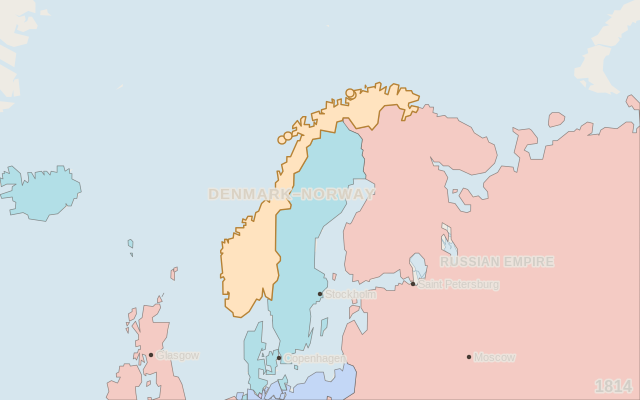
It was founded in 1536, replacing the Kalmar Union.↓ Its borders are first mapped in 1814, around 344,100 km².↓

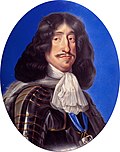
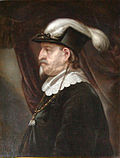
Its highest office was held by 9 rulers, covering 1534 – 1814, the median reign 29 years; none of its 8 handovers was irregular.↓ The best known of them are Christian IV of Denmark, Frederick III of Denmark and Christian VII.↓ Most of the 10 rows the atlas files under it are people.↓ Its record closes in 1814, after 278 years.↑

From Wikipedia’s article, retold · CC BY-SA 4.0

278 years

Longer than the Ming dynasty, shorter than the Tang dynasty

344,000 km²

At its height in 1814 · about the size of Philippines

9 rulers

the King of Denmark and Norway

4 wars and battles

More per century than 89% of states · 10 entries in all

Map: Denmark–Norway in 1814, its borders in gold among its neighbours
Beside it on the map in 1814: Russian Empire, Sweden, Denmark, United Kingdom of Great Britain and Ireland, Confederation of the Rhine and Duchy of Mecklenburg-Strelitz.How far it reached, year by year: its ground inside the borders Cliopatria draws (CC BY 4.0), measured on an equal-area grid; the map shows it at its largest, with the cities of the year.

The story

Four acts, 1536 – 1814

I1536 – 1588

Two kingdoms bound as one

During the Count's Feud the Protestant Christian III and the Catholic Christian II contest the Danish crown; Norway, fairly Catholic, wants out but is held by Denmark's stronger arms. Christian III binds the two kingdoms together. With a strong navy and control of the Oresund, Denmark–Norway levies the Sound Tolls on passing ships, two thirds of its income.

Watch this act on the live map, from 1536
II1588 – 1660

Christian IV and the Swedish wars

Sweden's Charles IX, seeking a route that avoids the Sound Toll, taxes northern Norway, and in 1611 Denmark–Norway invades Sweden. Christian IV spends the Älvsborg Ransom on new cities and the Danish East India Company, and joins the Thirty Years' War. Sweden invades after 1643 and wins, and defeat in 1657–1658 costs a quarter of the realm at Roskilde.

Watch this act on the live map, from 1588
III1660 – 1801

The absolute monarchy

In 1660 the High Council is abolished and the king rules as an absolute, hereditary monarch, confirmed by the Leges regiae of 1665; Norway keeps its own laws, chancellor, coinage and army. Christian V invades Sweden in 1675 to win back Scania, but Charles XI strikes back and a peace dictated by the French changes nothing.

Watch this act on the live map, from 1660
IV1801 – 1814

War with Britain, loss of Norway

Joining the Second League of Armed Neutrality draws British attack: a Danish fleet is beaten off Copenhagen in 1801, and in 1807 the city is besieged and occupied and most of the navy seized. The Gunboat War follows. At Kiel in 1814 Frederick VI cedes Norway to Sweden; Norway declares independence, but a Swedish invasion forces a union.

Watch this act on the live map, from 1801

Before and after

Before it

Where it sits in time

3000 BCE2000 BCE1000 BCE110002000Kalmar Union: 1397 – 1523Denmark–Norway: 1536 – 1814

Five thousand years, 3000 BCE to 2026; the state in gold, what it replaced or followed and what replaced or followed it in grey.

Its people

Lives across Denmark–Norway

155016001650170017501800
Statesmen and generalsAll its people on the timeline →

How it was governed

9 kings

9 kings on record, 1534 to 1814; a reign lasted 29 years at the median. Each bar is a reign, as long as it lasted.

Christian III of Denmark · 1534 – 1559 · died a natural deathFrederick II of Denmark · 1559 – 1588 · died a natural deathChristian IV of Denmark · 1588 – 1648 · died a natural deathFrederick III of Denmark · 1648 – 1670 · died a natural deathChristian V of Denmark · 1670 – 1699 · died a natural deathFrederick IV of Denmark · 1699 – 1730 · died a natural deathChristian VI · 1730 – 1746 · died a natural deathChristian VII · 1766 – 1808 · no death date to read the end againstFrederick VI of Denmark · 1808 – 1814 · no death date to read the end against155016001650170017501800
How their terms ended, where it is known (7 of 9):Died in office 7Not on record 2
Every term, with how it ended and its source

Rulers

How 9 reigns ended - choose one to show only those

How they died, where the record says: died of natural causes 8 · died by accident 1.

RulerReignLengthHow it ended · sourceTo the ruler before
16th century · 3 reigns
Christian III of Denmark1534 – 155925 yearsnatural deathcoded by Kokkonen & Sundelldied of natural causes
Frederick II of Denmark1559 – 158829 yearsnatural deathcoded by Kokkonen & Sundelldied of natural causeschild
Christian IV of Denmark1588 – 164860 yearsnatural deathcoded by Kokkonen & Sundelldied of natural causeschild
17th century · 3 reigns
Frederick III of Denmark1648 – 167022 yearsnatural deathcoded by Kokkonen & Sundelldied of natural causeschild
Christian V of Denmark1670 – 169929 yearsnatural deathcoded by Kokkonen & Sundelldied by accidentchild
Frederick IV of Denmark1699 – 173031 yearsnatural deathcoded by Kokkonen & Sundelldied of natural causeschild
18th century · 2 reigns
Christian VI1730 – 174616 yearsnatural deathcoded by Kokkonen & Sundelldied of natural causeschild
Christian VII1766 – 180842 yearsending not on recorddied of natural causesgrandchild
19th century · 1 reign
Frederick VI of Denmark1808 – 18146 yearsending not on recorddied of natural causeschild

9 rulers, 9 with terms dated as terms, covering 1534 – 1814. Median reign 29 years. 0 of 8 handovers irregular - a killing, a deposition, a rival claimant, a rising or a coup beside it. A blank in the last column means no kin on record, which is coverage, never “unrelated”.

Flags and arms, in order

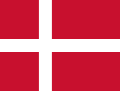
  • Flag of Denmark
    flag, undatedFlag of Denmark · Public domain
  • Royal Arms of Denmark & Norway (1699–1819)
    coat of arms, undatedRoyal Arms of Denmark & Norway (1699–1819) · CC BY-SA 3.0 · TRAJAN 117 This W3C-unspecified vector image was created with Inkscape .

Its world

Rivals, and who else stood

Who it fought most

Wars and battles both took part in, on whichever side: the record names who took part, not who fought whom.

Meanwhile, elsewhere

The best-known states of other regions that stood while it did; the band is Denmark–Norway’s own years.

1500160017001800

How it compares

Among 3,073 states

Stood longer than 71% of 3,073 states
Denmark–Norway · 278 yearsMing dynastyTang dynastyHow long it stood, among the states with a recorded end or still standing.
Held more ground at its peak than 68% of 1,464 states
Denmark–Norway · 344,100 km²VietnamPhilippinesThe most ground it held, among the states with a border in Cliopatria.
Had more wars on record per century than 89% of 3,073 states
Denmark–Norway · 0.7Wars recorded per century, among the states, counting the wars the atlas hosts under each.

Why it fell

Why did Denmark–Norway fall?

Historians still argue. Here is what the atlas records about its last century:

1

wars and battles in its last century

What led to it, and what came of it

Kalmar Union · Linked · 1397 – 1523 · “The three kingdoms of Denmark, Norway and Sweden united in the Kalmar Union in 1397.”Kalmar UnionSweden · In the article · 905 · “The three kingdoms of Denmark, Norway and Sweden united in the Kalmar Union in 1397.”SwedenErik XIV · In the article · 1533 · “In response, Erik XIV of Sweden (reigned 1560–1568) added the insignia of Norway and Denmark to his own coat of arms. Denmark–Norway then carried out some nav…”Erik XIVFrederick II of Denmark · Coincidence · 1534 – 1588Frederick II of DenmarkDenmark–Norway · 1536 – 1814Denmark–Norway10001200140016001800
in the articlelinkedcoincidence

Open the investigation: every row with its evidence, the conditions at the time, the theories condition by condition, and the succession analysed.

Its centuries in the record

1500 – 1599: 1 recorded — 0 wars and battles, 0 risings, regime changes and massacres, 1 other15001600 – 1699: 6 recorded — 2 wars and battles, 0 risings, regime changes and massacres, 4 other16001700 – 1799: 2 recorded — 1 wars and battles, 0 risings, regime changes and massacres, 1 other17001800 – 1899: 1 recorded — 1 wars and battles, 0 risings, regime changes and massacres, 0 other1800

Wars and battles in red, risings, coups and massacres beside them, everything else in grey, by the century each began in. A tall bar is partly a fact about Wikipedia: better-documented centuries hold more.

Each century’s own page:1500 – 15991600 – 16991700 – 17991800 – 1899

Keep exploring

Share this page
Copy link
Embed the map
Cite this page

How this page is made

Drawn from Wikidata (Q62651, CC0), the opening and history of its English Wikipedia article retold by the atlas (CC BY-SA 4.0), borders from Cliopatria (CC BY 4.0), coast and rivers from Natural Earth, cities from Reba, Reitsma & Seto 2016 (CC BY 4.0), symbols from Wikimedia Commons, each under its own licence. Data built 2026-11-26 · Pastlas v2.47.1, by Oleh Voronko; the published atlas and its data are for non-commercial use.

How to read it

Areas are measured on an equal-area grid from borders simplified to about five kilometres. “c.” marks an approximate date, and a date known to the century is never printed to the year. Counts are what the atlas holds, and they follow Wikipedia’s coverage: a busy century is partly a fact about the record.

Something wrong?

Tell us and name the entry. We fix the data, not just this page.

Report a problem