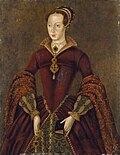
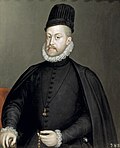
State · Europe

Kingdom of England

927 – 1707 · 780 years

Came after Kingdom of Wessex and Commonwealth of England · became Kingdom of Great Britain

The kingdom Æthelstan united from the Anglo-Saxon realms, conquered by the Normans and merged with Scotland into Great Britain.

The Kingdom of England began in 927 CE, when Æthelstan took York, the last Viking kingdom, and became the first Anglo-Saxon king of all England. From 1016 it lay within Cnut the Great's North Sea Empire, and in 1066 it fell to the Normans. Under Norman, Plantagenet, Tudor and Stuart kings it became one of Europe's strongest states, conquered Wales and broke with the pope, until on 1 May 1707 it united with Scotland as the Kingdom of Great Britain.

What the record holds

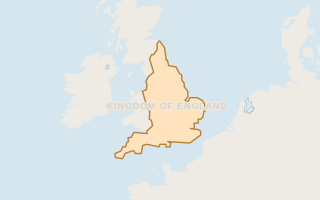
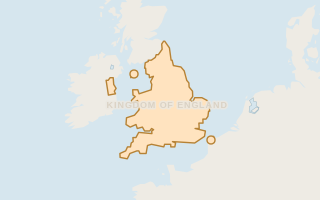
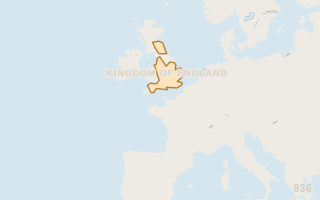
It was founded in 927, replacing the Kingdom of Wessex and the Principality of Wales.↓ Its borders are first mapped in 936, around 118,000 km².↓ Over the years of the Wars of the Roses, 1455 – 1487, its ground went from 200,600 km² to 165,700 km².↓

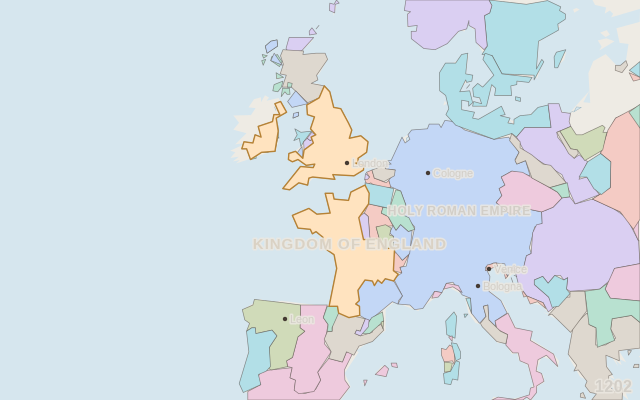
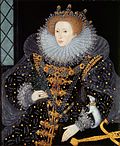
Its ground peaked in 1202 at 424,700 km².↓ Its line counts 48 rulers, covering 899 – 1707, the median reign 10 years; 25 of 52 handovers were irregular.↓ The best known of them are Elizabeth I, Henry VIII and William the Conqueror.↓ Most of the 426 rows the atlas files under it are people.↓

The Kingdom of Great Britain replaced it in 1707, after 780 years.↓ Its end fits “Demographic-structural breakdown”, every condition present.↓

From Wikipedia’s article, retold · CC BY-SA 4.0

780 years

Longer than the House of Habsburg, shorter than the Holy Roman Empire

425,000 km²

At its height in 1202 · about the size of Norway

48 rulers

the Monarch of England

94 wars and battles

More per century than 97% of states · 426 entries in all

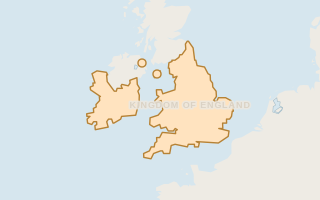
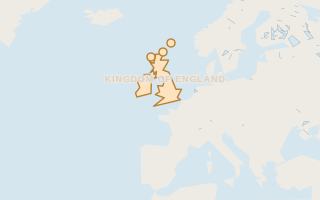
Map: Kingdom of England in 1202, its borders in gold among its neighbours
Norman Conquest, 1066 – 1075Hundred Years' War, 1337 – 1453: 212,300 km² → 200,600 km²Wars of the Roses, 1455 – 1487: 200,600 km² → 165,700 km²English Civil War, 1642 – 1651: 182,600 km² → 186,600 km²Glorious Revolution, 1688 – 16891000120014001600
Beside it on the map in 1202: Holy Roman Empire, Angevin Empire, Kingdom of Hungary, Sweden, Kingdom of Galicia–Volhynia and Denmark.How far it reached, year by year: its ground inside the borders Cliopatria draws (CC BY 4.0), measured on an equal-area grid; the map shows it at its largest, with the cities of the year.

The story

Five acts, 927 – 1707

Kingdom of England in 1065, at the end of act I
I927 – 1066

One English kingdom

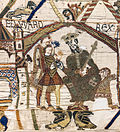
Æthelstan completes the reconquest that unites the kingdoms of the old Heptarchy, and the Battle of Brunanburh is fought in 937 CE. In 1016 England passes into Cnut the Great's North Sea Empire, in personal union with Denmark and Norway. The childless Edward dies in January 1066, and his brother-in-law Harold is crowned.

Watch this act on the live map, from 927
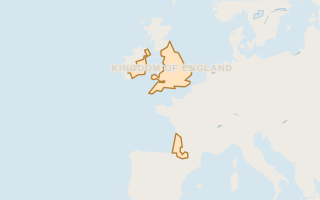
Kingdom of England in 1215, at the end of act II
II1066 – 1216129,000 → 213,000 km²

Normans and Angevins

William, Duke of Normandy, lands in Sussex three days after Harold beats the Norwegians at Stamford Bridge, and takes the crown at Hastings. The capital moves from Winchester to Westminster. William II annexes Cumbria in 1092, Henry I cedes Lothian in 1124, fixing England's lasting borders, and Henry II begins the Plantagenet line in 1154.

Watch this act on the live map, from 1066
Kingdom of England in 1484, at the end of act III
III1216 – 1485191,000 → 166,000 km²

The Plantagenet realm

Edward I conquers Wales by 1284. Edward III, claiming the French throne, opens the Hundred Years' War and makes England one of Europe's most formidable military powers; the Peasants' Revolt follows in 1381. Defeats at Formigny in 1450 and Castillon in 1453 end the French war, then come the Wars of the Roses and, after Bosworth in 1485, the Tudors.

Watch this act on the live map, from 1216
Kingdom of England in 1706, at the end of act V
V1603 – 1707218,000 → 341,000 km²

Stuarts, Commonwealth and union

James I joins the crowns of England and Scotland. Charles I taxes in defiance of Parliament, loses a civil war and is executed in 1649, and England becomes a Commonwealth. Charles II is restored in 1660; the Glorious Revolution of 1688 removes another Stuart, and the Act of Settlement 1701 hands the succession to the Protestant House of Hanover.

Watch this act on the live map, from 1603
Kingdom of England in 1202, at its largestKingdom of England in 936, first mapped
The rise and the fall in one frame: drag across it from 936, first mapped at 118,000 km², to 1202, at its largest at 424,700 km². Open the live map in 936 or 1202.

Before and after

Before it

After it

Where it sits in time

3000 BCE2000 BCE1000 BCE110002000Kingdom of Wessex: 519 – 927Principality of Wales: 1216 – 1542Commonwealth of England: 1649 – 1660Kingdom of Great Britain: 1707 – 1801Kingdom of England: 927 – 1707

Five thousand years, 3000 BCE to 2026; the state in gold, what it replaced or followed and what replaced or followed it in grey.

Its people

Lives across the Kingdom of England

120013001400150016001700
Statesmen and generalsWriters, artists and thinkersRebels and raidersScientists and explorersLived on after it endedAll its people on the timeline →

How it was governed

48 monarchs

48 monarchs on record, 899 to 1707; a reign lasted 10 years at the median. Each bar is a reign, as long as it lasted.

Edward the Elder · 899 – 924 · died in office, manner not recordedÆthelstan · 927 – 939 · died in office, manner not recordedEdmund I · 939 – 946 · killedEadred · 946 – 955 · died in office, manner not recordedEadwig · 955 – 959 · died in office, manner not recordedEdgar, King of England · 959 – 975 · died in office, manner not recordedEdward the Martyr · 975 – 978 · killedÆthelred the Unready · 978 – 1013 · left office aliveSwein Forkbeard · 1013 – 1014 · died in office of natural causesÆthelred the Unready · 1014 – 1016 · died in office, manner not recordedEdmund Ironside · 1016 – 1016 · died in office, manner not recordedCnut the Great · 1016 – 1035 · died in office of natural causesHarold Harefoot · 1037 – 1040 · died in office, manner not recordedHarthacnut · 1040 – 1042 · died in office of natural causesEdward the Confessor · 1042 – 1066 · died in office, manner not recordedHarold Godwinson · 1066 – 1066 · ended otherwise, as coded — neither deposed nor a natural deathWilliam the Conqueror · 1066 – 1087 · ended otherwise, as coded — neither deposed nor a natural deathWilliam II of England · 1087 – 1100 · deposed or killedHenry I of England · 1100 – 1135 · died a natural deathStephen, King of England · 1135 – 1141 · deposed or killedEmpress Matilda · 1141 – 1141 · deposed or killedStephen, King of England · 1141 – 1154 · died a natural deathHenry II of England · 1154 – 1189 · deposed or killedRichard I of England · 1189 – 1199 · deposed or killedJohn, King of England · 1199 – 1216 · died a natural deathHenry III of England · 1216 – 1272 · died a natural deathEdward I · 1272 – 1307 · died a natural deathEdward II · 1307 – 1327 · deposed or killedEdward III · 1327 – 1377 · died a natural deathRichard II of England · 1377 – 1399 · deposed or killedHenry IV of England · 1399 – 1413 · died a natural deathHenry V of England · 1413 – 1422 · ended otherwise, as coded — neither deposed nor a natural deathHenry VI of England · 1422 – 1461 · deposed or killedEdward IV · 1461 – 1470 · deposed or killedHenry VI of England · 1470 – 1471 · deposed or killedEdward IV · 1471 – 1483 · died a natural deathEdward V · 1483 – 1483 · deposed or killedRichard III of England · 1483 – 1485 · deposed or killedHenry VII of England · 1485 – 1509 · died a natural deathHenry VIII · 1509 – 1547 · died a natural deathEdward VI · 1547 – 1553 · died a natural deathLady Jane Grey · 1553 – 1553 · died a natural deathMary I · 1553 – 1558 · died a natural deathPhilip II of Spain · 1554 – 1558 · died a natural deathElizabeth I · 1558 – 1603 · died a natural deathJames VI and I · 1603 – 1625 · died a natural deathCharles I of England · 1625 – 1649 · deposed or killedCharles II of England · 1660 – 1685 · died a natural deathJames II of England · 1685 – 1688 · deposed or killedWilliam III of England · 1689 – 1694 · died a natural deathMary II · 1689 – 1694 · died a natural deathWilliam III of England · 1694 – 1702 · died a natural deathAnne, Queen of Great Britain · 1702 – 1707 · died a natural death1000120014001600
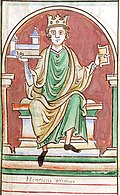
a second row: a reign that began before the last had ended — rival claimants, or a shared throne
How their terms ended, where it is known (53 of 53):Killed 2Deposed or removed 14Died in office 33Left office alive 4
Every term, with how it ended and its source

Rulers

How 53 reigns ended - choose one to show only those

How they died, where the record says: died of natural causes 22 · killed 7 · died in battle 2 · executed 2 · died by accident 2.

RulerReignLengthHow it ended · sourceTo the ruler before
9th century · 1 reign
Edward the Elder · aged 25899 – 92425 yearsdied in officeread off the dates alone
10th century · 7 reigns · 2 killed or removed
Æthelstan · aged 32927 – 93912 yearsdied in officeWikidata's end cause on the termchild
Edmund I · aged 19939 – 9467 yearskilled in officeWikidata's manner of deathsibling
Eadred · aged 23946 – 9559 yearsdied in officeWikidata's end cause on the termsibling
Eadwig · aged 15955 – 9594 yearsdied in officeWikidata's end cause on the termnephew or niece
Edgar, King of England · aged 16959 – 97516 yearsdied in officeWikidata's end cause on the termsibling
Edward the Martyr · aged 12975 – 9783 yearskilled in officeWikidata's manner of deathchild
Æthelred the Unready · aged 11978 – 101335 yearsleft office aliveread off the dates alonesibling
11th century · 11 reigns · 1 killed or removed
Swein Forkbeard · aged 501013 – 10141 yeardied in officeWikidata's manner of deathdied of natural causes
Æthelred the Unready · aged 471014 – 10162 yearsdied in officeWikidata's end cause on the term
Edmund Ironside · aged 361016 – 1016under a yeardied in officeWikidata's end cause on the termchild
Cnut the Great · aged 221016 – 103519 yearsdied in officeWikidata's manner of deathdied of natural causes
Harold Harefoot · aged 211037 – 10403 yearsdied in officeWikidata's end cause on the termchild
Harthacnut · aged 221040 – 10422 yearsdied in officeWikidata's manner of deathdied of natural causessibling
Edward the Confessor1042 – 106624 yearsdied in officeWikidata's end cause on the termsibling
Harold Godwinson · aged 441066 – 1066under a yearended otherwisecoded by Kokkonen & Sundelldied in battle
William the Conqueror · aged 381066 – 108721 yearsended otherwisecoded by Kokkonen & Sundell
William II of England · aged 311087 – 110013 yearsdeposed or killedcoded by Kokkonen & Sundellkilledchild
Henry I of England · aged 321100 – 113535 yearsnatural deathcoded by Kokkonen & Sundelldied of natural causessibling
12th century · 6 reigns · 4 killed or removed
Stephen, King of England · aged 401135 – 11416 yearsdeposed or killedcoded by Kokkonen & Sundelldied of natural causesnephew or niece
Empress Matilda · aged 391141 – 1141under a yeardeposed or killedcoded by Kokkonen & Sundell
Stephen, King of England · aged 461141 – 115413 yearsnatural deathcoded by Kokkonen & Sundelldied of natural causes
Henry II of England · aged 211154 – 118935 yearsdeposed or killedcoded by Kokkonen & Sundelldied of natural causes
Richard I of England · aged 321189 – 119910 yearsdeposed or killedcoded by Kokkonen & Sundellkilledchild
John, King of England · aged 331199 – 121617 yearsnatural deathcoded by Kokkonen & Sundelldied of natural causessibling
13th century · 2 reigns
Henry III of England · aged 91216 – 127256 yearsnatural deathcoded by Kokkonen & Sundellchild
Edward I · aged 331272 – 130735 yearsnatural deathcoded by Kokkonen & Sundelldied of natural causeschild
14th century · 4 reigns · 2 killed or removed
Edward II · aged 231307 – 132720 yearsdeposed or killedcoded by Kokkonen & Sundellkilledchild
Edward III · aged 151327 – 137750 yearsnatural deathcoded by Kokkonen & Sundelldied of natural causeschild
Richard II of England · aged 101377 – 139922 yearsdeposed or killedcoded by Kokkonen & Sundellkilledgrandchild
Henry IV of England · aged 321399 – 141314 yearsnatural deathcoded by Kokkonen & Sundell
15th century · 8 reigns · 5 killed or removed
Henry V of England · aged 271413 – 14229 yearsended otherwisecoded by Kokkonen & Sundelldied of natural causeschild
Henry VI of England · aged 11422 – 146139 yearsdeposed or killedcoded by Kokkonen & Sundellchild
Edward IV · aged 191461 – 14709 yearsdeposed or killedcoded by Kokkonen & Sundell
Henry VI of England · aged 491470 – 14711 yeardeposed or killedcoded by Kokkonen & Sundell
Edward IV · aged 291471 – 148312 yearsnatural deathcoded by Kokkonen & Sundell
Edward V · aged 131483 – 1483under a yeardeposed or killedcoded by Kokkonen & Sundellkilledchild
Richard III of England · aged 311483 – 14852 yearsdeposed or killedcoded by Kokkonen & Sundelldied in battle
Henry VII of England · aged 281485 – 150924 yearsnatural deathcoded by Kokkonen & Sundelldied of natural causes
16th century · 6 reigns
Henry VIII · aged 181509 – 154738 yearsnatural deathcoded by Kokkonen & Sundelldied of natural causeschild
Edward VI · aged 101547 – 15536 yearsnatural deathcoded by Kokkonen & Sundelldied of natural causeschild
Lady Jane Grey · aged 161553 – 1553under a yearnatural deathcoded by Kokkonen & Sundellexecutedanother recorded relative
Mary I · aged 371553 – 15585 yearsnatural deathcoded by Kokkonen & Sundelldied of natural causesanother recorded relative
Philip II of Spain · aged 271554 – 15584 yearsnatural deathcoded by Kokkonen & Sundelldied of natural causesspouse
Elizabeth I · aged 251558 – 160345 yearsnatural deathcoded by Kokkonen & Sundelldied of natural causes
17th century · 7 reigns · 2 killed or removed
James VI and I · aged 371603 – 162522 yearsnatural deathcoded by Kokkonen & Sundelldied of natural causes
Charles I of England · aged 251625 – 164924 yearsdeposed or killedcoded by Kokkonen & Sundellexecutedchild
Charles II of England · aged 301660 – 168525 yearsnatural deathcoded by Kokkonen & Sundelldied of natural causeschild
James II of England · aged 521685 – 16883 yearsdeposed or killedcoded by Kokkonen & Sundelldied of natural causessibling
William III of England · aged 391689 – 16945 yearsnatural deathcoded by Kokkonen & Sundelldied by accidentnephew or niece
Mary II · aged 271689 – 16945 yearsnatural deathcoded by Kokkonen & Sundelldied of natural causesspouse
William III of England · aged 441694 – 17028 yearsnatural deathcoded by Kokkonen & Sundelldied by accidentspouse
18th century · 1 reign
Anne, Queen of Great Britain · aged 371702 – 17075 yearsnatural deathcoded by Kokkonen & Sundelldied of natural causes

48 rulers, 48 with terms dated as terms, covering 899 – 1707. Median reign 10 years. 25 of 52 handovers irregular - a killing, a deposition, a rival claimant, a rising or a coup beside it. A blank in the last column means no kin on record, which is coverage, never “unrelated”.

Flags and arms, in order

  • Coat of arms of England (1689–1694)
    coat of arms, undatedCoat of arms of England (1689–1694) · CC BY-SA 3.0 · Sodacan
  • Coat of Arms of Richard II of England (1377-1399) Variant 3
    coat of arms, to 1399Coat of Arms of Richard II of England (1377-1399) Variant 3 · CC BY-SA 4.0 · Muttum with elements of Sodacan
  • Coat of arms of England (1694–1702)
    coat of arms, undatedCoat of arms of England (1694–1702) · CC BY-SA 3.0 · Sodacan
  • Royal Arms of England (1154-1189)
    coat of arms, to 1189Royal Arms of England (1154-1189) · CC BY-SA 3.0 · Sodacan
  • Royal Banner of England
    flag, from 1100Royal Banner of England · Public domain
  • Royal Arms of England (1189-1198)
    coat of arms, 1189 – 1198Royal Arms of England (1189-1198) · CC BY-SA 3.0 · Sodacan
  • Royal arms of England
    coat of arms, 1198 – 1340Royal arms of England · CC BY-SA 4.0
  • Coat of Arms of England (-1340)
    coat of arms, 1327 – 1340Coat of Arms of England (-1340) · CC BY-SA 3.0 · Sodacan
  • Coat of Arms of Edward III of England (1327-1377) (Attributed)
    coat of arms, 1340 – 1377Coat of Arms of Edward III of England (1327-1377) (Attributed) · CC BY-SA 3.0 · Sodacan
  • Coat of Arms of Henry IV of England (1399-1413)
    coat of arms, 1399 – 1413Coat of Arms of Henry IV of England (1399-1413) · CC BY-SA 3.0 · Sodacan
  • Coat of Arms of Henry IV & V of England (1413-1422)
    coat of arms, 1413 – 1422Coat of Arms of Henry IV & V of England (1413-1422) · CC BY-SA 3.0 · Sodacan
  • Coat of Arms of Henry VI of England (1422-1471)
    coat of arms, 1422 – 1461Coat of Arms of Henry VI of England (1422-1471) · CC BY-SA 3.0 · Sodacan

14 more in the atlas.

Its world

Rivals, and who else stood

Who it fought most

Wars and battles both took part in, on whichever side: the record names who took part, not who fought whom.

Meanwhile, elsewhere

The best-known states of other regions that stood while it did; the band is the Kingdom of England’s own years.

10001200140016001800

How it compares

Among 3,073 states

Stood longer than 95% of 3,073 states
Kingdom of England · 780 yearsHouse of HabsburgHoly Roman EmpireHow long it stood, among the states with a recorded end or still standing.
Held more ground at its peak than 72% of 1,464 states
Kingdom of England · 424,700 km²NorwayIraqThe most ground it held, among the states with a border in Cliopatria.
Had more wars on record per century than 97% of 3,073 states
Kingdom of England · 2.1Wars recorded per century, among the states, counting the wars the atlas hosts under each.

Why it fell

Why did the Kingdom of England fall?

Historians still argue. Here is what the atlas records about its last century:

1

wars and battles in its last century

×1.6

its land, between 1607 and 1706

1688

James II of England, deposed or removed in office

What led to it, and what came of it

Prydain · Linked · 400 BCEPrydainKingdom of Wessex · Linked · 519 – 927Kingdom of WessexKingdom of England · 927 – 1707Kingdom of EnglandKingdom of Great Britain · Linked · 1707 – 1801Kingdom of Great Britain150010001500
linked

Open the investigation: every row with its evidence, the conditions at the time, the theories condition by condition, and the succession analysed.

Theories that apply to its ending

  • Demographic-structural breakdown

    Goldstone 1991 · Turchin & Nefedov 2009

    Applies by its own logic: 3 of its 3 conditions held here (it needs 2), and this is the kind of outcome it predicts — unrest, adverse regime change or the state's ending.

    • famine, plague or disaster within 30 y in the state, or population up 25% over 50 y — prior
    • overlapping reigns — rival claimants — within 20 y, or 3 or more changes of ruler within 20 y, or 2 or more reigns of two years or less within 20 y, or a monarch deposed or killed within 20 y — rivalClaimants -5; handovers 4
    • a war the state is fighting, still under way, or a war the state fought, ended within 10 y — warEnded

Its centuries in the record

900 – 999: 11 recorded — 2 wars and battles, 0 risings, regime changes and massacres, 9 other9001000 – 1099: 28 recorded — 9 wars and battles, 2 risings, regime changes and massacres, 17 other10001100 – 1199: 22 recorded — 4 wars and battles, 0 risings, regime changes and massacres, 18 other11001200 – 1299: 35 recorded — 10 wars and battles, 0 risings, regime changes and massacres, 25 other12001300 – 1399: 52 recorded — 10 wars and battles, 2 risings, regime changes and massacres, 40 other13001400 – 1499: 80 recorded — 21 wars and battles, 2 risings, regime changes and massacres, 57 other14001500 – 1599: 58 recorded — 5 wars and battles, 5 risings, regime changes and massacres, 48 other15001600 – 1699: 130 recorded — 32 wars and battles, 5 risings, regime changes and massacres, 93 other16001700 – 1799: 9 recorded — 1 wars and battles, 0 risings, regime changes and massacres, 8 other1700

Wars and battles in red, risings, coups and massacres beside them, everything else in grey, by the century each began in. A tall bar is partly a fact about Wikipedia: better-documented centuries hold more.

Each century’s own page:900 – 9991000 – 10991100 – 11991200 – 12991300 – 13991400 – 14991500 – 15991600 – 16991700 – 1799

Keep exploring

Share this page
Copy link
Embed the map
Cite this page

How this page is made

Drawn from Wikidata (Q179876, CC0), the opening and history of its English Wikipedia article retold by the atlas (CC BY-SA 4.0), borders from Cliopatria (CC BY 4.0), coast and rivers from Natural Earth, cities from Reba, Reitsma & Seto 2016 (CC BY 4.0), symbols from Wikimedia Commons, each under its own licence. Data built 2026-11-26 · Pastlas v2.47.1, by Oleh Voronko; the published atlas and its data are for non-commercial use.

How to read it

Areas are measured on an equal-area grid from borders simplified to about five kilometres. “c.” marks an approximate date, and a date known to the century is never printed to the year. Counts are what the atlas holds, and they follow Wikipedia’s coverage: a busy century is partly a fact about the record.

Something wrong?

Tell us and name the entry. We fix the data, not just this page.

Report a problem