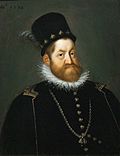
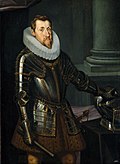
State · Europe

Kingdom of Bohemia

1198 – 1918 · 720 years

Came after Duchy of Bohemia · became Czechoslovakia and Austrian Empire

A Czech kingdom of the Holy Roman Empire whose kings chose emperors, cradle of the Hussites and later a Habsburg crown land.

Raised from the Duchy of Bohemia by the Přemyslid dynasty in 1198, the Kingdom of Bohemia ranked as an Imperial State of the Holy Roman Empire, its king a prince-elector and lord of Moravia, Silesia, Lusatia and other lands of the Bohemian Crown. Luxembourg, Jagiellonian and, from 1526, Habsburg kings followed, many also emperors, and Prague twice became the imperial seat. It survived as a crown land of the Austro-Hungarian Empire until 1918.

What the record holds

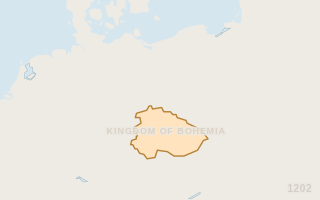
Its record opens in 1198, replacing the Duchy of Bohemia.↓ Its borders are first mapped in 1202, around 70,600 km².↓

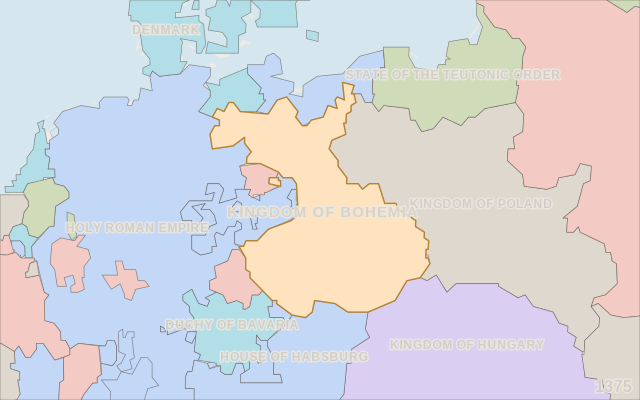
It reached its greatest extent in 1375: 170,000 km².↓ The record names 34 rulers in its line, covering 1198 – 1918, the median reign 18 years; 5 of 33 handovers were irregular.↓ The best known of them are Maria Theresa, Franz Joseph I and Francis II, Holy Roman Emperor.↓ Most of the 37 rows the atlas files under it are wars and battles.↓

Its own article says it was dissolved, in 1918.↓ Czechoslovakia, the First Czechoslovak Republic and the Austrian Empire replaced it in 1918, after 720 years.↓

From Wikipedia’s article, retold · CC BY-SA 4.0

720 years

Longer than the Ottoman Empire, shorter than the House of Habsburg

170,000 km²

At its height in 1375 · about the size of Uruguay

34 rulers

the King of Bohemia

19 wars and battles

More per century than 86% of states · 37 entries in all

Map: Kingdom of Bohemia in 1375, its borders in gold among its neighbours
Battle of Rozgony, 1312Battle of Vítkov Hill, 1420Battle of Lipany, 1434125013001350140014501500
Beside it on the map in 1375: Holy Roman Empire, Kingdom of Poland, Grand Duchy of Lithuania, Kingdom of Hungary, House of Habsburg and State of the Teutonic Order.How far it reached, year by year: its ground inside the borders Cliopatria draws (CC BY 4.0), measured on an equal-area grid; the map shows it at its largest, with the cities of the year.

The story

Five acts, 1198 – 1918

Kingdom of Bohemia in 1525, at the end of act III
III1419 – 1526129,000 → 128,000 km²

Hussites and absent kings

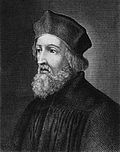
Hussite reformers defy papal authority and turn back four crusades launched from the Holy Roman Empire. After the Hussite king George of Poděbrady dies in 1471, the Diet elects the Jagiellonian Vladislaus, who cedes land to Hungary at Olomouc in 1479, takes Hungary's crown too in 1490 and rules from afar, leaving power to the nobility.

Watch this act on the live map, from 1419
V1740 – 1918

Silesia lost, a crown land

In 1740 the Prussian Army takes Bohemian Silesia, and in 1742 Maria Theresa cedes most of it. Prussia invades in 1757, wins at Prague and occupies it, but loses at Kolín. Just before the Holy Roman Empire ends in 1806, Bohemia joins the Austrian Empire, and from 1867 the Austro-Hungarian Empire, as a crown land that keeps its name.

Watch this act on the live map, from 1740
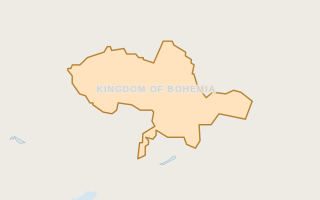
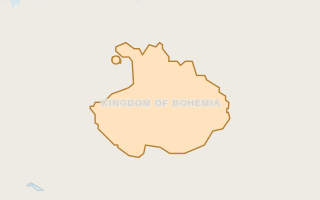
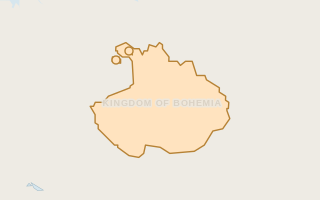
Kingdom of Bohemia in 1375, at its largestKingdom of Bohemia in 1202, first mapped
The rise and the fall in one frame: drag across it from 1202, first mapped at 70,600 km², to 1375, at its largest at 170,000 km². Open the live map in 1202 or 1375.

Before and after

Before it

After it

Where it sits in time

3000 BCE2000 BCE1000 BCE110002000Duchy of Bohemia: 870 – 1198Austrian Empire: 1804 – 1867First Czechoslovak Republic: 1918 – 1938Czechoslovakia: 1918 – 1992Kingdom of Bohemia: 1198 – 1918
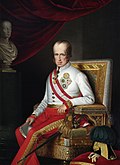
Five thousand years, 3000 BCE to 2026; the state in gold, what it replaced or followed and what replaced or followed it in grey.

Its people

Lives across the Kingdom of Bohemia

140016001800
Statesmen and generalsWriters, artists and thinkersScientists and explorersAll its people on the timeline →

How it was governed

34 kings

34 kings on record, 1198 to 1918; a reign lasted 18 years at the median. Each bar is a reign, as long as it lasted.

Ottokar I of Bohemia · 1198 – 1230 · died a natural deathWenceslaus I of Bohemia · 1230 – 1253 · died a natural deathOttokar II of Bohemia · 1253 – 1278 · ended otherwise, as coded — neither deposed nor a natural deathWenceslaus II of Bohemia · 1278 – 1305 · died a natural deathWenceslaus III of Bohemia · 1305 – 1306 · ended otherwise, as coded — neither deposed nor a natural deathHenry of Bohemia · 1306 – 1306 · deposed or killedRudolf I of Bohemia · 1306 – 1307 · deposed or killedJohn of Bohemia · 1310 – 1346 · ended otherwise, as coded — neither deposed nor a natural deathCharles IV · 1346 – 1378 · died a natural deathWenceslaus IV of Bohemia · 1378 – 1419 · died a natural deathSigismund · 1419 – 1437 · died a natural deathAlbert II of Germany · 1438 – 1439 · died a natural deathLadislaus the Posthumous · 1453 – 1457 · died a natural deathGeorge of Poděbrady · 1458 – 1471 · died a natural deathVladislaus II of Hungary · 1471 – 1516 · died a natural deathMatthias Corvinus · 1478 – 1490 · died in office of natural causesLouis II of Hungary · 1516 – 1526 · ended otherwise, as coded — neither deposed nor a natural deathFerdinand I, Holy Roman Emperor · 1526 – 1564 · died a natural deathMaximilian II, Holy Roman Emperor · 1564 – 1576 · died a natural deathRudolf II, Holy Roman Emperor · 1576 – 1611 · deposed or killedMatthias, Holy Roman Emperor · 1611 – 1619 · died a natural deathFrederick V of the Palatinate · 1619 – 1620 · deposed or killedFerdinand II, Holy Roman Emperor · 1619 – 1637 · died a natural deathFerdinand III, Holy Roman Emperor · 1637 – 1657 · died a natural deathLeopold I, Holy Roman Emperor · 1657 – 1705 · died a natural deathJoseph I, Holy Roman Emperor · 1705 – 1711 · died a natural deathCharles VI, Holy Roman Emperor · 1711 – 1740 · died a natural deathMaria Theresa · 1740 – 1780 · died in office of natural causesJoseph II, Holy Roman Emperor · 1780 – 1790 · died in office, manner not recordedLeopold II, Holy Roman Emperor · 1790 – 1792 · died in office of natural causesFrancis II, Holy Roman Emperor · 1792 – 1835 · died in office, manner not recordedFerdinand I of Austria · 1835 – 1848 · left office aliveFranz Joseph I · 1848 – 1916 · died in office of natural causesCharles I of Austria · 1916 – 1918 · left office alive1200140016001800
a second row: a reign that began before the last had ended — rival claimants, or a shared throne
How their terms ended, where it is known (34 of 34):Deposed or removed 4Died in office 24Left office alive 6
Every term, with how it ended and its source

Rulers

How 34 reigns ended - choose one to show only those

How they died, where the record says: died of natural causes 14 · died by accident 2 · died in battle 1.

RulerReignLengthHow it ended · sourceTo the ruler before
12th century · 1 reign
Ottokar I of Bohemia · aged 431198 – 123032 yearsnatural deathcoded by Kokkonen & Sundell
13th century · 3 reigns
Wenceslaus I of Bohemia · aged 251230 – 125323 yearsnatural deathcoded by Kokkonen & Sundellchild
Ottokar II of Bohemia · aged 201253 – 127825 yearsended otherwisecoded by Kokkonen & Sundellchild
Wenceslaus II of Bohemia · aged 71278 – 130527 yearsnatural deathcoded by Kokkonen & Sundelldied of natural causeschild
14th century · 6 reigns · 2 killed or removed
Wenceslaus III of Bohemia · aged 161305 – 13061 yearended otherwisecoded by Kokkonen & Sundellchild
Henry of Bohemia · aged 411306 – 1306under a yeardeposed or killedcoded by Kokkonen & Sundelldied of natural causes
Rudolf I of Bohemia · aged 251306 – 13071 yeardeposed or killedcoded by Kokkonen & Sundelldied of natural causesnephew or niece
John of Bohemia · aged 141310 – 134636 yearsended otherwisecoded by Kokkonen & Sundelldied in battle
Charles IV · aged 301346 – 137832 yearsnatural deathcoded by Kokkonen & Sundelldied of natural causeschild
Wenceslaus IV of Bohemia · aged 171378 – 141941 yearsnatural deathcoded by Kokkonen & Sundelldied of natural causeschild
15th century · 6 reigns
Sigismund · aged 511419 – 143718 yearsnatural deathcoded by Kokkonen & Sundellsibling
Albert II of Germany · aged 411438 – 14391 yearnatural deathcoded by Kokkonen & Sundelldied of natural causesin-law
Ladislaus the Posthumous · aged 131453 – 14574 yearsnatural deathcoded by Kokkonen & Sundelldied of natural causeschild
George of Poděbrady · aged 381458 – 147113 yearsnatural deathcoded by Kokkonen & Sundell
Vladislaus II of Hungary · aged 151471 – 151645 yearsnatural deathcoded by Kokkonen & Sundell
Matthias Corvinus · aged 351478 – 149012 yearsdied in officeWikidata's manner of deathdied of natural causes
16th century · 4 reigns · 1 killed or removed
Louis II of Hungary · aged 101516 – 152610 yearsended otherwisecoded by Kokkonen & Sundelldied by accident
Ferdinand I, Holy Roman Emperor · aged 231526 – 156438 yearsnatural deathcoded by Kokkonen & Sundellin-law
Maximilian II, Holy Roman Emperor · aged 371564 – 157612 yearsnatural deathcoded by Kokkonen & Sundellchild
Rudolf II, Holy Roman Emperor · aged 241576 – 161135 yearsdeposed or killedcoded by Kokkonen & Sundellchild
17th century · 5 reigns · 1 killed or removed
Matthias, Holy Roman Emperor · aged 541611 – 16198 yearsnatural deathcoded by Kokkonen & Sundellsibling
Frederick V of the Palatinate · aged 231619 – 16201 yeardeposed or killedcoded by Kokkonen & Sundelldied of natural causes
Ferdinand II, Holy Roman Emperor · aged 411619 – 163718 yearsnatural deathcoded by Kokkonen & Sundell
Ferdinand III, Holy Roman Emperor · aged 291637 – 165720 yearsnatural deathcoded by Kokkonen & Sundellchild
Leopold I, Holy Roman Emperor · aged 171657 – 170548 yearsnatural deathcoded by Kokkonen & Sundellchild
18th century · 6 reigns
Joseph I, Holy Roman Emperor · aged 271705 – 17116 yearsnatural deathcoded by Kokkonen & Sundelldied of natural causeschild
Charles VI, Holy Roman Emperor · aged 261711 – 174029 yearsnatural deathcoded by Kokkonen & Sundelldied by accidentsibling
Maria Theresa · aged 231740 – 178040 yearsdied in officeWikidata's manner of deathdied of natural causeschild
Joseph II, Holy Roman Emperor · aged 391780 – 179010 yearsdied in officeread off the dates alonechild
Leopold II, Holy Roman Emperor · aged 431790 – 17922 yearsdied in officeWikidata's manner of deathdied of natural causessibling
Francis II, Holy Roman Emperor · aged 241792 – 183543 yearsdied in officeread off the dates alonechild
19th century · 2 reigns
Ferdinand I of Austria · aged 421835 – 184813 yearsleft office aliveread off the dates alonechild
Franz Joseph I · aged 181848 – 191668 yearsdied in officeWikidata's manner of deathdied of natural causesnephew or niece
20th century · 1 reign
Charles I of Austria · aged 291916 – 19182 yearsleft office aliveread off the dates alonedied of natural causes

34 rulers, 34 with terms dated as terms, covering 1198 – 1918. Median reign 18 years. 5 of 33 handovers irregular - a killing, a deposition, a rival claimant, a rising or a coup beside it. A blank in the last column means no kin on record, which is coverage, never “unrelated”.

Flags and arms, in order

  • Coat of arms of the Kingdom of Bohemia
    coat of arms, undatedCoat of arms of the Kingdom of Bohemia · CC BY-SA 3.0 · Redraw: Samhanin Historical original works: Hugo Gerhard Ströhl
  • Flag of Bohemia
    flag, undatedFlag of Bohemia · Public domain
  • Royal banner of the Kingdom of Bohemia (colorful)
    flag, undatedRoyal banner of the Kingdom of Bohemia (colorful) · CC BY-SA 4.0 · Samhanin & Havsjö (change the color of the 'Royal banner of the Kingdom of Bohemia.svg')
  • Znak českého království
    coat of arms, undatedZnak českého království · Public domain
  • Royal banner of the Kingdom of Bohemia
    flag, undatedRoyal banner of the Kingdom of Bohemia · CC BY-SA 3.0 · Samhanin
  • Coat of arms of the House of Luxembourg-Bohemia
    coat of arms, undatedCoat of arms of the House of Luxembourg-Bohemia · CC BY-SA 4.0 · FDRMRZUSA

Its world

Rivals, and who else stood

Who it fought most

Wars and battles both took part in, on whichever side: the record names who took part, not who fought whom.

Meanwhile, elsewhere

The best-known states of other regions that stood while it did; the band is the Kingdom of Bohemia’s own years.

12001400160018002000

How it compares

Among 3,073 states

Stood longer than 93% of 3,073 states
Kingdom of Bohemia · 720 yearsOttoman EmpireHouse of HabsburgHow long it stood, among the states with a recorded end or still standing.
Held more ground at its peak than 55% of 1,464 states
Kingdom of Bohemia · 170,000 km²TunisiaUruguayThe most ground it held, among the states with a border in Cliopatria.
Had more wars on record per century than 86% of 3,073 states
Kingdom of Bohemia · 0.1Wars recorded per century, among the states, counting the wars the atlas hosts under each.

Why it fell

Why did the Kingdom of Bohemia fall?

Historians still argue. Here is what the atlas records about its last century:

How it ended, as its article says

Dissolved. Read from the article's section “lead” by its grammar; the claim is only that the article says so.

Following the defeat of the Central Powers in World War I, both the Kingdom and Empire were dissolved.

One sentence of the English Wikipedia article, CC BY-SA 4.0.

What led to it, and what came of it

Duchy of Bohemia · Linked · 870 – 1198Duchy of BohemiaHoly Roman Empire · Linked · 962 – 1806Holy Roman EmpirePřemyslid dynasty · Coincidence · 872 – 1521Přemyslid dynastyKingdom of Bohemia · 1198 – 1918Kingdom of BohemiaCzechoslovakia · Linked · 1918 – 1992CzechoslovakiaFirst Czechoslovak Republic · Linked · 1918 – 1938First Czechoslovak Republic100015002000
linkedcoincidence

Open the investigation: every row with its evidence, the conditions at the time, the theories condition by condition, and the succession analysed.

Its centuries in the record

1100 – 1199: 0 recorded — 0 wars and battles, 0 risings, regime changes and massacres, 0 other11001200 – 1299: 7 recorded — 0 wars and battles, 0 risings, regime changes and massacres, 7 other12001300 – 1399: 6 recorded — 1 wars and battles, 0 risings, regime changes and massacres, 5 other13001400 – 1499: 13 recorded — 11 wars and battles, 0 risings, regime changes and massacres, 2 other14001500 – 1599: 1 recorded — 0 wars and battles, 0 risings, regime changes and massacres, 1 other15001600 – 1699: 1 recorded — 1 wars and battles, 0 risings, regime changes and massacres, 0 other16001700 – 1799: 3 recorded — 2 wars and battles, 0 risings, regime changes and massacres, 1 other17001800 – 1899: 6 recorded — 4 wars and battles, 0 risings, regime changes and massacres, 2 other18001900 – 1999: 0 recorded — 0 wars and battles, 0 risings, regime changes and massacres, 0 other1900

Wars and battles in red, risings, coups and massacres beside them, everything else in grey, by the century each began in. A tall bar is partly a fact about Wikipedia: better-documented centuries hold more.

Each century’s own page:1100 – 11991200 – 12991300 – 13991400 – 14991500 – 15991600 – 16991700 – 17991800 – 18991900 – 1999

Keep exploring

Share this page
Copy link
Embed the map
Cite this page

How this page is made

Drawn from Wikidata (Q42585, CC0), the opening and history of its English Wikipedia article retold by the atlas (CC BY-SA 4.0), borders from Cliopatria (CC BY 4.0), coast and rivers from Natural Earth, cities from Reba, Reitsma & Seto 2016 (CC BY 4.0), symbols from Wikimedia Commons, each under its own licence, and one sentence of the article, quoted. Data built 2026-11-26 · Pastlas v2.47.1, by Oleh Voronko; the published atlas and its data are for non-commercial use.

How to read it

Areas are measured on an equal-area grid from borders simplified to about five kilometres. “c.” marks an approximate date, and a date known to the century is never printed to the year. Counts are what the atlas holds, and they follow Wikipedia’s coverage: a busy century is partly a fact about the record.

Something wrong?

Tell us and name the entry. We fix the data, not just this page.

Report a problem