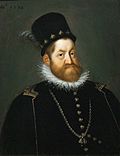
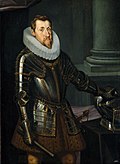
Dynasty · Europe

House of Habsburg

1001 – 1780 · 779 years

Swabian counts who came to wear the imperial crown for three centuries and rule realms across Europe and the Americas.

The House of Habsburg, also called the House of Austria, took its name from Habsburg Castle, built in Swabia in the 1020s by Radbot of Klettgau. In 1273 Rudolph, a later count, became King of the Romans and shifted the family's base to Vienna. From 1440 the Habsburgs held the throne of the Holy Roman Empire without a break until their male line died out in 1740, and they ruled Spain, Bohemia, Hungary and colonies overseas.

What the record holds

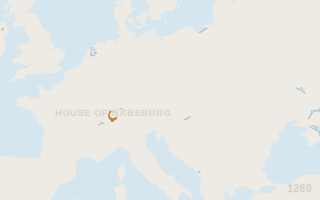
Its record opens in the 11th century.↑ Its borders are first mapped in 1260, around 2,700 km².↓

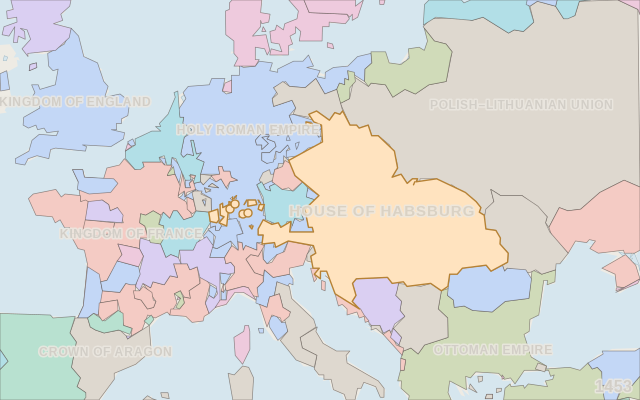
Its ground peaked in 1453 at 559,900 km².↓ Its line counts 14 rulers, covering 1437 – 1780, the median reign 17.5 years; 1 of 13 handovers was irregular.↓ The best known of them are Maria Theresa, Charles VI, Holy Roman Emperor and Ferdinand I, Holy Roman Emperor.↓ Most of the 12 rows the atlas files under it are people.↓ Its record closes in 1780, after 779 years.↑

From Wikipedia’s article, retold · CC BY-SA 4.0

779 years

Longer than the Ottoman Empire, shorter than the Holy Roman Empire

560,000 km²

At its height in 1453 · about the size of Botswana

14 rulers

the Apostolic King of Hungary

3 wars and battles

12 entries in all

Map: House of Habsburg in 1453, its borders in gold among its neighbours
Vienna Gesera, 1420Battle of Dornach, 1499Battle of Bruderholz, 1499Battle of Calven, 149913001350140014501500
Beside it on the map in 1453: Polish–Lithuanian union, Holy Roman Empire, Ottoman Empire, Kingdom of France, Kingdom of England and Crown of Aragon.How far it reached, year by year: its ground inside the borders Cliopatria draws (CC BY 4.0), measured on an equal-area grid; the map shows it at its largest, with the cities of the year.

The story

Four acts, 1001 – 1780

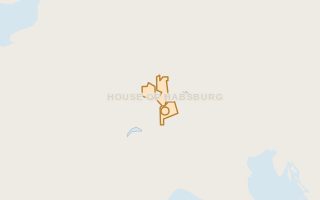
House of Habsburg in 1272, at the end of act I
I1001 – 1273

Counts of a Swabian castle

Radbot of Klettgau builds Habsburg Castle, and his grandson Otto II is the first to call himself Count of Habsburg. The castle stays the family seat through the 11th, 12th and 13th centuries, and by the later 13th century Count Rudolph is a powerful lord between the Vosges and Lake Constance.

Watch this act on the live map, from 1001
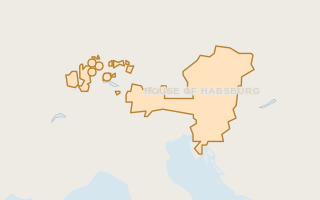
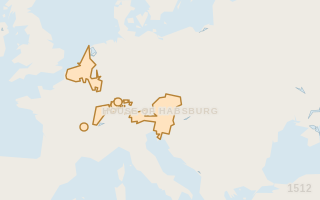
House of Habsburg in 1512, last mappedHouse of Habsburg in 1260, first mapped
The rise and the fall in one frame: drag across it from 1260, first mapped at 2,700 km², to 1512, last mapped at 174,200 km². Open the live map in 1260 or 1512.

Where it sits in time

3000 BCE2000 BCE1000 BCE110002000House of Habsburg: 1001 – 1780

Five thousand years, 3000 BCE to 2026; the state in gold.

Its people

Lives across the House of Habsburg

140015001600
Statesmen and generalsScientists and explorersAll its people on the timeline →

How it was governed

14 kings

14 kings on record, 1437 to 1780; a reign lasted 17.5 years at the median. Each bar is a reign, as long as it lasted.

Albert II of Germany · 1437 – 1439 · died in office of natural causesLadislaus the Posthumous · 1440 – 1457 · died in office of natural causesFrederick III, Holy Roman Emperor · 1458 – 1463 · left office aliveFerdinand I, Holy Roman Emperor · 1526 – 1564 · died in office, manner not recordedMaximilian II, Holy Roman Emperor · 1564 – 1576 · died in office, manner not recordedRudolf II, Holy Roman Emperor · 1576 – 1608 · resignedMatthias, Holy Roman Emperor · 1608 – 1619 · died in office, manner not recordedFerdinand II, Holy Roman Emperor · 1619 – 1637 · died in office, manner not recordedFerdinand III, Holy Roman Emperor · 1637 – 1657 · died in office, manner not recordedFerdinand IV, King of the Romans · 1647 – 1654 · died in office of natural causesLeopold I, Holy Roman Emperor · 1657 – 1705 · died in office, manner not recordedJoseph I, Holy Roman Emperor · 1705 – 1711 · died in office of natural causesCharles VI, Holy Roman Emperor · 1711 – 1740 · died by accidentMaria Theresa · 1740 – 1780 · died in office of natural causes120014001600
a second row: a reign that began before the last had ended — rival claimants, or a shared throne
How their terms ended, where it is known (14 of 14):Died in office 12Left office alive 2
Every term, with how it ended and its source

Rulers

How 14 reigns ended - choose one to show only those

How they died, where the record says: died of natural causes 5 · died by accident 1.

RulerReignLengthHow it ended · sourceTo the ruler before
15th century · 3 reigns
Albert II of Germany · aged 401437 – 14392 yearsdied in officeWikidata's manner of deathdied of natural causes
Ladislaus the Posthumous1440 – 145717 yearsdied in officeWikidata's manner of deathdied of natural causeschild
Frederick III, Holy Roman Emperor · aged 431458 – 14635 yearsleft office aliveread off the dates alone
16th century · 3 reigns
Ferdinand I, Holy Roman Emperor · aged 231526 – 156438 yearsdied in officeWikidata's end cause on the term
Maximilian II, Holy Roman Emperor · aged 371564 – 157612 yearsdied in officeWikidata's end cause on the termchild
Rudolf II, Holy Roman Emperor · aged 241576 – 160832 yearsresignedWikidata's end cause on the termchild
17th century · 5 reigns
Matthias, Holy Roman Emperor · aged 511608 – 161911 yearsdied in officeWikidata's end cause on the termsibling
Ferdinand II, Holy Roman Emperor · aged 411619 – 163718 yearsdied in officeWikidata's end cause on the term
Ferdinand III, Holy Roman Emperor · aged 291637 – 165720 yearsdied in officeWikidata's end cause on the termchild
Ferdinand IV, King of the Romans · aged 141647 – 16547 yearsdied in officeWikidata's manner of deathdied of natural causeschild
Leopold I, Holy Roman Emperor · aged 171657 – 170548 yearsdied in officeWikidata's end cause on the termsibling
18th century · 3 reigns
Joseph I, Holy Roman Emperor · aged 271705 – 17116 yearsdied in officeWikidata's manner of deathdied of natural causeschild
Charles VI, Holy Roman Emperor · aged 261711 – 174029 yearsdied by accidentWikidata's manner of deathdied by accidentsibling
Maria Theresa · aged 231740 – 178040 yearsdied in officeWikidata's manner of deathdied of natural causeschild

14 rulers, 14 with terms dated as terms, covering 1437 – 1780. Median reign 17.5 years. 1 of 13 handovers irregular - a killing, a deposition, a rival claimant, a rising or a coup beside it. A blank in the last column means no kin on record, which is coverage, never “unrelated”.

Flags and arms, in order

  • Habspurg-Wappen ZWB
    coat of arms, undatedHabspurg-Wappen ZWB · Public domain
  • COA Habsburg early crest
    coat of arms, undatedCOA Habsburg early crest · CC BY-SA 4.0 · Wereszczyński

Its world

Rivals, and who else stood

Who it fought most

Wars and battles both took part in, on whichever side: the record names who took part, not who fought whom.

Meanwhile, elsewhere

The best-known states of other regions that stood while it did; the band is the House of Habsburg’s own years.

10001200140016001800

How it compares

Among 3,073 states

Stood longer than 94% of 3,073 states
House of Habsburg · 779 yearsOttoman EmpireHoly Roman EmpireHow long it stood, among the states with a recorded end or still standing.
Held more ground at its peak than 76% of 1,464 states
House of Habsburg · 559,900 km²ThailandBotswanaThe most ground it held, among the states with a border in Cliopatria.

Why it fell

Why did the House of Habsburg fall?

Historians still argue. Here is what the atlas records about its last century:

Its centuries in the record

1000 – 1099: 0 recorded — 0 wars and battles, 0 risings, regime changes and massacres, 0 other10001100 – 1199: 0 recorded — 0 wars and battles, 0 risings, regime changes and massacres, 0 other11001200 – 1299: 0 recorded — 0 wars and battles, 0 risings, regime changes and massacres, 0 other12001300 – 1399: 1 recorded — 0 wars and battles, 0 risings, regime changes and massacres, 1 other13001400 – 1499: 7 recorded — 3 wars and battles, 1 risings, regime changes and massacres, 3 other14001500 – 1599: 3 recorded — 0 wars and battles, 0 risings, regime changes and massacres, 3 other15001600 – 1699: 1 recorded — 0 wars and battles, 0 risings, regime changes and massacres, 1 other16001700 – 1799: 0 recorded — 0 wars and battles, 0 risings, regime changes and massacres, 0 other1700

Wars and battles in red, risings, coups and massacres beside them, everything else in grey, by the century each began in. A tall bar is partly a fact about Wikipedia: better-documented centuries hold more.

Each century’s own page:1000 – 10991100 – 11991200 – 12991300 – 13991400 – 14991500 – 15991600 – 16991700 – 1799

Keep exploring

Share this page
Copy link
Embed the map
Cite this page

How this page is made

Drawn from Wikidata (Q65968, CC0), the opening and history of its English Wikipedia article retold by the atlas (CC BY-SA 4.0), borders from Cliopatria (CC BY 4.0), coast and rivers from Natural Earth, cities from Reba, Reitsma & Seto 2016 (CC BY 4.0), symbols from Wikimedia Commons, each under its own licence. Data built 2026-11-26 · Pastlas v2.47.1, by Oleh Voronko; the published atlas and its data are for non-commercial use.

How to read it

Areas are measured on an equal-area grid from borders simplified to about five kilometres. “c.” marks an approximate date, and a date known to the century is never printed to the year. Counts are what the atlas holds, and they follow Wikipedia’s coverage: a busy century is partly a fact about the record.

Something wrong?

Tell us and name the entry. We fix the data, not just this page.

Report a problem