Civilisation · Europe

Ancient Greece

1201 BCE – 600 CE · 1,801 years

A world of rival city-states around the Aegean whose philosophy, politics and art Rome carried across Europe.

Ancient Greece was a loose world of related city-states and regions around the northeastern Mediterranean, lasting from the Dark Ages after Mycenaean Greece until classical antiquity closed c. 600 CE. City-states arose from the 8th century BCE and sent colonies across the sea. After the Greco-Persian Wars came Athens' golden age and its war with Sparta, and Alexander the Great carried Greek culture into Africa and Asia. Rome, steeped in its philosophy, ruled it from 146 BCE.

What the record holds

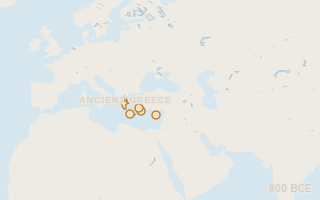
Ancient Greece began in the 13th century BCE.↑ In 800 BCE, the first year its borders are mapped, it covered 58,500 km².↓ Between the start and the end of the Peloponnesian War, 431 – 404 BCE, it went from 144,800 km² to 195,400 km².↓

It reached its greatest extent in 164 BCE: 206,300 km².↓ The record names 4 rulers in its line, covering 336 BCE – 304 BCE; its one handover was regular.↓ The best known of them are Alexander the Great and Demetrius I Poliorcetes.↓ Of the 129 rows the atlas files under it, people are the largest group.↓ Its record closes in 600, after 1,801 years.↑

From Wikipedia’s article, retold · CC BY-SA 4.0

1,801 years

Longer than Rhodes, shorter than Babylon

206,000 km²

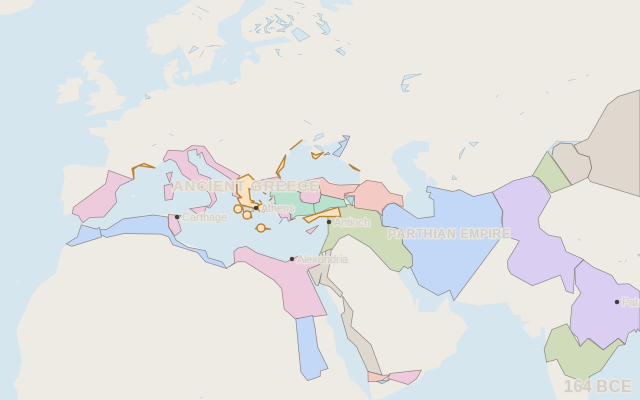
At its height in 164 BCE · about the size of Belarus

4 rulers

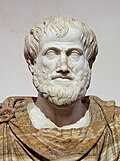
the tyrant

62 wars and battles

More per century than 94% of states · 129 entries in all

Map: Ancient Greece in 164 BCE, its borders in gold among its neighbours
Greco-Persian Wars, 499 – 449 BCE: 161,500 km² → 144,800 km²Battle of Marathon, 490 BCEBattle of Thermopylae, 480 BCEPeloponnesian War, 431 – 404 BCE: 144,800 km² → 195,400 km²Battle of Actium, 31 BCE600 BCE400 BCE200 BCE1
Beside it on the map in 164 BCE: Parthian Empire, Greco-Bactrian Kingdom, Xiongnu, Shunga Empire, Roman Republic and Seleucid Empire.How far it reached, year by year: its ground inside the borders Cliopatria draws (CC BY 4.0), measured on an equal-area grid; the map shows it at its largest, with the cities of the year.

The story

Five acts, 1201 BCE – 600 CE

I1201 – 800 BCE

After the Mycenaean collapse

Mycenaean Greece declines in the Bronze Age collapse of c. 1100 BCE. In the Greek Dark Ages that follow, from the 12th to the 9th centuries BCE, no powerful state rises, and mountains keep settlements apart from their neighbours, laying the ground for small, independent communities.

Watch this act on the live map, from 1201 BCE
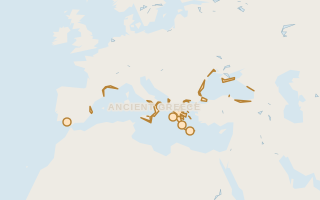
Ancient Greece in 500 BCE, at the end of act II
II800 – 499 BCE58,500 → 162,000 km²

Poleis, tyrants and colonies

The polis becomes the chief unit of political life. Tyrants seize power in several cities, most famously at Corinth from 657 BCE, and Greeks found colonies around the Mediterranean. The First Messenian War and the Lelantine War are fought, and poets and thinkers such as Hesiod, Sappho, Solon and Thales of Miletus emerge.

Watch this act on the live map, from 800 BCE
Ancient Greece in 324 BCE, at the end of act III
III499 – 323 BCE162,000 → 97,400 km²

Persian Wars to Alexander

The Ionian cities rise against Persia in 499 BCE; Athens and its Plataean allies win at Marathon, and Xerxes' second invasion meets the Greeks at Thermopylae, Artemisium and Plataea. Athens' golden age gives way to the Peloponnesian War with Sparta and to Spartan and Theban hegemonies, until Philip II of Macedon leads a Hellenic league and Alexander conquers Persia.

Watch this act on the live map, from 499 BCE
Ancient Greece in 147 BCE, at the end of act IV
IV323 – 146 BCE134,000 → 206,000 km²

Hellenistic kings

After Alexander's death his generals make themselves kings: Antigonus I and Demetrius hold Macedonia and Greece, Ptolemy holds Egypt and Seleucus I holds Syria. Greek states keep fighting, at Sellasia and elsewhere, while Rome's wars with Macedon and the Seleucids bring battle to Cynoscephalae in 197 BCE.

Watch this act on the live map, from 323 BCE
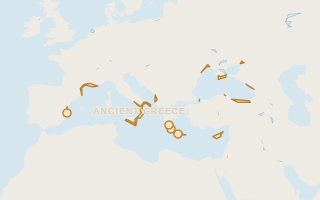
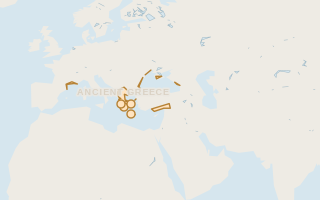
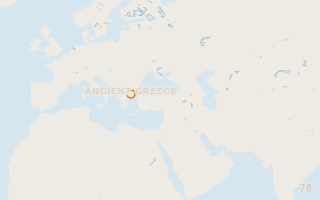
Ancient Greece in 78, last mappedAncient Greece in 800 BCE, first mapped
The rise and the fall in one frame: drag across it from 800 BCE, first mapped at 58,500 km², to 78, last mapped at 600 km². Open the live map in 800 BCE or 78.

Where it sits in time

3000 BCE2000 BCE1000 BCE110002000Ancient Greece: 1201 BCE – 600

Five thousand years, 3000 BCE to 2026; the state in gold.

Its people

Lives across Ancient Greece

700 BCE600 BCE500 BCE400 BCE300 BCE
Writers, artists and thinkersScientists and explorersAll its people on the timeline →

How it was governed

4 tyrants

4 tyrants on record, 336 BCE to 304 BCE. Each bar is a reign, as long as it lasted.

Alexander the Great · 336 BCE – 323 BCE · no death date to read the end againstDemetrius I Poliorcetes · 304 BCE – 304 BCE · no death date to read the end against1000 BCE500 BCE1500
How their terms ended, where it is known (0 of 2):Not on record 2
Every term, with how it ended and its source

Rulers

RulerReignLengthHow it ended · sourceTo the ruler before
4th century BCE · 2 reigns
Alexander the Great336 BCE – 323 BCE13 yearsending not on recorddied of natural causes
Demetrius I Poliorcetes304 BCE – 304 BCEunder a yearending not on record

4 rulers, 2 with terms dated as terms, covering 336 BCE – 304 BCE. Only 32 years of the line are dated - too short for a median. 0 of 1 handovers irregular - a killing, a deposition, a rival claimant, a rising or a coup beside it. A blank in the last column means no kin on record, which is coverage, never “unrelated”.

Its world

Rivals, and who else stood

Who it fought most

Wars and battles both took part in, on whichever side: the record names who took part, not who fought whom.

Meanwhile, elsewhere

The best-known states of other regions that stood while it did; the band is Ancient Greece’s own years.

1000 BCE500 BCE1500

How it compares

Among 3,073 states

Stood longer than 99% of 3,073 states
Ancient Greece · 1,801 yearsRhodesBabylonHow long it stood, among the states with a recorded end or still standing.
Held more ground at its peak than 58% of 1,464 states
Ancient Greece · 206,300 km²SenegalBelarusThe most ground it held, among the states with a border in Cliopatria.
Had more wars on record per century than 94% of 3,073 states
Ancient Greece · 1.1Wars recorded per century, among the states, counting the wars the atlas hosts under each.

Why it fell

Why did Ancient Greece fall?

Historians still argue. Here is what the atlas records about its last century:

Its centuries in the record

1300 BCE – 1201 BCE: 0 recorded — 0 wars and battles, 0 risings, regime changes and massacres, 0 other1300 BCE1200 BCE – 1101 BCE: 0 recorded — 0 wars and battles, 0 risings, regime changes and massacres, 0 other1100 BCE – 1001 BCE: 0 recorded — 0 wars and battles, 0 risings, regime changes and massacres, 0 other1100 BCE1000 BCE – 901 BCE: 0 recorded — 0 wars and battles, 0 risings, regime changes and massacres, 0 other900 BCE – 801 BCE: 0 recorded — 0 wars and battles, 0 risings, regime changes and massacres, 0 other900 BCE800 BCE – 701 BCE: 4 recorded — 2 wars and battles, 0 risings, regime changes and massacres, 2 other700 BCE – 601 BCE: 16 recorded — 2 wars and battles, 0 risings, regime changes and massacres, 14 other700 BCE600 BCE – 501 BCE: 22 recorded — 3 wars and battles, 0 risings, regime changes and massacres, 19 other500 BCE – 401 BCE: 40 recorded — 22 wars and battles, 0 risings, regime changes and massacres, 18 other500 BCE400 BCE – 301 BCE: 28 recorded — 17 wars and battles, 0 risings, regime changes and massacres, 11 other300 BCE – 201 BCE: 7 recorded — 6 wars and battles, 0 risings, regime changes and massacres, 1 other300 BCE200 BCE – 101 BCE: 9 recorded — 8 wars and battles, 0 risings, regime changes and massacres, 1 other100 BCE – 1 BCE: 2 recorded — 2 wars and battles, 0 risings, regime changes and massacres, 0 other100 BCE0 – 99: 0 recorded — 0 wars and battles, 0 risings, regime changes and massacres, 0 other100 – 199: 0 recorded — 0 wars and battles, 0 risings, regime changes and massacres, 0 other100200 – 299: 0 recorded — 0 wars and battles, 0 risings, regime changes and massacres, 0 other300 – 399: 1 recorded — 0 wars and battles, 0 risings, regime changes and massacres, 1 other300400 – 499: 0 recorded — 0 wars and battles, 0 risings, regime changes and massacres, 0 other500 – 599: 0 recorded — 0 wars and battles, 0 risings, regime changes and massacres, 0 other500600 – 699: 0 recorded — 0 wars and battles, 0 risings, regime changes and massacres, 0 other

Wars and battles in red, risings, coups and massacres beside them, everything else in grey, by the century each began in. A tall bar is partly a fact about Wikipedia: better-documented centuries hold more.

Each century’s own page:1300 BCE – 1201 BCE1200 BCE – 1101 BCE1100 BCE – 1001 BCE1000 BCE – 901 BCE900 BCE – 801 BCE800 BCE – 701 BCE700 BCE – 601 BCE600 BCE – 501 BCE500 BCE – 401 BCE400 BCE – 301 BCE300 BCE – 201 BCE200 BCE – 101 BCE100 BCE – 1 BCE0 – 99100 – 199200 – 299300 – 399400 – 499500 – 599600 – 699

Keep exploring

Share this page
Copy link
Embed the map
Cite this page

How this page is made

Drawn from Wikidata (Q11772, CC0), the opening and history of its English Wikipedia article retold by the atlas (CC BY-SA 4.0), borders from Cliopatria (CC BY 4.0), coast and rivers from Natural Earth, cities from Reba, Reitsma & Seto 2016 (CC BY 4.0). Data built 2026-11-26 · Pastlas v2.47.1, by Oleh Voronko; the published atlas and its data are for non-commercial use.

How to read it

Areas are measured on an equal-area grid from borders simplified to about five kilometres. “c.” marks an approximate date, and a date known to the century is never printed to the year. Counts are what the atlas holds, and they follow Wikipedia’s coverage: a busy century is partly a fact about the record.

Something wrong?

Tell us and name the entry. We fix the data, not just this page.

Report a problem