State · Europe

Macedonia

701 – 167 BCE · 534 years

Came after Achaemenid Empire and Thirty-first Dynasty of Egypt

Philip II's and Alexander's kingdom: a small realm on Greece's edge that overthrew the Achaemenid Empire, then declined as Rome rose.

Macedonia, or Macedon, was the kingdom of the ancient Macedonians on the edge of Classical Greece, ruled in turn by the Argead, Antipatrid and Antigonid dynasties. Small and for a time subject to the Achaemenid Empire, it was made master of mainland Greece by Philip II, whose son Alexander the Great overthrew the Achaemenid Empire and reached the Indus River. After the wars of the Diadochi it remained a centre of Greek politics and culture until Rome rose.

What the record holds

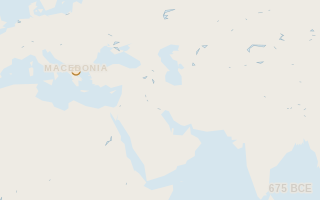
Its record opens in the 8th century BCE, replacing the Thirty-first Dynasty of Egypt.↓ In 675 BCE, the first year its borders are mapped, it covered 2,700 km².↓

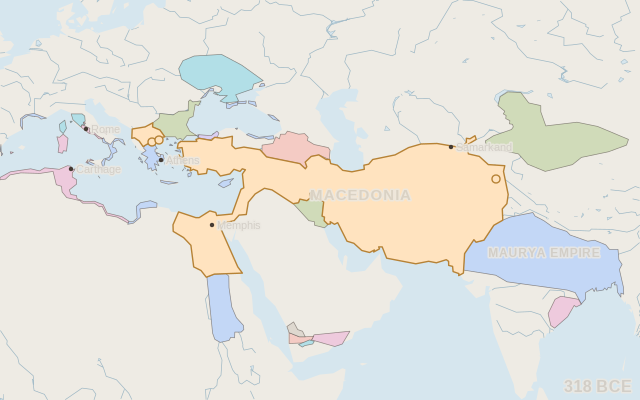
At its largest, in 318 BCE, it held 4.87 million km².↓ The record names 37 rulers in its line, covering 512 BCE – 168 BCE, the median reign 6 years; 14 of 30 handovers were irregular.↓ Among them, Alexander the Great, Philip II of Macedon and Pyrrhus of Epirus are the best known.↓ The atlas files 80 rows under it, most of them people.↓ It ended in 167 BCE, 534 years after it began.↑

From Wikipedia’s article, retold · CC BY-SA 4.0

534 years

Longer than the Abbasid Caliphate, shorter than Vikings

4.87 million km²

At its height in 318 BCE

37 rulers

the king of Macedonia

15 wars and battles

More per century than 95% of states · 80 entries in all

Map: Macedonia in 318 BCE, its borders in gold among its neighbours
Partition of Babylon, 323 BCEWars of the Diadochi, 322 – 275 BCEBattle of Gabiene, 316 BCE600 BCE500 BCE400 BCE
Beside it on the map in 318 BCE: Maurya Empire, Yuezhi, Scythians, Kingdom of Kush, Kingdom of Armenia and Ancient Carthage.How far it reached, year by year: its ground inside the borders Cliopatria draws (CC BY 4.0), measured on an equal-area grid; the map shows it at its largest, with the cities of the year.

The story

Four acts, 701 – 167 BCE

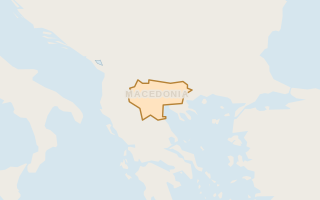
Macedonia in 360 BCE, at the end of act I
I701 – 359 BCE

Argead kings at Aegae

Herodotus and Thucydides tell how the Argead kings claimed descent from Temenus of Argos, and so from Heracles. Alexander I, at first a Persian vassal, befriends the Greek city-states; his successor Perdiccas II fights Athens in four wars, while Athens founds Amphipolis on the Strymon River nearby.

Watch this act on the live map, from 701 BCE
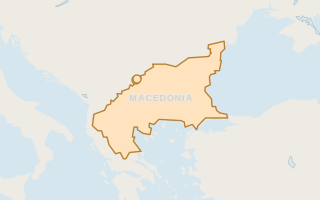
Macedonia in 324 BCE, at the end of act II
II359 – 323 BCE28,400 → 218,000 km²

Philip II and Alexander

Philip II, king from 359 BCE, bribes and bargains his way past rival pretenders and rebuilds the army around the sarissa phalanx; at Chaeronea in 338 BCE he defeats Athens and Thebes. His son Alexander the Great, hailed king by the army in 336 BCE, destroys rebel Thebes, overthrows the Achaemenid Empire and dies at Babylon in 323 BCE.

Watch this act on the live map, from 359 BCE
III323 – 272 BCE

The successors' wars

With no heir, the army splits between Alexander's half-brother Philip III Arrhidaeus and his infant son Alexander IV, and most Greeks rise against Antipater in the Lamian War. In the Wars of the Diadochi, Antipater's son Cassander contends with Antigonus I and Demetrius I; Pyrrhus of Epirus twice takes the throne and is killed at Argos in 272 BCE.

Watch this act on the live map, from 323 BCE
IV272 – 167 BCE

Antigonid kings and Rome

Antigonus II wins back Macedonia and the rest of Greece, restores the Argead tombs at Aigai and annexes Paeonia, though the Achaean League, formed in 251 BCE, drives his forces from much of the Peloponnese. In 215 BCE Rome intercepts a treaty of alliance between Hannibal and Philip V, and the Macedonian Wars begin. Perseus reigns until 168 BCE.

Watch this act on the live map, from 272 BCE
Macedonia in 318 BCE, at its largestMacedonia in 675 BCE, first mapped
The rise and the fall in one frame: drag across it from 675 BCE, first mapped at 2,700 km², to 318 BCE, at its largest at 4.87 million km². Open the live map in 675 BCE or 318 BCE.

Before and after

Before it

Where it sits in time

3000 BCE2000 BCE1000 BCE110002000Achaemenid Empire: 550 BCE – 330 BCEThirty-first Dynasty of Egypt: 343 BCE – 332 BCEMacedonia: 701 BCE – 167 BCE

Five thousand years, 3000 BCE to 2026; the state in gold, what it replaced or followed and what replaced or followed it in grey.

Its people

Lives across Macedonia

400 BCE300 BCE200 BCE
Statesmen and generalsScientists and explorersLived on after it endedAll its people on the timeline →

How it was governed

37 kings

37 kings on record, 512 BCE to 168 BCE; a reign lasted 6 years at the median. Each bar is a reign, as long as it lasted.

Amyntas I of Macedon · 512 BCE – 497 BCE · the term ends after the recorded deathAlexander I of Macedon · 498 BCE – 454 BCE · died in office, manner not recordedPerdiccas II of Macedon · 454 BCE – 413 BCE · died in office, manner not recordedArchelaus of Macedon · 413 BCE – 399 BCE · died in office, manner not recordedOrestes of Macedon · 400 BCE – 397 BCE · killedArgaeus II of Macedon · 393 BCE – 392 BCE · no death date to read the end againstAmyntas III of Macedon · 393 BCE – 370 BCE · died in office, manner not recordedAlexandros II of Macedon · 370 BCE – 368 BCE · died in office, manner not recordedPerdiccas III of Macedon · 365 BCE – 360 BCE · left office aliveAmyntas IV · 359 BCE – 359 BCE · left office alivePhilip II of Macedon · 359 BCE – 336 BCE · killedAlexander the Great · 336 BCE – 323 BCE · died in office of natural causesPhilip III of Macedon · 323 BCE – 317 BCE · killedAlexander IV of Macedon · 322 BCE – 309 BCE · killedCassander · 305 BCE – 297 BCE · left office alivePhilip IV of Macedon · 297 BCE – 297 BCE · left office aliveAlexander V of Macedon · 297 BCE – 294 BCE · killedAntipater I of Macedon · 297 BCE – 294 BCE · killed, the article saysDemetrius I Poliorcetes · 294 BCE – 288 BCE · left office alivePyrrhus of Epirus · 288 BCE – 285 BCE · deposed, the article saysLysimachus · 288 BCE – 281 BCE · died in battlePtolemy Ceraunus · 281 BCE – 279 BCE · executedMeleager (king) · 279 BCE – 279 BCE · no death date to read the end againstAntipater Etesias · 279 BCE – 279 BCE · died in office, manner not recordedSosthenes of Macedon · 279 BCE – 277 BCE · died in office, manner not recordedAntigonus II Gonatas · 277 BCE – 239 BCE · the term ends after the recorded deathPyrrhus of Epirus · 274 BCE – 272 BCE · died in battleDemetrius II Aetolicus · 239 BCE – 229 BCE · died in office, manner not recordedAntigonus III Doson · 229 BCE – 221 BCE · died in office of natural causesPhilip V of Macedon · 221 BCE – 179 BCE · died in office, manner not recordedPerseus of Macedon · 179 BCE – 168 BCE · left office alive700 BCE600 BCE500 BCE400 BCE300 BCE200 BCE
a second row: a reign that began before the last had ended — rival claimants, or a shared throne
How their terms ended, where it is known (27 of 31):Killed 9Deposed or removed 1Died in office 11Left office alive 6Not on record 4
Every term, with how it ended and its source

Rulers

How 31 reigns ended - choose one to show only those

How they died, where the record says: killed 5 · died of natural causes 5 · died in battle 3 · executed 2.

RulerReignLengthHow it ended · sourceTo the ruler before
6th century BCE · 1 reign
Amyntas I of Macedon · aged 28512 BCE – 497 BCE15 yearsdates disagreeread off the dates alone
5th century BCE · 3 reigns
Alexander I of Macedon498 BCE – 454 BCE44 yearsdied in officeread off the dates alone
Perdiccas II of Macedon · aged 47454 BCE – 413 BCE41 yearsdied in officeread off the dates alone
Archelaus of Macedon · aged 88413 BCE – 399 BCE14 yearsdied in officeread off the dates alone
4th century BCE · 11 reigns · 4 killed or removed
Orestes of Macedon · aged 11400 BCE – 397 BCE3 yearskilled in officeWikidata's manner of death
Argaeus II of Macedon393 BCE – 392 BCE1 yearending not on record
Amyntas III of Macedon · aged 58393 BCE – 370 BCE23 yearsdied in officeread off the dates alone
Alexandros II of Macedon · aged 20370 BCE – 368 BCE2 yearsdied in officeread off the dates alonechild
Perdiccas III of Macedon365 BCE – 360 BCE5 yearsleft office aliveread off the dates alonesibling
Amyntas IV · aged 6359 BCE – 359 BCEunder a yearleft office aliveread off the dates aloneexecutedchild
Philip II of Macedon · aged 27359 BCE – 336 BCE23 yearskilled in officeWikidata's manner of death
Alexander the Great · aged 20336 BCE – 323 BCE13 yearsdied in officeWikidata's manner of deathdied of natural causeschild
Philip III of Macedon · aged 36323 BCE – 317 BCE6 yearskilled in officeWikidata's manner of deathsibling
Alexander IV of Macedon · aged 1322 BCE – 309 BCE13 yearskilled in officeWikidata's manner of deathnephew or niece
Cassander · aged 50305 BCE – 297 BCE8 yearsleft office aliveread off the dates alonedied of natural causes
3rd century BCE · 15 reigns · 6 killed or removed
Philip IV of Macedon · aged 104297 BCE – 297 BCEunder a yearleft office aliveread off the dates alonedied of natural causeschild
Alexander V of Macedon · aged 104297 BCE – 294 BCE3 yearskilled in officeWikidata's manner of deathsibling
Antipater I of Macedon · aged 13297 BCE – 294 BCE3 yearskilledread from the ruler's own articlesibling
Demetrius I Poliorcetes · aged 43294 BCE – 288 BCE6 yearsleft office aliveread off the dates alone
Pyrrhus of Epirus · aged 30288 BCE – 285 BCE3 yearsdeposedread from the ruler's own articledied in battle
Lysimachus · aged 73288 BCE – 281 BCE7 yearsdied in battleWikidata's manner of death
Ptolemy Ceraunus · aged 38281 BCE – 279 BCE2 yearsexecutedWikidata's manner of deathin-law
Meleager (king) · aged 41279 BCE – 279 BCEunder a yearending not on recordsibling
Antipater Etesias · aged 122279 BCE – 279 BCEunder a yeardied in officeread off the dates alone
Sosthenes of Macedon · aged 122279 BCE – 277 BCE2 yearsdied in officeread off the dates alone
Antigonus II Gonatas · aged 42277 BCE – 239 BCE38 yearsdates disagreeread off the dates alonedied of natural causes
Pyrrhus of Epirus · aged 44274 BCE – 272 BCE2 yearsdied in battleWikidata's manner of death
Demetrius II Aetolicus · aged 30239 BCE – 229 BCE10 yearsdied in officeread off the dates alone
Antigonus III Doson · aged 34229 BCE – 221 BCE8 yearsdied in officeWikidata's manner of deathdied of natural causes
Philip V of Macedon · aged 17221 BCE – 179 BCE42 yearsdied in officeread off the dates alone
2nd century BCE · 1 reign
Perseus of Macedon · aged 33179 BCE – 168 BCE11 yearsleft office aliveread off the dates alonechild

37 rulers, 30 with terms dated as terms, covering 512 BCE – 168 BCE. Median reign 6 years. 14 of 30 handovers irregular - a killing, a deposition, a rival claimant, a rising or a coup beside it. A blank in the last column means no kin on record, which is coverage, never “unrelated”.

Flag or arms

  • Vergina Sun WIPO
    flag, undatedVergina Sun WIPO · CC BY-SA 3.0 · ‍Philly boy92

Its world

Rivals, and who else stood

Who it fought most

Wars and battles both took part in, on whichever side: the record names who took part, not who fought whom.

Meanwhile, elsewhere

The best-known states of other regions that stood while it did; the band is Macedonia’s own years.

600 BCE400 BCE200 BCE

How it compares

Among 3,073 states

Stood longer than 88% of 3,073 states
Macedonia · 534 yearsAbbasid CaliphateVikingsHow long it stood, among the states with a recorded end or still standing.
Held more ground at its peak than 97% of 1,464 states
Macedonia · 4,874,200 km²IndiaAustraliaThe most ground it held, among the states with a border in Cliopatria.
Had more wars on record per century than 95% of 3,073 states
Macedonia · 1.5Wars recorded per century, among the states, counting the wars the atlas hosts under each.

Why it fell

Why did Macedonia fall?

Historians still argue. Here is what the atlas records about its last century:

What led to it, and what came of it

Ancient Greek · Coincidence · 1450 BCE – 301 BCEAncient GreekMacedonia · 701 BCE – 167 BCEMacedoniaFourth Macedonian War · Linked · 150 BCE – 148 BCEFourth Macedonian WarBattle of Pydna (148 BC) · Linked · 148 BCEBattle of Pydna (148 BC)1500 BCE1000 BCE500 BCE
linkedcoincidence

Open the investigation: every row with its evidence, the conditions at the time, the theories condition by condition, and the succession analysed.

Its centuries in the record

800 BCE – 701 BCE: 2 recorded — 0 wars and battles, 0 risings, regime changes and massacres, 2 other800 BCE700 BCE – 601 BCE: 0 recorded — 0 wars and battles, 0 risings, regime changes and massacres, 0 other700 BCE600 BCE – 501 BCE: 5 recorded — 0 wars and battles, 0 risings, regime changes and massacres, 5 other600 BCE500 BCE – 401 BCE: 18 recorded — 0 wars and battles, 0 risings, regime changes and massacres, 18 other500 BCE400 BCE – 301 BCE: 46 recorded — 12 wars and battles, 0 risings, regime changes and massacres, 34 other400 BCE300 BCE – 201 BCE: 7 recorded — 3 wars and battles, 0 risings, regime changes and massacres, 4 other300 BCE200 BCE – 101 BCE: 0 recorded — 0 wars and battles, 0 risings, regime changes and massacres, 0 other200 BCE

Wars and battles in red, risings, coups and massacres beside them, everything else in grey, by the century each began in. A tall bar is partly a fact about Wikipedia: better-documented centuries hold more.

Each century’s own page:800 BCE – 701 BCE700 BCE – 601 BCE600 BCE – 501 BCE500 BCE – 401 BCE400 BCE – 301 BCE300 BCE – 201 BCE200 BCE – 101 BCE

Keep exploring

Share this page
Copy link
Embed the map
Cite this page

How this page is made

Drawn from Wikidata (Q83958, CC0), the opening and history of its English Wikipedia article retold by the atlas (CC BY-SA 4.0), borders from Cliopatria (CC BY 4.0), coast and rivers from Natural Earth, cities from Reba, Reitsma & Seto 2016 (CC BY 4.0), symbols from Wikimedia Commons, each under its own licence. Data built 2026-11-26 · Pastlas v2.47.1, by Oleh Voronko; the published atlas and its data are for non-commercial use.

How to read it

Areas are measured on an equal-area grid from borders simplified to about five kilometres. “c.” marks an approximate date, and a date known to the century is never printed to the year. Counts are what the atlas holds, and they follow Wikipedia’s coverage: a busy century is partly a fact about the record.

  • Wikidata dates the kingdom from 808 BCE, the legendary founding by Caranus; its own article gives the 7th century BCE, with Perdiccas I, and the atlas draws it from that century.

Something wrong?

Tell us and name the entry. We fix the data, not just this page.

Report a problem