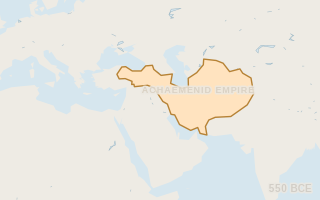
State · Middle East and North Africa

Achaemenid Empire

550 – 330 BCE · 220 years

Came after Elam and Lydia · became Macedonia and Twenty-eighth Dynasty of Egypt

The largest empire of its time: a Persian realm from the Balkans to the Indus, built by Cyrus and ended by Alexander.

In 550 BCE Cyrus the Great, an Achaemenid from Persis, overthrew the Medes, and soon Lydia and Babylon fell to him too. His heirs carried the empire into Egypt and the Balkans until it covered some 5.5 million square kilometres, the largest of its age, bound by a professional army, the Royal Road and a postal system. Thrown back from Scythia and Greece, it was conquered whole by Alexander the Great in 330 BCE.

What the record holds

Its record opens in 550 BCE, after Elam and Lydia.↓ In 550 BCE, the first year its borders are mapped, it covered 3.33 million km².↓ Between the start and the end of the Peloponnesian War, 431 – 404 BCE, it went from 5.53 million km² to 4.99 million km².↓

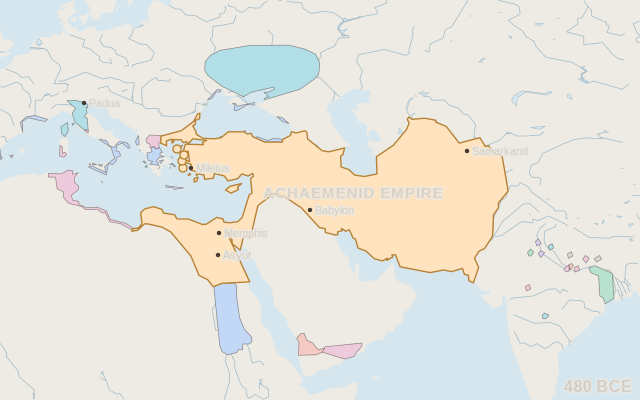
It reached its greatest extent in 480 BCE: 5.62 million km².↓ The record names 16 rulers in its line, covering 559 BCE – 330 BCE, the median reign 14.5 years; 10 of 14 handovers were irregular.↓ The best known of them are Cyrus the Great, Darius the Great and Xerxes I.↓ Most of the 60 rows the atlas files under it are people.↓

Its own article says it was conquered, in 330 BCE.↓ Macedonia and the Twenty-eighth Dynasty of Egypt followed it in 330 BCE, after 220 years.↓

From Wikipedia’s article, retold · CC BY-SA 4.0

220 years

Longer than Greenland, shorter than the Polish–Lithuanian Commonwealth

5.62 million km²

At its height in 480 BCE

16 rulers

the King of Kings

13 wars and battles

More per century than 95% of states · 60 entries in all

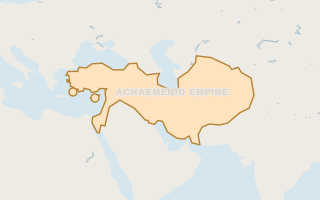
Map: Achaemenid Empire in 480 BCE, its borders in gold among its neighbours
Ionian Revolt, 499 – 493 BCEPeloponnesian War, 431 – 404 BCE: 5.53 million km² → 4.99 million km²Corinthian War, 395 – 387 BCEBattle of the Granicus, 334 BCEBattle of Gaugamela, 331 BCE550 BCE500 BCE450 BCE400 BCE350 BCE
Beside it on the map in 480 BCE: Scythians, Kingdom of Kush, Ancient Carthage, Ancient Greece, Haryanka dynasty and Etruscan civilization.How far it reached, year by year: its ground inside the borders Cliopatria draws (CC BY 4.0), measured on an equal-area grid; the map shows it at its largest, with the cities of the year.

The story

Five acts, 550 – 330 BCE

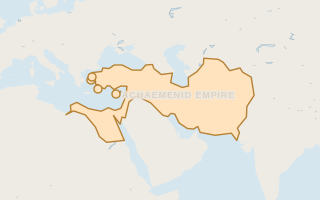
Achaemenid Empire in 466 BCE, at the end of act III
III499 – 465 BCE5.55 million → 5.62 million km²

Revolt and war with Greece

In the Ionian Revolt of 499 BCE the Greek cities of Asia Minor, chafing under tyrants Persia had imposed, rise and hold out until 493 BCE. Invasions of Greece in 492–490 and 480–479 BCE are thrown back, though the empire is at its widest in 480 BCE. Xerxes I is later assassinated.

Watch this act on the live map, from 499 BCE
Achaemenid Empire in 339 BCE, at the end of act IV
IV465 – 338 BCE5.62 million → 4.33 million km²

The kings named Artaxerxes

Under Artaxerxes I, Elamite gives way to Aramaic in government and Zoroastrianism becomes the empire's faith in practice. With the fighting in Greece halted, Persia pays the Athenians' Greek enemies instead. Satraps rise against the crown from 366 BCE, and in 343 BCE Artaxerxes III retakes Egypt with Greek troops beside his Persians.

Watch this act on the live map, from 465 BCE
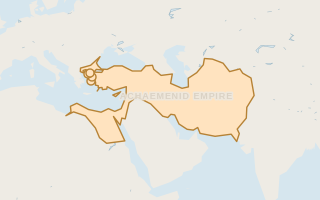
Achaemenid Empire in 331 BCE, at the end of act V
V338 – 330 BCE4.33 million → 3.51 million km²

Poison at court, Alexander invades

Bagoas, chief of the eunuchs, poisons the new king Arses and seats Darius III, who makes Bagoas swallow poison in his turn. In 334 BCE Alexander invades Asia Minor and defeats the Persian armies at the Granicus, Issus and Gaugamela, then marches on Susa. By 330 BCE the whole empire is his.

Watch this act on the live map, from 338 BCE
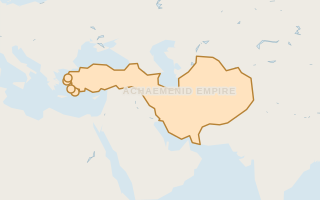
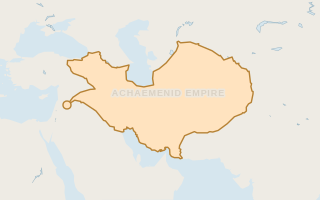
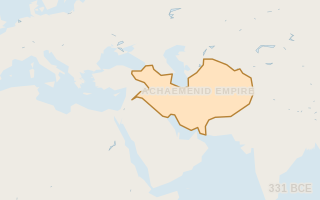
Achaemenid Empire in 331 BCE, last mappedAchaemenid Empire in 550 BCE, first mapped
The rise and the fall in one frame: drag across it from 550 BCE, first mapped at 3.33 million km², to 331 BCE, last mapped at 3.51 million km². Open the live map in 550 BCE or 331 BCE.

Before and after

Before it

After it

Where it sits in time

3000 BCE2000 BCE1000 BCE110002000Elam: 2700 BCE – 539 BCEMedian kingdom: 678 BCE – 550 BCEGandhara (Mahabharata): 1501 BCE – 535 BCETwenty-eighth Dynasty of Egypt: 404 BCE – 399 BCEMacedonia: 701 BCE – 167 BCEAchaemenid Empire: 550 BCE – 330 BCE

Five thousand years, 3000 BCE to 2026; the state in gold, what it replaced or followed and what replaced or followed it in grey.

Its people

Lives across the Achaemenid Empire

600 BCE550 BCE500 BCE450 BCE400 BCE350 BCE
Statesmen and generalsScientists and explorersWriters, artists and thinkersLived on after it endedAll its people on the timeline →

How it was governed

16 kings

16 kings on record, 559 BCE to 330 BCE; a reign lasted 14.5 years at the median. Each bar is a reign, as long as it lasted.

Cyrus the Great · 559 BCE – 530 BCE · died in battleCambyses II · 530 BCE – 522 BCE · died in office of natural causesBardiya · 522 BCE – 522 BCE · killedGaumata · 522 BCE – 522 BCE · killedDarius the Great · 522 BCE – 486 BCE · died in office, manner not recordedAtossa · 522 BCE – 475 BCE · died in office, manner not recordedXerxes I · 486 BCE – 465 BCE · deposed or removedArtaxerxes I · 465 BCE – 424 BCE · died in office, manner not recordedXerxes II · 424 BCE – 424 BCE · left office aliveSogdianus · 424 BCE – 423 BCE · executedDarius II · 423 BCE – … · no end recordedArtaxerxes II · 405 BCE – 358 BCE · died in office, manner not recordedArtaxerxes III · 359 BCE – 338 BCE · killedArses of Persia · 338 BCE – 336 BCE · killedDarius III · 336 BCE – 330 BCE · died in office, manner not recorded550 BCE500 BCE450 BCE400 BCE350 BCE
a second row: a reign that began before the last had ended — rival claimants, or a shared throne
How their terms ended, where it is known (14 of 15):Killed 6Deposed or removed 1Died in office 6Left office alive 1Not on record 1
Every term, with how it ended and its source

Rulers

How 15 reigns ended - choose one to show only those

How they died, where the record says: killed 4 · died in battle 1 · died of natural causes 1 · executed 1.

RulerReignLengthHow it ended · sourceTo the ruler before
6th century BCE · 6 reigns · 3 killed or removed
Cyrus the Great · aged 41559 BCE – 530 BCE29 yearsdied in battleWikidata's manner of death
Cambyses II · aged 29530 BCE – 522 BCE8 yearsdied in officeWikidata's manner of deathdied of natural causeschild
Bardiya522 BCE – 522 BCEunder a yearkilled in officeWikidata's manner of deathsibling
Gaumata · aged 79522 BCE – 522 BCEunder a yearkilled in officeWikidata's manner of death
Darius the Great · aged 28522 BCE – 486 BCE36 yearsdied in officeread off the dates alone
Atossa · aged 28522 BCE – 475 BCE47 yearsdied in officeread off the dates alonespouse
5th century BCE · 6 reigns · 2 killed or removed
Xerxes I · aged 33486 BCE – 465 BCE21 yearsdeposedWikidata's end cause on the termchild
Artaxerxes I · aged 36465 BCE – 424 BCE41 yearsdied in officeread off the dates alone
Xerxes II · aged 77424 BCE – 424 BCEunder a yearleft office aliveread off the dates alone
Sogdianus · aged 77424 BCE – 423 BCE1 yearexecutedWikidata's manner of deathsibling
Darius II · aged 52423 BCE – —no end recordedending not on recordsibling
Artaxerxes II · aged 48405 BCE – 358 BCE47 yearsdied in officeread off the dates alone
4th century BCE · 3 reigns · 2 killed or removed
Artaxerxes III · aged 66359 BCE – 338 BCE21 yearskilled in officeWikidata's manner of death
Arses of Persia338 BCE – 336 BCE2 yearskilled in officeWikidata's manner of death
Darius III · aged 44336 BCE – 330 BCE6 yearsdied in officeread off the dates alone

16 rulers, 15 with terms dated as terms, covering 559 BCE – 330 BCE. Median reign 14.5 years. 10 of 14 handovers irregular - a killing, a deposition, a rival claimant, a rising or a coup beside it. A blank in the last column means no kin on record, which is coverage, never “unrelated”.

Flag or arms

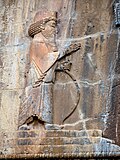
  • Standard of Cyrus the Great
    flag, undatedStandard of Cyrus the Great · Public domain

Its world

Rivals, and who else stood

Who it fought most

Wars and battles both took part in, on whichever side: the record names who took part, not who fought whom.

Meanwhile, elsewhere

The best-known states of other regions that stood while it did; the band is the Achaemenid Empire’s own years.

550 BCE500 BCE450 BCE400 BCE350 BCE300 BCE

How it compares

Among 3,073 states

Stood longer than 65% of 3,073 states
Achaemenid Empire · 220 yearsGreenlandPolish–Lithuanian CommonwealthHow long it stood, among the states with a recorded end or still standing.
Held more ground at its peak than 98% of 1,464 states
Achaemenid Empire · 5,624,700 km²IndiaAustraliaThe most ground it held, among the states with a border in Cliopatria.
Had more wars on record per century than 95% of 3,073 states
Achaemenid Empire · 1.4Wars recorded per century, among the states, counting the wars the atlas hosts under each.

Why it fell

Why did the Achaemenid Empire fall?

Historians still argue. Here is what the atlas records about its last century:

5

wars and battles in its last century

÷1.6

its land, between 430 BCE and 331 BCE

336 BCE

Arses of Persia, killed in office

How it ended, as its article says

Conquered, -0330. Read from the article's section “lead” by its grammar; the claim is only that the article says so.

In 330 BC, amidst a Greek military campaign that began in 336 BC, the Achaemenid Empire was conquered in its entirety by Alexander the Great, who annexed it to his Macedonian Empire.

One sentence of the English Wikipedia article, CC BY-SA 4.0.

What led to it, and what came of it

Elam · Linked · 2700 BCE – 539 BCEElamGandhara (Mahabharata) · Linked · 1450 BCE – 535 BCEGandhara (Mahabharata)Lydia · Linked · 1200 BCE – 546 BCELydiaNeo-Elamite period · Linked · 1100 BCE – 539 BCENeo-Elamite periodMedian kingdom · Linked · 678 BCE – 550 BCEMedian kingdomTwenty-sixth Dynasty of Egypt · Linked · 664 BCE – 525 BCETwenty-sixth Dynasty of EgyptAchaemenid Empire · 550 BCE – 330 BCEAchaemenid EmpireMacedonia · Linked · 650 BCE – 167 BCEMacedonia2500 BCE2000 BCE1500 BCE1000 BCE500 BCE
linked

Open the investigation: every row with its evidence, the conditions at the time, the theories condition by condition, and the succession analysed.

Its centuries in the record

600 BCE – 501 BCE: 19 recorded — 2 wars and battles, 0 risings, regime changes and massacres, 17 other600 BCE500 BCE – 401 BCE: 19 recorded — 6 wars and battles, 0 risings, regime changes and massacres, 13 other500 BCE400 BCE – 301 BCE: 14 recorded — 5 wars and battles, 1 risings, regime changes and massacres, 8 other400 BCE

Wars and battles in red, risings, coups and massacres beside them, everything else in grey, by the century each began in. A tall bar is partly a fact about Wikipedia: better-documented centuries hold more.

Each century’s own page:600 BCE – 501 BCE500 BCE – 401 BCE400 BCE – 301 BCE

Keep exploring

Share this page
Copy link
Embed the map
Cite this page

How this page is made

Drawn from Wikidata (Q389688, CC0), the opening and history of its English Wikipedia article retold by the atlas (CC BY-SA 4.0), borders from Cliopatria (CC BY 4.0), coast and rivers from Natural Earth, cities from Reba, Reitsma & Seto 2016 (CC BY 4.0), symbols from Wikimedia Commons, each under its own licence, and one sentence of the article, quoted. Data built 2026-11-26 · Pastlas v2.47.1, by Oleh Voronko; the published atlas and its data are for non-commercial use.

How to read it

Areas are measured on an equal-area grid from borders simplified to about five kilometres. “c.” marks an approximate date, and a date known to the century is never printed to the year. Counts are what the atlas holds, and they follow Wikipedia’s coverage: a busy century is partly a fact about the record.

  • Held with the record of Achaemenid dynasty, merged into this one.

Something wrong?

Tell us and name the entry. We fix the data, not just this page.

Report a problem