State · Europe

Principality of Catalonia

1173 – 1714 · 541 years

Came after County of Barcelona and County of Urgell · became Andorra and Catalan Republic (1640–1641)

The Principality of Catalonia began in 1173, replacing the County of Barcelona and the County of Urgell.↓ The record names 37 rulers in its line, covering 1162 – 1704, the median reign 3 years; 1 of 30 handovers was irregular.↓ The best known of them are James I of Aragon, Peter III of Aragon and Alfonso II of Aragon.↓ Most of the 29 rows the atlas files under it are people.↓

Continue reading

In 1714, after 541 years, it was replaced by Andorra and the Catalan Republic.↓

541 years

Longer than Vikings, shorter than Kathmandu

37 rulers

the viceroy of Catalonia

1 war or battle

More per century than 87% of states · 29 entries in all

Its borders aren’t on record

The borders dataset does not draw the Principality of Catalonia. The live map still shows where it stood among the states of its years.

Find it on the live map

The story

Its key moments

Before and after

Before it

After it

Where it sits in time

3000 BCE2000 BCE1000 BCE110002000County of Barcelona: 801 – 1164County of Urgell: 785 – 1413County of Besalú: 988 – 1111Andorra: 1278 – 2026Catalan Republic (1640–1641): 1640 – 1641Principality of Catalonia: 1173 – 1714

Five thousand years, 3000 BCE to 2026; the state in gold, what it replaced or followed and what replaced or followed it in grey.

Its people

Lives across the Principality of Catalonia

145015001550160016501700
Statesmen and generalsLived on after it endedAll its people on the timeline →

How it was governed

37 viceroys

37 viceroys on record, 1162 to 1704; a reign lasted 3 years at the median. Each bar is a reign, as long as it lasted.

Alfonso II of Aragon · 1162 – 1196 · died in office, manner not recordedPeter II of Aragon · 1196 – 1213 · died in battleJames I of Aragon · 1213 – 1276 · died in office, manner not recordedPeter III of Aragon · 1276 – 1285 · died in office, manner not recordedJuan de Lanuza y Garabito · 1493 – 1495 · left office aliveFadrique de Portugal · 1525 – 1539 · died in office, manner not recordedFrancis Borgia · 1539 – 1543 · left office aliveJuan Fernández Manrique de Lara, Marqués de Aguilar de Campoo · 1543 – 1553 · died in office, manner not recordedPedro Afán de Ribera · 1554 – 1558 · left office aliveGarcía Álvarez de Toledo y Osorio · 1558 – 1564 · left office aliveFernando Álvarez de Toledo · 1571 – 1580 · left office aliveJuan de Zúñiga, 1st Duke of Peñaranda · 1583 – 1586 · left office aliveFrancisco Hurtado de Mendoza y Cárdenas · 1611 – 1615 · died in office, manner not recordedFrancisco Fernández de la Cueva, 7th Duke of Alburquerque · 1615 – 1619 · left office aliveLuis Díez de Aux y Armendáriz · 1626 – 1627 · died in office, manner not recordedMiguel de los Santos de San Pedro · 1627 – 1629 · left office aliveCardinal-Infante Ferdinand of Austria · 1632 – 1633 · left office aliveUrbain de Maillé, 1st Marquis of Brézé · 1641 – 1642 · left office aliveDiego Felípez de Guzmán, 1st Marquis of Leganés · 1645 – 1647 · left office aliveJohn Joseph of Austria · 1653 – 1656 · left office aliveFrancisco de Moura Corte Real, 3rd Marquis of Castelo Rodrigo · 1663 – 1664 · left office aliveGaspar Téllez-Girón, 5th Duke of Osuna · 1667 – 1669 · left office aliveFrancisco Fernández de Córdoba y Pimentel · 1669 – 1673 · left office aliveAlexander Farnese, Prince of Parma · 1676 – 1677 · left office aliveJuan Domingo de Zuñiga y Fonseca · 1677 – 1678 · left office aliveJuan Tomas Enriquez de Cabrera, 7th Duke of Medina de Rioseco · 1688 – 1688 · left office aliveCarlos de Aragón de Gurrea, 9th Duke of Villahermosa · 1688 – 1690 · left office aliveJuan Claros Pérez de Guzmán, 11th Duke of Medina Sidonia · 1690 – 1693 · left office aliveJuan Manuel Fernández Pacheco, 8th Duke of Escalona · 1693 – 1694 · left office aliveFrancisco Antonio de Agurto, 1st Marquess of Gastañaga · 1694 – 1696 · left office aliveLuis Tomás Fernández Portocarrero Bocanegra · 1701 – 1704 · left office alive120013001400150016001700
How their terms ended, where it is known (31 of 31):Killed 1Died in office 7Left office alive 23
Every term, with how it ended and its source

Rulers

How 31 reigns ended - choose one to show only those

How they died, where the record says: died in battle 1.

RulerReignLengthHow it ended · sourceTo the ruler before
12th century · 2 reigns · 1 killed or removed
Alfonso II of Aragon · aged 51162 – 119634 yearsdied in officeread off the dates alone
Peter II of Aragon · aged 191196 – 121317 yearsdied in battleWikidata's manner of deathchild
13th century · 2 reigns
James I of Aragon · aged 51213 – 127663 yearsdied in officeread off the dates alonechild
Peter III of Aragon · aged 361276 – 12859 yearsdied in officeread off the dates alonechild
15th century · 1 reign
Juan de Lanuza y Garabito1493 – 14952 yearsleft office aliveread off the dates alone
16th century · 7 reigns
Fadrique de Portugal · aged 601525 – 153914 yearsdied in officeread off the dates alone
Francis Borgia · aged 291539 – 15434 yearsleft office aliveread off the dates alone
Juan Fernández Manrique de Lara, Marqués de Aguilar de Campoo · aged 531543 – 155310 yearsdied in officeread off the dates alone
Pedro Afán de Ribera · aged 451554 – 15584 yearsleft office aliveread off the dates alone
García Álvarez de Toledo y Osorio · aged 441558 – 15646 yearsleft office aliveread off the dates alone
Fernando Álvarez de Toledo · aged 431571 – 15809 yearsleft office aliveread off the dates alone
Juan de Zúñiga, 1st Duke of Peñaranda · aged 421583 – 15863 yearsleft office aliveread off the dates alone
17th century · 18 reigns
Francisco Hurtado de Mendoza y Cárdenas · aged 511611 – 16154 yearsdied in officeread off the dates alone
Francisco Fernández de la Cueva, 7th Duke of Alburquerque · aged 401615 – 16194 yearsleft office aliveread off the dates alone
Luis Díez de Aux y Armendáriz · aged 641626 – 16271 yeardied in officeread off the dates alone
Miguel de los Santos de San Pedro · aged 641627 – 16292 yearsleft office aliveread off the dates alone
Cardinal-Infante Ferdinand of Austria · aged 231632 – 16331 yearleft office aliveread off the dates alone
Urbain de Maillé, 1st Marquis of Brézé · aged 441641 – 16421 yearleft office aliveread off the dates alone
Diego Felípez de Guzmán, 1st Marquis of Leganés · aged 651645 – 16472 yearsleft office aliveread off the dates alone
John Joseph of Austria · aged 241653 – 16563 yearsleft office aliveread off the dates alone
Francisco de Moura Corte Real, 3rd Marquis of Castelo Rodrigo · aged 421663 – 16641 yearleft office aliveread off the dates alone
Gaspar Téllez-Girón, 5th Duke of Osuna · aged 421667 – 16692 yearsleft office aliveread off the dates alone
Francisco Fernández de Córdoba y Pimentel · aged 431669 – 16734 yearsleft office aliveread off the dates alone
Alexander Farnese, Prince of Parma · aged 411676 – 16771 yearleft office aliveread off the dates alone
Juan Domingo de Zuñiga y Fonseca · aged 371677 – 16781 yearleft office aliveread off the dates alone
Juan Tomas Enriquez de Cabrera, 7th Duke of Medina de Rioseco · aged 421688 – 1688under a yearleft office aliveread off the dates alone
Carlos de Aragón de Gurrea, 9th Duke of Villahermosa · aged 541688 – 16902 yearsleft office aliveread off the dates alone
Juan Claros Pérez de Guzmán, 11th Duke of Medina Sidonia · aged 481690 – 16933 yearsleft office aliveread off the dates alone
Juan Manuel Fernández Pacheco, 8th Duke of Escalona · aged 431693 – 16941 yearleft office aliveread off the dates alone
Francisco Antonio de Agurto, 1st Marquess of Gastañaga · aged 541694 – 16962 yearsleft office aliveread off the dates alone
18th century · 1 reign
Luis Tomás Fernández Portocarrero Bocanegra · aged 521701 – 17043 yearsleft office aliveread off the dates alone

37 rulers, 31 with terms dated as terms, covering 1162 – 1704. Median reign 3 years. 1 of 30 handovers irregular - a killing, a deposition, a rival claimant, a rising or a coup beside it. A blank in the last column means no kin on record, which is coverage, never “unrelated”.

Flags and arms, in order

  • Coat of Arms of Catalonia
    coat of arms, undatedCoat of Arms of Catalonia · CC BY-SA 3.0 · This vector image includes elements that have been taken or adapted from this file:
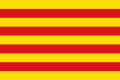
  • Flag of Catalonia
    flag, undatedFlag of Catalonia · Public domain

Its world

Rivals, and who else stood

Who it fought most

Wars and battles both took part in, on whichever side: the record names who took part, not who fought whom.

Meanwhile, elsewhere

The best-known states of other regions that stood while it did; the band is the Principality of Catalonia’s own years.

120014001600

How it compares

Among 3,073 states

Stood longer than 88% of 3,073 states
Principality of Catalonia · 541 yearsVikingsKathmanduHow long it stood, among the states with a recorded end or still standing.
Had more wars on record per century than 87% of 3,073 states
Principality of Catalonia · 0.2Wars recorded per century, among the states, counting the wars the atlas hosts under each.

Why it fell

Why did the Principality of Catalonia fall?

Historians still argue. Here is what the atlas records about its last century:

What led to it, and what came of it

County of Roussillon · Linked · 812 – 1172County of RoussillonCounty of Barcelona · Linked · 801 – 1164County of BarcelonaCounty of Conflent · Linked · 850 – 1126County of ConflentCounty of Besalú · Linked · 988 – 1111County of BesalúCounty of Urgell · Linked · 785 – 1413County of UrgellCounty of Cerdanya · Linked · 798 – 1403County of CerdanyaPrincipality of Catalonia · 1173 – 1714Principality of CataloniaRoussillon · Linked · 1659 – 1790RoussillonAndorra · Linked · 1278 – 2026AndorraSpain · In the article · 1516 · “The ascension to the throne of Aragon of Ferdinand II (1479), already married to Isabella I of Castile, put under a personal union two of the three major mona…”Spain100015002000
in the articlelinked

Open the investigation: every row with its evidence, the conditions at the time, the theories condition by condition, and the succession analysed.

Its centuries in the record

1100 – 1199: 0 recorded — 0 wars and battles, 0 risings, regime changes and massacres, 0 other11001200 – 1299: 0 recorded — 0 wars and battles, 0 risings, regime changes and massacres, 0 other12001300 – 1399: 0 recorded — 0 wars and battles, 0 risings, regime changes and massacres, 0 other13001400 – 1499: 5 recorded — 1 wars and battles, 0 risings, regime changes and massacres, 4 other14001500 – 1599: 13 recorded — 0 wars and battles, 0 risings, regime changes and massacres, 13 other15001600 – 1699: 11 recorded — 0 wars and battles, 0 risings, regime changes and massacres, 11 other16001700 – 1799: 0 recorded — 0 wars and battles, 0 risings, regime changes and massacres, 0 other1700

Wars and battles in red, risings, coups and massacres beside them, everything else in grey, by the century each began in. A tall bar is partly a fact about Wikipedia: better-documented centuries hold more.

Each century’s own page:1100 – 11991200 – 12991300 – 13991400 – 14991500 – 15991600 – 16991700 – 1799

Keep exploring

Share this page
Copy link
Cite this page

How this page is made

Drawn from Wikidata (Q15581, CC0), symbols from Wikimedia Commons, each under its own licence. Data built 2026-11-26 · Pastlas v2.47.1, by Oleh Voronko; the published atlas and its data are for non-commercial use.

How to read it

Areas are measured on an equal-area grid from borders simplified to about five kilometres. “c.” marks an approximate date, and a date known to the century is never printed to the year. Counts are what the atlas holds, and they follow Wikipedia’s coverage: a busy century is partly a fact about the record.

Something wrong?

Tell us and name the entry. We fix the data, not just this page.

Report a problem