State · Europe

Norway

1905 – present · 121 years · still standing

A kingdom that left its union with Sweden peacefully, endured German occupation, and became a Nordic welfare state rich in petroleum.

Norway became a fully independent kingdom on 7 June 1905, when it peacefully ended its union with Sweden. A referendum chose monarchy, and parliament elected a Danish prince, who reigned as Haakon VII. Neutral in the First World War, Norway was invaded by Germany in April 1940 and occupied until the war ended. Since then it has kept a Nordic welfare state, with petroleum around a quarter of its economy, and helped found the United Nations and NATO.

What the record holds

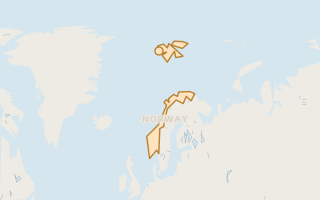
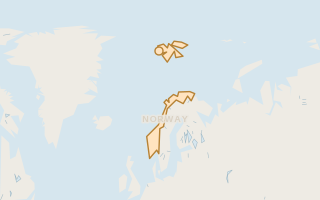
Norway began in 1905.↑ In 1906, the first year its borders are mapped, it covered 344,100 km².↓

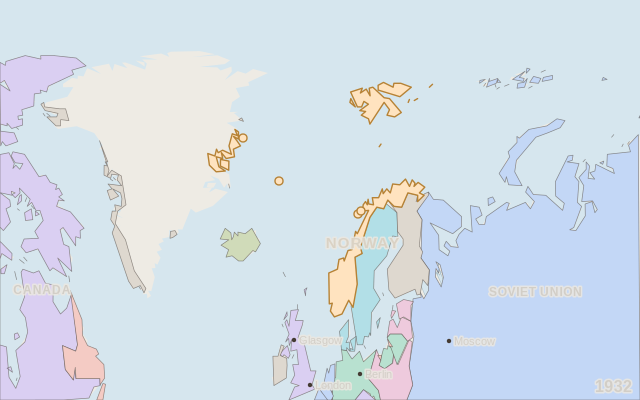
It reached its greatest extent in 1932: 459,500 km².↓ The record names 5 rulers in its line, covering 1872 – 2026, the median reign 34.5 years; 1 of 4 handovers was irregular.↓ The best known of them are Harald V, Haakon VIII and Haakon VII.↓ Most of the 86 rows the atlas files under it are people.↓

From Wikipedia’s article, retold · CC BY-SA 4.0

121 years

Longer than Nizhny Novgorod, shorter than the Maurya Empire

460,000 km²

At its height in 1932 · about the size of Sweden

5 rulers

the Monarch of Norway

33 wars and battles

86 entries in all

Map: Norway in 1932, its borders in gold among its neighbours
Battle of Jutland, 1916Svalbard Treaty, 1920Norwegian heavy water sabotage, 1940 – 1944Norwegian campaign, 19402011 Norway attacks, 201119201940196019802000
Beside it on the map in 1932: Soviet Union, Canada, Sweden, Finland, Weimar Republic and Second Polish Republic.How far it reached, year by year: its ground inside the borders Cliopatria draws (CC BY 4.0), measured on an equal-area grid; the map shows it at its largest, with the cities of the year.

The story

Four acts, 1905 – present

Norway in 1944, at the end of act II
II1940 – 1945418,000 → 400 km²

Invasion and occupation

German forces invade on 9 April 1940. Norwegian troops resist for two months and strike back at Narvik, but surrender on 10 June after British support is diverted to France. King Haakon and the government escape to London and broadcast to the occupied country; sabotage against heavy-water production runs from 1940 to 1944.

Watch this act on the live map, from 1940
Norway in 1990, at the end of act III
III1945 – 1991418,000 → 418,000 km²

Labour in power

Labour holds an absolute majority from 1945 to 1962, and Einar Gerhardsen's government pursues state-financed industrialisation and cooperation between unions and employers. Wartime controls on housing and cars last until 1960. Norway keeps its alliance with Britain and the United States, is a founding member of NATO, and from 1957 Olav V reigns.

Watch this act on the live map, from 1945
IV1991 – present

The reign of Harald V

Harald V takes the throne in 1991. Norway keeps its Nordic model of universal health care and social security, with petroleum about a quarter of its economy. The 2011 Norway attacks, the Gjerdrum landslide of 2020 and the Kongsberg attack of 2021 shake the country. Jonas Gahr Støre becomes prime minister in 2021, and Haakon VIII succeeds in 2026.

Watch this act on the live map, from 1991

Where it sits in time

3000 BCE2000 BCE1000 BCE110002000Norway: 1905 – 2026

Five thousand years, 3000 BCE to 2026; the state in gold.

Its people

Lives across Norway

1850190019502000
Writers, artists and thinkersStatesmen and generalsScientists and explorersAll its people on the timeline →

How it was governed

5 monarchs

5 monarchs on record, 1872 to 2026; a reign lasted 34.5 years at the median. Each bar is a reign, as long as it lasted.

Oscar II · 1872 – 1905 · deposed, the article saysHaakon VII · 1905 – 1957 · died in office of natural causesOlav V · 1957 – 1991 · died in office of natural causesHarald V · 1991 – 2026 · died in office of natural causesHaakon VIII · 2026 – … · still in office19502000
How their terms ended, where it is known (5 of 5):Deposed or removed 1Died in office 3In office 1
Every term, with how it ended and its source

Rulers

How 5 reigns ended - choose one to show only those

How they died, where the record says: died of natural causes 3.

RulerReignLengthHow it ended · sourceTo the ruler before
19th century · 1 reign · 1 killed or removed
Oscar II · aged 431872 – 190533 yearsdeposedread from the ruler's own article
20th century · 3 reigns
Haakon VII · aged 331905 – 195752 yearsdied in officeWikidata's manner of deathdied of natural causes
Olav V · aged 541957 – 199134 yearsdied in officeWikidata's manner of deathdied of natural causeschild
Harald V · aged 541991 – 202635 yearsdied in officeWikidata's manner of deathdied of natural causeschild
21st century · 1 reign
Haakon VIII · aged 532026 – in officein office since 2026still in officechild

5 rulers, 5 with terms dated as terms, covering 1872 – 2026. Median reign 34.5 years. 1 of 4 handovers irregular - a killing, a deposition, a rival claimant, a rising or a coup beside it. A blank in the last column means no kin on record, which is coverage, never “unrelated”.

Heads of government

The line of Prime Minister of Norway, drawn and never measured: a cabinet is not a reign.

Vidkun Quislinglived 1887 – 1945
Johannes Steen1898 – 1902
Otto Blehr1902 – 1903
Francis Hagerup1903 – 1905
Christian Michelsen1905 – 1907
Jørgen Løvland1907 – 1908
Gunnar Knudsen1908 – 1910
Wollert Konow1910 – 1912
Jens Bratlie1912 – 1913
Gunnar Knudsen1913 – 1920
Otto Bahr Halvorsen1920 – 1921
Otto Blehr1921 – 1923
Abraham Berge1923 – 1924
Otto Bahr Halvorsen1923 – 1923
Johan Ludwig Mowinckel1924 – 1926
Ivar Lykke1926 – 1928
Christopher Hornsrud1928 – 1928
Johan Ludwig Mowinckel1928 – 1931
Peder Kolstad1931 – 1932
Jens Hundseid1932 – 1933
Johan Ludwig Mowinckel1933 – 1935
Johan Nygaardsvold1935 – 1945
Einar Gerhardsen1945 – 1951
Oscar Torp1951 – 1955
Einar Gerhardsen1955 – 1963
Einar Gerhardsen1963 – 1965
John Lyng1963 – 1963
Per Borten1965 – 1971
Trygve Bratteli1971 – 1972
Lars Korvald1972 – 1973
Trygve Bratteli1973 – 1976
Odvar Nordli1976 – 1981
Gro Harlem Brundtland1981 – 1981
Kåre Willoch1981 – 1986
Svenn Stray1984 – 1984
Gro Harlem Brundtland1986 – 1989
Jan P. Syse1989 – 1990
Gro Harlem Brundtland1990 – 1996
Thorbjørn Jagland1996 – 1997
Kjell Magne Bondevik1997 – 2000
Anne Enger1998 – 1998
Jens Stoltenberg2000 – 2001
Kjell Magne Bondevik2001 – 2005
Jens Stoltenberg2005 – 2013
Erna Solberg2013 – 2021
Jonas Gahr Støre2021 – …

Flags and arms, in order

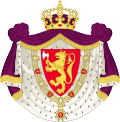
  • Royal coat of arms of Norway
    coat of arms, undatedRoyal coat of arms of Norway · Public domain
  • Greater royal coat of arms of Norway
    coat of arms, undatedGreater royal coat of arms of Norway · Public domain
  • Coat of arms of Norway
    coat of arms, from 1285Coat of arms of Norway · Public domain
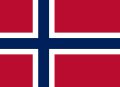
  • Flag of Norway
    flag, from 1821Flag of Norway · Public domain

Its world

Rivals, and who else stood

Who it fought most

Wars and battles both took part in, on whichever side: the record names who took part, not who fought whom.

Meanwhile, elsewhere

The best-known states of other regions that stood while it did; the band is Norway’s own years.

190019251950197520002025

How it compares

Among 3,073 states

Stood longer than 50% of 3,073 states
Norway · 121 yearsNizhny NovgorodMaurya EmpireHow long it stood, among the states with a recorded end or still standing.
Held more ground at its peak than 73% of 1,464 states
Norway · 459,500 km²SwedenYemenThe most ground it held, among the states with a border in Cliopatria.

How it began

How did Norway begin?

What led to it, and what came of it

Union between Sweden and Norway · Linked · 1814 – 1905Union between Sweden and NorwayNapoleonic Wars · In the article · 1803 · “Following the recession caused by the Napoleonic Wars, economic development of Norway remained slow until 1830. This period also saw the rise of Norwegian rom…”Napoleonic WarsHenrik Ibsen · Coincidence · 1828 – 1906Henrik IbsenBjørnstjerne Bjørnson · Coincidence · 1832 – 1910Bjørnstjerne BjørnsonOscar de Négrier · Coincidence · 1839 – 1913Oscar de NégrierEdvard Grieg · Coincidence · 1843 – 1907Edvard GriegNorway · 1905 – 2026Norway18001850190019502000
in the articlelinkedcoincidence

Open the investigation: every row with its evidence, the conditions at the time, the theories condition by condition, and the succession analysed.

Its centuries in the record

1900 – 1999: 61 recorded — 33 wars and battles, 0 risings, regime changes and massacres, 28 other19002000 – 2099: 5 recorded — 0 wars and battles, 3 risings, regime changes and massacres, 2 other2000

Wars and battles in red, risings, coups and massacres beside them, everything else in grey, by the century each began in. A tall bar is partly a fact about Wikipedia: better-documented centuries hold more.

Each century’s own page:1900 – 19992000 – 2099

Keep exploring

Share this page
Copy link
Embed the map
Cite this page

How this page is made

Drawn from Wikidata (Q20, CC0), the opening and history of its English Wikipedia article retold by the atlas (CC BY-SA 4.0), borders from Cliopatria (CC BY 4.0), coast and rivers from Natural Earth, cities from Reba, Reitsma & Seto 2016 (CC BY 4.0), symbols from Wikimedia Commons, each under its own licence. Data built 2026-11-26 · Pastlas v2.47.1, by Oleh Voronko; the published atlas and its data are for non-commercial use.

How to read it

Areas are measured on an equal-area grid from borders simplified to about five kilometres. “c.” marks an approximate date, and a date known to the century is never printed to the year. Counts are what the atlas holds, and they follow Wikipedia’s coverage: a busy century is partly a fact about the record.

  • Wikidata records foundings in 900 and 1814 and 1905; the atlas draws the present-day state from 1905.
  • Still standing: the span runs to the year of the build, 2026.

Something wrong?

Tell us and name the entry. We fix the data, not just this page.

Report a problem