State · Sub-Saharan Africa

South Africa

1961 – present · 65 years · still standing

Came after Union of South Africa and The Apartheid Regime in South Africa

A republic born under apartheid, which a long struggle dismantled, opening the way to universal elections and Nelson Mandela's presidency.

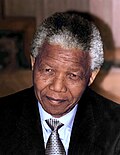
South Africa became a republic after a referendum in 1961, half a century after the Union was formed from four colonies. Apartheid, imposed by the National Party in 1948, left most Black South Africans without the vote. After a long struggle by the ANC and other opponents at home and abroad, discriminatory laws began to be repealed in the mid-1980s; Nelson Mandela left prison in 1990 after 27 years, and universal elections in 1994 made him president.

What the record holds

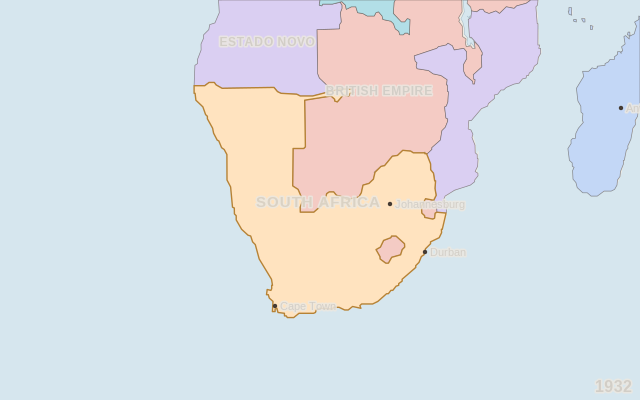
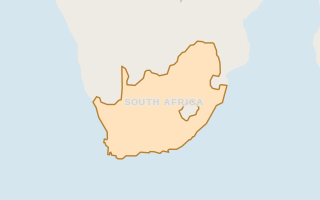
Its record opens in 1961, replacing the Union of South Africa and The Apartheid Regime in South Africa.↓ When the borders dataset first draws it, in 1932, it held 2.06 million km².↓ Between the start and the end of the South African Border War, 1966 – 1990, it went from 2.06 million km² to 1.23 million km².↓

Its line counts 6 rulers, covering 1994 – 2018; 1 of 6 handovers was irregular.↓ Among them, Nelson Mandela, Thabo Mbeki and Jacob Zuma are the best known.↓ The atlas files 25 rows under it, people the largest group of them.↓

From Wikipedia’s article, retold · CC BY-SA 4.0

65 years

Longer than Bremen, shorter than the Soviet Union

2.06 million km²

At its height in 1932 · about the size of Indonesia

6 rulers

the President of South Africa

2 wars and battles

More per century than 96% of states · 25 entries in all

Map: South Africa in 1932, its borders in gold among its neighbours
South African Border War, 1966 – 1990: 2.06 million km² → 1.23 million km²Angolan Civil War, 1975 – 2002: 2.06 million km² → 1.23 million km²Soweto uprising, 1976Marikana massacre, 20122021 South African unrest, 2021197019801990200020102020
Beside it on the map in 1932: British Empire, Estado Novo, French Third Republic and Belgian Congo.How far it reached, year by year: its ground inside the borders Cliopatria draws (CC BY 4.0), measured on an equal-area grid; the map shows it at its largest, with the cities of the year.

The story

Three acts, 1961 – present

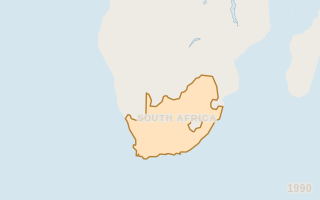
South Africa in 1989, at the end of act I
I1961 – 19902.06 million → 2.06 million km²

The apartheid republic

The white-minority government classifies every South African by race and rules through legal segregation. The Soweto uprising breaks out in 1976, and Steve Biko dies in 1977. The South African Border War runs from 1966 to 1990, beside the Angolan Civil War; a bomb strikes Church Street in Pretoria in 1983, and the Nkomati Accord is signed in 1984.

Watch this act on the live map, from 1961
III1994 – present

The democratic republic

The 1994 elections give every racial group a voice in government. Nelson Mandela is followed as president by Thabo Mbeki, Kgalema Motlanthe, Jacob Zuma and Cyril Ramaphosa. The Marikana massacre takes place in 2012, the FeesMustFall protests in 2015 and widespread unrest in 2021, and floods strike KwaZulu-Natal in 2022.

Watch this act on the live map, from 1994
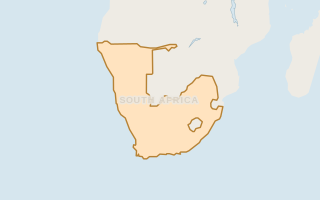
South Africa in 1990, last mappedSouth Africa in 1932, at its largest
The rise and the fall in one frame: drag across it from 1932, at its largest at 2.06 million km², to 1990, last mapped at 1.23 million km². Open the live map in 1932 or 1990.

Before and after

Before it

Where it sits in time

3000 BCE2000 BCE1000 BCE110002000Union of South Africa: 1910 – 1961South Africa: 1961 – 2026

Five thousand years, 3000 BCE to 2026; the state in gold, what it replaced or followed and what replaced or followed it in grey.

Its people

Lives across South Africa

19251950197520002025
Statesmen and generalsAll its people on the timeline →

How it was governed

6 presidents

6 presidents on record, 1994 to 2018. Each bar is a reign, as long as it lasted.

Nelson Mandela · 1994 – 1999 · left office aliveThabo Mbeki · 1999 – 2008 · lost an election, the article saysIvy Matsepe-Casaburri · 2005 – 2005 · left office aliveIvy Matsepe-Casaburri · 2008 – 2008 · left office aliveKgalema Motlanthe · 2008 – 2009 · resigned or stood down, the article saysJacob Zuma · 2009 – 2018 · resigned or stood down, the article saysCyril Ramaphosa · 2018 – … · still in office198020002020
a second row: a reign that began before the last had ended — rival claimants, or a shared throne
How their terms ended, where it is known (7 of 7):Left office alive 6In office 1
Every term, with how it ended and its source

Rulers

How 7 reigns ended - choose one to show only those

How they died, where the record says: died of natural causes 1.

RulerReignLengthHow it ended · sourceTo the ruler before
20th century · 2 reigns
Nelson Mandela · aged 761994 – 19995 yearsleft office aliveread off the dates alonedied of natural causes
Thabo Mbeki · aged 571999 – 20089 yearslost an electionread from the ruler's own article
21st century · 5 reigns
Ivy Matsepe-Casaburri · aged 682005 – 2005under a yearleft office aliveread off the dates alone
Ivy Matsepe-Casaburri · aged 712008 – 2008under a yearleft office aliveread off the dates alone
Kgalema Motlanthe · aged 592008 – 20091 yearresignedread from the ruler's own article
Jacob Zuma · aged 672009 – 20189 yearsresignedread from the ruler's own article
Cyril Ramaphosa · aged 662018 – in officein office since 2018still in office

6 rulers, 6 with terms dated as terms, covering 1994 – 2018. Only 24 years of the line are dated - too short for a median. 1 of 6 handovers irregular - a killing, a deposition, a rival claimant, a rising or a coup beside it. The violent-handover count is withheld: power changed hands so often that any rising falls beside one (exposure 0.96, limit 0.6). A blank in the last column means no kin on record, which is coverage, never “unrelated”.

Heads of government

The line of Prime Minister of South Africa, drawn and never measured: a cabinet is not a reign.

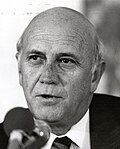
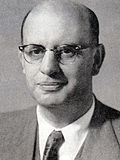
Hendrik Verwoerd1958 – 1966
P. W. Botha1978 – 1984

Flags and arms, in order

  • Coat of arms of South Africa (1910–1930)
    coat of arms, 1910 – 1930Coat of arms of South Africa (1910–1930) · Public domain
  • Red Ensign of South Africa (1910–1912)
    flag, 1910 – 1912Red Ensign of South Africa (1910–1912) · CC BY-SA 3.0 · Fornax , Zscout370
  • Red Ensign of South Africa (1912–1951)
    flag, 1912 – 1928Red Ensign of South Africa (1912–1951) · CC BY-SA 3.0 · Fornax
  • Flag of South Africa (1928–1994, dark colors)
    flag, 1928 – 1994Flag of South Africa (1928–1994, dark colors) · Public domain
  • Coat of arms of South Africa (1930–1932)
    coat of arms, 1930 – 1932Coat of arms of South Africa (1930–1932) · Public domain
  • Coat of arms of South Africa (1932–2000)
    coat of arms, 1932 – 2000Coat of arms of South Africa (1932–2000) · Public domain
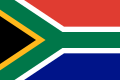
  • Flag of South Africa
    flag, from 1994Flag of South Africa · Public domain
  • Coat of arms of South Africa (heraldic)
    coat of arms, from 2000Coat of arms of South Africa (heraldic) · CC BY-SA 4.0 · Echando una mano

Its world

Who else stood

Meanwhile, elsewhere

The best-known states of other regions that stood while it did; the band is South Africa’s own years.

1960198020002020

How it compares

Among 3,073 states

Stood longer than 38% of 3,073 states
South Africa · 65 yearsBremenSoviet UnionHow long it stood, among the states with a recorded end or still standing.
Held more ground at its peak than 91% of 1,464 states
South Africa · 2,064,600 km²IndonesiaDenmarkThe most ground it held, among the states with a border in Cliopatria.
Had more wars on record per century than 96% of 3,073 states
South Africa · 2.0Wars recorded per century, among the states, counting the wars the atlas hosts under each.

How it began

How did South Africa begin?

What led to it, and what came of it

Korean War · Linked · 1950 – 1953Korean WarUnion of South Africa · Linked · 1910 – 1961Union of South AfricaThe Apartheid Regime in South Africa · Linked · 1948 – 1994The Apartheid Regime in South Af…Eben Dönges · Coincidence · 1898 – 1968Eben DöngesHendrik Verwoerd · Coincidence · 1901 – 1966Hendrik VerwoerdBoris Balinsky · Coincidence · 1905 – 1997Boris BalinskySouth Africa · 1961 – 2026South Africa190019502000
linkedcoincidence

Open the investigation: every row with its evidence, the conditions at the time, the theories condition by condition, and the succession analysed.

Its centuries in the record

1900 – 1999: 19 recorded — 2 wars and battles, 4 risings, regime changes and massacres, 13 other19002000 – 2099: 6 recorded — 0 wars and battles, 3 risings, regime changes and massacres, 3 other2000

Wars and battles in red, risings, coups and massacres beside them, everything else in grey, by the century each began in. A tall bar is partly a fact about Wikipedia: better-documented centuries hold more.

Each century’s own page:1900 – 19992000 – 2099

Keep exploring

Share this page
Copy link
Embed the map
Cite this page

How this page is made

Drawn from Wikidata (Q258, CC0), the opening and history of its English Wikipedia article retold by the atlas (CC BY-SA 4.0), borders from Cliopatria (CC BY 4.0), coast and rivers from Natural Earth, cities from Reba, Reitsma & Seto 2016 (CC BY 4.0), symbols from Wikimedia Commons, each under its own licence. Data built 2026-11-26 · Pastlas v2.47.1, by Oleh Voronko; the published atlas and its data are for non-commercial use.

How to read it

Areas are measured on an equal-area grid from borders simplified to about five kilometres. “c.” marks an approximate date, and a date known to the century is never printed to the year. Counts are what the atlas holds, and they follow Wikipedia’s coverage: a busy century is partly a fact about the record.

  • Still standing: the span runs to the year of the build, 2026.

Something wrong?

Tell us and name the entry. We fix the data, not just this page.

Report a problem