State · Europe

Finland

1917 – present · 109 years · still standing

Came after Kingdom of Finland and Finnish Socialist Workers' Republic

A Nordic republic that won its independence from Russia, fought the Soviet Union to keep it, and stood neutral until joining NATO.

Finland broke away from the Russian Empire, of which it had been an autonomous grand duchy since 1809, after the Russian Revolution of 1917. A civil war in 1918 ended in victory for the anticommunist Whites, and the republic was confirmed in 1919. In the Second World War it fought the Soviet Union twice and then Germany, losing land but not its independence. Neutral through the Cold War, it joined the European Union in 1995 and NATO in 2023.

What the record holds

Finland began in 1917, replacing the Kingdom of Finland and the Finnish Socialist Workers' Republic.↓ In 1918, the first year its borders are mapped, it covered 374,100 km².↓ Between the start and the end of the Winter War, 1939 – 1940, it went from 374,300 km² to 343,900 km².↓

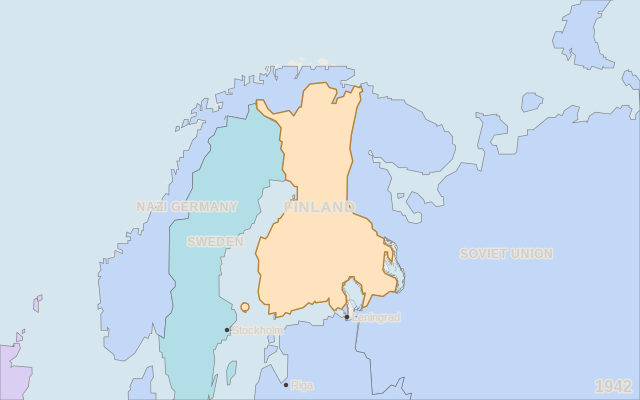
At its largest, in 1942, it held 444,900 km².↓ Its highest office was held by 13 rulers, covering 1919 – 2024, the median reign 6 years; none of its 12 handovers was irregular.↓ The best known of them are Martti Ahtisaari, Sauli Niinistö and Tarja Halonen.↓ Most of the 103 rows the atlas files under it are people.↓

From Wikipedia’s article, retold · CC BY-SA 4.0

109 years

Longer than Nizhny Novgorod, shorter than the Maurya Empire

445,000 km²

At its height in 1942 · about the size of Iraq

13 rulers

the President of Finland

33 wars and battles

More per century than 99% of states · 103 entries in all

Map: Finland in 1942, its borders in gold among its neighbours
Winter War, 1939 – 1940: 374,300 km² → 343,900 km²Continuation War, 1941 – 1944: 343,900 km² → 353,400 km²Lapland War, 1944 – 1945: 353,400 km² → 335,000 km²Helsinki Accords, 19751940196019802000
Beside it on the map in 1942: Soviet Union, Nazi Germany, Sweden and United Kingdom.How far it reached, year by year: its ground inside the borders Cliopatria draws (CC BY 4.0), measured on an equal-area grid; the map shows it at its largest, with the cities of the year.

The story

Four acts, 1917 – present

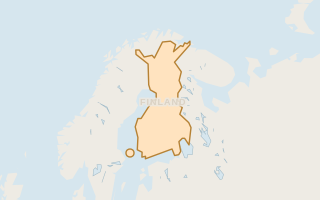
Finland in 1938, at the end of act I
I1917 – 1939

Independence and civil war

After the February Revolution the parliament claims supreme power, and in 1917 Finland declares independence. Civil war follows in 1918, won by the anticommunist Whites, and the republic is confirmed in 1919. The Åland convention is signed in 1921, an uprising shakes East Karelia in 1921–1922, and the Mäntsälä rebellion breaks out in 1932.

Watch this act on the live map, from 1917
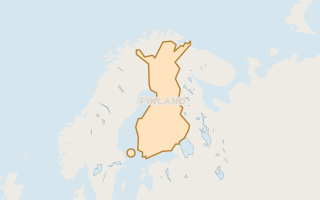
Finland in 1944, at the end of act II
II1939 – 1945374,000 → 353,000 km²

Three wars

Acting under its pact with Germany, the Soviet Union attacks on 30 November 1939 to annex Finland. In the Winter War the Red Army is beaten at Suomussalmi and elsewhere, yet Finland must give up land. It fights the Soviets again in the Continuation War of 1941–1944, then Germany in the Lapland War, keeping its independence.

Watch this act on the live map, from 1939
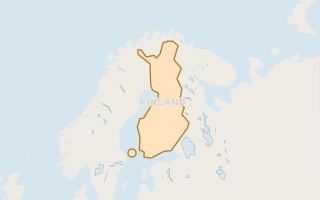
Finland in 1994, at the end of act III
III1945 – 1995335,000 → 335,000 km²

Neutral between the blocs

Reparations to the Soviet Union and trade with the West turn agrarian Finland into an industrial country; in 1950, 46 per cent of workers still farmed. Through the Cold War Finland holds to neutrality under presidents Juho Kusti Paasikivi, Urho Kekkonen and Mauno Koivisto, and the Helsinki Accords are signed in 1975.

Watch this act on the live map, from 1945
IV1995 – present

Into Europe and NATO

Finland becomes an EU member in 1995 and enters the eurozone in 1999. Tarja Halonen becomes its first woman president in 2000, and Martti Ahtisaari receives the Nobel Peace Prize in 2008, when the financial crisis stalls exports. After Russia invades Ukraine in 2022, opinion swings to NATO, and Finland joins in 2023.

Watch this act on the live map, from 1995

Before and after

Before it

Where it sits in time

3000 BCE2000 BCE1000 BCE110002000Finnish Socialist Workers' Republic: 1918 – 1918Kingdom of Finland: 1918 – 1919Finland: 1917 – 2026

Five thousand years, 3000 BCE to 2026; the state in gold, what it replaced or followed and what replaced or followed it in grey.

Its people

Lives across Finland

190019502000
Statesmen and generalsScientists and explorersAll its people on the timeline →

How it was governed

13 presidents

13 presidents on record, 1919 to 2024; a reign lasted 6 years at the median. Each bar is a reign, as long as it lasted.

Kaarlo Juho Ståhlberg · 1919 – 1925 · left office aliveLauri Kristian Relander · 1925 – 1931 · left office alivePehr Evind Svinhufvud · 1931 – 1937 · left office aliveKyösti Kallio · 1937 – 1940 · died in office of natural causesRisto Ryti · 1940 – 1944 · left office aliveCarl Gustaf Emil Mannerheim · 1944 – 1946 · resigned or stood down, the article saysJuho Kusti Paasikivi · 1946 – 1956 · died in office, manner not recordedUrho Kekkonen · 1956 – 1982 · left office aliveMauno Koivisto · 1982 – 1994 · resigned or stood down, the article saysMartti Ahtisaari · 1994 – 2000 · left office aliveTarja Halonen · 2000 – 2012 · resigned or stood down, the article saysSauli Niinistö · 2012 – 2024 · no death date to read the end againstAlexander Stubb · 2024 – … · still in office192019401960198020002020
How their terms ended, where it is known (12 of 13):Died in office 2Left office alive 9In office 1Not on record 1
Every term, with how it ended and its source

Rulers

How 13 reigns ended - choose one to show only those

How they died, where the record says: died of natural causes 5.

RulerReignLengthHow it ended · sourceTo the ruler before
20th century · 11 reigns
Kaarlo Juho Ståhlberg · aged 541919 – 19256 yearsleft office aliveread off the dates alone
Lauri Kristian Relander · aged 421925 – 19316 yearsleft office aliveread off the dates alonedied of natural causes
Pehr Evind Svinhufvud · aged 701931 – 19376 yearsleft office aliveread off the dates alone
Kyösti Kallio · aged 641937 – 19403 yearsdied in officeWikidata's manner of deathdied of natural causes
Risto Ryti · aged 511940 – 19444 yearsleft office aliveread off the dates alone
Carl Gustaf Emil Mannerheim · aged 771944 – 19462 yearsresignedread from the ruler's own articledied of natural causes
Juho Kusti Paasikivi · aged 761946 – 195610 yearsdied in officeread off the dates alone
Urho Kekkonen · aged 561956 – 198226 yearsleft office aliveread off the dates alone
Mauno Koivisto · aged 591982 – 199412 yearsresignedread from the ruler's own articledied of natural causes
Martti Ahtisaari · aged 571994 – 20006 yearsleft office aliveread off the dates alonedied of natural causes
Tarja Halonen · aged 572000 – 201212 yearsresignedread from the ruler's own article
21st century · 2 reigns
Sauli Niinistö · aged 642012 – 202412 yearsending not on record
Alexander Stubb · aged 562024 – in officein office since 2024still in office

13 rulers, 13 with terms dated as terms, covering 1919 – 2024. Median reign 6 years. 0 of 12 handovers irregular - a killing, a deposition, a rival claimant, a rising or a coup beside it. The violent-handover count is withheld: power changed hands so often that any rising falls beside one (exposure 0.65, limit 0.6). A blank in the last column means no kin on record, which is coverage, never “unrelated”.

Heads of government

The line of Prime Minister of Finland, drawn and never measured: a cabinet is not a reign.

Pehr Evind Svinhufvud1917 – 1918
Juho Kusti Paasikivi1918 – 1918
Lauri Ingman1918 – 1919
Juho Vennola1919 – 1920
Kaarlo Castrén1919 – 1919
Rafael Erich1920 – 1921
Juho Vennola1921 – 1922
Kyösti Kallio1922 – 1924
Aimo Cajander1922 – 1922
Aimo Cajander1924 – 1924
Lauri Ingman1924 – 1925
Kyösti Kallio1925 – 1926
Antti Tulenheimo1925 – 1925
Väinö Tanner1926 – 1927
Juho Sunila1927 – 1928
Oskari Mantere1928 – 1929
Kyösti Kallio1929 – 1930
Pehr Evind Svinhufvud1930 – 1931
Juho Sunila1931 – 1932
Toivo Mikael Kivimäki1932 – 1936
Kyösti Kallio1936 – 1937
Aimo Cajander1937 – 1939
Risto Ryti1939 – 1940
Johan Wilhelm Rangell1941 – 1943
Edwin Linkomies1943 – 1944
Urho Castrén1944 – 1944
Juho Kusti Paasikivi1944 – 1946
Antti Hackzell1944 – 1944
Mauno Pekkala1946 – 1948
Karl-August Fagerholm1948 – 1950
Urho Kekkonen1950 – 1953
Sakari Tuomioja1953 – 1953
Urho Kekkonen1954 – 1956
Ralf Törngren1954 – 1954
Karl-August Fagerholm1956 – 1957
V. J. Sukselainen1957 – 1957
Rainer von Fieandt1957 – 1958
Karl-August Fagerholm1958 – 1959
Reino Kuuskoski1958 – 1958
V. J. Sukselainen1959 – 1961
Martti Miettunen1961 – 1962
Ahti Karjalainen1962 – 1963
Reino Ragnar Lehto1963 – 1964
Johannes Virolainen1964 – 1966
Rafael Paasio1966 – 1968
Mauno Koivisto1968 – 1970
Ahti Karjalainen1970 – 1971
Teuvo Aura1971 – 1972
Kalevi Sorsa1972 – 1975
Rafael Paasio1972 – 1972
Keijo Liinamaa1975 – 1975
Martti Miettunen1975 – 1976
Kalevi Sorsa1977 – 1979
Mauno Koivisto1979 – 1982
Kalevi Sorsa1982 – 1987
Harri Holkeri1987 – 1991
Esko Aho1991 – 1995
Paavo Lipponen1995 – 2003
Matti Vanhanen2003 – 2010
Anneli Jäätteenmäki2003 – 2003
Mari Kiviniemi2010 – 2011
Jyrki Katainen2011 – 2014
Alexander Stubb2014 – 2015
Juha Sipilä2015 – 2019
Antti Rinne2019 – 2019
Sanna Marin2019 – 2023
Petteri Orpo2023 – …

Flags and arms, in order

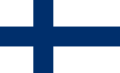
  • Flag of Finland
    flag, from 1918Flag of Finland · Public domain
  • Coat of arms of Finland
    coat of arms, from 1978Coat of arms of Finland · Public domain

Its world

Rivals, and who else stood

Who it fought most

Wars and battles both took part in, on whichever side: the record names who took part, not who fought whom.

Meanwhile, elsewhere

The best-known states of other regions that stood while it did; the band is Finland’s own years.

19251950197520002025

How it compares

Among 3,073 states

Stood longer than 48% of 3,073 states
Finland · 109 yearsNizhny NovgorodMaurya EmpireHow long it stood, among the states with a recorded end or still standing.
Held more ground at its peak than 72% of 1,464 states
Finland · 444,900 km²IraqSwedenThe most ground it held, among the states with a border in Cliopatria.
Had more wars on record per century than 99% of 3,073 states
Finland · 5.5Wars recorded per century, among the states, counting the wars the atlas hosts under each.

How it began

How did Finland begin?

What led to it, and what came of it

Finnish Socialist Workers' Republic · Linked · 1918Finnish Socialist Workers' Repub…Kingdom of Finland · Linked · 1918 – 1919Kingdom of FinlandRussian Revolution · In the article · 1917 · “During this period, Finnish art flourished and an independence movement gradually developed. Following the Russian Revolution of 1917, Finland declared its in…”Russian RevolutionJean Sibelius · Coincidence · 1865 – 1957Jean SibeliusSigrid Schauman · Coincidence · 1877 – 1979Sigrid SchaumanVäinö Tanner · Coincidence · 1881 – 1966Väinö TannerFinland · 1917 – 2026Finland190019502000
in the articlelinkedcoincidence

Open the investigation: every row with its evidence, the conditions at the time, the theories condition by condition, and the succession analysed.

Its centuries in the record

1900 – 1999: 74 recorded — 33 wars and battles, 2 risings, regime changes and massacres, 39 other19002000 – 2099: 4 recorded — 0 wars and battles, 2 risings, regime changes and massacres, 2 other2000

Wars and battles in red, risings, coups and massacres beside them, everything else in grey, by the century each began in. A tall bar is partly a fact about Wikipedia: better-documented centuries hold more.

Each century’s own page:1900 – 19992000 – 2099

Keep exploring

Share this page
Copy link
Embed the map
Cite this page

How this page is made

Drawn from Wikidata (Q33, CC0), the opening and history of its English Wikipedia article retold by the atlas (CC BY-SA 4.0), borders from Cliopatria (CC BY 4.0), coast and rivers from Natural Earth, cities from Reba, Reitsma & Seto 2016 (CC BY 4.0), symbols from Wikimedia Commons, each under its own licence. Data built 2026-11-26 · Pastlas v2.47.1, by Oleh Voronko; the published atlas and its data are for non-commercial use.

How to read it

Areas are measured on an equal-area grid from borders simplified to about five kilometres. “c.” marks an approximate date, and a date known to the century is never printed to the year. Counts are what the atlas holds, and they follow Wikipedia’s coverage: a busy century is partly a fact about the record.

  • Still standing: the span runs to the year of the build, 2026.

Something wrong?

Tell us and name the entry. We fix the data, not just this page.

Report a problem