State · Americas and Oceania

United States

1776 – present · 250 years · still standing

Came after Confederate States of America and California Republic

A republic born of revolt against the British Crown that spread across a continent, survived civil war and became a superpower.

The United States declared its independence from Great Britain in July 1776 and won recognition by defeating it in the Revolutionary War. The federal republic spread west through purchase, settlement and conquest, survived a civil war over slavery, and was a great power by 1900. After the Second World War it faced the Soviet Union as a rival superpower, and since the Soviet collapse in 1991 it has stood alone.

What the record holds

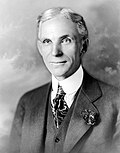
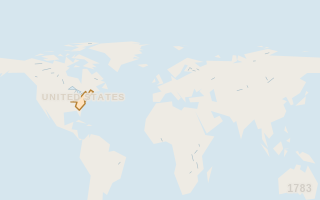
The United States began in 1776, replacing the Confederate States of America and United Colonies.↓ Its borders are first mapped in 1783, around 1.01 million km².↓ The American Civil War, 1861 – 1865, began with it holding 2.49 million km² and ended with 4.00 million km².↓

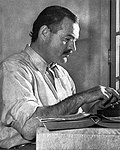
At its largest, in 1945, it held 12.16 million km².↓ The record names 57 rulers in its line, covering 1789 – 2025, the median reign 4 years; 6 of 47 handovers were irregular.↓ Among them, Barack Obama, Donald Trump and Ronald Reagan are the best known.↓ The atlas files 2,065 rows under it, most of them people.↓

From Wikipedia’s article, retold · CC BY-SA 4.0

250 years

Longer than the Gupta Empire, shorter than the Golden Horde

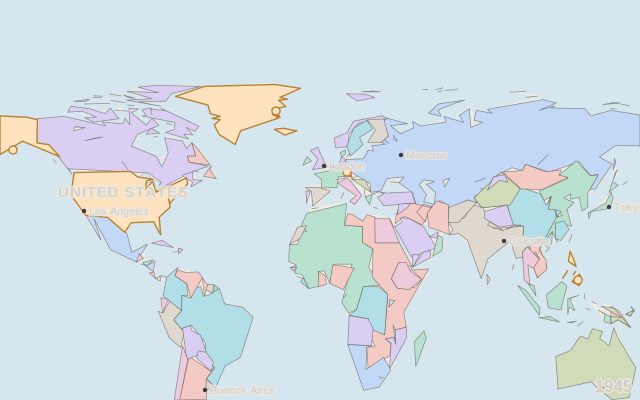
12.2 million km²

At its height in 1945 · a little larger than Canada

57 rulers

the President of the United States

307 wars and battles

More per century than any other state · 2,065 entries in all

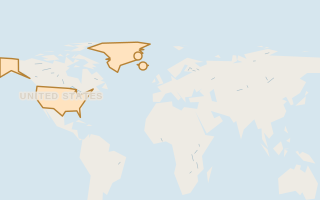
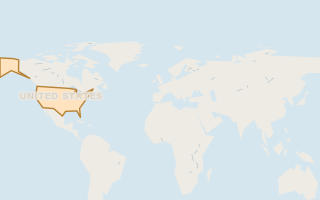
Map: United States in 1945, its borders in gold among its neighbours
War of 1812, 1812 – 1815: 1.50 million km² → 1.59 million km²American Civil War, 1861 – 1865: 2.49 million km² → 4.00 million km²Charter of the United Nations, 1945Convention on the Rights of the Child, 1989September 11 attacks, 200118001850190019502000
Beside it on the map in 1945: Soviet Union, Canada, Provisional Government of the French Republic, British Empire, Brazil and Australia.How far it reached, year by year: its ground inside the borders Cliopatria draws (CC BY 4.0), measured on an equal-area grid; the map shows it at its largest, with the cities of the year.

The story

Five acts, 1776 – present

United States in 1864, at the end of act I
I1776 – 1865

Independence and a divided Union

The colonies declare independence in 1776 and win the war by 1783. The republic almost doubles its land with the Louisiana Purchase of 1803, fights Britain to a draw in 1812 and goes to war with Mexico in 1846. Slavery splits North from South: eleven Southern states secede, and the Union wins the Civil War of 1861–1865, ending slavery.

Watch this act on the live map, from 1776
United States in 1916, at the end of act II
II1865 – 19174.0 million → 9.85 million km²

Reconstruction and a rising power

The Reconstruction Amendments abolish slavery, promise all persons equal protection and bar racial limits on voting, and African Americans take an active part in Southern politics. The country buys Alaska in 1867 and fights the Philippine–American War from 1899; by 1900 it is a great power.

Watch this act on the live map, from 1865
United States in 1944, at the end of act III
III1917 – 19459.85 million → 11.7 million km²

World wars and the Depression

Joining the First World War in 1917, the United States helps defeat the Central Powers, and women win the national vote in 1920. The Wall Street Crash of 1929 opens the Great Depression, which Franklin D. Roosevelt answers with the New Deal. After Japan strikes Pearl Harbor in 1941, the country enters the Second World War with the Allies.

Watch this act on the live map, from 1917
United States in 1990, at the end of act IV
IV1945 – 199112.2 million → 9.59 million km²

Cold War superpower

Victory leaves the United States and the Soviet Union rival superpowers. America seeks to contain Soviet influence, races the Soviets for nuclear arms, backs regime change abroad and puts the first crew on the Moon in 1969. At home the economy booms and cities grow; John F. Kennedy is assassinated in 1963.

Watch this act on the live map, from 1945
V1991 – present

The sole superpower

The Soviet collapse of 1991 leaves the United States the only superpower. An American-led coalition expels an Iraqi invasion force in the Gulf War, and the 1990s bring a record boom and the World Wide Web. Then come the September 11 attacks of 2001, the attack on the Capitol on 6 January 2021, and a rising challenge from China.

Watch this act on the live map, from 1991
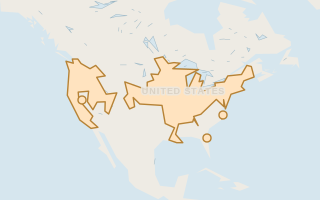
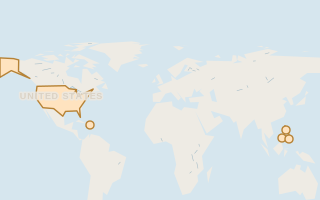
United States in 1945, at its largestUnited States in 1783, first mapped
The rise and the fall in one frame: drag across it from 1783, first mapped at 1.01 million km², to 1945, at its largest at 12.16 million km². Open the live map in 1783 or 1945.

Before and after

Before it

Where it sits in time

3000 BCE2000 BCE1000 BCE110002000California Republic: 1846 – 1846Confederate States of America: 1861 – 1865United States: 1776 – 2026

Five thousand years, 3000 BCE to 2026; the state in gold, what it replaced or followed and what replaced or followed it in grey.

Its people

Lives across the United States

175018001850190019502000
Statesmen and generalsWriters, artists and thinkersScientists and explorersAll its people on the timeline →

How it was governed

57 presidents

57 presidents on record, 1789 to 2025; a reign lasted 4 years at the median. Each bar is a reign, as long as it lasted.

George Washington · 1789 – 1797 · resigned or stood down, the article saysJohn Adams · 1797 – 1801 · left office aliveThomas Jefferson · 1801 – 1809 · left office aliveJames Madison · 1809 – 1817 · resigned or stood down, the article saysJames Monroe · 1817 – 1825 · left office aliveJohn Quincy Adams · 1825 – 1829 · left office aliveAndrew Jackson · 1829 – 1837 · left office aliveMartin Van Buren · 1837 – 1841 · lost an election, the article saysQuentin Trembley · 1837 – … · still in officeWilliam Henry Harrison · 1841 – 1841 · died in office of natural causesJohn Tyler · 1841 – 1845 · left office aliveJames K. Polk · 1845 – 1849 · died in office of natural causesZachary Taylor · 1849 – 1850 · died in office of natural causesMillard Fillmore · 1850 – 1853 · left office aliveFranklin Pierce · 1853 – 1857 · left office aliveJames Buchanan · 1857 – 1861 · resigned or stood down, the article saysAbraham Lincoln · 1861 – 1865 · killedAndrew Johnson · 1865 – 1869 · left office aliveUlysses S. Grant · 1869 – 1877 · left office aliveRutherford B. Hayes · 1877 – 1881 · resigned or stood down, the article saysJames A. Garfield · 1881 – 1881 · killedChester A. Arthur · 1881 – 1885 · resigned or stood down, the article saysGrover Cleveland · 1885 – 1889 · left office aliveBenjamin Harrison · 1889 – 1893 · left office aliveGrover Cleveland · 1893 – 1897 · left office aliveWilliam McKinley · 1897 – 1901 · killedTheodore Roosevelt · 1901 – 1909 · left office aliveWilliam Howard Taft · 1909 – 1913 · left office aliveWoodrow Wilson · 1913 – 1921 · left office aliveWarren G. Harding · 1921 – 1923 · died in office of natural causesCalvin Coolidge · 1923 – 1929 · left office aliveHerbert Hoover · 1929 – 1933 · left office aliveFranklin D. Roosevelt · 1933 – 1945 · died in office of natural causesHarry S. Truman · 1945 – 1953 · left office aliveDwight D. Eisenhower · 1953 – 1961 · left office aliveJohn F. Kennedy · 1961 – 1963 · killedLyndon B. Johnson · 1963 – 1969 · killed, the article saysRichard Nixon · 1969 – 1974 · resignedGerald Ford · 1974 – 1977 · left office aliveJimmy Carter · 1977 – 1981 · lost an election, the article saysRonald Reagan · 1981 – 1989 · left office aliveGeorge H. W. Bush · 1989 – 1993 · lost an election, the article saysBill Clinton · 1993 – 2001 · resigned or stood down, the article saysGeorge W. Bush · 2001 – 2009 · lost an election, the article saysBarack Obama · 2009 – 2017 · no death date to read the end againstDonald Trump · 2017 – 2021 · no death date to read the end againstJoe Biden · 2021 – 2025 · served out the term, the article saysDonald Trump · 2025 – … · still in office18001850190019502000
a second row: a reign that began before the last had ended — rival claimants, or a shared throne
How their terms ended, where it is known (46 of 48):Killed 5Died in office 5Left office alive 34In office 2Not on record 2
Every term, with how it ended and its source

Rulers

How 48 reigns ended - choose one to show only those

How they died, where the record says: died of natural causes 36 · killed 4.

RulerReignLengthHow it ended · sourceTo the ruler before
18th century · 2 reigns
George Washington · aged 571789 – 17978 yearsresignedread from the ruler's own articledied of natural causes
John Adams · aged 621797 – 18014 yearsleft office aliveread off the dates alonedied of natural causes
19th century · 24 reigns · 3 killed or removed
Thomas Jefferson · aged 581801 – 18098 yearsleft office aliveread off the dates alonedied of natural causes
James Madison · aged 581809 – 18178 yearsresignedread from the ruler's own articledied of natural causes
James Monroe · aged 591817 – 18258 yearsleft office aliveread off the dates alonedied of natural causes
John Quincy Adams · aged 581825 – 18294 yearsleft office aliveread off the dates alonedied of natural causes
Andrew Jackson · aged 621829 – 18378 yearsleft office aliveread off the dates alonedied of natural causes
Martin Van Buren · aged 551837 – 18414 yearslost an electionread from the ruler's own articledied of natural causes
Quentin Trembley1837 – in officein office since 1837still in office
William Henry Harrison · aged 681841 – 1841under a yeardied in officeWikidata's manner of deathdied of natural causes
John Tyler · aged 511841 – 18454 yearsleft office aliveread off the dates alonedied of natural causes
James K. Polk · aged 501845 – 18494 yearsdied in officeWikidata's manner of deathdied of natural causes
Zachary Taylor · aged 651849 – 18501 yeardied in officeWikidata's manner of deathdied of natural causes
Millard Fillmore · aged 501850 – 18533 yearsleft office aliveread off the dates alonedied of natural causes
Franklin Pierce · aged 491853 – 18574 yearsleft office aliveread off the dates alonedied of natural causes
James Buchanan · aged 661857 – 18614 yearsresignedread from the ruler's own articledied of natural causes
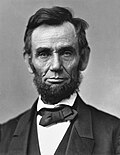
Abraham Lincoln · aged 521861 – 18654 yearskilled in officeWikidata's manner of death
Andrew Johnson · aged 571865 – 18694 yearsleft office aliveread off the dates alonedied of natural causes
Ulysses S. Grant · aged 471869 – 18778 yearsleft office aliveread off the dates alonedied of natural causes
Rutherford B. Hayes · aged 551877 – 18814 yearsresignedread from the ruler's own articledied of natural causes
James A. Garfield · aged 501881 – 1881under a yearkilled in officeWikidata's manner of death
Chester A. Arthur · aged 521881 – 18854 yearsresignedread from the ruler's own articledied of natural causes
Grover Cleveland · aged 481885 – 18894 yearsleft office aliveread off the dates alonedied of natural causes
Benjamin Harrison · aged 561889 – 18934 yearsleft office aliveread off the dates alonedied of natural causes
Grover Cleveland · aged 561893 – 18974 yearsleft office aliveread off the dates alonedied of natural causes
William McKinley · aged 541897 – 19014 yearskilled in officeWikidata's manner of death
20th century · 17 reigns · 2 killed or removed
Theodore Roosevelt · aged 431901 – 19098 yearsleft office aliveread off the dates alonedied of natural causes
William Howard Taft · aged 521909 – 19134 yearsleft office aliveread off the dates alonedied of natural causes
Woodrow Wilson · aged 571913 – 19218 yearsleft office aliveread off the dates alonedied of natural causes
Warren G. Harding · aged 561921 – 19232 yearsdied in officeWikidata's manner of deathdied of natural causes
Calvin Coolidge · aged 511923 – 19296 yearsleft office aliveread off the dates alonedied of natural causes
Herbert Hoover · aged 551929 – 19334 yearsleft office aliveread off the dates alonedied of natural causes
Franklin D. Roosevelt · aged 511933 – 194512 yearsdied in officeWikidata's manner of deathdied of natural causes
Harry S. Truman · aged 611945 – 19538 yearsleft office aliveread off the dates alonedied of natural causes
Dwight D. Eisenhower · aged 631953 – 19618 yearsleft office aliveread off the dates alonedied of natural causes
John F. Kennedy · aged 441961 – 19632 yearskilled in officeWikidata's manner of death
Lyndon B. Johnson · aged 551963 – 19696 yearskilledread from the ruler's own articledied of natural causes
Richard Nixon · aged 561969 – 19745 yearsresignedWikidata's end cause on the termdied of natural causes
Gerald Ford · aged 611974 – 19773 yearsleft office aliveread off the dates alonedied of natural causes
Jimmy Carter · aged 531977 – 19814 yearslost an electionread from the ruler's own article
Ronald Reagan · aged 701981 – 19898 yearsleft office aliveread off the dates alonedied of natural causes
George H. W. Bush · aged 651989 – 19934 yearslost an electionread from the ruler's own articledied of natural causes
Bill Clinton · aged 471993 – 20018 yearsresignedread from the ruler's own article
21st century · 5 reigns
George W. Bush · aged 552001 – 20098 yearslost an electionread from the ruler's own article
Barack Obama · aged 482009 – 20178 yearsending not on record
Donald Trump · aged 712017 – 20214 yearsending not on record
Joe Biden · aged 792021 – 20254 yearsserved out the termread from the ruler's own article
Donald Trump · aged 792025 – in officein office since 2025still in office

57 rulers, 46 with terms dated as terms, covering 1789 – 2025. Median reign 4 years. 6 of 47 handovers irregular - a killing, a deposition, a rival claimant, a rising or a coup beside it. The violent-handover count is withheld: power changed hands so often that any rising falls beside one (exposure 0.92, limit 0.6). A blank in the last column means no kin on record, which is coverage, never “unrelated”.

Flags and arms, in order

  • Greater coat of arms of the United States
    coat of arms, undatedGreater coat of arms of the United States · Public domain
  • Flag of the United States (1776–1777)
    flag, 1775 – 1777Flag of the United States (1776–1777) · Public domain
  • Flag of the United States (1777–1795)
    flag, 1777 – 1795Flag of the United States (1777–1795) · Public domain
  • Flag of the United States (1795-1818)
    flag, 1795 – 1818Flag of the United States (1795-1818) · Public domain
  • Flag of the United States (1818–1819)
    flag, 1818 – 1819Flag of the United States (1818–1819) · Public domain
  • Flag of the United States (1819–1820)
    flag, 1819 – 1820Flag of the United States (1819–1820) · Public domain
  • Flag of the United States (1820–1822)
    flag, 1820 – 1822Flag of the United States (1820–1822) · Public domain
  • Flag of the United States (1822–1836)
    flag, 1822 – 1836Flag of the United States (1822–1836) · Public domain
  • Flag of the United States (1836–1837)
    flag, 1836 – 1837Flag of the United States (1836–1837) · Public domain
  • Flag of the United States (1837–1845)
    flag, 1837 – 1845Flag of the United States (1837–1845) · Public domain
  • Flag of the United States (1845–1846)
    flag, 1845 – 1846Flag of the United States (1845–1846) · Public domain
  • Flag of the United States (1846–1847)
    flag, 1846 – 1847Flag of the United States (1846–1847) · Public domain

17 more in the atlas.

Its world

Rivals, and who else stood

Who it fought most

Wars and battles both took part in, on whichever side: the record names who took part, not who fought whom.

Meanwhile, elsewhere

The best-known states of other regions that stood while it did; the band is the United States’s own years.

175018001850190019502000

How it compares

Among 3,073 states

Stood longer than 68% of 3,073 states
United States · 250 yearsGupta EmpireGolden HordeHow long it stood, among the states with a recorded end or still standing.
Held more ground at its peak than 99% of 1,464 states
United States · 12,156,200 km²CanadaRussiaThe most ground it held, among the states with a border in Cliopatria.
Had more wars on record per century than any other of 3,073 states
United States · 20.0Wars recorded per century, among the states, counting the wars the atlas hosts under each.

How it began

How did the United States begin?

What led to it, and what came of it

Battle of Bunker Hill · Linked · 1775Battle of Bunker HillBattle of Quebec (1775) · Linked · 1775Battle of Quebec (1775)Capture of Fort Ticonderoga · Linked · 1775Capture of Fort TiconderogaBattle of Chelsea Creek · Linked · 1775Battle of Chelsea CreekBattle of Great Bridge · Linked · 1775Battle of Great BridgeBattle of Longue-Pointe · Linked · 1775Battle of Longue-PointeUnited States · 1776 – 2026United States18001850190019502000
linked

Open the investigation: every row with its evidence, the conditions at the time, the theories condition by condition, and the succession analysed.

Its centuries in the record

1700 – 1799: 130 recorded — 59 wars and battles, 4 risings, regime changes and massacres, 67 other17001800 – 1899: 837 recorded — 199 wars and battles, 30 risings, regime changes and massacres, 608 other18001900 – 1999: 1006 recorded — 39 wars and battles, 59 risings, regime changes and massacres, 908 other19002000 – 2099: 92 recorded — 10 wars and battles, 42 risings, regime changes and massacres, 40 other2000

Wars and battles in red, risings, coups and massacres beside them, everything else in grey, by the century each began in. A tall bar is partly a fact about Wikipedia: better-documented centuries hold more.

Each century’s own page:1700 – 17991800 – 18991900 – 19992000 – 2099

Keep exploring

Share this page
Copy link
Embed the map
Cite this page

How this page is made

Drawn from Wikidata (Q30, CC0), the opening and history of its English Wikipedia article retold by the atlas (CC BY-SA 4.0), borders from Cliopatria (CC BY 4.0), coast and rivers from Natural Earth, cities from Reba, Reitsma & Seto 2016 (CC BY 4.0), symbols from Wikimedia Commons, each under its own licence. Data built 2026-11-26 · Pastlas v2.47.1, by Oleh Voronko; the published atlas and its data are for non-commercial use.

How to read it

Areas are measured on an equal-area grid from borders simplified to about five kilometres. “c.” marks an approximate date, and a date known to the century is never printed to the year. Counts are what the atlas holds, and they follow Wikipedia’s coverage: a busy century is partly a fact about the record.

  • Still standing: the span runs to the year of the build, 2026.

Something wrong?

Tell us and name the entry. We fix the data, not just this page.

Report a problem