State · Middle East and North Africa

Egypt

1953 – present · 73 years · still standing

Came after United Arab Republic and Kingdom of Egypt

The Arab world's most populous state, a republic of soldier-presidents, which fought Israel, made peace with it and overthrew Mubarak.

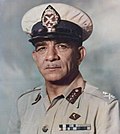
Egypt was declared a republic on 18 June 1953, a year after the Free Officers' revolution put the army in power and banned political parties. Gamal Abdel Nasser soon pushed aside its first president, Mohamed Naguib, and Egypt fought Israel in 1956 and 1967. Anwar Sadat made peace with Israel and turned to the United States; Hosni Mubarak ruled for three decades until the revolution of 2011, which opened years of unrest.

What the record holds

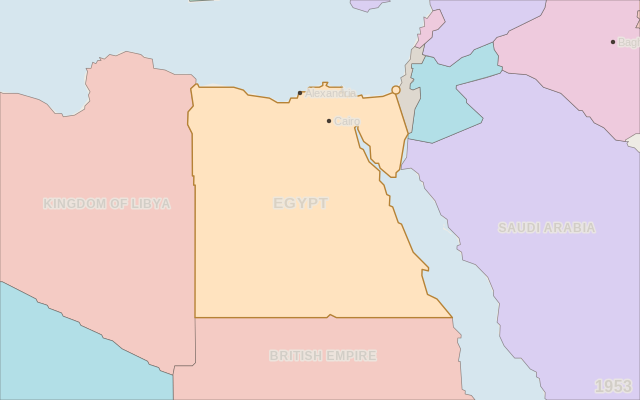
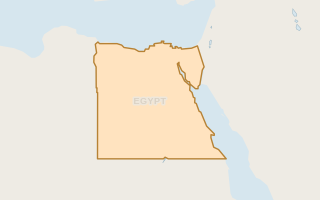
Its record opens in 1953, replacing the United Arab Republic and the Kingdom of Egypt.↓ In 1953, the first year its borders are mapped, it covered 1.01 million km².↓

Its line counts 9 rulers, covering 1953 – 2014, the median reign 1 year; 6 of 8 handovers were irregular.↓ The best known of them are Hosni Mubarak, Gamal Abdel Nasser and Anwar Sadat.↓ Most of the 85 rows the atlas files under it are people.↓

From Wikipedia’s article, retold · CC BY-SA 4.0

73 years

Longer than Jammu and Kashmir, shorter than Yugoslavia

1.01 million km²

At its height in 1953 · about the size of Mauritania

9 rulers

the President of Egypt

16 wars and battles

More per century than 99% of states · 85 entries in all

Map: Egypt in 1953, its borders in gold among its neighbours
Suez Crisis, 1956War of Attrition, 1967 – 1970Yom Kippur War, 1973Arab Spring, 2010 – 20122013 Egyptian coup d'état, 20131960198020002020
Beside it on the map in 1953: Saudi Arabia, Kingdom of Libya, British Empire, Kingdom of Iraq, French Fourth Republic and Jordan.How far it reached, year by year: its ground inside the borders Cliopatria draws (CC BY 4.0), measured on an equal-area grid; the map shows it at its largest, with the cities of the year.

The story

Four acts, 1953 – present

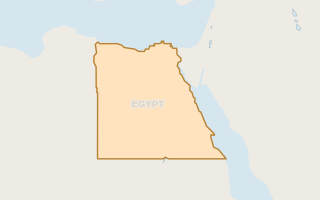
Egypt in 1980, at the end of act II
II1970 – 1981

Sadat turns west

Anwar Sadat takes over on Nasser's death in 1970. He sidelines the Nasserists and expels Soviet advisers in 1972. With Syria he wages the war of 1973; cuts to food subsidies spark bread riots in 1977. Egypt signs the Camp David Accords in 1978 and peace with Israel in 1979; Sadat is assassinated in 1981.

Watch this act on the live map, from 1970
IV2011 – present

Revolution and its aftermath

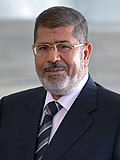
The army takes control under Mohamed Hussein Tantawi, dissolves parliament and suspends the constitution. Mohamed Morsi holds the presidency in 2012–2013; 2013 brings a coup and the Rabaa massacre, Adly Mansour holds the office until 2014, and Abdel Fattah el-Sisi has been president since. An insurgency breaks out in Sinai in 2011.

Watch this act on the live map, from 2011

Before and after

Before it

Where it sits in time

3000 BCE2000 BCE1000 BCE110002000Israeli Military Governorate: 1967 – 1982Kingdom of Egypt: 1922 – 1953United Arab Republic: 1958 – 1971Egypt: 1953 – 2026

Five thousand years, 3000 BCE to 2026; the state in gold, what it replaced or followed and what replaced or followed it in grey.

Its people

Lives across Egypt

19251950197520002025
Statesmen and generalsWriters, artists and thinkersAll its people on the timeline →

How it was governed

9 presidents

9 presidents on record, 1953 to 2014; a reign lasted 1 years at the median. Each bar is a reign, as long as it lasted.

Mohamed Naguib · 1953 – 1954 · left office aliveGamal Abdel Nasser · 1956 – 1970 · died in office of natural causesZakaria Mohieddin · 1967 – 1967 · left office aliveAnwar Sadat · 1970 – 1970 · left office aliveSufi Abu Taleb · 1981 – 1981 · left office aliveHosni Mubarak · 1981 – 2011 · resigned or stood down, the article saysMohamed Morsi · 2012 – 2013 · left office aliveAdly Mansour · 2013 – 2014 · no death date to read the end againstAbdel Fattah el-Sisi · 2014 – … · still in office1960198020002020
a second row: a reign that began before the last had ended — rival claimants, or a shared throne
How their terms ended, where it is known (8 of 9):Died in office 1Left office alive 6In office 1Not on record 1
Every term, with how it ended and its source

Rulers

How 9 reigns ended - choose one to show only those

How they died, where the record says: died of natural causes 5 · killed 1.

RulerReignLengthHow it ended · sourceTo the ruler before
20th century · 6 reigns
Mohamed Naguib · aged 521953 – 19541 yearleft office aliveread off the dates alonedied of natural causes
Gamal Abdel Nasser · aged 381956 – 197014 yearsdied in officeWikidata's manner of deathdied of natural causes
Zakaria Mohieddin · aged 491967 – 1967under a yearleft office aliveread off the dates alone
Anwar Sadat · aged 521970 – 1970under a yearleft office aliveread off the dates alonekilled
Sufi Abu Taleb · aged 561981 – 1981under a yearleft office aliveread off the dates alonedied of natural causes
Hosni Mubarak · aged 531981 – 201130 yearsresignedread from the ruler's own articledied of natural causes
21st century · 3 reigns
Mohamed Morsi · aged 612012 – 20131 yearleft office aliveread off the dates alonedied of natural causes
Adly Mansour · aged 682013 – 20141 yearending not on record
Abdel Fattah el-Sisi · aged 602014 – in officein office since 2014still in office

9 rulers, 9 with terms dated as terms, covering 1953 – 2014. Median reign 1 years. 6 of 8 handovers irregular - a killing, a deposition, a rival claimant, a rising or a coup beside it. A blank in the last column means no kin on record, which is coverage, never “unrelated”.

Heads of government

The line of Prime Minister of Egypt, drawn and never measured: a cabinet is not a reign.

Nureddin Tarraflived 1910 – 1995
Mahmoud El Nokrashy Pasha1946 – 1948
Ibrahim Abdel Hady Pasha1948 – 1949
Hussein Sirri Pasha1949 – 1950
Mostafa el-Nahas1950 – 1952
Hussein Sirri Pasha1952 – 1952
Ahmed Naguib el-Hilaly1952 – 1952
Aly Maher Pasha1952 – 1952
Mohamed Naguib1953 – 1954
Gamal Abdel Nasser1954 – 1954
Gamal Abdel Nasser1958 – 1962
Kamal el-Din Hussein1960 – 1961
Ali Sabri1962 – 1965
Zakaria Mohieddin1965 – 1966
Mohamed Sedki Sulayman1966 – 1967
Gamal Abdel Nasser1967 – 1970
Mahmoud Fawzi1970 – 1971
Aziz Sedky1972 – 1973
Anwar Sadat1973 – 1974
Abdel Aziz Mohamed Hegazy1974 – 1975
Mamdouh Salem1975 – 1978
Mustafa Khalil1978 – 1980
Anwar Sadat1980 – 1981
Hosni Mubarak1981 – 1982
Ahmad Fuad Mohieddin1982 – 1984
Kamal Hassan Ali1984 – 1985
Aly Lotfy Mahmoud1985 – 1986
Atef Sedky1986 – 1996
Kamal Ganzouri1996 – 1999
Atef Ebeid1999 – 2004
Ahmed Nazif2004 – 2011
Ahmed Shafik2011 – 2011
Kamal Ganzouri2011 – 2012
Essam Sharaf2011 – 2011
Hesham Qandil2012 – 2013
Hazem El Beblawi2013 – 2014
Ibrahim Mahlab2014 – 2015
Sherif Ismail2015 – 2018
Mostafa Madbouly2018 – …

Flags and arms, in order

  • Flag of Egypt (1922-1958)
    flag, undatedFlag of Egypt (1922-1958) · Public domain
  • Flag of Egypt (1844–1867)
    flag, 1844 – 1867Flag of Egypt (1844–1867) · CC BY-SA 3.0 · TRAJAN 117
  • Flag of Muhammad Ali
    flag, 1867 – 1881Flag of Muhammad Ali · CC0
  • Flag of Egypt (1882–1922)
    flag, 1881 – 1922Flag of Egypt (1882–1922) · Public domain
  • Flag of the United Arab Republic (1958–1971), Flag of Syria (1980–2024)
    flag, 1958 – 1999Flag of the United Arab Republic (1958–1971), Flag of Syria (1980–2024) · Public domain
  • Flag of Egypt (1972–1984)
    flag, 1972 – 1984Flag of Egypt (1972–1984) · Public domain
  • Flag of Egypt
    flag, from 1983Flag of Egypt · Public domain
  • Coat of arms of Egypt (Official)
    coat of arms, from 1984Coat of arms of Egypt (Official) · Public domain

Its world

Rivals, and who else stood

Who it fought most

Wars and battles both took part in, on whichever side: the record names who took part, not who fought whom.

Meanwhile, elsewhere

The best-known states of other regions that stood while it did; the band is Egypt’s own years.

1960198020002020

How it compares

Among 3,073 states

Stood longer than 40% of 3,073 states
Egypt · 73 yearsJammu and KashmirYugoslaviaHow long it stood, among the states with a recorded end or still standing.
Held more ground at its peak than 85% of 1,464 states
Egypt · 1,012,900 km²VenezuelaMauritaniaThe most ground it held, among the states with a border in Cliopatria.
Had more wars on record per century than 99% of 3,073 states
Egypt · 5.0Wars recorded per century, among the states, counting the wars the atlas hosts under each.

How it began

How did Egypt begin?

What led to it, and what came of it

1952 Clash of Ismailia · Linked · 19521952 Clash of IsmailiaWorld War II · Linked · 1939 – 1945World War IIItalian invasion of Egypt · Linked · 1940Italian invasion of EgyptMedieval Egypt · Linked · 641Medieval EgyptKingdom of Egypt · Linked · 1922 – 1953Kingdom of EgyptAll-Palestine Government · Linked · 1948 – 1959All-Palestine GovernmentEgypt · 1953 – 2026Egypt100015002000
linked

Open the investigation: every row with its evidence, the conditions at the time, the theories condition by condition, and the succession analysed.

Its centuries in the record

1900 – 1999: 71 recorded — 12 wars and battles, 3 risings, regime changes and massacres, 56 other19002000 – 2099: 14 recorded — 4 wars and battles, 9 risings, regime changes and massacres, 1 other2000

Wars and battles in red, risings, coups and massacres beside them, everything else in grey, by the century each began in. A tall bar is partly a fact about Wikipedia: better-documented centuries hold more.

Each century’s own page:1900 – 19992000 – 2099

Keep exploring

Share this page
Copy link
Embed the map
Cite this page

How this page is made

Drawn from Wikidata (Q79, CC0), the opening and history of its English Wikipedia article retold by the atlas (CC BY-SA 4.0), borders from Cliopatria (CC BY 4.0), coast and rivers from Natural Earth, cities from Reba, Reitsma & Seto 2016 (CC BY 4.0), symbols from Wikimedia Commons, each under its own licence. Data built 2026-11-26 · Pastlas v2.47.1, by Oleh Voronko; the published atlas and its data are for non-commercial use.

How to read it

Areas are measured on an equal-area grid from borders simplified to about five kilometres. “c.” marks an approximate date, and a date known to the century is never printed to the year. Counts are what the atlas holds, and they follow Wikipedia’s coverage: a busy century is partly a fact about the record.

  • Still standing: the span runs to the year of the build, 2026.

Something wrong?

Tell us and name the entry. We fix the data, not just this page.

Report a problem