State · East and Southeast Asia

People's Republic of China

1949 – present · 77 years · still standing

Came after Republic of China and Inner Mongolian People's Republic

The Chinese Communist Party's state: famine and the Cultural Revolution under Mao, then market reform and a rise to superpower.

Mao Zedong proclaimed the People's Republic in 1949, after a string of victories in the civil war drove the Republic of China's government to Taiwan; both still claim to be China's legitimate state. Famine and political turmoil wrecked many of the Communist Party's early plans. From 1978 reform and opening-up moved China toward a socialist market economy, and it became the world's largest manufacturer and second-largest economy, a one-party state now called a superpower.

What the record holds

The People's Republic of China began in 1949, replacing the Republic of China and the Inner Mongolian People's Republic.↓ Its borders are first mapped in 1950, around 8.41 million km².↓ The Vietnam War, 1955 – 1975, began with it holding 9.36 million km² and ended with 9.39 million km².↓

Its ground peaked in 2000 at 9.40 million km².↓ Its highest office was held by 6 rulers, covering 1949 – 2012, the median reign 11 years; 2 of 5 handovers were irregular.↓ Among them, Mao Zedong, Xi Jinping and Deng Xiaoping are the best known.↓ The atlas files 129 rows under it, people the largest group of them.↓

From Wikipedia’s article, retold · CC BY-SA 4.0

77 years

Longer than Yugoslavia, shorter than the Empire of Japan

9.4 million km²

At its height in 2000 · about the size of the United States

6 rulers

the Paramount leader

17 wars and battles

More per century than 99% of states · 129 entries in all

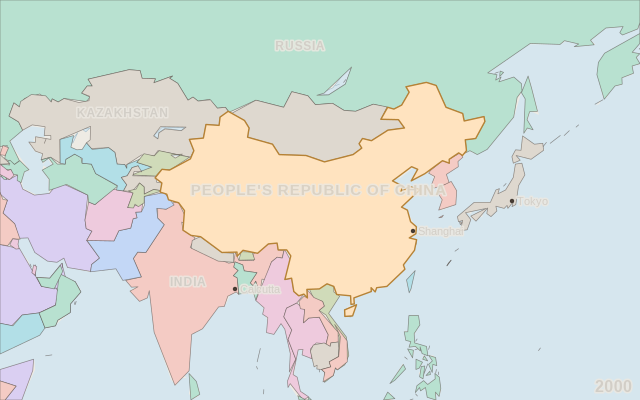
Map: People's Republic of China in 2000, its borders in gold among its neighbours
Vietnam War, 1955 – 1975: 9.36 million km² → 9.39 million km²Sino-Indian War, 1962Cultural Revolution, 1966 – 1976Sino-Vietnamese War, 19791989 Tiananmen Square protests and massacre, 1989196019701980199020002010
Beside it on the map in 2000: Russia, Kazakhstan, India, Mongolia, Iran and Pakistan.How far it reached, year by year: its ground inside the borders Cliopatria draws (CC BY 4.0), measured on an equal-area grid; the map shows it at its largest, with the cities of the year.

The story

Four acts, 1949 – present

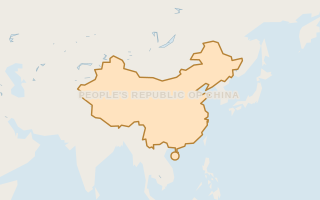
People's Republic of China in 1975, at the end of act I
I1949 – 1976

Mao's revolution

The new state annexes Tibet in 1950, puts the economy under state control, builds heavy industry and spreads literacy, while land reform sets peasants on landlords and kills upwards of a million. The Great Chinese Famine of 1959–1961, war with India in 1962 and the Cultural Revolution from 1966 follow; Mao dies in 1976.

Watch this act on the live map, from 1949
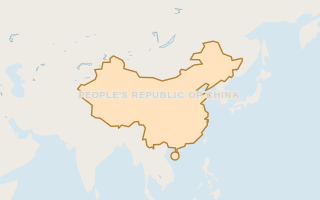
People's Republic of China in 1988, at the end of act II
II1976 – 19899.39 million → 9.39 million km²

Reform and opening

The Tangshan earthquake strikes in 1976, and Hua Guofeng leads until 1978. From then Deng Xiaoping's reform and opening-up steers China toward a socialist market economy and spurs growth. China fights Vietnam in 1979, and in 1989 the protests in Tiananmen Square end in a massacre.

Watch this act on the live map, from 1976
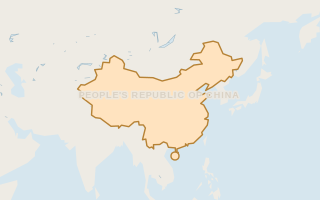
People's Republic of China in 2011, at the end of act III
III1989 – 20129.39 million → 9.4 million km²

Jiang and Hu

Jiang Zemin leads from 1989 and Hu Jintao from 2002 as growth continues. Tension over the Taiwan Strait flares in 1995–1996, and SARS spreads in 2002–2004. In 2008 the Sichuan earthquake strikes and unrest breaks out in Tibet; riots shake Ürümqi in 2009.

Watch this act on the live map, from 1989
IV2012 – present

Xi Jinping's China

Xi Jinping becomes paramount leader in 2012. The persecution of Uyghurs begins in 2014, and international bodies accuse China of authoritarianism and abuses. COVID-19 emerges in 2019, and COVID-19 protests break out in 2022. The world's largest manufacturer and second-largest economy, China is now called a superpower.

Watch this act on the live map, from 2012

Before and after

Before it

Where it sits in time

3000 BCE2000 BCE1000 BCE110002000Republic of China: 1912 – 1949Chiang Hung: 1180 – 1950Inner Mongolian People's Republic: 1945 – 1945People's Republic of China: 1949 – 2026

Five thousand years, 3000 BCE to 2026; the state in gold, what it replaced or followed and what replaced or followed it in grey.

Its people

Lives across the People's Republic of China

190019251950197520002025
Statesmen and generalsWriters, artists and thinkersScientists and explorersAll its people on the timeline →

How it was governed

6 leaders

6 leaders on record, 1949 to 2012; a reign lasted 11 years at the median. Each bar is a reign, as long as it lasted.

Mao Zedong · 1949 – 1976 · no death date to read the end againstHua Guofeng · 1976 – 1978 · no death date to read the end againstDeng Xiaoping · 1978 – 1989 · resigned or stood down, the article saysJiang Zemin · 1989 – 2002 · no death date to read the end againstHu Jintao · 2002 – 2012 · no death date to read the end againstXi Jinping · 2012 – … · still in office1960198020002020
How their terms ended, where it is known (2 of 6):Left office alive 1In office 1Not on record 4
Every term, with how it ended and its source

Rulers

How 6 reigns ended - choose one to show only those

How they died, where the record says: died of natural causes 3.

RulerReignLengthHow it ended · sourceTo the ruler before
20th century · 4 reigns
Mao Zedong1949 – 197627 yearsending not on recorddied of natural causes
Hua Guofeng1976 – 19782 yearsending not on record
Deng Xiaoping1978 – 198911 yearsresignedread from the ruler's own articledied of natural causes
Jiang Zemin1989 – 200213 yearsending not on recorddied of natural causes
21st century · 2 reigns
Hu Jintao2002 – 201210 yearsending not on record
Xi Jinping2012 – in officein office since 2012still in office

6 rulers, 6 with terms dated as terms, covering 1949 – 2012. Median reign 11 years. 2 of 5 handovers irregular - a killing, a deposition, a rival claimant, a rising or a coup beside it. A blank in the last column means no kin on record, which is coverage, never “unrelated”.

Formal heads of state and heads of government

The line of Premier of the People's Republic of China, drawn and never measured: a cabinet is not a reign.

Zhou Enlai1954 – 1976
Mao Zedong1954 – 1959
Liu Shaoqi1959 – 1968
Soong Ching-ling1968 – 1975
Dong Biwu1968 – 1975
Zhu De1975 – 1976
Hua Guofeng1976 – 1980
Soong Ching-ling1976 – 1978
Ye Jianying1978 – 1983
Zhao Ziyang1980 – 1987
Li Xiannian1983 – 1988
Li Peng1988 – 1998
Yang Shangkun1988 – 1993
Jiang Zemin1993 – 2003
Zhu Rongji1998 – 2003
Wen Jiabao2003 – 2013
Hu Jintao2003 – 2013
Li Keqiang2013 – 2023
Xi Jinping2013 – …
Li Qiang2023 – …

Flags and arms, in order

  • Flag of the People's Republic of China
    flag, from 1949Flag of the People's Republic of China · Public domain
  • 中華人民共和國國徽
    coat of arms, from 1950中華人民共和國國徽 · Public domain

Its world

Rivals, and who else stood

Who it fought most

Wars and battles both took part in, on whichever side: the record names who took part, not who fought whom.

Meanwhile, elsewhere

The best-known states of other regions that stood while it did; the band is the People's Republic of China’s own years.

19401960198020002020

How it compares

Among 3,073 states

Stood longer than 41% of 3,073 states
People's Republic of China · 77 yearsYugoslaviaEmpire of JapanHow long it stood, among the states with a recorded end or still standing.
Held more ground at its peak than 99% of 1,464 states
People's Republic of China · 9,397,800 km²BrazilUnited StatesThe most ground it held, among the states with a border in Cliopatria.
Had more wars on record per century than 99% of 3,073 states
People's Republic of China · 7.0Wars recorded per century, among the states, counting the wars the atlas hosts under each.

How it began

How did the People's Republic of China begin?

What led to it, and what came of it

Second Sino-Japanese War · Argued · 1937 – 1945 · “The Japanese invasion is argued to have given the Communists the chance to mobilise the countryside and exhaust the Nationalists; others put their victory dow…”Second Sino-Japanese WarInner Mongolian People's Republic · Linked · 1945Inner Mongolian People's RepublicChiang Hung · Linked · 1180 – 1950Chiang HungEast Turkestan · Linked · 1463 – 1949East TurkestanPortuguese Macau · Linked · 1557 – 1999Portuguese MacauGanden Phodrang · Linked · 1642 – 1959Ganden PhodrangPeople's Republic of China · 1949 – 2026People's Republic of China12001400160018002000
arguedlinked

Open the investigation: every row with its evidence, the conditions at the time, the theories condition by condition, and the succession analysed.

Its centuries in the record

1900 – 1999: 79 recorded — 14 wars and battles, 15 risings, regime changes and massacres, 50 other19002000 – 2099: 42 recorded — 3 wars and battles, 11 risings, regime changes and massacres, 28 other2000

Wars and battles in red, risings, coups and massacres beside them, everything else in grey, by the century each began in. A tall bar is partly a fact about Wikipedia: better-documented centuries hold more.

Each century’s own page:1900 – 19992000 – 2099

Keep exploring

Share this page
Copy link
Embed the map
Cite this page

How this page is made

Drawn from Wikidata (Q148, CC0), the opening and history of its English Wikipedia article retold by the atlas (CC BY-SA 4.0), borders from Cliopatria (CC BY 4.0), coast and rivers from Natural Earth, cities from Reba, Reitsma & Seto 2016 (CC BY 4.0), symbols from Wikimedia Commons, each under its own licence. Data built 2026-11-26 · Pastlas v2.47.1, by Oleh Voronko; the published atlas and its data are for non-commercial use.

How to read it

Areas are measured on an equal-area grid from borders simplified to about five kilometres. “c.” marks an approximate date, and a date known to the century is never printed to the year. Counts are what the atlas holds, and they follow Wikipedia’s coverage: a busy century is partly a fact about the record.

  • Still standing: the span runs to the year of the build, 2026.

Something wrong?

Tell us and name the entry. We fix the data, not just this page.

Report a problem