I1950 – 1966
The first presidents
Rajendra Prasad serves as president from 1950 to 1962, followed by the philosopher Sarvepalli Radhakrishnan. The young republic fights China in 1962 and Pakistan in 1965.
Watch this act on the live map, from 1950State · South Asia
1950 – present · 76 years · still standing
Came after  British Raj and
 Kingdom of Mysore · became Faridkot State
The world's most populous country: a federal republic forged from the British Raj and princely states, tested by war, insurgency and assassination.
The Republic of India took its present form in 1950, succeeding the Dominion of India and absorbing hundreds of princely states, from Hyderabad and Mysore to Travancore. It is now the most populous country on earth and the seventh-largest by area, bordering Pakistan, China, Nepal, Bhutan, Bangladesh and Myanmar. A federal, democratic republic with a president at its head, it has fought China once and Pakistan several times.
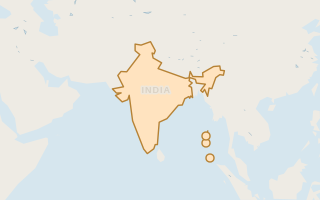
It was founded in 1950, replacing the British Raj and the Kingdom of Mysore.↓ Its borders are first mapped in 1951, around 3.14 million km².↓
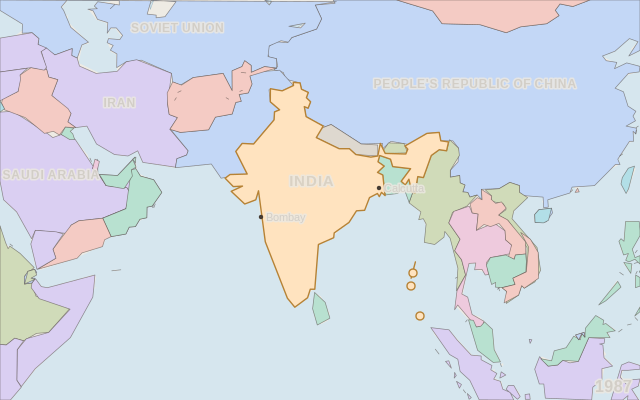
At its largest, in 1987, it held 3.19 million km².↓ Its highest office was held by 17 rulers, covering 1950 – 2022, the median reign 5 years; none of its 16 handovers was irregular.↓ The best known of them are  A. P. J. Abdul Kalam,
 Pranab Mukherjee and
 Pratibha Patil.↓ Of the 121 rows the atlas files under it, people are the largest group.↓
From Wikipedia’s article, retold · CC BY-SA 4.0
Best known for
76 years
Longer than Yugoslavia, shorter than the Empire of Japan
3.19 million km²
At its height in 1987 · a little larger than Argentina
17 rulers
the President of India
18 wars and battles
More per century than 99% of states · 121 entries in all
 People's Republic of China,
 Soviet Union,
 Iran,
 Saudi Arabia,
 Indonesia and
 Pakistan.How far it reached, year by year: its ground inside the borders Cliopatria draws (CC BY 4.0), measured on an equal-area grid; the map shows it at its largest, with the cities of the year.
The story
Its life in chapters, drawn from its article’s own history; each opens on the live map.
Rajendra Prasad serves as president from 1950 to 1962, followed by the philosopher Sarvepalli Radhakrishnan. The young republic fights China in 1962 and Pakistan in 1965.
Watch this act on the live map, from 1950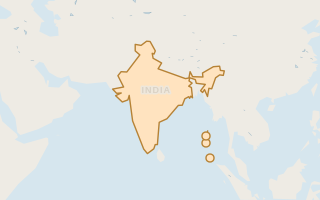
A Naxalite–Maoist insurgency begins in 1967. India fights Pakistan again in 1971 and signs the Simla Agreement in 1972. The year 1984 brings Operation Blue Star, the assassination of Indira Gandhi and the anti-Sikh riots, as well as the Siachen conflict. Insurgency grips Jammu and Kashmir from 1989, and Rajiv Gandhi is assassinated in 1991.
The Kargil War is fought in 1999. An earthquake strikes Gujarat in 2001, and violence follows there in 2002. The Pulwama attack and border skirmishes with Pakistan mark 2019; protests against the Citizenship Amendment Act and riots in Delhi follow, then COVID-19 in 2020 and conflict in Manipur from 2023.
Watch this act on the live map, from 1991The states the record files it as replacing or following, and those that replaced or followed it - Wikidata's own statements, each read from this state's side.
 Cambay State · replaces · 1730 – 1948
 Datia State · replaces · 1626 – 1950
 Jawhar State · replaces · 1343 – 1947
 Dhar State · replaces · 1728 – 1947
 Jind State · replaces · 1763 – 1948
 Jhalawar State · replaces · 1838 – 1949
 Samthar State · replaces · 1760 – 1950British Raj · replaces · 1858 – 1947
 Banganapalle State · replaces · 1790 – 1948
 Benares State · replaces · 1770 – 1948
 Junagadh State · replaces · 1748 – 1948
 Porbandar State · replaces · 1193 – 1948
 Sachin State · replaces · 1791 – 1948
 Kingdom of Cochin · replaces · 1500 – 1949
 Travancore · replaces · 1729 – 1949
 Nawanagar State · replaces · 1540 – 1948
 State of Alwar · replaces · 1770 – 1949
 Gwalior State · replaces · 1761 – 1948
 Ratlam State · replaces · 1652 – 1948
 Kingdom of Jhalavad · replaces · 1742 – 1948
 Jaora State · replaces · 1817 – 1948
 Gondal State · replaces · 1634 – 1949
 Cutch State · replaces · 1147 – 1948
 Kapurthala State · replaces · 1772 – 1947
 Kingdom of Mewar · replaces · 1666 – 1949
 Tripura · replaces · 1809 – 1949
 Balasinor State · replaces · 1758 – 1948
 Pratapgarh State · replaces · 1775 – 1949
 Dominion of India · replaces · 1947 – 1950
 Kota State · replaces · 1613 – 1949
 Janjira State · replaces · 1489 – 1948
 Lunavada State · replaces · 1434 – 1948
 Oudh State · replaces · 1732 – 1859
 Sawantwadi State · replaces · 1627 – 1948
 Sangli State · replaces · 1801 – 1948
 Shahpura State · replaces · 1629 – 1949
 Jammu and Kashmir (princely state) · replaces · 1846 – 1947Kingdom of Mysore · replaces · 1399 – 1950
 Kangra State · replaces · 1400 – 1948
 Limbdi State · replaces · 1500 – 1947
 Loharu State · replaces · 1806 – 1947
 Carnatic Sultanate · replaces · 1692 – 1855
 Rampur State · replaces · 1719 – 1949
 Pudukkottai Kingdom · replaces · 1680 – 1948
 Bansda State · replaces · 1781 – 1948
 Bundi State · replaces · 1342 – 1949
 Cooch Behar State · replaces · 1586 – 1949
 Dharampur State · replaces · 1262 – 1948
 Ajaigarh State · replaces · 1765 – 1949
 Sandur State · replaces · 1713 – 1949
 Kingdom of Amber · replaces · 1128 – 1949
 Kingdom of Marwar · replaces · 1250 – 1949
 Kishangarh State · replaces · 1611 – 1947
 Idar State · replaces · 1257 – 1948
 Dholpur State · replaces · 1806 – 1948
 Kolhapur State · replaces · 1707 – 1949
 Hyderabad State · replaces · 1724 – 1948
 Mandi State · replaces · 1290 – 1948
 Palanpur State · replaces · 1370 – 1948
 Indore State · replaces · 1732 – 1948
 Sirohi State · replaces · 1405 – 1949
 Bijawar State · replaces · 1765 – 1950
 Banswara State · replaces · 1497 – 1949
 Baroda State · replaces · 1721 – 1949
 Barwani State · replaces · 836 – 1948
 Bharatpur State · replaces · 1680 – 1948
 Bhavnagar State · replaces · 1723 – 1948
 Bhopal State · replaces · 1723 – 1947
 Bhor State · replaces · 1697 – 1948
 Bikaner State · replaces · 1465 – 1947
 Bilaspur State · replaces · 697 – 1948
 Tonk State · replaces · 1817 – 1949
 Rajpipla State · replaces · 1340 – 1948
 Bantva Manavadar · replaces · 1760 – 1947
 Dungarpur State · replaces · 1197 – 1947
Five thousand years, 3000 BCE to 2026; the state in gold, what it replaced or followed and what replaced or followed it in grey.
Its people
One axis for everyone, so you can see who knew whom: the best-known, ordered by birth.
 Rajendra Prasadpresident · writer1884 – 1963
 Sarvepalli Radhakrishnanpresident · philosopher1888 – 1975
 Indira Gandhipolitician · writer1917 – 1984
 Atal Bihari Vajpayeepolitician · poet1924 – 2018
 A. P. J. Abdul Kalampresident1931 – 2015
 Manmohan Singhpolitician1932 – 2024
 Pratibha Patilpresident1934 – present
 Pranab Mukherjeepresident1935 – 2020
 Rajiv Gandhipolitician1944 – 1991
 Ram Nath Kovindpresident1945 – present
 Narendra Modipolitician · writer1950 – present
 Rajnath Singhphysicist · politician1951 – present
 Kailash Satyarthiengineer1954 – present
 Droupadi Murmupresident1958 – present
 Arundhati Roywriter1961 – present
 Viswanathan Anandwriter1969 – present
 Sachin Tendulkarpolitician1973 – present
How it was governed
17 presidents on record, 1950 to 2022; a reign lasted 5 years at the median. Each bar is a reign, as long as it lasted.
The line of President of India - the office this state names as its head of state.
| Ruler | Reign | Length | How it ended · source | To the ruler before |
|---|---|---|---|---|
| 20th century · 12 reigns | ||||
| Rajendra Prasad · aged 66 | 1950 – 1962 | 12 years | left office aliveread off the dates alone | |
| Sarvepalli Radhakrishnan · aged 74 | 1962 – 1967 | 5 years | left office aliveread off the dates alone | |
 Zakir Husain · aged 70 | 1967 – 1969 | 2 years | died in officeread off the dates alone | |
 V. V. Giri · aged 75 | 1969 – 1969 | under a year | resignedread from the ruler's own article | |
 Mohammad Hidayatullah · aged 64 | 1969 – 1969 | under a year | left office aliveread off the dates alone | |
 Fakhruddin Ali Ahmed · aged 69 | 1974 – 1977 | 3 years | died in officeread off the dates alone | |
 B. D. Jatti · aged 65 | 1977 – 1977 | under a year | resignedread from the ruler's own articledied of natural causes | |
 Neelam Sanjiva Reddy · aged 64 | 1977 – 1982 | 5 years | left office aliveread off the dates alonedied of natural causes | |
 Zail Singh · aged 66 | 1982 – 1987 | 5 years | left office aliveread off the dates alonedied by accident | |
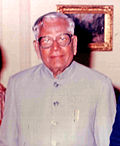 Ramaswamy Venkataraman · aged 77 | 1987 – 1992 | 5 years | left office aliveread off the dates alonedied of natural causes | |
 Shankar Dayal Sharma · aged 74 | 1992 – 1997 | 5 years | left office aliveread off the dates alonedied of natural causes | |
 K. R. Narayanan · aged 77 | 1997 – 2002 | 5 years | left office aliveread off the dates alonedied of natural causes | |
| 21st century · 5 reigns | ||||
| A. P. J. Abdul Kalam · aged 71 | 2002 – 2007 | 5 years | left office aliveread off the dates alonedied of natural causes | |
| Pratibha Patil · aged 73 | 2007 – 2012 | 5 years | ending not on record | |
| Pranab Mukherjee · aged 77 | 2012 – 2017 | 5 years | left office aliveread off the dates alonedied of natural causes | |
| Ram Nath Kovind · aged 72 | 2017 – 2022 | 5 years | ending not on record | |
| Droupadi Murmu · aged 64 | 2022 – in office | in office since 2022 | still in office | |
17 rulers, 17 with terms dated as terms, covering 1950 – 2022. Median reign 5 years. 0 of 16 handovers irregular - a killing, a deposition, a rival claimant, a rising or a coup beside it. The violent-handover count is withheld: power changed hands so often that any rising falls beside one (exposure 0.92, limit 0.6). A blank in the last column means no kin on record, which is coverage, never “unrelated”.
The line of Prime Minister of India, drawn and never measured: a cabinet is not a reign.
 Jawaharlal Nehru | 1947 – 1964 |
 Lal Bahadur Shastri | 1964 – 1966 |
 Gulzarilal Nanda | 1964 – 1964 |
 Indira Gandhi | 1966 – 1977 |
| Gulzarilal Nanda | 1966 – 1966 |
 Morarji Desai | 1977 – 1979 |
 Charan Singh | 1979 – 1980 |
| Indira Gandhi | 1980 – 1984 |
 Rajiv Gandhi | 1984 – 1989 |
 V. P. Singh | 1989 – 1990 |
 Chandra Shekhar | 1990 – 1991 |
 P. V. Narasimha Rao | 1991 – 1996 |
 Atal Bihari Vajpayee | 1996 – 1996 |
 H. D. Deve Gowda | 1996 – 1997 |
 Inder Kumar Gujral | 1997 – 1998 |
| Atal Bihari Vajpayee | 1998 – 2004 |
 Manmohan Singh | 2004 – 2014 |
 Narendra Modi | 2014 – … |
Each symbol with the years its own statement gives; the timeline flies the one of the year on screen.


 Rajendra Prasad12 yrsA. P. J. Abdul Kalam5 yrsK. R. Narayanan5 yrsNeelam Sanjiva Reddy5 yrsPranab Mukherjee5 yrs
Its world
Wars and battles both took part in, on whichever side: the record names who took part, not who fought whom.
PakistanBangladesh Liberation War10People's Republic of ChinaSino-Indian War3 Soviet UnionBangladesh Liberation War2
 United StatesBangladesh Liberation War2
The best-known states of other regions that stood while it did; the band is India’s own years.
 United StatesAmericas and Oceania
 MexicoAmericas and Oceania
 TurkeyMiddle East and North Africa
 ItalyEurope
 JapanEast and Southeast Asia
 EgyptMiddle East and North Africa
 South AfricaSub-Saharan Africa
 RussiaEurope
How it compares
Each column is a share of the states; gold is India.
How it began
It began in 1950 as a republic succeeding the Dominion of India, with Rajendra Prasad as its first president.
The investigation's own picture: 41 causes the record names and 0 results, the strongest six of each at their own years, joined to the state by the kind of claim - a recorded statement solid, the article's sentence dashed, a theory dash-dot.
Open the investigation: every row with its evidence, the conditions at the time, the theories condition by condition, and the succession analysed.
Wars and battles in red, risings, coups and massacres beside them, everything else in grey, by the century each began in. A tall bar is partly a fact about Wikipedia: better-documented centuries hold more.
Each century’s own page:1900 – 19992000 – 2099
“India”, Pastlas, a historical atlas, 2026-11-26. https://app.pastlas.com/state/india/
Drawn from Wikidata (Q668, CC0), the opening and history of its English Wikipedia article retold by the atlas (CC BY-SA 4.0), borders from Cliopatria (CC BY 4.0), coast and rivers from Natural Earth, cities from Reba, Reitsma & Seto 2016 (CC BY 4.0), symbols from Wikimedia Commons, each under its own licence. Data built 2026-11-26 · Pastlas v2.47.1, by Oleh Voronko; the published atlas and its data are for non-commercial use.
Areas are measured on an equal-area grid from borders simplified to about five kilometres. “c.” marks an approximate date, and a date known to the century is never printed to the year. Counts are what the atlas holds, and they follow Wikipedia’s coverage: a busy century is partly a fact about the record.
