State · Middle East and North Africa

Jordan

1946 – present · 80 years · still standing

Came after Mandatory Palestine

The Hashemite kingdom east of the Jordan River, which won and lost the West Bank and has sheltered millions of refugees.

Jordan, officially the Hashemite Kingdom, lies in the Southern Levant, with its capital at Amman. Formed from Ottoman Syria as the Emirate of Transjordan, a British protectorate, in 1921, it became an independent kingdom under Abdullah I in 1946. It annexed the West Bank in the 1948 Palestine war, lost it to Israel in 1967 and made peace with Israel in 1994, while sheltering millions of Palestinian and Syrian refugees.

What the record holds

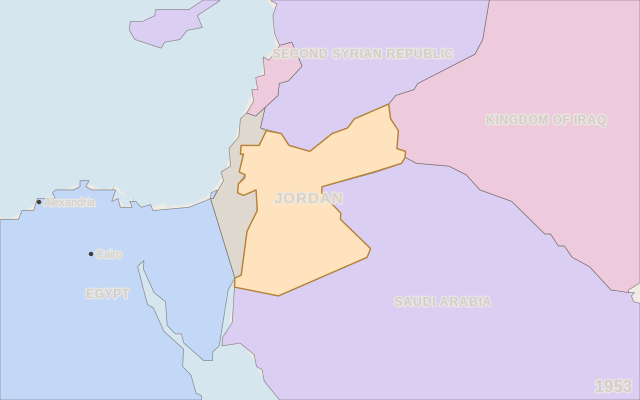
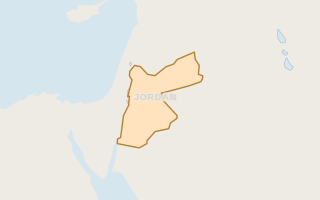
Its record opens in 1946, replacing Mandatory Palestine.↓ In 1947, the first year its borders are mapped, it covered 98,400 km².↓

It reached its greatest extent in 1953: 103,800 km².↓ Its line counts 4 rulers, covering 1946 – 1999, the median reign 5 years; 2 of 3 handovers were irregular.↓ Among them, Abdullah II of Jordan, Hussein of Jordan and Abdullah I of Jordan are the best known.↓ The atlas files 59 rows under it, most of them people.↓

From Wikipedia’s article, retold · CC BY-SA 4.0

80 years

Longer than the Empire of Japan, shorter than the Western Roman Empire

104,000 km²

At its height in 1953 · about the size of South Korea

4 rulers

the King of Jordan

4 wars and battles

More per century than 96% of states · 59 entries in all

Map: Jordan in 1953, its borders in gold among its neighbours
1966 attack on Samu, 1966Battle of Karameh, 1968Black September, 1970 – 1971Jordanian–Syrian border incidents during the Syrian civil war, 2012 – 2018196019701980199020002010
Beside it on the map in 1953: Saudi Arabia, Kingdom of Iraq, Egypt, Second Syrian Republic, Israel and United Kingdom.How far it reached, year by year: its ground inside the borders Cliopatria draws (CC BY 4.0), measured on an equal-area grid; the map shows it at its largest, with the cities of the year.

The story

Three acts, 1946 – present

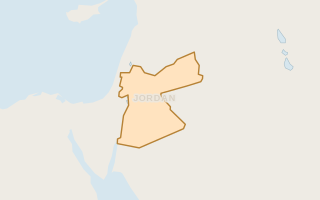
Jordan in 1966, at the end of act I
I1946 – 1967

A kingdom on both banks

The Treaty of London, signed in March 1946, recognises independence, and on 25 May the emirate becomes a kingdom with Abdullah as its first king. In the 1948 Palestine war Jordan takes and annexes the West Bank. Abdullah's reign ends in 1951; after Talal's brief rule, Hussein takes the throne in 1952, and Jordan joins the United Nations in 1955.

Watch this act on the live map, from 1946
III1999 – present

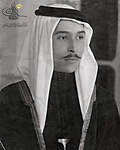
Abdullah II and the refugees

Abdullah II succeeds in 1999. Jordan comes through the Arab Spring largely unharmed, but the Syrian civil war brings border clashes from 2012 and a flood of refugees that strains its resources and infrastructure. Protests break out in 2018, and arrests follow in 2021.

Watch this act on the live map, from 1999

Before and after

Before it

  • Mandatory Palestine · replaces

Where it sits in time

3000 BCE2000 BCE1000 BCE110002000Jordan: 1946 – 2026

Five thousand years, 3000 BCE to 2026; the state in gold.

Its people

Lives across Jordan

190019251950197520002025
Statesmen and generalsWriters, artists and thinkersAll its people on the timeline →

How it was governed

4 kings

4 kings on record, 1946 to 1999; a reign lasted 5 years at the median. Each bar is a reign, as long as it lasted.

Abdullah I of Jordan · 1946 – 1951 · killedTalal of Jordan · 1951 – 1952 · deposed, the article saysHussein of Jordan · 1952 – 1999 · died in office of natural causesAbdullah II of Jordan · 1999 – … · still in office1960198020002020
How their terms ended, where it is known (4 of 4):Killed 1Deposed or removed 1Died in office 1In office 1
Every term, with how it ended and its source

Rulers

How 4 reigns ended - choose one to show only those

How they died, where the record says: died of natural causes 2 · killed 1.

RulerReignLengthHow it ended · sourceTo the ruler before
20th century · 4 reigns · 2 killed or removed
Abdullah I of Jordan · aged 641946 – 19515 yearskilled in officeWikidata's manner of death
Talal of Jordan · aged 421951 – 19521 yeardeposedread from the ruler's own articledied of natural causeschild
Hussein of Jordan · aged 171952 – 199947 yearsdied in officeWikidata's manner of deathdied of natural causeschild
Abdullah II of Jordan · aged 371999 – in officein office since 1999still in officechild

4 rulers, 4 with terms dated as terms, covering 1946 – 1999. Median reign 5 years. 2 of 3 handovers irregular - a killing, a deposition, a rival claimant, a rising or a coup beside it. A blank in the last column means no kin on record, which is coverage, never “unrelated”.

Heads of government

The line of Prime Minister of Jordan, drawn and never measured: a cabinet is not a reign.

Ibrahim Hashemlived 1886 – 1958
Sa'id Muftilived 1898 – 1989
Fawzi Mulkilived 1910 – 1962
Bahjat Talhounilived 1913 – 1994
Tawfik Abu Al-Huda1938 – 1944
Tawfik Abu Al-Huda1947 – 1950
Tawfik Abu Al-Huda1951 – 1953
Tawfik Abu Al-Huda1954 – 1955
Hazza' Majali1955 – 1955
Suleiman Nabulsi1956 – 1957
Hussein Khalidi1957 – 1957
Hazza' Majali1959 – 1960
Wasfi Tal1962 – 1963
Hussein ibn Nasser1963 – 1964
Wasfi Tal1965 – 1967
Hussein ibn Nasser1967 – 1967
Abdelmunim Rifai1969 – 1969
Wasfi Tal1970 – 1971
Ahmad Toukan1970 – 1970
Mohammad Al-Abbasi1970 – 1970
Ahmad Lozi1971 – 1973
Zaid Rifai1973 – 1976
Mudar Badran1976 – 1979
Abdelhamid Sharaf1979 – 1980
Kassim Rimawi1980 – 1980
Mudar Badran1980 – 1984
Ahmad Obeidat1984 – 1985
Zaid Rifai1985 – 1989
Zeid bin Shaker1989 – 1989
Mudar Badran1989 – 1991
Zeid bin Shaker1991 – 1993
Taher Masri1991 – 1991
Abdelsalam Majali1993 – 1995
Zeid bin Shaker1995 – 1996
Abdul Karim Kabariti1996 – 1997
Abdelsalam Majali1997 – 1998
Fayez Tarawneh1998 – 1999
Abdelraouf Rawabdeh1999 – 2000
Ali Abu Al-Ragheb2000 – 2002
Faisal Al-Fayez2003 – 2005
Ali Abu Al-Ragheb2003 – 2003
Marouf al-Bakhit2005 – 2007
Adnan Badran2005 – 2005
Nader Al-Dahabi2007 – 2009
Samir Rifai2009 – 2011
Marouf al-Bakhit2011 – 2011
Awn Al-Khasawneh2011 – 2012
Abdullah Ensour2012 – 2016
Fayez Tarawneh2012 – 2012
Hani Mulki2016 – 2018
Omar Razzaz2018 – 2020
Bisher Khasawneh2020 – 2024
Jafar Hassan2024 – …

Flags and arms, in order

  • Coat of arms of Jordan
    coat of arms, from 1921Coat of arms of Jordan · Public domain
  • Flag of Jordan
    flag, from 1928Flag of Jordan · Public domain

Its world

Rivals, and who else stood

Who it fought most

Wars and battles both took part in, on whichever side: the record names who took part, not who fought whom.

Meanwhile, elsewhere

The best-known states of other regions that stood while it did; the band is Jordan’s own years.

19401960198020002020

How it compares

Among 3,073 states

Stood longer than 42% of 3,073 states
Jordan · 80 yearsEmpire of JapanWestern Roman EmpireHow long it stood, among the states with a recorded end or still standing.
Held more ground at its peak than 46% of 1,464 states
Jordan · 103,800 km²LiberiaSouth KoreaThe most ground it held, among the states with a border in Cliopatria.
Had more wars on record per century than 96% of 3,073 states
Jordan · 2.0Wars recorded per century, among the states, counting the wars the atlas hosts under each.

How it began

How did Jordan begin?

What led to it, and what came of it

Mandatory Palestine · Linked · 1920 – 1948Mandatory PalestineArab Revolt · In the article · 1916 · “Following the 1916 Great Arab Revolt during World War I, former Ottoman Syria was partitioned, leading to the establishment of the Emirate of Transjordan in 1…”Arab RevoltRaghib al-Nashashibi · Coincidence · 1881 – 1951Raghib al-NashashibiIzzat Darwaza · Coincidence · 1888 – 1984Izzat DarwazaAbdullah Yusuf Azzam · Coincidence · 1941 – 1989Abdullah Yusuf AzzamJordan · 1946 – 2026Jordan190019502000
in the articlelinkedcoincidence

Open the investigation: every row with its evidence, the conditions at the time, the theories condition by condition, and the succession analysed.

Its centuries in the record

1900 – 1999: 50 recorded — 3 wars and battles, 1 risings, regime changes and massacres, 46 other19002000 – 2099: 4 recorded — 1 wars and battles, 2 risings, regime changes and massacres, 1 other2000

Wars and battles in red, risings, coups and massacres beside them, everything else in grey, by the century each began in. A tall bar is partly a fact about Wikipedia: better-documented centuries hold more.

Each century’s own page:1900 – 19992000 – 2099

Keep exploring

Share this page
Copy link
Embed the map
Cite this page

How this page is made

Drawn from Wikidata (Q810, CC0), the opening and history of its English Wikipedia article retold by the atlas (CC BY-SA 4.0), borders from Cliopatria (CC BY 4.0), coast and rivers from Natural Earth, cities from Reba, Reitsma & Seto 2016 (CC BY 4.0), symbols from Wikimedia Commons, each under its own licence. Data built 2026-11-26 · Pastlas v2.47.1, by Oleh Voronko; the published atlas and its data are for non-commercial use.

How to read it

Areas are measured on an equal-area grid from borders simplified to about five kilometres. “c.” marks an approximate date, and a date known to the century is never printed to the year. Counts are what the atlas holds, and they follow Wikipedia’s coverage: a busy century is partly a fact about the record.

  • Still standing: the span runs to the year of the build, 2026.

Something wrong?

Tell us and name the entry. We fix the data, not just this page.

Report a problem