State · Middle East and North Africa

Saudi Arabia

1932 – present · 94 years · still standing

Came after Kingdom of Hejaz and Nejd and Sheikhdom of Diriyah

Most of Arabia, united by Ibn Saud: an absolute monarchy holding Mecca and Medina, made rich by oil.

King Abdulaziz, known as Ibn Saud, founded Saudi Arabia in 1932, after three decades of war and diplomacy had joined Hejaz, Najd and parts of eastern and southern Arabia; it was the third Saudi state. Oil, found in 1938, made a land of pilgrims and scant farming rich and influential. The House of Saud has ruled it ever since as an absolute monarchy and Islamic state, and from the mid-2010s it has slowly loosened social and religious life.

What the record holds

It was founded in 1932, replacing the Kingdom of Hejaz and Nejd.↓ When the borders dataset first draws it, in 1936, it held 1.92 million km².↓

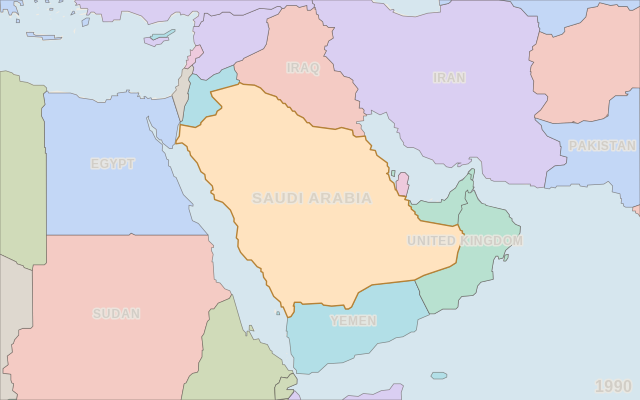
At its largest, in 1990, it held 1.93 million km².↓ Its highest office was held by 7 rulers, covering 1932 – 2015, the median reign 11 years; 1 of 6 handovers was irregular.↓ The best known of them are Abdullah of Saudi Arabia, Salman of Saudi Arabia and Ibn Saud.↓ Most of the 37 rows the atlas files under it are people.↓

From Wikipedia’s article, retold · CC BY-SA 4.0

94 years

Longer than the British Raj, shorter than the Inca Empire

1.93 million km²

At its height in 1990 · about the size of Mexico

7 rulers

the King of Saudi Arabia

7 wars and battles

More per century than 99% of states · 37 entries in all

Map: Saudi Arabia in 1990, its borders in gold among its neighbours
Iran–Saudi Arabia proxy war, 1979Grand Mosque seizure, 1979Battle of Khafji, 19912011–2012 Saudi Arabian protests, 20111960198020002020
Beside it on the map in 1990: Iran, Sudan, Egypt, Iraq, Libyan Arab Jamahiriya and Yemen.How far it reached, year by year: its ground inside the borders Cliopatria draws (CC BY 4.0), measured on an equal-area grid; the map shows it at its largest, with the cities of the year.

The story

Four acts, 1932 – present

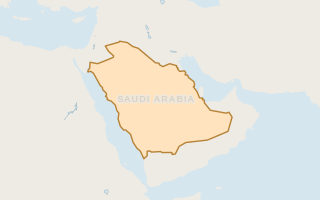
Saudi Arabia in 1952, at the end of act I
I1932 – 1953

Unification and oil

Ibn Saud rules a kingdom that lives at first on modest farming and the income from pilgrims, and in 1934 fights a war with Yemen. Vast oil reserves are found in Al-Ahsa on the Gulf coast in 1938, and from 1941 the US-controlled Aramco develops the fields, bringing wealth and weight abroad.

Watch this act on the live map, from 1932
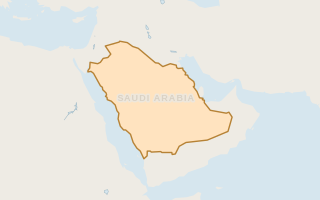
Saudi Arabia in 1981, at the end of act II
II1953 – 19821.92 million → 1.93 million km²

Kings and oil wealth

Saud reigns from 1953, Faisal from 1964 and Khalid from 1975. Oil brings prosperity: newspapers and radio flourish in the Hejaz, while an influx of foreign oil workers sharpens an old wariness of strangers. A coup attempt in 1969, the Grand Mosque seizure of 1979 and a proxy war with Iran from that year shake the kingdom.

Watch this act on the live map, from 1953
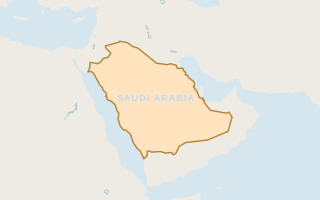
Saudi Arabia in 2004, at the end of act III
III1982 – 20051.93 million → 1.93 million km²

Fahd and the Gulf War

Fahd reigns from 1982 until his death in 2005. Operation Desert Shield and the Battle of Khafji fall in 1990–1991. Bombings and armed attacks hit Riyadh, Jeddah, Yanbu and Khobar in 2003 and 2004, and early in 2005 Saudis vote in their first nationwide municipal elections, from which women are excluded.

Watch this act on the live map, from 1982
IV2005 – present

Reform under Abdullah and Salman

Abdullah succeeds Fahd, keeps reform minimal and protest in check, and opens the economy to private and foreign capital to lessen its reliance on oil. Salman becomes king in 2015, as war with the Houthis begins. From the mid-2010s limited reforms ease social, cultural and religious life, while the intervention in Yemen and curbs on liberty draw criticism.

Watch this act on the live map, from 2005

Before and after

Before it

Where it sits in time

3000 BCE2000 BCE1000 BCE110002000Kingdom of Hejaz and Nejd: 1926 – 1932Sheikhdom of Diriyah: 1446 – 1744Saudi Arabia: 1932 – 2026

Five thousand years, 3000 BCE to 2026; the state in gold, what it replaced or followed and what replaced or followed it in grey.

Its people

Lives across Saudi Arabia

190019251950197520002025
Statesmen and generalsScientists and explorersWriters, artists and thinkersAll its people on the timeline →

How it was governed

7 kings

7 kings on record, 1932 to 2015; a reign lasted 11 years at the median. Each bar is a reign, as long as it lasted.

Ibn Saud · 1932 – 1953 · died in office of natural causesSaud of Saudi Arabia · 1953 – 1964 · left office aliveFaisal of Saudi Arabia · 1964 – 1975 · killedKhalid of Saudi Arabia · 1975 – 1982 · died in office of natural causesFahd of Saudi Arabia · 1982 – 2005 · died in office of natural causesAbdullah of Saudi Arabia · 2005 – 2015 · died in office of natural causesSalman of Saudi Arabia · 2015 – … · still in office19401960198020002020
How their terms ended, where it is known (7 of 7):Killed 1Died in office 4Left office alive 1In office 1
Every term, with how it ended and its source

Rulers

How 7 reigns ended - choose one to show only those

How they died, where the record says: died of natural causes 5 · killed 1.

RulerReignLengthHow it ended · sourceTo the ruler before
20th century · 5 reigns · 1 killed or removed
Ibn Saud · aged 561932 – 195321 yearsdied in officeWikidata's manner of deathdied of natural causes
Saud of Saudi Arabia · aged 511953 – 196411 yearsleft office aliveread off the dates alonedied of natural causeschild
Faisal of Saudi Arabia · aged 581964 – 197511 yearskilled in officeWikidata's manner of deathsibling
Khalid of Saudi Arabia · aged 641975 – 19827 yearsdied in officeWikidata's manner of deathdied of natural causessibling
Fahd of Saudi Arabia · aged 621982 – 200523 yearsdied in officeWikidata's manner of deathdied of natural causessibling
21st century · 2 reigns
Abdullah of Saudi Arabia · aged 812005 – 201510 yearsdied in officeWikidata's manner of deathdied of natural causessibling
Salman of Saudi Arabia · aged 802015 – in officein office since 2015still in officesibling

7 rulers, 7 with terms dated as terms, covering 1932 – 2015. Median reign 11 years. 1 of 6 handovers irregular - a killing, a deposition, a rival claimant, a rising or a coup beside it. A blank in the last column means no kin on record, which is coverage, never “unrelated”.

Heads of government

The line of Prime Minister of Saudi Arabia, drawn and never measured: a cabinet is not a reign.

Ibn Saud1932 – 1953
Saud of Saudi Arabia1953 – 1964
Faisal of Saudi Arabia1964 – 1975
Khalid of Saudi Arabia1975 – 1982
Fahd of Saudi Arabia1982 – 2005
Abdullah of Saudi Arabia2005 – 2015
Salman of Saudi Arabia2015 – 2022
Mohammed bin Salman2022 – …

Flags and arms, in order

  • Flag of the Third Saudi State-01
    flag, to 1921Flag of the Third Saudi State-01 · CC BY-SA 3.0 · Guilherme Paula
  • Flag of the Third Saudi State-01
    flag, to 1818Flag of the Third Saudi State-01 · CC BY-SA 3.0 · Guilherme Paula
  • Flag of Saudi Arabia (1938–1973)
    flag, to 1973Flag of Saudi Arabia (1938–1973) · Public domain
  • Flag of Nejd (1921)
    flag, to 1932Flag of Nejd (1921) · Public domain
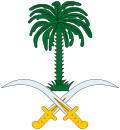
  • Emblem of Saudi Arabia
    coat of arms, from 1950Emblem of Saudi Arabia · Public domain
  • Flag of Saudi Arabia
    flag, from 1973Flag of Saudi Arabia · Public domain

Its world

Rivals, and who else stood

Who it fought most

Wars and battles both took part in, on whichever side: the record names who took part, not who fought whom.

Meanwhile, elsewhere

The best-known states of other regions that stood while it did; the band is Saudi Arabia’s own years.

192019401960198020002020

How it compares

Among 3,073 states

Stood longer than 45% of 3,073 states
Saudi Arabia · 94 yearsBritish RajInca EmpireHow long it stood, among the states with a recorded end or still standing.
Held more ground at its peak than 91% of 1,464 states
Saudi Arabia · 1,933,500 km²SudanMexicoThe most ground it held, among the states with a border in Cliopatria.
Had more wars on record per century than 99% of 3,073 states
Saudi Arabia · 4.0Wars recorded per century, among the states, counting the wars the atlas hosts under each.

How it began

How did Saudi Arabia begin?

What led to it, and what came of it

Sheikhdom of Diriyah · Linked · 1446 – 1744Sheikhdom of DiriyahThird Saudi state · Linked · 1902 – 1935Third Saudi stateKingdom of Hejaz and Nejd · Linked · 1926 – 1932Kingdom of Hejaz and NejdMuhammad bin Talal Al Rashid · Coincidence · 1904 – 1954Muhammad bin Talal Al RashidAbdullah bin Mutaib Al Rashid · Coincidence · 1906 – 1946Abdullah bin Mutaib Al RashidIdi Amin · Coincidence · 1925 – 2003Idi AminSaudi Arabia · 1932 – 2026Saudi Arabia160018002000
linkedcoincidence

Open the investigation: every row with its evidence, the conditions at the time, the theories condition by condition, and the succession analysed.

Its centuries in the record

1900 – 1999: 31 recorded — 5 wars and battles, 1 risings, regime changes and massacres, 25 other19002000 – 2099: 5 recorded — 2 wars and battles, 1 risings, regime changes and massacres, 2 other2000

Wars and battles in red, risings, coups and massacres beside them, everything else in grey, by the century each began in. A tall bar is partly a fact about Wikipedia: better-documented centuries hold more.

Each century’s own page:1900 – 19992000 – 2099

Keep exploring

Share this page
Copy link
Embed the map
Cite this page

How this page is made

Drawn from Wikidata (Q851, CC0), the opening and history of its English Wikipedia article retold by the atlas (CC BY-SA 4.0), borders from Cliopatria (CC BY 4.0), coast and rivers from Natural Earth, cities from Reba, Reitsma & Seto 2016 (CC BY 4.0), symbols from Wikimedia Commons, each under its own licence. Data built 2026-11-26 · Pastlas v2.47.1, by Oleh Voronko; the published atlas and its data are for non-commercial use.

How to read it

Areas are measured on an equal-area grid from borders simplified to about five kilometres. “c.” marks an approximate date, and a date known to the century is never printed to the year. Counts are what the atlas holds, and they follow Wikipedia’s coverage: a busy century is partly a fact about the record.

  • Wikidata records foundings in 622 and 1447 and 1727; the atlas draws the preferred founding.
  • Still standing: the span runs to the year of the build, 2026.

Something wrong?

Tell us and name the entry. We fix the data, not just this page.

Report a problem