State · Europe

Slovenia

1991 – present · 35 years · still standing

Came after Socialist Republic of Slovenia and Socialist Federal Republic of Yugoslavia

A small Alpine and Adriatic republic that broke from Yugoslavia after a ten-day war and joined the European Union and NATO.

Slovenia is a mountainous, wooded country in Central Europe with a short Adriatic coast and its capital at Ljubljana. Its lands passed from the Roman Empire to Austria-Hungary before joining the Kingdom of Serbs, Croats and Slovenes in 1918 and, in 1945, socialist Yugoslavia as one of six republics. It declared independence in June 1991 and became sovereign once the brief Ten-Day War was over. It now belongs to the European Union, NATO and the United Nations.

What the record holds

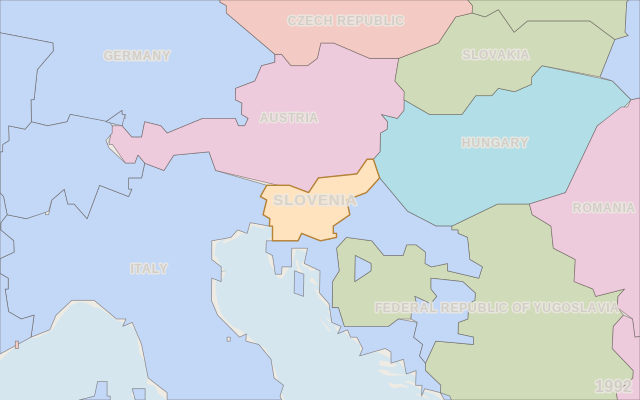
Its record opens in 1991, replacing the Socialist Republic of Slovenia and the Socialist Federal Republic of Yugoslavia.↓ In 1992, the first year its borders are mapped, it covered 19,500 km².↓

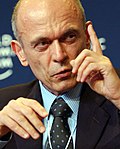
The record names 7 rulers in its line, covering 1984 – 2022; none of its 6 handovers was irregular.↓ The best known of them are Borut Pahor, Janez Drnovšek and Danilo Türk.↓ Most of the 15 rows the atlas files under it are people.↓

From Wikipedia’s article, retold · CC BY-SA 4.0

35 years

Longer than Daman and Diu, shorter than East Germany

19,500 km²

At its height in 1992 · about the size of Timor-Leste

7 rulers

the President of Slovenia

1 war or battle

More per century than 92% of states · 15 entries in all

Map: Slovenia in 1992, its borders in gold among its neighbours
20002005201020152020
Beside it on the map in 1992: Italy, Federal Republic of Yugoslavia, Germany, Hungary, Austria and Romania.How far it reached, year by year: its ground inside the borders Cliopatria draws (CC BY 4.0), measured on an equal-area grid; the map shows it at its largest, with the cities of the year.

The story

Its key moments

Before and after

Before it

Where it sits in time

3000 BCE2000 BCE1000 BCE110002000Socialist Republic of Slovenia: 1945 – 1991Slovenia: 1991 – 2026

Five thousand years, 3000 BCE to 2026; the state in gold, what it replaced or followed and what replaced or followed it in grey.

Its people

Lives across Slovenia

1960198020002020
Statesmen and generalsAll its people on the timeline →

How it was governed

7 presidents

7 presidents on record, 1984 to 2022. Each bar is a reign, as long as it lasted.

France Popit · 1984 – 1988 · left office aliveJanez Stanovnik · 1988 – 1990 · left office aliveMilan Kučan · 1991 – 2002 · no death date to read the end againstJanez Drnovšek · 2002 – 2007 · left office aliveDanilo Türk · 2007 – 2012 · no death date to read the end againstBorut Pahor · 2012 – 2022 · no death date to read the end againstNataša Pirc Musar · 2022 – … · still in office200020102020
How their terms ended, where it is known (4 of 7):Left office alive 3In office 1Not on record 3
Every term, with how it ended and its source

Rulers

How 7 reigns ended - choose one to show only those

How they died, where the record says: died of natural causes 1.

RulerReignLengthHow it ended · sourceTo the ruler before
20th century · 3 reigns
France Popit · aged 631984 – 19884 yearsleft office aliveread off the dates alone
Janez Stanovnik · aged 661988 – 19902 yearsleft office aliveread off the dates alone
Milan Kučan · aged 501991 – 200211 yearsending not on record
21st century · 4 reigns
Janez Drnovšek · aged 522002 – 20075 yearsleft office aliveread off the dates alonedied of natural causes
Danilo Türk · aged 552007 – 20125 yearsending not on record
Borut Pahor · aged 492012 – 202210 yearsending not on record
Nataša Pirc Musar · aged 542022 – in officein office since 2022still in office

7 rulers, 7 with terms dated as terms, covering 1984 – 2022. Only 38 years of the line are dated - too short for a median. 0 of 6 handovers irregular - a killing, a deposition, a rival claimant, a rising or a coup beside it. The violent-handover count is withheld: power changed hands so often that any rising falls beside one (exposure 0.87, limit 0.6). A blank in the last column means no kin on record, which is coverage, never “unrelated”.

Heads of government

The line of Prime Minister of Slovenia, drawn and never measured: a cabinet is not a reign.

Lojze Peterle1990 – 1992
Janez Drnovšek1992 – 2000
Janez Drnovšek2000 – 2002
Andrej Bajuk2000 – 2000
Anton Rop2002 – 2004
Janez Janša2004 – 2008
Borut Pahor2008 – 2012
Janez Janša2012 – 2013
Alenka Bratušek2013 – 2014
Miro Cerar2014 – 2018
Marjan Šarec2018 – 2020
Janez Janša2020 – 2022
Robert Golob2022 – 2026
Janez Janša2026 – …

Flags and arms, in order

  • Coat of arms of Slovenia
    coat of arms, undatedCoat of arms of Slovenia · Public domain
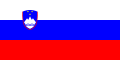
  • Flag of Slovenia
    flag, from 1991Flag of Slovenia · Public domain

Its world

Who else stood

Meanwhile, elsewhere

The best-known states of other regions that stood while it did; the band is Slovenia’s own years.

1990200020102020

How it compares

Among 3,073 states

Stood longer than 28% of 3,073 states
Slovenia · 35 yearsDaman and DiuEast GermanyHow long it stood, among the states with a recorded end or still standing.
Held more ground at its peak than 21% of 1,464 states
Slovenia · 19,500 km²Timor-LesteDjiboutiThe most ground it held, among the states with a border in Cliopatria.
Had more wars on record per century than 92% of 3,073 states
Slovenia · 1.0Wars recorded per century, among the states, counting the wars the atlas hosts under each.

How it began

How did Slovenia begin?

What led to it, and what came of it

Socialist Republic of Slovenia · Linked · 1945 – 1991Socialist Republic of SloveniaMitja Ribičič · Coincidence · 1919 – 2013Mitja RibičičSlovenia · 1991 – 2026Slovenia19502000
linkedcoincidence

Open the investigation: every row with its evidence, the conditions at the time, the theories condition by condition, and the succession analysed.

Its centuries in the record

1900 – 1999: 14 recorded — 1 wars and battles, 0 risings, regime changes and massacres, 13 other19002000 – 2099: 1 recorded — 0 wars and battles, 0 risings, regime changes and massacres, 1 other2000

Wars and battles in red, risings, coups and massacres beside them, everything else in grey, by the century each began in. A tall bar is partly a fact about Wikipedia: better-documented centuries hold more.

Each century’s own page:1900 – 19992000 – 2099

Keep exploring

Share this page
Copy link
Embed the map
Cite this page

How this page is made

Drawn from Wikidata (Q215, CC0), the opening and history of its English Wikipedia article retold by the atlas (CC BY-SA 4.0), borders from Cliopatria (CC BY 4.0), coast and rivers from Natural Earth, cities from Reba, Reitsma & Seto 2016 (CC BY 4.0), symbols from Wikimedia Commons, each under its own licence. Data built 2026-11-26 · Pastlas v2.47.1, by Oleh Voronko; the published atlas and its data are for non-commercial use.

How to read it

Areas are measured on an equal-area grid from borders simplified to about five kilometres. “c.” marks an approximate date, and a date known to the century is never printed to the year. Counts are what the atlas holds, and they follow Wikipedia’s coverage: a busy century is partly a fact about the record.

  • Wikidata records foundings in 700 and 1991; the atlas draws the line of its rulers.
  • Still standing: the span runs to the year of the build, 2026.

Something wrong?

Tell us and name the entry. We fix the data, not just this page.

Report a problem