State · East and Southeast Asia

Thailand

1932 – present · 94 years · still standing

Came after Rattanakosin Kingdom

The kingdom once called Siam: a constitutional monarchy since its revolution, repeatedly ruled by generals and shaken by coups and protest.

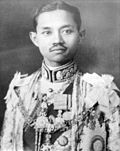
In 1932 the Khana Ratsadon's bloodless revolution made King Prajadhipok sign a constitution, turning Siam into a parliamentary monarchy; under Plaek Phibunsongkhram it took the name Thailand. Military rule lasted until the popular uprising of 1973, and coups and crackdowns returned in 1976, 1991–1992, 2006 and 2014. Bhumibol Adulyadej reigned for seventy years, and since 2001 the populist Thaksin Shinawatra and his allies have split the country's politics.

What the record holds

Its record opens in 1932, replacing the Rattanakosin Kingdom.↓ In 1932, the first year its borders are mapped, it covered 523,900 km².↓ Over the years of the Malayan Emergency, 1948 – 1960, its ground went from 523,900 km² to 523,500 km².↓

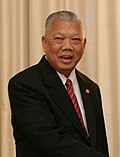
Its line counts 4 rulers, covering 1925 – 2016, the median reign 11 years; 3 of 3 handovers were irregular.↓ Among them, Bhumibol Adulyadej, Vajiralongkorn and Ananda Mahidol are the best known.↓ The atlas files 78 rows under it, most of them people.↓

From Wikipedia’s article, retold · CC BY-SA 4.0

94 years

Longer than the British Raj, shorter than the Inca Empire

524,000 km²

At its height in 1932 · about the size of Spain

4 rulers

the King of Thailand

6 wars and battles

More per century than 99% of states · 78 entries in all

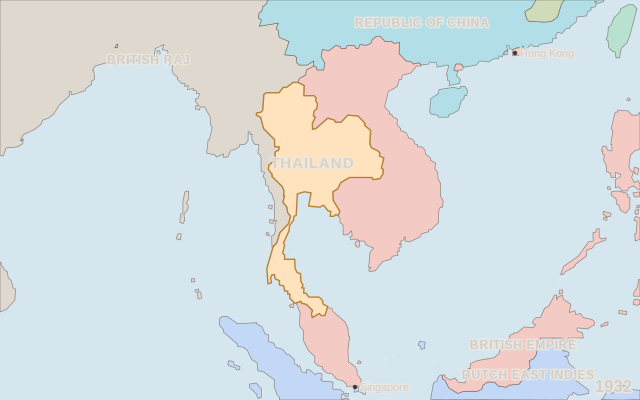
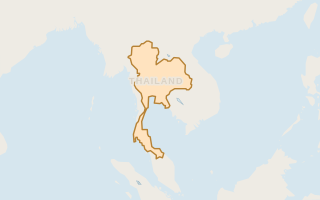
Map: Thailand in 1932, its borders in gold among its neighbours
Franco-Thai War, 1940 – 1941Malayan Emergency, 1948 – 1960: 523,900 km² → 523,500 km²2006 Thai coup d'état, 2006Nakhon Ratchasima shootings, 202019401960198020002020
Beside it on the map in 1932: British Raj, Republic of China, French Indochina, Dutch East Indies, British Empire and United States.How far it reached, year by year: its ground inside the borders Cliopatria draws (CC BY 4.0), measured on an equal-area grid; the map shows it at its largest, with the cities of the year.

The story

Four acts, 1932 – present

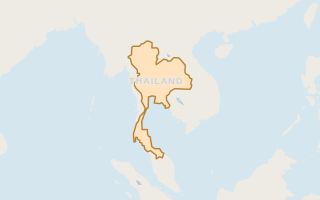
Thailand in 1945, at the end of act I
I1932 – 1946524,000 → 524,000 km²

The end of absolute monarchy

The revolution of 1932 ends absolute rule; the Boworadet Rebellion and a coup follow in 1933, and Prajadhipok abdicates for the young Ananda Mahidol. Phibun becomes premier in 1938, pursues a nationalist, pro-fascist course, renames the country Thailand and fights France in 1940–1941. After brief resistance to Japan's invasion in 1941, Thailand joins Japan.

Watch this act on the live map, from 1932
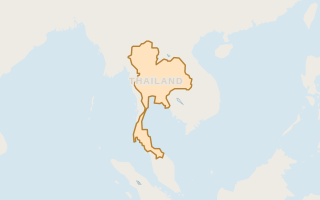
Thailand in 1972, at the end of act II
II1946 – 1973524,000 → 524,000 km²

Military rule and insurgency

Bhumibol Adulyadej comes to the throne in 1946, and military rule continues. The Malayan Emergency runs from 1948 to 1960, a communist insurgency begins in 1965, and Thailand signs the ASEAN Declaration in 1967. In 1973 a popular uprising overthrows the military regime.

Watch this act on the live map, from 1946
Thailand in 2000, at the end of act III
III1973 – 2001524,000 → 524,000 km²

Toward democracy

The king appoints a civilian premier, but instability and fear of communism end in the massacre of 6 October 1976 and renewed military rule. Under Prem Tinsulanonda the 1980s bring growth, semi-democracy and the end of the communist insurgency. A coup in 1991 and Suchinda Kraprayoon's bid to keep power provoke Black May in 1992.

Watch this act on the live map, from 1973
IV2001 – present

The Shinawatra era

The 1997 financial crisis carries Thaksin Shinawatra to power. His policies cut rural poverty and bring universal healthcare but alienate the urban elite and royalists. A coup ousts him in 2006; his allies win the 2007 election, and protests and a further coup in 2014 follow. Vajiralongkorn succeeds Bhumibol in 2016, and a border crisis with Cambodia erupts in 2025.

Watch this act on the live map, from 2001

Before and after

Before it

Where it sits in time

3000 BCE2000 BCE1000 BCE110002000Rattanakosin Kingdom: 1782 – 1932Thailand: 1932 – 2026

Five thousand years, 3000 BCE to 2026; the state in gold, what it replaced or followed and what replaced or followed it in grey.

Its people

Lives across Thailand

190019251950197520002025
Statesmen and generalsAll its people on the timeline →

How it was governed

4 kings

4 kings on record, 1925 to 2016; a reign lasted 11 years at the median. Each bar is a reign, as long as it lasted.

Prajadhipok · 1925 – 1935 · left office aliveAnanda Mahidol · 1935 – 1946 · killedBhumibol Adulyadej · 1946 – 2016 · died in office of natural causesVajiralongkorn · 2016 – … · still in office19401960198020002020
How their terms ended, where it is known (4 of 4):Killed 1Died in office 1Left office alive 1In office 1
Every term, with how it ended and its source

Rulers

How 4 reigns ended - choose one to show only those

How they died, where the record says: died of natural causes 2 · killed 1.

RulerReignLengthHow it ended · sourceTo the ruler before
20th century · 3 reigns · 1 killed or removed
Prajadhipok · aged 321925 – 193510 yearsleft office aliveread off the dates alonedied of natural causes
Ananda Mahidol · aged 101935 – 194611 yearskilled in officeWikidata's manner of death
Bhumibol Adulyadej · aged 191946 – 201670 yearsdied in officeWikidata's manner of deathdied of natural causessibling
21st century · 1 reign
Vajiralongkorn · aged 642016 – in officein office since 2016still in officechild

4 rulers, 4 with terms dated as terms, covering 1925 – 2016. Median reign 11 years. 3 of 3 handovers irregular - a killing, a deposition, a rival claimant, a rising or a coup beside it. A blank in the last column means no kin on record, which is coverage, never “unrelated”.

Heads of government

The line of Prime Minister of Thailand, drawn and never measured: a cabinet is not a reign.

Phraya Manopakorn Nitithada1932 – 1933
Phraya Phahonphonphayuhasena1933 – 1938
Plaek Phibunsongkhram1938 – 1944
Khuang Aphaiwong1944 – 1945
Thawan Thamrongnawasawat1946 – 1947
Pridi Banomyong1946 – 1946
Khuang Aphaiwong1947 – 1949
Plaek Phibunsongkhram1948 – 1957
Pote Sarasin1957 – 1957
Thanom Kittikachorn1958 – 1958
Sarit Thanarat1959 – 1963
Thanom Kittikachorn1963 – 1969
Thanom Kittikachorn1972 – 1973
Sanya Dharmasakti1974 – 1975
Kukrit Pramoj1975 – 1976
Seni Pramoj1976 – 1976
Thanin Kraivichien1976 – 1977
Kriangsak Chamanan1977 – 1980
Prem Tinsulanonda1980 – 1988
Chatichai Choonhavan1988 – 1991
Chuan Leekpai1992 – 1995
Anand Panyarachun1992 – 1992
Suchinda Kraprayoon1992 – 1992
Banharn Silpa-archa1995 – 1996
Chavalit Yongchaiyudh1996 – 1997
Chuan Leekpai1997 – 2001
Thaksin Shinawatra2001 – 2005
Surayud Chulanont2006 – 2008
Sonthi Boonyaratglin2006 – 2006
Abhisit Vejjajiva2008 – 2011
Samak Sundaravej2008 – 2008
Somchai Wongsawat2008 – 2008
Chavarat Charnvirakul2008 – 2008
Yingluck Shinawatra2011 – 2014
Prayut Chan-o-cha2014 – 2023
Prawit Wongsuwon2022 – 2022
Srettha Thavisin2023 – 2024
Phumtham Wechayachai2024 – 2024
Paetongtarn Shinawatra2024 – 2025
Anutin Charnvirakul2025 – …
Suriya Juangroongruangkit2025 – 2025

Flags and arms, in order

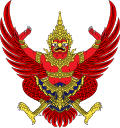
  • Emblem of Thailand
    coat of arms, from 1911Emblem of Thailand · Public domain
  • Flag of Thailand
    flag, from 1917Flag of Thailand · Public domain

Its world

Rivals, and who else stood

Who it fought most

Wars and battles both took part in, on whichever side: the record names who took part, not who fought whom.

Meanwhile, elsewhere

The best-known states of other regions that stood while it did; the band is Thailand’s own years.

192019401960198020002020

How it compares

Among 3,073 states

Stood longer than 45% of 3,073 states
Thailand · 94 yearsBritish RajInca EmpireHow long it stood, among the states with a recorded end or still standing.
Held more ground at its peak than 75% of 1,464 states
Thailand · 523,900 km²SpainBotswanaThe most ground it held, among the states with a border in Cliopatria.
Had more wars on record per century than 99% of 3,073 states
Thailand · 5.0Wars recorded per century, among the states, counting the wars the atlas hosts under each.

How it began

How did Thailand begin?

What led to it, and what came of it

Rattanakosin Kingdom · Linked · 1782 – 1932Rattanakosin KingdomKhmer Empire · In the article · 802 · “In the 9th century, the Khmer people established the Khmer Empire, centred in Angkor, while Tambralinga, a Malay state, rose to control trade through the Stra…”Khmer EmpireSiamese revolution of 1932 · In the article · 1932 · “Siam adapted to international relations during the imperialist era and joined World War I on the side of the Allies, a political decision aimed at revising th…”Siamese revolution of 1932Damrong Rajanubhab · Coincidence · 1862 – 1943Damrong RajanubhabNarisara Nuwattiwong · Coincidence · 1863 – 1947Narisara NuwattiwongTan Malaka · Coincidence · 1897 – 1949Tan MalakaThailand · 1932 – 2026Thailand100015002000
in the articlelinkedcoincidence

Open the investigation: every row with its evidence, the conditions at the time, the theories condition by condition, and the succession analysed.

Its centuries in the record

1900 – 1999: 62 recorded — 4 wars and battles, 18 risings, regime changes and massacres, 40 other19002000 – 2099: 12 recorded — 2 wars and battles, 7 risings, regime changes and massacres, 3 other2000

Wars and battles in red, risings, coups and massacres beside them, everything else in grey, by the century each began in. A tall bar is partly a fact about Wikipedia: better-documented centuries hold more.

Each century’s own page:1900 – 19992000 – 2099

Keep exploring

Share this page
Copy link
Embed the map
Cite this page

How this page is made

Drawn from Wikidata (Q869, CC0), the opening and history of its English Wikipedia article retold by the atlas (CC BY-SA 4.0), borders from Cliopatria (CC BY 4.0), coast and rivers from Natural Earth, cities from Reba, Reitsma & Seto 2016 (CC BY 4.0), symbols from Wikimedia Commons, each under its own licence. Data built 2026-11-26 · Pastlas v2.47.1, by Oleh Voronko; the published atlas and its data are for non-commercial use.

How to read it

Areas are measured on an equal-area grid from borders simplified to about five kilometres. “c.” marks an approximate date, and a date known to the century is never printed to the year. Counts are what the atlas holds, and they follow Wikipedia’s coverage: a busy century is partly a fact about the record.

  • Wikidata records foundings in 1238 and 1768; the atlas draws the present-day state from 1768.
  • Still standing: the span runs to the year of the build, 2026.

Something wrong?

Tell us and name the entry. We fix the data, not just this page.

Report a problem