State · Sub-Saharan Africa

Uganda

1963 – present · 63 years · still standing

Came after Uganda (1962–1963)

The East African republic named for Buganda, scarred by Idi Amin's terror and ruled by Yoweri Museveni since his guerrilla victory.

Uganda is a landlocked country of East Africa on Lake Victoria, named after the kingdom of Buganda; its capital is Kampala. Independent from 1962, it became a republic in 1963, and in 1966 Milton Obote broke with Buganda and took full power. Idi Amin overthrew him in 1971 and ruled by mass killing until 1979. Obote's return in 1980 set off a bush war won in 1986 by Yoweri Museveni, who still rules.

What the record holds

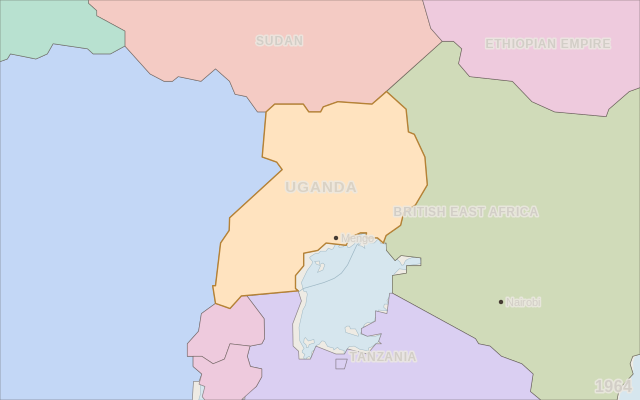
It was founded in 1963, replacing Uganda.↓ Its borders are first mapped in 1964, around 211,000 km².↓

Its line counts 16 rulers, covering 1963 – 2026, the median reign 1 year; 12 of 17 handovers were irregular.↓ The best known of them are Idi Amin, Yoweri Museveni and Milton Obote.↓ Most of the 31 rows the atlas files under it are people.↓

From Wikipedia’s article, retold · CC BY-SA 4.0

63 years

Longer than Hamburg, shorter than Bremen

211,000 km²

At its height in 1964 · about the size of Belarus

16 rulers

the President of Uganda

3 wars and battles

More per century than 96% of states · 31 entries in all

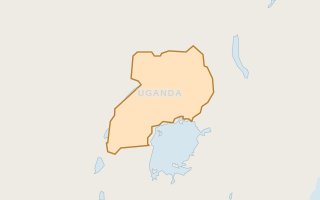
Map: Uganda in 1964, its borders in gold among its neighbours
Entebbe raid, 1976Ugandan Bush War, 1980 – 1986Ngogo chimpanzee war, 2015Mpondwe school massacre, 202319801990200020102020
Beside it on the map in 1964: Democratic Republic of the Congo, Kenya (1963–1964), Sudan, Tanzania, Ethiopian Empire and Central African Republic.How far it reached, year by year: its ground inside the borders Cliopatria draws (CC BY 4.0), measured on an equal-area grid; the map shows it at its largest, with the cities of the year.

The story

Four acts, 1963 – present

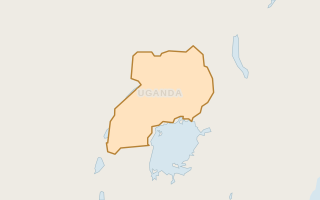
Uganda in 1970, at the end of act I
I1963 – 1971

King and prime minister

With the governor-general's post abolished in 1963, Mutesa II, king of Buganda, serves as ceremonial president beside prime minister Milton Obote. The place of Buganda, the largest kingdom, divides the state; in 1966 Obote suspends the constitution and removes the president, and in 1967 a new constitution abolishes the kingdoms and makes Obote president.

Watch this act on the live map, from 1963
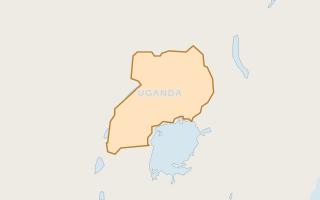
Uganda in 1978, at the end of act II
II1971 – 1979211,000 → 211,000 km²

Amin's reign of terror

General Idi Amin seizes power in a coup in January 1971 and rules as a military dictator. Between 80,000 and 500,000 Ugandans die under him, and he drives out the Indian minority. In 1976 Israeli commandos free hostages held at Entebbe airport, and in 1979 Amin falls in the Uganda–Tanzania War.

Watch this act on the live map, from 1971
IV1986 – present

Museveni's Movement

Museveni brings stability and growth but confines parties under his non-party Movement system until a 2005 referendum restores multi-party politics. Term limits are abolished, and he wins elections in 2011, 2016, 2021 and 2026 amid claims of fraud. Uganda is drawn into the Congo Wars and fights the Lord's Resistance Army and the Allied Democratic Forces.

Watch this act on the live map, from 1986

Before and after

Before it

Where it sits in time

3000 BCE2000 BCE1000 BCE110002000Uganda (1962–1963): 1962 – 1963Uganda: 1963 – 2026

Five thousand years, 3000 BCE to 2026; the state in gold, what it replaced or followed and what replaced or followed it in grey.

Its people

Lives across Uganda

192019401960198020002020
Statesmen and generalsAll its people on the timeline →

How it was governed

16 presidents

16 presidents on record, 1963 to 2026; a reign lasted 1 years at the median. Each bar is a reign, as long as it lasted.

Mutesa II of Buganda · 1963 – 1966 · left office aliveMilton Obote · 1966 – 1971 · deposed, the article saysIdi Amin · 1971 – 1979 · left office aliveYusuf Lule · 1979 – 1979 · left office aliveGodfrey Binaisa · 1979 – 1980 · left office aliveSaulo Musoke · 1980 – 1980 · left office aliveYoweri Hunter Wacha-Olwol · 1980 – 1980 · left office alivePolycarp Nyamuchoncho · 1980 – 1980 · left office alivePaulo Muwanga · 1980 – 1980 · left office aliveMilton Obote · 1980 – 1985 · deposed, the article saysBazilio Olara-Okello · 1985 – 1985 · left office aliveTito Okello · 1985 – 1986 · left office aliveYoweri Museveni · 1986 – … · still in officeApolo Nsibambi · 1999 – 2011 · left office aliveAmama Mbabazi · 2011 – 2014 · no death date to read the end againstRuhakana Rugunda · 2014 – 2021 · no death date to read the end againstRobinah Nabbanja · 2021 – … · still in officeYoweri Museveni · 2026 – … · still in office198020002020
a second row: a reign that began before the last had ended — rival claimants, or a shared throne
How their terms ended, where it is known (16 of 18):Deposed or removed 2Left office alive 11In office 3Not on record 2
Every term, with how it ended and its source

Rulers

4 terms are shared from Uganda (1962–1963).

How 18 reigns ended - choose one to show only those

How they died, where the record says: died of natural causes 7.

RulerReignLengthHow it ended · sourceTo the ruler before
20th century · 14 reigns · 2 killed or removed
Mutesa II of Buganda · aged 391963 – 19663 yearsleft office aliveread off the dates alonedied of natural causes
Milton Obote · aged 411966 – 19715 yearsdeposedread from the ruler's own articledied of natural causes
Idi Amin · aged 461971 – 19798 yearsleft office aliveread off the dates alonedied of natural causes
Yusuf Lule · aged 671979 – 1979under a yearleft office aliveread off the dates alonedied of natural causes
Godfrey Binaisa · aged 591979 – 19801 yearleft office aliveread off the dates alonedied of natural causes
Saulo Musoke · aged 601980 – 1980under a yearleft office aliveread off the dates alone
Yoweri Hunter Wacha-Olwol · aged 571980 – 1980under a yearleft office aliveread off the dates alone
Polycarp Nyamuchoncho1980 – 1980under a yearleft office aliveread off the dates alone
Paulo Muwanga · aged 561980 – 1980under a yearleft office aliveread off the dates alone
Milton Obote · aged 551980 – 19855 yearsdeposedread from the ruler's own articledied of natural causes
Bazilio Olara-Okello · aged 561985 – 1985under a yearleft office aliveread off the dates alone
Tito Okello · aged 711985 – 19861 yearleft office aliveread off the dates alone
Yoweri Museveni · aged 421986 – in officein office since 1986still in office
Apolo Nsibambi · from the line of Uganda (1962–1963) · aged 591999 – 201112 yearsleft office aliveread off the dates alonedied of natural causes
21st century · 4 reigns
Amama Mbabazi · from the line of Uganda (1962–1963) · aged 622011 – 20143 yearsending not on record
Ruhakana Rugunda · from the line of Uganda (1962–1963) · aged 672014 – 20217 yearsending not on record
Robinah Nabbanja · from the line of Uganda (1962–1963) · aged 522021 – in officein office since 2021still in office
Yoweri Museveni · aged 822026 – in officein office since 2026still in office

16 rulers, 16 with terms dated as terms, covering 1963 – 2026. Median reign 1 years. 12 of 17 handovers irregular - a killing, a deposition, a rival claimant, a rising or a coup beside it. The violent-handover count is withheld: power changed hands so often that any rising falls beside one (exposure 0.86, limit 0.6). A blank in the last column means no kin on record, which is coverage, never “unrelated”.

Heads of government

The line of Prime Minister of Uganda, drawn and never measured: a cabinet is not a reign.

Samson Kisekkalived 1912 – 1999
Paulo Muwangalived 1924 – 1991
Abraham Waligolived 1928 – 2000
Otema Allimadilived 1929 – 2001
Kintu Musokelived 1938 – …
George Cosmas Adyebolived 1947 – 2000
Milton Obote1962 – 1966
Benedicto Kiwanuka1962 – 1962
Apolo Nsibambi1999 – 2011
Amama Mbabazi2011 – 2014
Ruhakana Rugunda2014 – 2021
Robinah Nabbanja2021 – …

Flags and arms, in order

  • Coat of arms of Uganda
    coat of arms, from 1962Coat of arms of Uganda · CC BY-SA 3.0 · Sodacan
  • Flag of Uganda
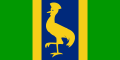
    flag, from 1962Flag of Uganda · Public domain
  • Flag of Uganda 1962
    flag, 1962 – 1962Flag of Uganda 1962 · Public domain

Its world

Rivals, and who else stood

Who it fought most

Wars and battles both took part in, on whichever side: the record names who took part, not who fought whom.

Meanwhile, elsewhere

The best-known states of other regions that stood while it did; the band is Uganda’s own years.

1960198020002020

How it compares

Among 3,073 states

Stood longer than 37% of 3,073 states
Uganda · 63 yearsHamburgBremenHow long it stood, among the states with a recorded end or still standing.
Held more ground at its peak than 59% of 1,464 states
Uganda · 211,000 km²BelarusLaosThe most ground it held, among the states with a border in Cliopatria.
Had more wars on record per century than 96% of 3,073 states
Uganda · 2.0Wars recorded per century, among the states, counting the wars the atlas hosts under each.

How it began

How did Uganda begin?

What led to it, and what came of it

Uganda (1962–1963) · Linked · 1962 – 1963Uganda (1962–1963)Buganda · Coincidence · 1420 – 1966BugandaAnkole · Coincidence · 1450 – 1967AnkoleTooro Kingdom · Coincidence · 1830 – 1967Tooro KingdomSamson Kisekka · Coincidence · 1912 – 1999Samson KisekkaBenedicto Kiwanuka · Coincidence · 1922 – 1972Benedicto KiwanukaUganda · 1963 – 2026Uganda1400160018002000
linkedcoincidence

Open the investigation: every row with its evidence, the conditions at the time, the theories condition by condition, and the succession analysed.

Its centuries in the record

1900 – 1999: 27 recorded — 2 wars and battles, 4 risings, regime changes and massacres, 21 other19002000 – 2099: 4 recorded — 1 wars and battles, 1 risings, regime changes and massacres, 2 other2000

Wars and battles in red, risings, coups and massacres beside them, everything else in grey, by the century each began in. A tall bar is partly a fact about Wikipedia: better-documented centuries hold more.

Each century’s own page:1900 – 19992000 – 2099

Keep exploring

Share this page
Copy link
Embed the map
Cite this page

How this page is made

Drawn from Wikidata (Q1036, CC0), the opening and history of its English Wikipedia article retold by the atlas (CC BY-SA 4.0), borders from Cliopatria (CC BY 4.0), coast and rivers from Natural Earth, cities from Reba, Reitsma & Seto 2016 (CC BY 4.0), symbols from Wikimedia Commons, each under its own licence. Data built 2026-11-26 · Pastlas v2.47.1, by Oleh Voronko; the published atlas and its data are for non-commercial use.

How to read it

Areas are measured on an equal-area grid from borders simplified to about five kilometres. “c.” marks an approximate date, and a date known to the century is never printed to the year. Counts are what the atlas holds, and they follow Wikipedia’s coverage: a busy century is partly a fact about the record.

  • Still standing: the span runs to the year of the build, 2026.

Something wrong?

Tell us and name the entry. We fix the data, not just this page.

Report a problem