State · Sub-Saharan Africa

Democratic Republic of the Congo

1960 – present · 66 years · still standing

Became Zaire

A vast Central African republic, born into secession and crisis, renamed Zaire under Mobutu's dictatorship, then torn by continental wars.

The Democratic Republic of the Congo, Africa's second-largest country by land, centres on the rainforests and rivers of the Congo Basin, with Kinshasa as its capital. It won independence from Belgium in 1960 and fell at once into mutiny, secession and the murder of Prime Minister Patrice Lumumba. Mobutu Sese Seko seized power in 1965 and in 1971 renamed it Zaire. His overthrow in 1997 was followed by the Second Congo War, which cost several million lives.

What the record holds

The Democratic Republic of the Congo began in 1960.↑ When the borders dataset first draws it, in 1960, it held 2.32 million km².↓ The Congo Crisis, 1960 – 1966, began with it holding 2.32 million km² and ended with 2.32 million km².↓

Its highest office was held by 6 rulers, covering 1960 – 2019, the median reign 5 years; 4 of 5 handovers were irregular.↓ The best known of them are Mobutu Sese Seko, Joseph Kabila and Félix Tshisekedi.↓ Of the 55 rows the atlas files under it, people are the largest group.↓

From Wikipedia’s article, retold · CC BY-SA 4.0

66 years

Longer than Bremen, shorter than the Soviet Union

2.32 million km²

At its height in 1960 · about the size of Algeria

6 rulers

the President of the Democratic Republic of the Congo

15 wars and battles

More per century than 99% of states · 55 entries in all

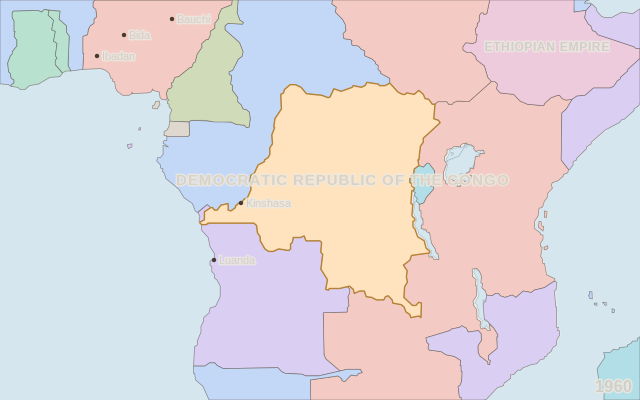
Map: Democratic Republic of the Congo in 1960, its borders in gold among its neighbours
Congo Crisis, 1960 – 1966: 2.32 million km² → 2.32 million km²Siege of Jadotville, 1961Simba rebellion, 1964Second Congo War, 1998 – 2003Kivu conflict, 20041960197019801990200020102020
Beside it on the map in 1960: British Empire, Estado Novo, French Fifth Republic, Ethiopian Empire, Sudan and Cameroon.How far it reached, year by year: its ground inside the borders Cliopatria draws (CC BY 4.0), measured on an equal-area grid; the map shows it at its largest, with the cities of the year.

The story

Four acts, 1960 – present

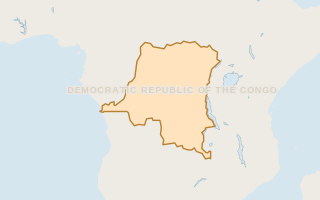
Democratic Republic of the Congo in 1965, at the end of act I
I1960 – 19662.32 million → 2.32 million km²

Independence and the Congo Crisis

Lumumba's nationalists win the May 1960 elections and Kasa-Vubu becomes president. Soon after independence the Force Publique mutinies, and Katanga under Moïse Tshombe and South Kasai move to break away. Lumumba is assassinated, and in 1965 Mobutu Sese Seko takes power.

Watch this act on the live map, from 1960
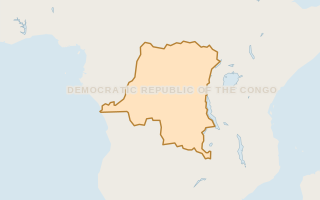
Democratic Republic of the Congo in 1996, at the end of act II
II1966 – 19972.32 million → 2.32 million km²

Mobutu's Zaire

Backed by the United States as a bulwark against communism, Mobutu builds a one-party state, stands alone in his own elections and renames the country Zaire in 1971. Peace holds, but at the price of repression, corruption and a cult of personality. In 1996 Rwanda and Uganda invade, and the next year Mobutu flees.

Watch this act on the live map, from 1966
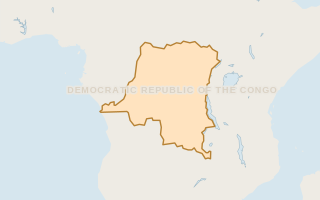
Democratic Republic of the Congo in 2002, at the end of act III
III1997 – 20032.32 million → 2.32 million km²

The Congo wars

Laurent-Désiré Kabila marches into Kinshasa and the country's name is changed again. In 1998 the Second Congo War begins, with a separate conflict in Ituri, and several million people die. Kabila is assassinated in 2001; the war ends in 2003 under Joseph Kabila.

Watch this act on the live map, from 1997
IV2003 – present

Rebellion in the east

Joseph Kabila restores a measure of calm, but the east stays at war. Laurent Nkunda's CNDP rises until Rwandan troops arrest him in 2009, and in 2012 Bosco Ntaganda mutinies. After a delayed election at the end of 2018, Félix Tshisekedi takes office, while the M23 fights on and Ebola returns.

Watch this act on the live map, from 2003

Before and after

After it

  • Zaire · replaced by · 1971 – 1997

Where it sits in time

3000 BCE2000 BCE1000 BCE110002000Zaire: 1971 – 1997Democratic Republic of the Congo: 1960 – 2026

Five thousand years, 3000 BCE to 2026; the state in gold, what it replaced or followed and what replaced or followed it in grey.

Its people

Lives across the Democratic Republic of the Congo

192019401960198020002020
Statesmen and generalsAll its people on the timeline →

How it was governed

6 presidents

6 presidents on record, 1960 to 2019; a reign lasted 5 years at the median. Each bar is a reign, as long as it lasted.

Joseph Kasa-Vubu · 1960 – 1965 · left office aliveMobutu Sese Seko · 1965 – 1997 · died in office of natural causesLaurent-Désiré Kabila · 1997 – 2001 · killedEddy Kapend · 2001 – 2001 · no death date to read the end againstJoseph Kabila · 2001 – 2019 · resigned or stood down, the article saysFélix Tshisekedi · 2019 – … · still in office1960198020002020
How their terms ended, where it is known (5 of 6):Killed 1Died in office 1Left office alive 2In office 1Not on record 1
Every term, with how it ended and its source

Rulers

How 6 reigns ended - choose one to show only those

How they died, where the record says: died of natural causes 2 · killed 1.

RulerReignLengthHow it ended · sourceTo the ruler before
20th century · 3 reigns · 1 killed or removed
Joseph Kasa-Vubu · aged 501960 – 19655 yearsleft office aliveread off the dates alonedied of natural causes
Mobutu Sese Seko · aged 351965 – 199732 yearsdied in officeWikidata's manner of deathdied of natural causes
Laurent-Désiré Kabila · aged 581997 – 20014 yearskilled in officeWikidata's manner of death
21st century · 3 reigns
Eddy Kapend · aged 412001 – 2001under a yearending not on record
Joseph Kabila · aged 302001 – 201918 yearsresignedread from the ruler's own article
Félix Tshisekedi · aged 562019 – in officein office since 2019still in office

6 rulers, 6 with terms dated as terms, covering 1960 – 2019. Median reign 5 years. 4 of 5 handovers irregular - a killing, a deposition, a rival claimant, a rising or a coup beside it. A blank in the last column means no kin on record, which is coverage, never “unrelated”.

Heads of government

The line of Prime Minister of the Democratic Republic of the Congo, drawn and never measured: a cabinet is not a reign.

Joseph Iléo1960 – 1960
Patrice Lumumba1960 – 1960
Justin Bomboko1960 – 1961
Cyrille Adoula1961 – 1964
Moïse Tshombe1964 – 1965
Évariste Kimba1965 – 1965
Léonard Mulamba1965 – 1966
Antoine Gizenga2006 – 2008
Adolphe Muzito2008 – 2012
Louis Alphonse Koyagialo2012 – 2012
Matata Ponyo Mapon2012 – 2016
Samy Badibanga2016 – 2017
Bruno Tshibala2017 – 2019
Sylvestre Ilunga2019 – 2021
Sama Lukonde2021 – 2024
Judith Suminwa2024 – …

Flags and arms, in order

  • Coat of arms of the Democratic Republic of the Congo (black spear)
    coat of arms, undatedCoat of arms of the Democratic Republic of the Congo (black spear) · CC BY-SA 4.0 · SVG-image-maker
  • Flag of the Democratic Republic of the Congo (1997–2006)
    flag, undatedFlag of the Democratic Republic of the Congo (1997–2006) · Public domain
  • Flag of the Republic of the Congo (Léopoldville) (1960–1963)
    flag, 1960 – 1963Flag of the Republic of the Congo (Léopoldville) (1960–1963) · Public domain
  • Flag of the Republic of the Congo (Léopoldville) (1963–1966)
    flag, 1963 – 1966Flag of the Republic of the Congo (Léopoldville) (1963–1966) · Public domain
  • Flag of the Democratic Republic of the Congo (1966–1971)
    flag, 1966 – 1971Flag of the Democratic Republic of the Congo (1966–1971) · Public domain
  • Flag of Zaire (1971–1997)
    flag, 1971 – 1997Flag of Zaire (1971–1997) · Public domain
  • Coat of arms of the Democratic Republic of the Congo (grey spear)
    coat of arms, from 2006Coat of arms of the Democratic Republic of the Congo (grey spear) · Public domain
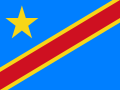
  • Flag of the Democratic Republic of the Congo
    flag, from 2006Flag of the Democratic Republic of the Congo · Public domain

Its world

Rivals, and who else stood

Who it fought most

Wars and battles both took part in, on whichever side: the record names who took part, not who fought whom.

Meanwhile, elsewhere

The best-known states of other regions that stood while it did; the band is the Democratic Republic of the Congo’s own years.

1960198020002020

How it compares

Among 3,073 states

Stood longer than 38% of 3,073 states
Democratic Republic of the Congo · 66 yearsBremenSoviet UnionHow long it stood, among the states with a recorded end or still standing.
Held more ground at its peak than 93% of 1,464 states
Democratic Republic of the Congo · 2,318,000 km²DenmarkAlgeriaThe most ground it held, among the states with a border in Cliopatria.
Had more wars on record per century than 99% of 3,073 states
Democratic Republic of the Congo · 9.0Wars recorded per century, among the states, counting the wars the atlas hosts under each.

How it began

How did the Democratic Republic of the Congo begin?

What led to it, and what came of it

Soviet Union · In the article · 1922 · “Following the dissolution of the Soviet Union, U.S.”Soviet UnionKatanga Province · Coincidence · 1910 – 2015Katanga ProvinceMoïse Tshombe · Coincidence · 1919 – 1969Moïse TshombeCyrille Adoula · Coincidence · 1921 – 1978Cyrille AdoulaJoseph Iléo · Coincidence · 1921 – 1994Joseph IléoAntoine Gizenga · Coincidence · 1925 – 2019Antoine GizengaDemocratic Republic of the Congo · 1960 – 2026Democratic Republic of the Congo190019502000
in the articlecoincidence

Open the investigation: every row with its evidence, the conditions at the time, the theories condition by condition, and the succession analysed.

Its centuries in the record

1900 – 1999: 32 recorded — 7 wars and battles, 3 risings, regime changes and massacres, 22 other19002000 – 2099: 23 recorded — 8 wars and battles, 8 risings, regime changes and massacres, 7 other2000

Wars and battles in red, risings, coups and massacres beside them, everything else in grey, by the century each began in. A tall bar is partly a fact about Wikipedia: better-documented centuries hold more.

Each century’s own page:1900 – 19992000 – 2099

Keep exploring

Share this page
Copy link
Embed the map
Cite this page

How this page is made

Drawn from Wikidata (Q974, CC0), the opening and history of its English Wikipedia article retold by the atlas (CC BY-SA 4.0), borders from Cliopatria (CC BY 4.0), coast and rivers from Natural Earth, cities from Reba, Reitsma & Seto 2016 (CC BY 4.0), symbols from Wikimedia Commons, each under its own licence. Data built 2026-11-26 · Pastlas v2.47.1, by Oleh Voronko; the published atlas and its data are for non-commercial use.

How to read it

Areas are measured on an equal-area grid from borders simplified to about five kilometres. “c.” marks an approximate date, and a date known to the century is never printed to the year. Counts are what the atlas holds, and they follow Wikipedia’s coverage: a busy century is partly a fact about the record.

  • Still standing: the span runs to the year of the build, 2026.

Something wrong?

Tell us and name the entry. We fix the data, not just this page.

Report a problem