State · East and Southeast Asia

South Korea

1948 – present · 78 years · still standing

Came after Korea

The Republic of Korea: the southern half of a divided peninsula, which came through war and dictatorship to prosperity and democracy.

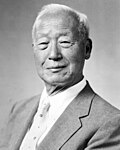
The Republic of Korea was proclaimed in the American-occupied south in August 1948, with Syngman Rhee as president, a month before the Soviet-aligned north became a state of its own. North Korea's invasion in 1950 began a war that killed three million Koreans and ended in 1953 with an armistice but no peace treaty. Dictatorships, coups and uprisings followed, alongside rapid economic growth, until the June Democratic Struggle forced an end to authoritarian rule in 1987.

What the record holds

South Korea began in 1948, replacing Korea.↓ When the borders dataset first draws it, in 1948, it held 102,800 km².↓ The Korean War, 1950 – 1953, began with it holding 102,800 km² and ended with 105,200 km².↓

It reached its greatest extent in 1953: 105,200 km².↓ The record names 18 rulers in its line, covering 1948 – 2025, the median reign 4 years; 8 of 17 handovers were irregular.↓ The best known of them are Park Geun-hye, Moon Jae-in and Park Chung Hee.↓ Of the 52 rows the atlas files under it, people are the largest group.↓

From Wikipedia’s article, retold · CC BY-SA 4.0

78 years

Longer than Yugoslavia, shorter than the Empire of Japan

105,000 km²

At its height in 1953 · about the size of Bulgaria

18 rulers

the President of South Korea

17 wars and battles

More per century than 96% of states · 52 entries in all

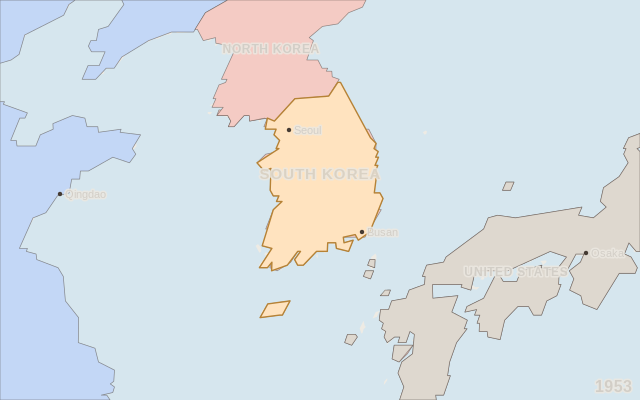
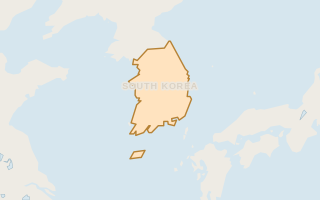
Map: South Korea in 1953, its borders in gold among its neighbours
Battle of Inchon, 1950No Gun Ri massacre, 1950Korean War, 1950 – 1953: 102,800 km² → 105,200 km²Panmunjom axe murder incident, 1976Gwangju Uprising, 1980196019802000
Beside it on the map in 1953: United States, People's Republic of China, Japan and North Korea.How far it reached, year by year: its ground inside the borders Cliopatria draws (CC BY 4.0), measured on an equal-area grid; the map shows it at its largest, with the cities of the year.

The story

Four acts, 1948 – present

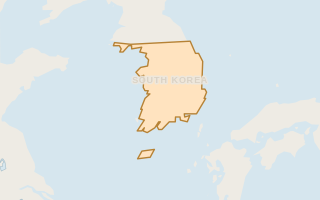
South Korea in 1952, at the end of act I
I1948 – 1953103,000 → 103,000 km²

Founding and the Korean War

Syngman Rhee, backed by the United States, wins the first presidential election. On 25 June 1950 North Korea invades; the United Nations intervenes, millions of Chinese troops join the North, and battles rage at the Pusan Perimeter, Inchon and Seoul. Civilians die in massacres such as No Gun Ri, and the war stalls into a 1953 armistice.

Watch this act on the live map, from 1948
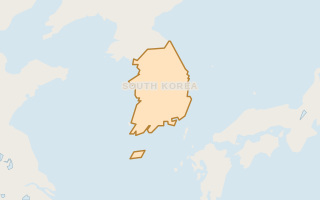
South Korea in 1978, at the end of act II
II1953 – 1979105,000 → 105,000 km²

Park Chung Hee's republic

A student uprising, the April Revolution of 1960, forces Rhee to resign, and 13 months of weak government follow. General Park Chung Hee seizes power on 16 May 1961 and drives export-led growth while repressing dissent; South Korea fights in the Vietnam War. A new constitution of 1972 gives him dictatorial powers, and in 1979 he is assassinated.

Watch this act on the live map, from 1953
South Korea in 1997, at the end of act III
III1979 – 1998105,000 → 105,000 km²

From Gwangju to the ballot

A coup comes in 1979 and the Gwangju Uprising in 1980. After the mass protests of June 1987, Roh Tae-woo narrowly wins that year's election against Kim Young-sam and Kim Dae-jung. Seoul hosts the 1988 Olympics, South Korea joins the United Nations in 1991, and Kim Dae-jung, once sentenced to death, is elected in 1997.

Watch this act on the live map, from 1979
IV1998 – present

Democracy and its trials

Kim Dae-jung takes office in 1998, followed by Roh Moo-hyun and Lee Myung-bak. The Battle of Yeonpyeong is fought in 2002, and the ROKS Cheonan sinks in 2010. Park Geun-hye, the first woman president, is removed in 2017 after mass protests over corruption; Moon Jae-in and then Yoon Suk Yeol follow.

Watch this act on the live map, from 1998

Before and after

Before it

  • Korea · replaces

Where it sits in time

3000 BCE2000 BCE1000 BCE110002000South Korea: 1948 – 2026

Five thousand years, 3000 BCE to 2026; the state in gold.

Its people

Lives across South Korea

190019502000
Statesmen and generalsWriters, artists and thinkersAll its people on the timeline →

How it was governed

18 presidents

18 presidents on record, 1948 to 2025; a reign lasted 4 years at the median. Each bar is a reign, as long as it lasted.

Syngman Rhee · 1948 – 1960 · left office aliveBaek Nak-jun · 1960 – 1960 · no death date to read the end againstHo Chong · 1960 – 1960 · no death date to read the end againstKwak Sang-hoon · 1960 – 1960 · no death date to read the end againstYun Po-sun · 1960 – 1962 · left office alivePark Chung Hee · 1963 – 1979 · killedChoi Kyu-hah · 1979 – 1979 · left office aliveChun Doo-hwan · 1980 – 1981 · left office aliveRoh Tae-woo · 1988 – 1993 · resigned or stood down, the article saysKim Young-sam · 1993 – 1998 · served out the term, the article saysKim Dae-jung · 1998 – 2003 · left office aliveRoh Moo-hyun · 2003 – 2008 · left office aliveLee Myung-bak · 2008 – 2013 · no death date to read the end againstPark Geun-hye · 2013 – 2017 · deposed or removedHwang Kyo-ahn · 2016 – 2017 · resigned or stood down, the article saysMoon Jae-in · 2017 – 2022 · resigned or stood down, the article saysYoon Suk Yeol · 2022 – 2025 · deposed or removedLee Jae Myung · 2025 – … · still in office1960198020002020
a second row: a reign that began before the last had ended — rival claimants, or a shared throne
How their terms ended, where it is known (14 of 18):Killed 1Deposed or removed 2Left office alive 10In office 1Not on record 4
Every term, with how it ended and its source

Rulers

3 terms are shared from Second Republic of Korea.

How 18 reigns ended - choose one to show only those

How they died, where the record says: died of natural causes 8 · killed 1 · died by suicide 1.

RulerReignLengthHow it ended · sourceTo the ruler before
20th century · 11 reigns · 1 killed or removed
Syngman Rhee · aged 731948 – 196012 yearsleft office aliveread off the dates alonedied of natural causes
Baek Nak-jun · from the line of Second Republic of Korea1960 – 1960under a yearending not on record
Ho Chong · from the line of Second Republic of Korea1960 – 1960under a yearending not on recorddied of natural causes
Kwak Sang-hoon · from the line of Second Republic of Korea1960 – 1960under a yearending not on record
Yun Po-sun · aged 631960 – 19622 yearsleft office aliveread off the dates alonedied of natural causes
Park Chung Hee · aged 461963 – 197916 yearskilled in officeWikidata's manner of death
Choi Kyu-hah · aged 601979 – 1979under a yearleft office aliveread off the dates alonedied of natural causes
Chun Doo-hwan · aged 491980 – 19811 yearleft office aliveread off the dates alonedied of natural causes
Roh Tae-woo · aged 561988 – 19935 yearsresignedread from the ruler's own articledied of natural causes
Kim Young-sam · aged 661993 – 19985 yearsserved out the termread from the ruler's own articledied of natural causes
Kim Dae-jung · aged 741998 – 20035 yearsleft office aliveread off the dates alonedied of natural causes
21st century · 7 reigns · 2 killed or removed
Roh Moo-hyun · aged 572003 – 20085 yearsleft office aliveread off the dates alonedied by suicide
Lee Myung-bak · aged 672008 – 20135 yearsending not on record
Park Geun-hye · aged 612013 – 20174 yearsdeposedWikidata's end cause on the term
Hwang Kyo-ahn · aged 592016 – 20171 yearresignedread from the ruler's own article
Moon Jae-in · aged 642017 – 20225 yearsresignedread from the ruler's own article
Yoon Suk Yeol · aged 622022 – 20253 yearsdeposedWikidata's end cause on the term
Lee Jae Myung · aged 622025 – in officein office since 2025still in office

18 rulers, 18 with terms dated as terms, covering 1948 – 2025. Median reign 4 years. 8 of 17 handovers irregular - a killing, a deposition, a rival claimant, a rising or a coup beside it. The violent-handover count is withheld: power changed hands so often that any rising falls beside one (exposure 0.80, limit 0.6). A blank in the last column means no kin on record, which is coverage, never “unrelated”.

Heads of government

The line of head of government, drawn and never measured: a cabinet is not a reign.

Lee Jae Myung2025 – …
Lee Ju-ho2025 – 2025
Han Seong-sook2026 – …

Flags and arms, in order

  • Flag of South Korea (1948–1949)
    flag, 1948 – 1950Flag of South Korea (1948–1949) · Public domain
  • Flag of South Korea (1949–1984)
    flag, 1950 – 1984Flag of South Korea (1949–1984) · Public domain
  • Emblem of South Korea
    coat of arms, from 1963Emblem of South Korea · Public domain
  • Flag of South Korea (1984–1997)
    flag, 1984 – 1997Flag of South Korea (1984–1997) · Public domain
  • Flag of South Korea (1997–2011)
    flag, 1997 – 2011Flag of South Korea (1997–2011) · Public domain
  • Flag of South Korea
    flag, from 2011Flag of South Korea · Public domain

Its world

Rivals, and who else stood

Who it fought most

Wars and battles both took part in, on whichever side: the record names who took part, not who fought whom.

Meanwhile, elsewhere

The best-known states of other regions that stood while it did; the band is South Korea’s own years.

19401960198020002020

How it compares

Among 3,073 states

Stood longer than 41% of 3,073 states
South Korea · 78 yearsYugoslaviaEmpire of JapanHow long it stood, among the states with a recorded end or still standing.
Held more ground at its peak than 46% of 1,464 states
South Korea · 105,200 km²LiberiaBulgariaThe most ground it held, among the states with a border in Cliopatria.
Had more wars on record per century than 96% of 3,073 states
South Korea · 2.0Wars recorded per century, among the states, counting the wars the atlas hosts under each.

How it began

How did South Korea begin?

What led to it, and what came of it

Indochina wars · Linked · 1946 – 1989Indochina warsKim Ku · Coincidence · 1876 – 1949Kim KuKim Kyu-sik · Coincidence · 1881 – 1950Kim Kyu-sikShin Song-mo · Coincidence · 1891 – 1960Shin Song-moChung Il-kwon · Coincidence · 1917 – 1994Chung Il-kwonPaik Sun-yup · Coincidence · 1920 – 2020Paik Sun-yupSouth Korea · 1948 – 2026South Korea190019502000
linkedcoincidence

Open the investigation: every row with its evidence, the conditions at the time, the theories condition by condition, and the succession analysed.

Its centuries in the record

1900 – 1999: 40 recorded — 15 wars and battles, 7 risings, regime changes and massacres, 18 other19002000 – 2099: 7 recorded — 2 wars and battles, 0 risings, regime changes and massacres, 5 other2000

Wars and battles in red, risings, coups and massacres beside them, everything else in grey, by the century each began in. A tall bar is partly a fact about Wikipedia: better-documented centuries hold more.

Each century’s own page:1900 – 19992000 – 2099

Keep exploring

Share this page
Copy link
Embed the map
Cite this page

How this page is made

Drawn from Wikidata (Q884, CC0), the opening and history of its English Wikipedia article retold by the atlas (CC BY-SA 4.0), borders from Cliopatria (CC BY 4.0), coast and rivers from Natural Earth, cities from Reba, Reitsma & Seto 2016 (CC BY 4.0), symbols from Wikimedia Commons, each under its own licence. Data built 2026-11-26 · Pastlas v2.47.1, by Oleh Voronko; the published atlas and its data are for non-commercial use.

How to read it

Areas are measured on an equal-area grid from borders simplified to about five kilometres. “c.” marks an approximate date, and a date known to the century is never printed to the year. Counts are what the atlas holds, and they follow Wikipedia’s coverage: a busy century is partly a fact about the record.

  • Still standing: the span runs to the year of the build, 2026.

Something wrong?

Tell us and name the entry. We fix the data, not just this page.

Report a problem