State · Middle East and North Africa

Safavid Iran

1501 – 1736 · 235 years

Came after Timurid Empire and Aq Qoyunlu · became Afsharid Iran

A gunpowder empire that made Twelver Shi'ism Iran's state religion, often seen as the beginning of modern Iranian history.

The Safavid dynasty ruled Safavid Iran, the Guarded Domains of Iran, from 1501 to 1736, though some end it in 1722, with the fall of Isfahan to the Afghans. Rising from a dervish order of Sufism based at Ardabil, the dynasty made Twelver Shi'ism the official religion. At its height it ruled today's Iran, Azerbaijan and Armenia, eastern Georgia and Iraq, and revived Iran as a trading power between East and West.

What the record holds

Safavid Iran began in 1501, after the Timurid Empire and Aq Qoyunlu.↓ In 1502, the first year its borders are mapped, it covered 158,900 km².↓ Between the start and the end of the Ottoman–Safavid war, 1603 – 1618, it went from 2.17 million km² to 2.60 million km².↓

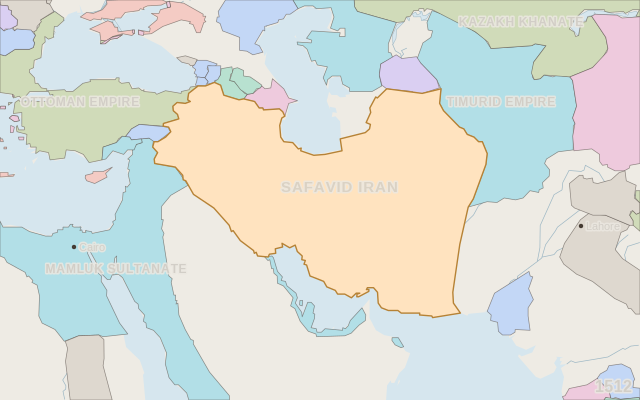
It reached its greatest extent in 1512: 2.85 million km².↓ The record names 10 rulers in its line, covering 1502 – 1732, the median reign 23 years; 4 of 9 handovers were irregular.↓ The best known of them are Abbas the Great, Ismail I and Tahmasp I.↓ Of the 38 rows the atlas files under it, wars and battles are the largest group.↓

It was followed by Afsharid Iran in 1736, 235 years after it began.↓

From Wikipedia’s article, retold · CC BY-SA 4.0

235 years

Longer than the Gupta Empire, shorter than the Golden Horde

2.85 million km²

At its height in 1512 · about the size of Argentina

10 rulers

the list of Safavid monarchs

17 wars and battles

More per century than 98% of states · 38 entries in all

Map: Safavid Iran in 1512, its borders in gold among its neighbours
Battle of Chaldiran, 1514Ottoman–Safavid War (1532–1555), 1532 – 1555: 2.77 million km² → 2.37 million km²Ottoman–Safavid war, 1603 – 1618: 2.17 million km² → 2.60 million km²Ottoman–Safavid War (1623–1639), 1623 – 1639: 2.60 million km² → 2.81 million km²Treaty of Zuhab, 16391550160016501700
Beside it on the map in 1512: Mamluk Sultanate, Ottoman Empire, Kazakh Khanate, Moghulistan, Nogai Horde and Lodi dynasty.How far it reached, year by year: its ground inside the borders Cliopatria draws (CC BY 4.0), measured on an equal-area grid; the map shows it at its largest, with the cities of the year.

The story

Three acts, 1501 – 1736

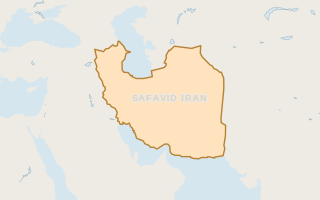
Safavid Iran in 1587, at the end of act I
I1501 – 1588

Ismail and the Qizilbash

Ismail I makes Twelver Shi'ism the official religion, a turning point in Islam's history. The Qizilbash, Turkoman tribes, form the bulk of the army, while Iranians, the shahs among them, run the bureaucracy. The Battle of Chaldiran is fought in 1514, and under Tahmasp I the Ottoman–Safavid War runs from 1532 to 1555.

Watch this act on the live map, from 1501
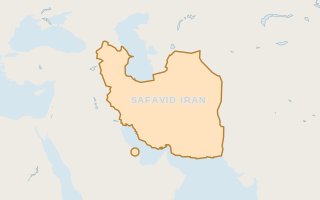
Safavid Iran in 1665, at the end of act II
II1588 – 16662.2 million → 2.62 million km²

Abbas the Great and the gholams

Abbas the Great reigns from 1588 to 1629. Over the 17th century the gholams, Armenian, Georgian and Circassian slave-soldiers, grow into a Third Force that leads the army. Ottoman–Safavid wars are fought from 1603 to 1618 and 1623 to 1639, a Mughal–Safavid war in 1622–1623, and the Treaty of Zuhab is signed in 1639.

Watch this act on the live map, from 1588
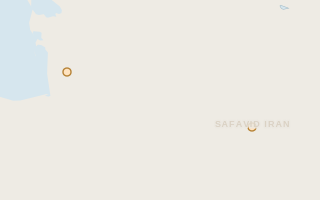
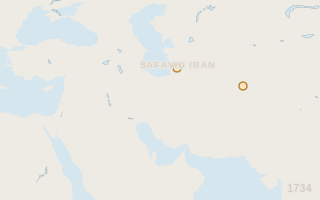
Safavid Iran in 1734, last mappedSafavid Iran in 1512, at its largest
The rise and the fall in one frame: drag across it from 1512, at its largest at 2.85 million km², to 1734, last mapped at 200 km². Open the live map in 1512 or 1734.

Before and after

Before it

  • Mar'ashis · follows
  • Shirvanshahs · follows
  • Timurid Empire · follows · 1370 – 1507
  • Afrasiab dynasty · follows
  • Aq Qoyunlu · follows · 1378 – 1508
  • Kar-Kiya dynasty · follows
  • Baduspanids · follows · 665 – 1598
  • Mihrabanids · follows

After it

Where it sits in time

3000 BCE2000 BCE1000 BCE110002000Timurid Empire: 1370 – 1507Aq Qoyunlu: 1378 – 1508Baduspanids: 665 – 1598Afsharid Iran: 1736 – 1796Safavid Iran: 1501 – 1736

Five thousand years, 3000 BCE to 2026; the state in gold, what it replaced or followed and what replaced or followed it in grey.

Its people

Lives across Safavid Iran

15001550160016501700
Statesmen and generalsWriters, artists and thinkersLived on after it endedAll its people on the timeline →

How it was governed

10 lists

10 lists on record, 1502 to 1732; a reign lasted 23 years at the median. Each bar is a reign, as long as it lasted.

Ismail I · 1502 – 1524 · died in office, manner not recordedTahmasp I · 1524 – 1576 · killedIsmail II · 1576 – 1577 · killedMohammad Khodabanda · 1578 – 1587 · deposed, the article saysAbbas the Great · 1588 – 1629 · died in office of natural causesSafi of Persia · 1629 – 1642 · died in office, manner not recordedAbbas II of Persia · 1642 – 1666 · died in office, manner not recordedSuleiman I of Persia · 1666 – 1694 · died in office, manner not recordedSoltan Hoseyn · 1694 – 1722 · left office aliveTahmasp II · 1729 – 1732 · left office alive1550160016501700
How their terms ended, where it is known (10 of 10):Killed 2Deposed or removed 1Died in office 5Left office alive 2
Every term, with how it ended and its source

Rulers

How 10 reigns ended - choose one to show only those

How they died, where the record says: killed 2 · died of natural causes 1 · executed 1.

RulerReignLengthHow it ended · sourceTo the ruler before
16th century · 5 reigns · 3 killed or removed
Ismail I · aged 151502 – 152422 yearsdied in officeread off the dates alone
Tahmasp I · aged 101524 – 157652 yearskilled in officeWikidata's manner of deathchild
Ismail II · aged 431576 – 15771 yearkilled in officeWikidata's manner of deathchild
Mohammad Khodabanda · aged 471578 – 15879 yearsdeposedread from the ruler's own articlesibling
Abbas the Great · aged 171588 – 162941 yearsdied in officeWikidata's manner of deathdied of natural causeschild
17th century · 4 reigns
Safi of Persia · aged 181629 – 164213 yearsdied in officeread off the dates alonegrandchild
Abbas II of Persia · aged 91642 – 166624 yearsdied in officeread off the dates alonechild
Suleiman I of Persia · aged 181666 – 169428 yearsdied in officeread off the dates alonechild
Soltan Hoseyn · aged 261694 – 172228 yearsleft office aliveread off the dates aloneexecutedchild
18th century · 1 reign
Tahmasp II · aged 251729 – 17323 yearsleft office aliveread off the dates alonechild

10 rulers, 10 with terms dated as terms, covering 1502 – 1732. Median reign 23 years. 4 of 9 handovers irregular - a killing, a deposition, a rival claimant, a rising or a coup beside it. A blank in the last column means no kin on record, which is coverage, never “unrelated”.

Flags and arms, in order

  • Lion and Sun Emblem of Persia
    coat of arms, undatedLion and Sun Emblem of Persia · CC BY-SA 3.0 · Sodacan
  • Safavid Flag
    flag, 1576 – 1732Safavid Flag · Public domain

Its world

Rivals, and who else stood

Who it fought most

Wars and battles both took part in, on whichever side: the record names who took part, not who fought whom.

Meanwhile, elsewhere

The best-known states of other regions that stood while it did; the band is Safavid Iran’s own years.

150016001700

How it compares

Among 3,073 states

Stood longer than 67% of 3,073 states
Safavid Iran · 235 yearsGupta EmpireGolden HordeHow long it stood, among the states with a recorded end or still standing.
Held more ground at its peak than 95% of 1,464 states
Safavid Iran · 2,847,100 km²ArgentinaIndiaThe most ground it held, among the states with a border in Cliopatria.
Had more wars on record per century than 98% of 3,073 states
Safavid Iran · 3.0Wars recorded per century, among the states, counting the wars the atlas hosts under each.

Why it fell

Why did Safavid Iran fall?

Historians still argue. Here is what the atlas records about its last century:

4

wars and battles in its last century

÷14061

its land, between 1636 and 1735

What led to it, and what came of it

Mihrabanids · Linked · 1236MihrabanidsBaduspanids · Linked · 665 – 1598BaduspanidsShirvanshahs · Linked · 861 – 1538ShirvanshahsTimurid Empire · Linked · 1370 – 1507Timurid EmpireKar-Kiya dynasty · Linked · 1375 – 1592Kar-Kiya dynastyAq Qoyunlu · Linked · 1378 – 1508Aq QoyunluSafavid Iran · 1501 – 1736Safavid IranAfsharid Iran · Linked · 1736 – 1796Afsharid IranTalysh Khanate · Linked · 1747 – 1828Talysh Khanate10001500
linked

Open the investigation: every row with its evidence, the conditions at the time, the theories condition by condition, and the succession analysed.

Its centuries in the record

1500 – 1599: 12 recorded — 5 wars and battles, 0 risings, regime changes and massacres, 7 other15001600 – 1699: 18 recorded — 8 wars and battles, 1 risings, regime changes and massacres, 9 other16001700 – 1799: 7 recorded — 4 wars and battles, 1 risings, regime changes and massacres, 2 other1700

Wars and battles in red, risings, coups and massacres beside them, everything else in grey, by the century each began in. A tall bar is partly a fact about Wikipedia: better-documented centuries hold more.

Each century’s own page:1500 – 15991600 – 16991700 – 1799

Keep exploring

Share this page
Copy link
Embed the map
Cite this page

How this page is made

Drawn from Wikidata (Q18234383, CC0), the opening and history of its English Wikipedia article retold by the atlas (CC BY-SA 4.0), borders from Cliopatria (CC BY 4.0), coast and rivers from Natural Earth, cities from Reba, Reitsma & Seto 2016 (CC BY 4.0), symbols from Wikimedia Commons, each under its own licence. Data built 2026-11-26 · Pastlas v2.47.1, by Oleh Voronko; the published atlas and its data are for non-commercial use.

How to read it

Areas are measured on an equal-area grid from borders simplified to about five kilometres. “c.” marks an approximate date, and a date known to the century is never printed to the year. Counts are what the atlas holds, and they follow Wikipedia’s coverage: a busy century is partly a fact about the record.

  • Held with the record of Safavid dynasty, merged into this one.

Something wrong?

Tell us and name the entry. We fix the data, not just this page.

Report a problem