1958 Venezuelan coup d'état
adverse regime change · 1958
State · Americas and Oceania
1953 – 1999 · 46 years
Came after  United States of Venezuela · became
 Venezuela and history of Venezuela (1999–present)
Its record opens in 1953, replacing the United States of Venezuela.↓ Its borders are first mapped in 1954, around 941,200 km².↓
Its line counts 17 rulers, covering 1945 – 2013, the median reign 3.5 years; 4 of 15 handovers were irregular.↓ The best known of them are  Hugo Chávez,
 Rómulo Gallegos and
 Rómulo Betancourt.↓ Most of the 38 rows the atlas files under it are people.↓
Venezuela and the history of Venezuela replaced it in 1999, after 46 years.↓ Its end fits “Elite conflict”, every condition present.↓
Best known for
46 years
Longer than East Germany, shorter than the German Empire
941,000 km²
At its height in 1954 · about the size of Venezuela
17 rulers
the President of Venezuela
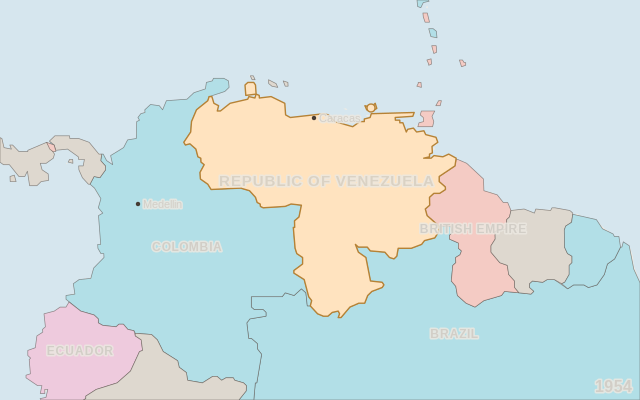
 Brazil,
 Colombia,
 Ecuador,
 British Empire,
 Suriname (Kingdom of the Netherlands) and
 Peru.How far it reached, year by year: its ground inside the borders Cliopatria draws (CC BY 4.0), measured on an equal-area grid; the map shows it at its largest, with the cities of the year.
The story
The best-known wars, battles, risings and changes of regime the record files under it; a war within a war is folded into it.
adverse regime change · 1958
unrest · 1961
unrest · 1989
unrest · November 1992
unrest · 1992
The states the record files it as replacing or following, and those that replaced or followed it - Wikidata's own statements, each read from this state's side.
United States of Venezuela · replaces · 1864 – 1953Venezuela · replaced by · 1999 – presentFive thousand years, 3000 BCE to 2026; the state in gold, what it replaced or followed and what replaced or followed it in grey.
Its people
One axis for everyone, so you can see who knew whom: the best-known, ordered by birth.
 Raúl Leonipresident1905 – 1972
 Rafael Calderapresident
 Ramón José Velásquezpresident
 Carlos Andrés Pérezpresident
 Octavio Lepagepresident
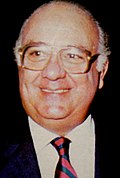 Jaime Lusinchipresident · physician
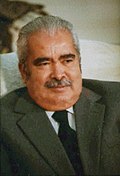 Luis Herrera Campinspresident
 Cilia Florespolitician
 Vladimir Padrino Lópezpolitician · military personnel
 Jorge Rodríguezpolitician
 María Corina Machadopolitician
 Julio Borgespolitician
 Leopoldo Lópezpolitician
 Henrique Caprilespolitician
 Jorge Arreazapolitician · diplomat
 Tareck El Aissamipolitician
 Fabiana Rosalespolitician
How it was governed
17 presidents on record, 1945 to 2013; a reign lasted 3.5 years at the median. Each bar is a reign, as long as it lasted.
The line of President of Venezuela.
| Ruler | Reign | Length | How it ended · source | To the ruler before |
|---|---|---|---|---|
| 20th century · 14 reigns · 2 killed or removed | ||||
 Rómulo Betancourt · aged 37 | 1945 – 1948 | 3 years | left office aliveread off the dates alonedied of natural causes | |
 Rómulo Gallegos · aged 64 | 1948 – 1948 | under a year | left office aliveread off the dates alone | |
 Carlos Delgado Chalbaud · aged 39 | 1948 – 1950 | 2 years | killed in officeWikidata's manner of death | |
 Germán Suárez Flamerich · aged 43 | 1950 – 1952 | 2 years | left office aliveread off the dates alone | |
 Marcos Pérez Jiménez · aged 39 | 1953 – 1958 | 5 years | deposedread from the ruler's own article | |
| Raúl Leoni · aged 59 | 1964 – 1969 | 5 years | left office aliveread off the dates alonedied of natural causes | |
| Carlos Andrés Pérez · aged 52 | 1974 – 1979 | 5 years | left office aliveread off the dates alonedied of natural causes | |
| Luis Herrera Campins · aged 54 | 1979 – 1984 | 5 years | left office aliveread off the dates alone | |
| Jaime Lusinchi · aged 60 | 1984 – 1989 | 5 years | left office aliveread off the dates alonedied of natural causes | |
| Carlos Andrés Pérez · aged 67 | 1989 – 1993 | 4 years | left office aliveread off the dates alonedied of natural causes | |
| Octavio Lepage · aged 70 | 1993 – 1994 | 1 year | left office aliveread off the dates alonedied of natural causes | |
| Ramón José Velásquez · aged 77 | 1993 – 1994 | 1 year | left office aliveread off the dates alone | |
| Rafael Caldera · aged 78 | 1994 – 1999 | 5 years | left office aliveread off the dates alonedied of natural causes | |
 Hugo Chávez · aged 45 | 1999 – 2013 | 14 years | died in officeWikidata's manner of deathdied of natural causes | |
| 21st century · 2 reigns | ||||
 Diosdado Cabello · aged 39 | 2002 – 2002 | under a year | ending not on record | |
 Pedro Carmona · aged 61 | 2002 – 2002 | under a year | ending not on record | |
17 rulers, 15 with terms dated as terms, covering 1945 – 2013. Median reign 3.5 years. 4 of 15 handovers irregular - a killing, a deposition, a rival claimant, a rising or a coup beside it. The violent-handover count is withheld: power changed hands so often that any rising falls beside one (exposure 0.78, limit 0.6). A blank in the last column means no kin on record, which is coverage, never “unrelated”.
Each symbol with the years its own statement gives; the timeline flies the one of the year on screen.

 Hugo Chávez14 yrsCarlos Andrés Pérez9 yrsJaime Lusinchi5 yrsLuis Herrera Campins5 yrsMarcos Pérez Jiménez5 yrs
Its world
The best-known states of other regions that stood while it did; the band is the Republic of Venezuela’s own years.
 FinlandEurope
 TurkeyMiddle East and North Africa
 ItalyEurope
 JapanEast and Southeast Asia
 People's Republic of ChinaEast and Southeast Asia
 IndiaSouth Asia
 EgyptMiddle East and North Africa
 South AfricaSub-Saharan Africa
How it compares
Each column is a share of the states; gold is the Republic of Venezuela.
Why it fell
Historians still argue. Here is what the atlas records about its last century:
1958
Marcos Pérez Jiménez, deposed or removed in office
The investigation's own picture: 1 cause the record names and 2 results, the strongest six of each at their own years, joined to the state by the kind of claim - a recorded statement solid, the article's sentence dashed, a theory dash-dot.
Open the investigation: every row with its evidence, the conditions at the time, the theories condition by condition, and the succession analysed.
Of 5 theories of why states fall, 1 has every condition present at this ending and 2 some of them; each is applied by its own logic, condition by condition, and whether its authors named this case is a footnote.
Lachmann 2000 · Lachmann 2010
Applies by its own logic: 2 of its 2 conditions held here (it needs all of them), and this is the kind of outcome it predicts — adverse regime change, unrest or the state's ending.
38 entries the atlas files under it, all in 1900 – 1999.
“Republic of Venezuela”, Pastlas, a historical atlas, 2026-11-26. https://app.pastlas.com/state/republic-of-venezuela/
Drawn from Wikidata (Q21296156, CC0), borders from Cliopatria (CC BY 4.0), coast and rivers from Natural Earth, cities from Reba, Reitsma & Seto 2016 (CC BY 4.0), symbols from Wikimedia Commons, each under its own licence. Data built 2026-11-26 · Pastlas v2.47.1, by Oleh Voronko; the published atlas and its data are for non-commercial use.
Areas are measured on an equal-area grid from borders simplified to about five kilometres. “c.” marks an approximate date, and a date known to the century is never printed to the year. Counts are what the atlas holds, and they follow Wikipedia’s coverage: a busy century is partly a fact about the record.