State · Sub-Saharan Africa

Republic of the Congo

1960 – present · 66 years · still standing

Came after People's Republic of the Congo

An oil-producing republic west of the Congo River, Marxist–Leninist for two decades and long ruled by Denis Sassou Nguesso.

The Republic of the Congo, or Congo-Brazzaville, lies on the Atlantic coast of Central Africa west of the Congo River. France colonised the region in the late 19th century; the republic was founded on 28 November 1958 and won independence in 1960. From 1969 to 1992 it was the Marxist–Leninist People's Republic of the Congo. Multi-party rule began in 1992, but after civil war Denis Sassou Nguesso returned to power in 1997.

What the record holds

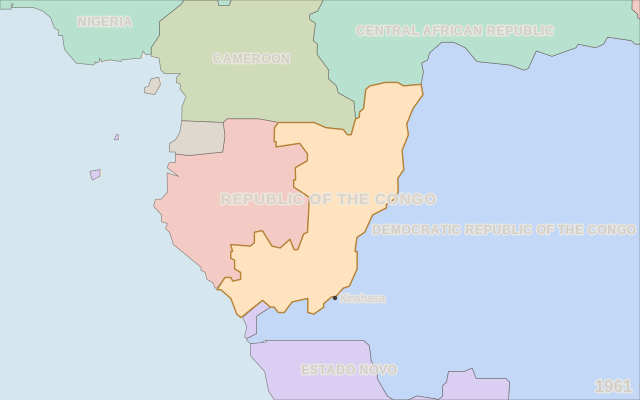
Its record opens in 1960, replacing the People's Republic of the Congo.↓ When the borders dataset first draws it, in 1961, it held 347,400 km².↓

The record names 8 rulers in its line, covering 1960 – 1997; 6 of 7 handovers were irregular.↓ Among them, Denis Sassou Nguesso, Pascal Lissouba and Marien Ngouabi are the best known.↓ The atlas files 27 rows under it, most of them people.↓

From Wikipedia’s article, retold · CC BY-SA 4.0

66 years

Longer than Bremen, shorter than the Soviet Union

347,000 km²

At its height in 1961 · about the size of Malaysia

8 rulers

the President of the Republic of the Congo

1 war or battle

More per century than 92% of states · 27 entries in all

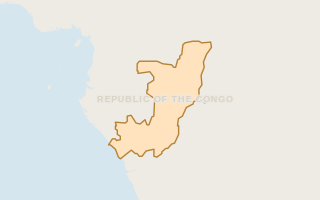
Map: Republic of the Congo in 1961, its borders in gold among its neighbours
1972 Republic of the Congo coup attempt, 19721987 Republic of the Congo coup attempt, 1987Republic of the Congo Civil War, 1997 – 1999197019801990200020102020
Beside it on the map in 1961: Democratic Republic of the Congo, Central African Republic, Cameroon, Gabon, Estado Novo and Nigeria.How far it reached, year by year: its ground inside the borders Cliopatria draws (CC BY 4.0), measured on an equal-area grid; the map shows it at its largest, with the cities of the year.

The story

Three acts, 1960 – present

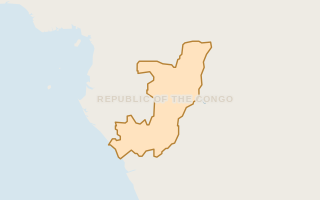
Republic of the Congo in 1991, at the end of act II
II1969 – 1992347,000 → 347,000 km²

The People's Republic

From 1969 the country is the Marxist–Leninist People's Republic of the Congo. Marien Ngouabi governs until 1977, the year of his death; Joachim Yhombi-Opango follows until 1979, and then Denis Sassou Nguesso holds the presidency until 1992. Coup attempts come in 1972 and 1987.

Watch this act on the live map, from 1969
III1992 – present

Civil war and Sassou's return

Multi-party elections in 1992 bring Pascal Lissouba to power, but his elected government is overthrown in the civil war of 1997–1999. Denis Sassou Nguesso, president from 1979 to 1992, returns in 1997 and has held office since. Oil makes the Congo the fourth-largest producer in the Gulf of Guinea, though its revenue is unevenly shared.

Watch this act on the live map, from 1992

Before and after

Before it

Where it sits in time

3000 BCE2000 BCE1000 BCE110002000People's Republic of the Congo: 1969 – 1992Republic of the Congo: 1960 – 2026

Five thousand years, 3000 BCE to 2026; the state in gold, what it replaced or followed and what replaced or followed it in grey.

Its people

Lives across the Republic of the Congo

192019401960198020002020
Statesmen and generalsAll its people on the timeline →

How it was governed

8 presidents

8 presidents on record, 1960 to 1997. Each bar is a reign, as long as it lasted.

Fulbert Youlou · 1960 – 1963 · resigned or stood down, the article saysAlphonse Massamba-Débat · 1963 – 1968 · left office aliveAugustin Poignet · 1968 – 1968 · left office aliveAlfred Raoul · 1968 – 1969 · left office aliveMarien Ngouabi · 1968 – 1977 · killedJoachim Yhombi-Opango · 1977 – 1979 · left office alivePascal Lissouba · 1992 – 1997 · deposed, the article saysDenis Sassou Nguesso · 1997 – … · still in office1960198020002020
a second row: a reign that began before the last had ended — rival claimants, or a shared throne
How their terms ended, where it is known (8 of 8):Killed 1Deposed or removed 1Left office alive 5In office 1
Every term, with how it ended and its source

Rulers

How 8 reigns ended - choose one to show only those

How they died, where the record says: died of natural causes 3 · killed 1.

RulerReignLengthHow it ended · sourceTo the ruler before
20th century · 8 reigns · 2 killed or removed
Fulbert Youlou · aged 431960 – 19633 yearsresignedread from the ruler's own articledied of natural causes
Alphonse Massamba-Débat · aged 421963 – 19685 yearsleft office aliveread off the dates alone
Augustin Poignet · aged 401968 – 1968under a yearleft office aliveread off the dates alone
Alfred Raoul · aged 301968 – 19691 yearleft office aliveread off the dates alone
Marien Ngouabi · aged 301968 – 19779 yearskilled in officeWikidata's manner of death
Joachim Yhombi-Opango · aged 381977 – 19792 yearsleft office aliveread off the dates alonedied of natural causes
Pascal Lissouba · aged 611992 – 19975 yearsdeposedread from the ruler's own articledied of natural causes
Denis Sassou Nguesso · aged 541997 – in officein office since 1997still in office

8 rulers, 8 with terms dated as terms, covering 1960 – 1997. Only 37 years of the line are dated - too short for a median. 6 of 7 handovers irregular - a killing, a deposition, a rival claimant, a rising or a coup beside it. The violent-handover count is withheld: power changed hands so often that any rising falls beside one (exposure 0.82, limit 0.6). A blank in the last column means no kin on record, which is coverage, never “unrelated”.

Heads of government

The line of Prime Minister of the Republic of the Congo, drawn and never measured: a cabinet is not a reign.

Claude Antoine Dacostalived 1932 – 2007
Ambroise Noumazalayelived 1933 – 2007
Aloïse Moudileno-Massengolived 1933 – 2020
André Milongolived 1935 – 2007
Stéphane Maurice Bongho-Nouarralived 1937 – 2007
Louis Sylvain Gomalived 1941 – …
Jacques Opangault1957 – 1958
Fulbert Youlou1958 – 1959
Pascal Lissouba1963 – 1966
Alphonse Massamba-Débat1963 – 1963
Alfred Raoul1968 – 1969
Henri Lopes1973 – 1975
Ange Édouard Poungui1984 – 1989
Alphonse Poaty-Souchlaty1989 – 1990
Joachim Yhombi-Opango1993 – 1996
Charles David Ganao1996 – 1997
Bernard Kolélas1997 – 1997
Isidore Mvouba2005 – 2009
Clément Mouamba2016 – 2021
Anatole Collinet Makosso2021 – 2026

Flags and arms, in order

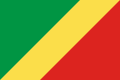
  • Flag of the Republic of the Congo
    flag, from 1959Flag of the Republic of the Congo · Public domain
  • Coat of arms of the Republic of the Congo
    coat of arms, from 1960Coat of arms of the Republic of the Congo · Public domain

Its world

Who else stood

Meanwhile, elsewhere

The best-known states of other regions that stood while it did; the band is the Republic of the Congo’s own years.

1960198020002020

How it compares

Among 3,073 states

Stood longer than 38% of 3,073 states
Republic of the Congo · 66 yearsBremenSoviet UnionHow long it stood, among the states with a recorded end or still standing.
Held more ground at its peak than 68% of 1,464 states
Republic of the Congo · 347,400 km²PhilippinesMalaysiaThe most ground it held, among the states with a border in Cliopatria.
Had more wars on record per century than 92% of 3,073 states
Republic of the Congo · 1.0Wars recorded per century, among the states, counting the wars the atlas hosts under each.

How it began

How did the Republic of the Congo begin?

What led to it, and what came of it

Cyrille Adoula · Coincidence · 1921 – 1978Cyrille AdoulaJean Nguza Karl-i-Bond · Coincidence · 1938 – 2003Jean Nguza Karl-i-BondRepublic of the Congo · 1960 – 2026Republic of the Congo19502000
coincidence

Open the investigation: every row with its evidence, the conditions at the time, the theories condition by condition, and the succession analysed.

Its centuries in the record

1900 – 1999: 26 recorded — 1 wars and battles, 3 risings, regime changes and massacres, 22 other19002000 – 2099: 1 recorded — 0 wars and battles, 0 risings, regime changes and massacres, 1 other2000

Wars and battles in red, risings, coups and massacres beside them, everything else in grey, by the century each began in. A tall bar is partly a fact about Wikipedia: better-documented centuries hold more.

Each century’s own page:1900 – 19992000 – 2099

Keep exploring

Share this page
Copy link
Embed the map
Cite this page

How this page is made

Drawn from Wikidata (Q971, CC0), the opening and history of its English Wikipedia article retold by the atlas (CC BY-SA 4.0), borders from Cliopatria (CC BY 4.0), coast and rivers from Natural Earth, cities from Reba, Reitsma & Seto 2016 (CC BY 4.0), symbols from Wikimedia Commons, each under its own licence. Data built 2026-11-26 · Pastlas v2.47.1, by Oleh Voronko; the published atlas and its data are for non-commercial use.

How to read it

Areas are measured on an equal-area grid from borders simplified to about five kilometres. “c.” marks an approximate date, and a date known to the century is never printed to the year. Counts are what the atlas holds, and they follow Wikipedia’s coverage: a busy century is partly a fact about the record.

  • Still standing: the span runs to the year of the build, 2026.

Something wrong?

Tell us and name the entry. We fix the data, not just this page.

Report a problem