State · Sub-Saharan Africa

Cameroon

1960 – present · 66 years · still standing

Came after Kamerun and Republic of Cameroon (1960-1961)

A Central African republic forged from French and British mandates, speaking both French and English, and ruled by two presidents since independence.

Cameroon lies where West and Central Africa meet, on the Gulf of Guinea, with its capital at Yaoundé. Once the German colony of Kamerun, it was split between France and the United Kingdom after World War I. French Cameroun became independent in 1960 under Ahmadou Ahidjo, and the south of British Cameroons joined it in 1961. Paul Biya has ruled since 1982, longer than any other non-royal leader, at the head of a de facto one-party state.

What the record holds

Its record opens in 1960, replacing Kamerun and the Republic of Cameroon.↓ Its borders are first mapped in 1960, around 425,700 km².↓

It reached its greatest extent in 1961: 467,300 km².↓ The record names 2 rulers in its line, covering 1960 – 1982; its one handover was irregular.↓ The best known of them are Paul Biya and Ahmadou Ahidjo.↓ Most of the 32 rows the atlas files under it are people.↓

From Wikipedia’s article, retold · CC BY-SA 4.0

66 years

Longer than Bremen, shorter than the Soviet Union

467,000 km²

At its height in 1961 · about the size of Turkmenistan

2 rulers

the traditional chief in Cameroon

1 war or battle

More per century than 92% of states · 32 entries in all

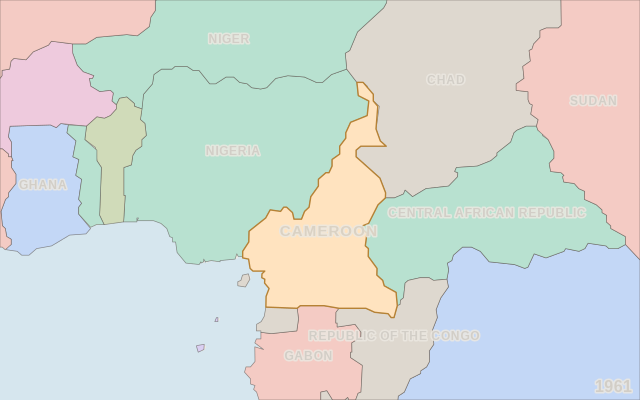
Map: Cameroon in 1961, its borders in gold among its neighbours
1960197019801990200020102020
Beside it on the map in 1961: Nigeria, Democratic Republic of the Congo, Chad, Central African Republic, Sudan and Niger.How far it reached, year by year: its ground inside the borders Cliopatria draws (CC BY 4.0), measured on an equal-area grid; the map shows it at its largest, with the cities of the year.

The story

Three acts, 1960 – present

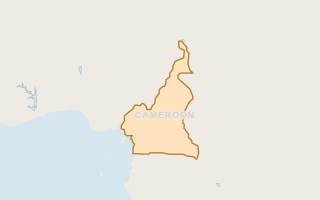
Cameroon in 1971, at the end of act I
I1960 – 1972426,000 → 467,000 km²

Ahidjo's federal republic

French Cameroun becomes independent in January 1960 under Ahmadou Ahidjo, and in October 1961 the British Southern Cameroons joins it in a federation of two states, East and West Cameroon, each with a legislature of its own. Ahidjo uses the war against the UPC rebels to gather power, and from 1966 his Cameroon National Union is the only legal party.

Watch this act on the live map, from 1960
III1982 – present

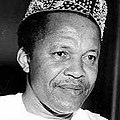
Biya's long presidency

Ahidjo hands power to Paul Biya in 1982 but tries to rule through the party until forced out. Biya starts by loosening the system, yet a failed coup in 1984 turns him back to his predecessor's ways; that year he restores the name Republic of Cameroon. The Lake Nyos disaster strikes in 1986, and the Anglophone Crisis erupts in 2017.

Watch this act on the live map, from 1982

Before and after

Before it

  • Republic of Cameroon (1960-1961) · replaces
  • United Republic of Cameroon · replaces
  • Kamerun · replaces · 1884 – 1919

Where it sits in time

3000 BCE2000 BCE1000 BCE110002000Kamerun: 1884 – 1919Cameroon: 1960 – 2026

Five thousand years, 3000 BCE to 2026; the state in gold, what it replaced or followed and what replaced or followed it in grey.

Its people

Lives across Cameroon

192019401960198020002020
Statesmen and generalsAll its people on the timeline →

How it was governed

2 cameroons

2 cameroons on record, 1960 to 1982. Each bar is a reign, as long as it lasted.

Ahmadou Ahidjo · 1960 – 1982 · exiled, imprisoned or confined, the article saysPaul Biya · 1982 – … · still in office1960198020002020
How their terms ended, where it is known (2 of 2):Deposed or removed 1In office 1
Every term, with how it ended and its source

Rulers

How 2 reigns ended - choose one to show only those

How they died, where the record says: died of natural causes 1.

RulerReignLengthHow it ended · sourceTo the ruler before
20th century · 2 reigns · 1 killed or removed
Ahmadou Ahidjo · aged 361960 – 198222 yearsexiledread from the ruler's own articledied of natural causes
Paul Biya · aged 491982 – in officein office since 1982still in office

2 rulers, 2 with terms dated as terms, covering 1960 – 1982. Only 22 years of the line are dated - too short for a median. 1 of 1 handovers irregular - a killing, a deposition, a rival claimant, a rising or a coup beside it. A blank in the last column means no kin on record, which is coverage, never “unrelated”.

Heads of government

The line of Prime Minister of Cameroon, drawn and never measured: a cabinet is not a reign.

John Ngu Fonchalived 1916 – 1999
Simon Pierre Tchounguilived 1916 – 1997
André-Marie Mbidalived 1917 – 1980
Augustine Ngom Jualived 1924 – 1977
Ahmadou Ahidjo1960 – 1960
Charles Assalé1960 – 1965
Vincent de Paul Ahanda1965 – 1965
Salomon Tandeng Muna1968 – 1972
Paul Biya1975 – 1982
Bello Bouba Maigari1982 – 1983
Luc Ayang1983 – 1984
Sadou Hayatou1991 – 1992
Simon Achidi Achu1992 – 1996
Peter Mafany Musonge1996 – 2004
Ephraïm Inoni2004 – 2009
Philémon Yang2009 – 2019
Joseph Ngute2019 – …

Flags and arms, in order

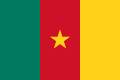
  • Flag of Cameroon
    flag, from 1975Flag of Cameroon · Public domain
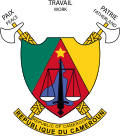
  • Coat of arms of Cameroon
    coat of arms, from 1986Coat of arms of Cameroon · Public domain

Its world

Who else stood

Meanwhile, elsewhere

The best-known states of other regions that stood while it did; the band is Cameroon’s own years.

1960198020002020

How it compares

Among 3,073 states

Stood longer than 38% of 3,073 states
Cameroon · 66 yearsBremenSoviet UnionHow long it stood, among the states with a recorded end or still standing.
Held more ground at its peak than 73% of 1,464 states
Cameroon · 467,300 km²YemenTurkmenistanThe most ground it held, among the states with a border in Cliopatria.
Had more wars on record per century than 92% of 3,073 states
Cameroon · 1.0Wars recorded per century, among the states, counting the wars the atlas hosts under each.

How it began

How did Cameroon begin?

What led to it, and what came of it

Kamerun · Linked · 1884 – 1919KamerunRepublic of Cameroon (1960-1961) · Linked · 1960 – 1961Republic of Cameroon (1960-1961)Cameroon · 1960 – 2026Cameroon190019502000
linked

Open the investigation: every row with its evidence, the conditions at the time, the theories condition by condition, and the succession analysed.

Its centuries in the record

1900 – 1999: 30 recorded — 0 wars and battles, 1 risings, regime changes and massacres, 29 other19002000 – 2099: 2 recorded — 1 wars and battles, 0 risings, regime changes and massacres, 1 other2000

Wars and battles in red, risings, coups and massacres beside them, everything else in grey, by the century each began in. A tall bar is partly a fact about Wikipedia: better-documented centuries hold more.

Each century’s own page:1900 – 19992000 – 2099

Keep exploring

Share this page
Copy link
Embed the map
Cite this page

How this page is made

Drawn from Wikidata (Q1009, CC0), the opening and history of its English Wikipedia article retold by the atlas (CC BY-SA 4.0), borders from Cliopatria (CC BY 4.0), coast and rivers from Natural Earth, cities from Reba, Reitsma & Seto 2016 (CC BY 4.0), symbols from Wikimedia Commons, each under its own licence. Data built 2026-11-26 · Pastlas v2.47.1, by Oleh Voronko; the published atlas and its data are for non-commercial use.

How to read it

Areas are measured on an equal-area grid from borders simplified to about five kilometres. “c.” marks an approximate date, and a date known to the century is never printed to the year. Counts are what the atlas holds, and they follow Wikipedia’s coverage: a busy century is partly a fact about the record.

  • Still standing: the span runs to the year of the build, 2026.

Something wrong?

Tell us and name the entry. We fix the data, not just this page.

Report a problem