State · Sub-Saharan Africa

Nigeria

1963 – present · 63 years · still standing

Came after British Cameroons and Federation of Nigeria

Africa's most populous country, a federation of hundreds of peoples that survived civil war and decades of military rule.

Three years after its independence from Britain in 1960, Nigeria became a federal republic, its parliament weighted towards the Northern Region. A coup and an anti-Igbo pogrom in 1966 preceded civil war from 1967 to 1970, and soldiers then ruled for most of three decades, broken only by an unstable democracy in 1979–1983. Since 1999 elected presidents have governed Africa's most populous country, a federation of thirty-six states and hundreds of ethnic groups.

What the record holds

Nigeria began in 1963, replacing the Federation of Nigeria.↓ Its borders are first mapped in 1961, around 914,600 km².↓ The Nigerian Civil War, 1967 – 1970, began with it holding 914,600 km² and ended with 914,700 km².↓

Its ground peaked in 1969 at 914,700 km².↓ Its highest office was held by 14 rulers, covering 1963 – 2023, the median reign 3 years; 8 of 15 handovers were irregular.↓ Among them, Muhammadu Buhari, Goodluck Jonathan and Umaru Musa Yar'Adua are the best known.↓ The atlas files 52 rows under it, unrest and atrocity the largest group of them.↓

From Wikipedia’s article, retold · CC BY-SA 4.0

63 years

Longer than Hamburg, shorter than Bremen

915,000 km²

At its height in 1969 · about the size of Tanzania

14 rulers

the President of Nigeria

6 wars and battles

More per century than 99% of states · 52 entries in all

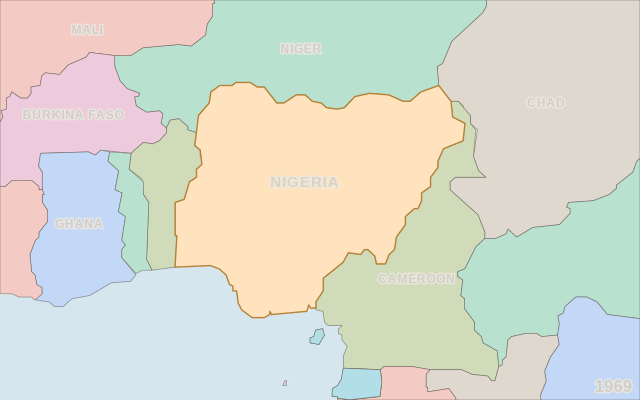
Map: Nigeria in 1969, its borders in gold among its neighbours
Nigerian Civil War, 1967 – 1970: 914,600 km² → 914,700 km²Conflict in the Niger Delta, 2003Boko Haram insurgency, 20092015 Baga massacre, 2015End SARS, 2020197019801990200020102020
Beside it on the map in 1969: Chad, Niger, Cameroon, Central African Republic, Mali and Burkina Faso.How far it reached, year by year: its ground inside the borders Cliopatria draws (CC BY 4.0), measured on an equal-area grid; the map shows it at its largest, with the cities of the year.

The story

Four acts, 1963 – present

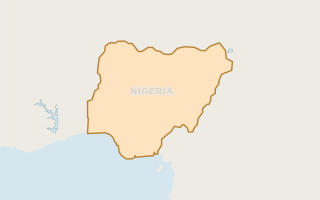
Nigeria in 1969, at the end of act I
I1963 – 1970915,000 → 915,000 km²

A republic tilted north

The republic inherits from British rule a parliament in which the Northern Region outweighs the Eastern and Western regions combined, and southern politicians resent it. In 1966 come a coup and an anti-Igbo pogrom; from 1967 to 1970 civil war tears the country apart.

Watch this act on the live map, from 1963
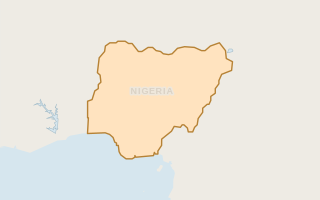
Nigeria in 1998, at the end of act II
II1970 – 1999915,000 → 915,000 km²

Soldiers and a brief democracy

Military rulers govern after the war. In 1979 they stage a careful return to civilian rule: Shehu Shagari is elected president, and Olusegun Obasanjo becomes the first head of state to step down willingly. That democracy lasts only until 1983; Muhammadu Buhari, Ibrahim Babangida and Sani Abacha follow, and Obasanjo is jailed under Abacha.

Watch this act on the live map, from 1970
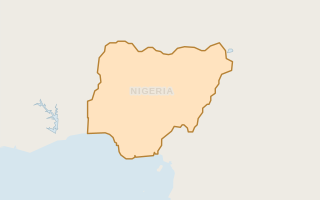
Nigeria in 2008, at the end of act III
III1999 – 2009915,000 → 915,000 km²

The Fourth Republic

On 29 May 1999 Abdulsalami Abubakar hands power to the newly elected Obasanjo, closing thirty-nine years of brief democracies, civil war and dictatorship. The votes of 1999 and 2003 are condemned as unfree, yet democracy makes real progress, and Umaru Musa Yar'Adua wins in 2007. Violence flares in the Niger Delta, at Yelwa and in Jos.

Watch this act on the live map, from 1999
IV2009 – present

Insurgency and protest

The Boko Haram insurgency breaks out in 2009; massacres follow at Baga, Zaria, Zamfara and in Plateau State, and a bandit conflict runs from 2011. Goodluck Jonathan, Muhammadu Buhari and Bola Tinubu hold the presidency in turn. The year 2020 brings the End SARS protests and the Lekki shooting, and floods strike in 2022, 2024 and 2025.

Watch this act on the live map, from 2009

Before and after

Before it

Where it sits in time

3000 BCE2000 BCE1000 BCE110002000British Cameroons: 1919 – 1961Federation of Nigeria: 1960 – 1963Nigeria: 1963 – 2026

Five thousand years, 3000 BCE to 2026; the state in gold, what it replaced or followed and what replaced or followed it in grey.

Its people

Lives across Nigeria

19251950197520002025
Statesmen and generalsWriters, artists and thinkersAll its people on the timeline →

How it was governed

14 presidents

14 presidents on record, 1963 to 2023; a reign lasted 3 years at the median. Each bar is a reign, as long as it lasted.

Nnamdi Azikiwe · 1963 – 1966 · left office aliveJohnson Aguiyi-Ironsi · 1966 – 1966 · killedYakubu Gowon · 1966 – 1975 · no death date to read the end againstMurtala Muhammed · 1975 – 1976 · killedOlusegun Obasanjo · 1976 – 1979 · no death date to read the end againstShehu Shagari · 1979 – 1983 · left office aliveMuhammadu Buhari · 1983 – 1985 · deposed, the article saysIbrahim Babangida · 1985 – 1993 · no death date to read the end againstErnest Shonekan · 1993 – 1993 · deposed, the article saysSani Abacha · 1993 – 1998 · died in office, manner not recordedAbdulsalami Abubakar · 1998 – 1999 · no death date to read the end againstOlusegun Obasanjo · 1999 – 2007 · resigned or stood down, the article saysUmaru Musa Yar'Adua · 2007 – 2010 · died in office of natural causesGoodluck Jonathan · 2010 – 2015 · no death date to read the end againstMuhammadu Buhari · 2015 – 2023 · left office aliveBola Tinubu · 2023 – … · still in office198020002020
How their terms ended, where it is known (11 of 16):Killed 2Deposed or removed 2Died in office 2Left office alive 4In office 1Not on record 5
Every term, with how it ended and its source

Rulers

How 16 reigns ended - choose one to show only those

How they died, where the record says: killed 2 · died of natural causes 1.

RulerReignLengthHow it ended · sourceTo the ruler before
20th century · 12 reigns · 4 killed or removed
Nnamdi Azikiwe · aged 591963 – 19663 yearsleft office aliveread off the dates alone
Johnson Aguiyi-Ironsi · aged 421966 – 1966under a yearkilled in officeWikidata's manner of death
Yakubu Gowon · aged 321966 – 19759 yearsending not on record
Murtala Muhammed · aged 371975 – 19761 yearkilled in officeWikidata's manner of death
Olusegun Obasanjo · aged 391976 – 19793 yearsending not on record
Shehu Shagari · aged 541979 – 19834 yearsleft office aliveread off the dates alone
Muhammadu Buhari · aged 411983 – 19852 yearsdeposedread from the ruler's own article
Ibrahim Babangida · aged 441985 – 19938 yearsending not on record
Ernest Shonekan · aged 571993 – 1993under a yeardeposedread from the ruler's own article
Sani Abacha · aged 501993 – 19985 yearsdied in officeread off the dates alone
Abdulsalami Abubakar · aged 561998 – 19991 yearending not on record
Olusegun Obasanjo · aged 621999 – 20078 yearsresignedread from the ruler's own article
21st century · 4 reigns
Umaru Musa Yar'Adua · aged 562007 – 20103 yearsdied in officeWikidata's manner of deathdied of natural causes
Goodluck Jonathan · aged 532010 – 20155 yearsending not on record
Muhammadu Buhari · aged 732015 – 20238 yearsleft office aliveread off the dates alone
Bola Tinubu · aged 712023 – in officein office since 2023still in office

14 rulers, 14 with terms dated as terms, covering 1963 – 2023. Median reign 3 years. 8 of 15 handovers irregular - a killing, a deposition, a rival claimant, a rising or a coup beside it. The violent-handover count is withheld: power changed hands so often that any rising falls beside one (exposure 0.97, limit 0.6). A blank in the last column means no kin on record, which is coverage, never “unrelated”.

Flags and arms, in order

  • Flag of Nigeria
    flag, from 1960Flag of Nigeria · Public domain
  • Coat of arms of Nigeria
    coat of arms, from 1960Coat of arms of Nigeria · CC BY-SA 3.0 · Lumia1234

Its world

Who else stood

Meanwhile, elsewhere

The best-known states of other regions that stood while it did; the band is Nigeria’s own years.

1960198020002020

How it compares

Among 3,073 states

Stood longer than 37% of 3,073 states
Nigeria · 63 yearsHamburgBremenHow long it stood, among the states with a recorded end or still standing.
Held more ground at its peak than 83% of 1,464 states
Nigeria · 914,700 km²TanzaniaVenezuelaThe most ground it held, among the states with a border in Cliopatria.
Had more wars on record per century than 99% of 3,073 states
Nigeria · 5.0Wars recorded per century, among the states, counting the wars the atlas hosts under each.

How it began

How did Nigeria begin?

What led to it, and what came of it

British Cameroons · Linked · 1919 – 1961British CameroonsFederation of Nigeria · Linked · 1960 – 1963Federation of NigeriaAhmadu Bello · Coincidence · 1910 – 1966Ahmadu BelloAbubakar Tafawa Balewa · Coincidence · 1912 – 1966Abubakar Tafawa BalewaChinua Achebe · Coincidence · 1930 – 2013Chinua AchebeChukwuemeka Odumegwu Ojukwu · Coincidence · 1933 – 2011Chukwuemeka Odumegwu OjukwuNigeria · 1963 – 2026Nigeria190019502000
linkedcoincidence

Open the investigation: every row with its evidence, the conditions at the time, the theories condition by condition, and the succession analysed.

Its centuries in the record

1900 – 1999: 29 recorded — 2 wars and battles, 10 risings, regime changes and massacres, 17 other19002000 – 2099: 23 recorded — 4 wars and battles, 13 risings, regime changes and massacres, 6 other2000

Wars and battles in red, risings, coups and massacres beside them, everything else in grey, by the century each began in. A tall bar is partly a fact about Wikipedia: better-documented centuries hold more.

Each century’s own page:1900 – 19992000 – 2099

Keep exploring

Share this page
Copy link
Embed the map
Cite this page

How this page is made

Drawn from Wikidata (Q1033, CC0), the opening and history of its English Wikipedia article retold by the atlas (CC BY-SA 4.0), borders from Cliopatria (CC BY 4.0), coast and rivers from Natural Earth, cities from Reba, Reitsma & Seto 2016 (CC BY 4.0), symbols from Wikimedia Commons, each under its own licence. Data built 2026-11-26 · Pastlas v2.47.1, by Oleh Voronko; the published atlas and its data are for non-commercial use.

How to read it

Areas are measured on an equal-area grid from borders simplified to about five kilometres. “c.” marks an approximate date, and a date known to the century is never printed to the year. Counts are what the atlas holds, and they follow Wikipedia’s coverage: a busy century is partly a fact about the record.

  • Still standing: the span runs to the year of the build, 2026.

Something wrong?

Tell us and name the entry. We fix the data, not just this page.

Report a problem