State · Europe

Novgorod Republic

1136 – 1478 · 342 years

Came after Principality of Novgorod · became Tsardom of Russia

A merchant city-state of northwestern Russia, the Hanseatic League's easternmost post, whose veche chose and dismissed its princes until Moscow annexed it.

Reaching from the Gulf of Finland to the Ural Mountains, the Novgorod Republic grew rich as the Hanseatic League's easternmost trading post. In 1136 Novgorodians deposed their prince; thereafter the veche, dominated by boyars, elected and dismissed princes and chose the posadnik. From the mid-13th century the grand princes of Vladimir, later of Moscow, held its throne. Beaten at Shelon in 1471, it pledged allegiance to Moscow, and in 1478 Ivan III dismantled the veche.

What the record holds

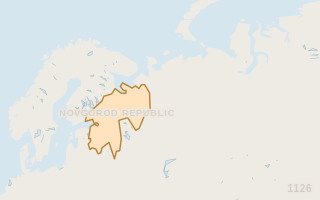
Its record opens in 1136, replacing the Principality of Novgorod.↓ In 1126, the first year its borders are mapped, it covered 539,200 km².↓

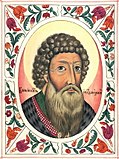
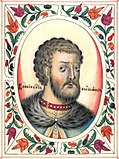
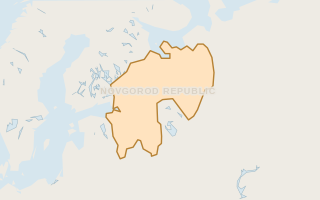
It reached its greatest extent in 1468: 1.59 million km².↓ Its line counts 5 rulers, covering 1138 – 1359, the median reign 4 years; 1 of 6 handovers was irregular.↓ Among them, Alexander Nevsky, Ivan I of Moscow and Ivan II of Moscow are the best known.↓ The atlas files 10 rows under it, people the largest group of them.↓

The Tsardom of Russia replaced it in 1478, after 342 years.↓

From Wikipedia’s article, retold · CC BY-SA 4.0

342 years

Longer than the Mughal Empire, shorter than Kyivan Rus'

1.59 million km²

At its height in 1468 · about the size of Mongolia

5 rulers

the Grand Prince of Novgorod

3 wars and battles

More per century than 87% of states · 10 entries in all

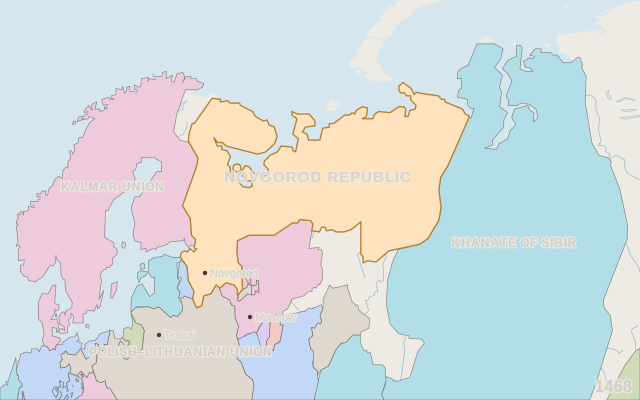
Map: Novgorod Republic in 1468, its borders in gold among its neighbours
Swedish–Novgorodian Wars, 1101 – 1300Battle of the Neva, 1240Treaty of Nöteborg, 1323Treaty of Novgorod, 1326Battle of Shelon, 1471120013001400
Beside it on the map in 1468: Khanate of Sibir, Kalmar Union, Polish–Lithuanian union, Grand Principality of Moscow, Golden Horde and Nogai Horde.How far it reached, year by year: its ground inside the borders Cliopatria draws (CC BY 4.0), measured on an equal-area grid; the map shows it at its largest, with the cities of the year.

The story

Four acts, 1136 – 1478

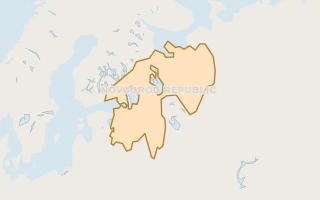
Novgorod Republic in 1239, at the end of act I
I1136 – 1240539,000 → 509,000 km²

The veche takes charge

Having deposed their prince in 1136, Novgorodians let the veche choose and dismiss princes and elect the posadnik, the tysyatsky and the archbishop; boyar families dominate it. Trade runs along the Baltic–Volga–Caspian route, which also brings food from the Oka region. In 1228 a campaign against the Tavastians fails when troops at odds with Prince Yaroslav Vsevolodovich refuse to fight.

Watch this act on the live map, from 1136
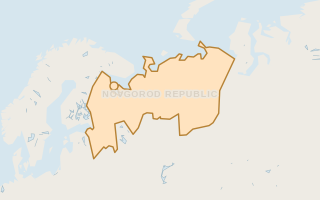
Novgorod Republic in 1303, at the end of act II
II1240 – 1304509,000 → 494,000 km²

Princes from Vladimir

Alexander Nevsky holds the princely seat at intervals until 1252, and in 1240 Novgorod fights the Battle of the Neva. From the mid-13th century the throne stays with the grand princes of Vladimir, though the prince counts for little. Boyar-funded ushkuyniki carry Novgorod's trade and colonies into the Russian North, to Lake Onega and the White Sea.

Watch this act on the live map, from 1240
Novgorod Republic in 1455, at the end of act III
III1304 – 1456494,000 → 1.48 million km²

Between Tver and Moscow

Tver, Moscow and Lithuania contend for Novgorod. When Mikhail Yaroslavich of Tver, grand prince of Vladimir from 1304, sends governors, quarrels push Novgorod toward Moscow, whose distant princes seem less threatening. Novgorodians reach the Arctic Ocean and the Ob, fur from the north makes the city rich, and from the late 14th century it fights Moscow to keep those lands.

Watch this act on the live map, from 1304
Novgorod Republic in 1477, at the end of act IV
IV1456 – 14781.48 million → 143,000 km²

Moscow takes Novgorod

Novgorod had sided with Dmitry Shemyaka in Moscow's succession war against Vasily Vasilievich, and as Moscow grows stronger its autonomy slips away. Defeated at Shelon, it pledges allegiance to Moscow in a treaty of 1471 that leaves its government standing for a time. In 1478 Ivan III dismantles the veche and rules Novgorod directly.

Watch this act on the live map, from 1456
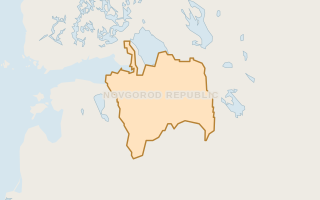
Novgorod Republic in 1468, at its largestNovgorod Republic in 1126, first mapped
The rise and the fall in one frame: drag across it from 1126, first mapped at 539,200 km², to 1468, at its largest at 1.59 million km². Open the live map in 1126 or 1468.

Before and after

Before it

  • Principality of Novgorod · replaces

After it

Where it sits in time

3000 BCE2000 BCE1000 BCE110002000Tsardom of Russia: 1547 – 1721Novgorod Republic: 1136 – 1478

Five thousand years, 3000 BCE to 2026; the state in gold, what it replaced or followed and what replaced or followed it in grey.

Its people

Lives across the Novgorod Republic

Notable figures

How it was governed

5 princes

5 princes on record, 1138 to 1359; a reign lasted 4 years at the median. Each bar is a reign, as long as it lasted.

Rostyslav Yuriiovych · 1138 – 1142 · left office aliveAlexander Nevsky · 1228 – 1229 · left office aliveAlexander Nevsky · 1236 – 1252 · left office aliveAlexander Nevsky · 1257 – 1259 · left office aliveYury of Moscow · 1322 – 1325 · killedIvan I of Moscow · 1328 – 1337 · left office aliveIvan II of Moscow · 1355 – 1359 · died in office, manner not recorded120013001400
How their terms ended, where it is known (7 of 7):Killed 1Died in office 1Left office alive 5
Every term, with how it ended and its source

Rulers

How 7 reigns ended - choose one to show only those

How they died, where the record says: died of natural causes 3 · killed 1.

RulerReignLengthHow it ended · sourceTo the ruler before
12th century · 1 reign
Rostyslav Yuriiovych1138 – 11424 yearsleft office aliveread off the dates alone
13th century · 3 reigns
Alexander Nevsky · aged 81228 – 12291 yearleft office aliveread off the dates alonedied of natural causes
Alexander Nevsky · aged 161236 – 125216 yearsleft office aliveread off the dates alonedied of natural causes
Alexander Nevsky · aged 371257 – 12592 yearsleft office aliveread off the dates alonedied of natural causes
14th century · 3 reigns · 1 killed or removed
Yury of Moscow · aged 411322 – 13253 yearskilled in officeWikidata's manner of deathgrandchild
Ivan I of Moscow · aged 401328 – 13379 yearsleft office aliveread off the dates alonesibling
Ivan II of Moscow · aged 291355 – 13594 yearsdied in officeread off the dates alonechild

5 rulers, 5 with terms dated as terms, covering 1138 – 1359. Median reign 4 years. 1 of 6 handovers irregular - a killing, a deposition, a rival claimant, a rising or a coup beside it. A blank in the last column means no kin on record, which is coverage, never “unrelated”.

Its world

Rivals, and who else stood

Who it fought most

Wars and battles both took part in, on whichever side: the record names who took part, not who fought whom.

Meanwhile, elsewhere

The best-known states of other regions that stood while it did; the band is the Novgorod Republic’s own years.

11001200130014001500

How it compares

Among 3,073 states

Stood longer than 76% of 3,073 states
Novgorod Republic · 342 yearsMughal EmpireKyivan Rus'How long it stood, among the states with a recorded end or still standing.
Held more ground at its peak than 89% of 1,464 states
Novgorod Republic · 1,589,300 km²MongoliaLibyaThe most ground it held, among the states with a border in Cliopatria.
Had more wars on record per century than 87% of 3,073 states
Novgorod Republic · 0.3Wars recorded per century, among the states, counting the wars the atlas hosts under each.

Why it fell

Why did the Novgorod Republic fall?

Historians still argue. Here is what the atlas records about its last century:

1

wars and battles in its last century

÷10

its land, between 1378 and 1477

What led to it, and what came of it

Principality of Novgorod · Linked · 882 – 1136Principality of NovgorodKyivan Rus' · In the article · 882 · “As a result, Novgorod is traditionally viewed as the birthplace of the Russian monarchy in Russian historiography. The Primary Chronicle states that when Oleg…”Kyivan Rus'Novgorod Republic · 1136 – 1478Novgorod RepublicTsardom of Russia · Linked · 1547 – 1721Tsardom of Russia1000120014001600
in the articlelinked

Open the investigation: every row with its evidence, the conditions at the time, the theories condition by condition, and the succession analysed.

Its centuries in the record

1100 – 1199: 2 recorded — 1 wars and battles, 0 risings, regime changes and massacres, 1 other11001200 – 1299: 2 recorded — 1 wars and battles, 0 risings, regime changes and massacres, 1 other12001300 – 1399: 4 recorded — 0 wars and battles, 0 risings, regime changes and massacres, 4 other13001400 – 1499: 2 recorded — 1 wars and battles, 0 risings, regime changes and massacres, 1 other1400

Wars and battles in red, risings, coups and massacres beside them, everything else in grey, by the century each began in. A tall bar is partly a fact about Wikipedia: better-documented centuries hold more.

Each century’s own page:1100 – 11991200 – 12991300 – 13991400 – 1499

Keep exploring

Share this page
Copy link
Embed the map
Cite this page

How this page is made

Drawn from Wikidata (Q151536, CC0), the opening and history of its English Wikipedia article retold by the atlas (CC BY-SA 4.0), borders from Cliopatria (CC BY 4.0), coast and rivers from Natural Earth, cities from Reba, Reitsma & Seto 2016 (CC BY 4.0). Data built 2026-11-26 · Pastlas v2.47.1, by Oleh Voronko; the published atlas and its data are for non-commercial use.

How to read it

Areas are measured on an equal-area grid from borders simplified to about five kilometres. “c.” marks an approximate date, and a date known to the century is never printed to the year. Counts are what the atlas holds, and they follow Wikipedia’s coverage: a busy century is partly a fact about the record.

Something wrong?

Tell us and name the entry. We fix the data, not just this page.

Report a problem