State · Europe

Kingdom of Germany

843 – 1806 · 963 years

Became Holy Roman Empire

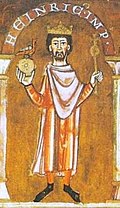
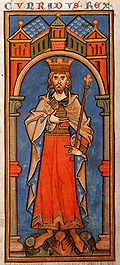
The Kingdom of Germany began in 843.↑ Its highest office was held by 28 rulers, covering 961 – 1519, the median reign 20.5 years; 12 of 27 handovers were irregular.↓ Among them, Frederick Barbarossa, Frederick II, Holy Roman Emperor and Charles IV are the best known.↓ The atlas files 9 rows under it, most of them people.↓

Continue reading

It was replaced by the Holy Roman Empire in 1806, 963 years after it began.↓

963 years

Longer than the Holy Roman Empire, shorter than the Byzantine Empire

28 rulers

the King of Germany

1 war or battle

9 entries in all

Its borders aren’t on record

The borders dataset does not draw the Kingdom of Germany. The live map still shows where it stood among the states of its years.

Find it on the live map

The story

Its key moments

Before and after

After it

Where it sits in time

3000 BCE2000 BCE1000 BCE110002000Holy Roman Empire: 962 – 1806Kingdom of Germany: 843 – 1806

Five thousand years, 3000 BCE to 2026; the state in gold, what it replaced or followed and what replaced or followed it in grey.

Its people

Lives across the Kingdom of Germany

10001100120013001400
Statesmen and generalsAll its people on the timeline →

How it was governed

28 kings

28 kings on record, 961 to 1519; a reign lasted 20.5 years at the median. Each bar is a reign, as long as it lasted.

Otto II · 961 – 983 · no death date to read the end againstOtto III, Holy Roman Emperor · 983 – 1002 · no death date to read the end againstHenry II, Holy Roman Emperor · 1002 – 1024 · no death date to read the end againstConrad II · 1024 – 1039 · no death date to read the end againstHenry III, Holy Roman Emperor · 1028 – 1056 · no death date to read the end againstHenry IV, Holy Roman Emperor · 1054 – 1105 · no death date to read the end againstConrad II of Italy · 1087 – 1098 · no death date to read the end againstHenry V · 1099 – 1125 · no death date to read the end againstLothair III · 1125 – 1137 · no death date to read the end againstConrad III of Germany · 1138 – 1152 · no death date to read the end againstFrederick Barbarossa · 1152 – 1190 · no death date to read the end againstHenry VI · 1169 – 1197 · no death date to read the end againstFrederick II, Holy Roman Emperor · 1196 – 1250 · no death date to read the end againstPhilip of Swabia · 1198 – 1208 · killed, the article saysOtto IV, Holy Roman Emperor · 1208 – 1215 · no death date to read the end againstHenry (VII) of Germany · 1222 – 1235 · no death date to read the end againstConrad IV of Germany · 1237 – 1254 · no death date to read the end againstRichard of Cornwall · 1257 – 1272 · no death date to read the end againstRudolf I of Germany · 1273 – 1291 · no death date to read the end againstAdolf, King of the Romans · 1292 – 1298 · no death date to read the end againstAlbert I of Germany · 1298 – 1308 · killed, the article saysLouis IV, Holy Roman Emperor · 1314 – 1347 · no death date to read the end againstCharles IV · 1346 – 1378 · no death date to read the end againstWenceslaus IV of Bohemia · 1376 – 1400 · no death date to read the end againstJobst of Moravia · 1410 – 1411 · no death date to read the end againstSigismund · 1410 – 1437 · no death date to read the end againstFrederick III, Holy Roman Emperor · 1440 – 1493 · no death date to read the end againstMaximilian I · 1486 – 1519 · no death date to read the end against10001200140016001800
a second row: a reign that began before the last had ended — rival claimants, or a shared throne
How their terms ended, where it is known (2 of 28):Killed 2Not on record 26
Every term, with how it ended and its source

Rulers

How 28 reigns ended - choose one to show only those

How they died, where the record says: died of natural causes 10 · died by accident 1 · killed 1 · died by suicide 1 · died in battle 1.

RulerReignLengthHow it ended · sourceTo the ruler before
10th century · 2 reigns
Otto II961 – 98322 yearsending not on recorddied of natural causes
Otto III, Holy Roman Emperor983 – 100219 yearsending not on recorddied of natural causeschild
11th century · 6 reigns
Henry II, Holy Roman Emperor1002 – 102422 yearsending not on record
Conrad II1024 – 103915 yearsending not on record
Henry III, Holy Roman Emperor1028 – 105628 yearsending not on recorddied of natural causeschild
Henry IV, Holy Roman Emperor1054 – 110551 yearsending not on recordchild
Conrad II of Italy1087 – 109811 yearsending not on recordchild
Henry V1099 – 112526 yearsending not on recordsibling
12th century · 6 reigns · 1 killed or removed
Lothair III1125 – 113712 yearsending not on record
Conrad III of Germany1138 – 115214 yearsending not on record
Frederick Barbarossa1152 – 119038 yearsending not on recorddied by accidentnephew or niece
Henry VI1169 – 119728 yearsending not on recorddied of natural causeschild
Frederick II, Holy Roman Emperor1196 – 125054 yearsending not on recorddied of natural causeschild
Philip of Swabia1198 – 120810 yearskilledread from the ruler's own article
13th century · 7 reigns · 1 killed or removed
Otto IV, Holy Roman Emperor1208 – 12157 yearsending not on recorddied of natural causes
Henry (VII) of Germany1222 – 123513 yearsending not on recorddied by suicide
Conrad IV of Germany1237 – 125417 yearsending not on recorddied of natural causessibling
Richard of Cornwall1257 – 127215 yearsending not on record
Rudolf I of Germany1273 – 129118 yearsending not on record
Adolf, King of the Romans1292 – 12986 yearsending not on recorddied in battle
Albert I of Germany1298 – 130810 yearskilledread from the ruler's own article
14th century · 3 reigns
Louis IV, Holy Roman Emperor1314 – 134733 yearsending not on recorddied of natural causes
Charles IV1346 – 137832 yearsending not on recorddied of natural causes
Wenceslaus IV of Bohemia1376 – 140024 yearsending not on recorddied of natural causeschild
15th century · 4 reigns
Jobst of Moravia1410 – 14111 yearending not on record
Sigismund1410 – 143727 yearsending not on record
Frederick III, Holy Roman Emperor1440 – 149353 yearsending not on record
Maximilian I1486 – 151933 yearsending not on recordchild

28 rulers, 28 with terms dated as terms, covering 961 – 1519. Median reign 20.5 years. 12 of 27 handovers irregular - a killing, a deposition, a rival claimant, a rising or a coup beside it. A blank in the last column means no kin on record, which is coverage, never “unrelated”.

Flags and arms, in order

  • Coat of arms of King of Germany
    coat of arms, undatedCoat of arms of King of Germany · CC BY-SA 3.0 · Samhanin
  • Königsbanner 14Jh
    flag, undatedKönigsbanner 14Jh · CC BY-SA 4.0 · Own work , Ronald Preuss (eagle)

Its world

Who else stood

Meanwhile, elsewhere

The best-known states of other regions that stood while it did; the band is the Kingdom of Germany’s own years.

7501000125015001750

How it compares

Among 3,073 states

Stood longer than 97% of 3,073 states
Kingdom of Germany · 963 yearsHoly Roman EmpireByzantine EmpireHow long it stood, among the states with a recorded end or still standing.

Why it fell

Why did the Kingdom of Germany fall?

Historians still argue. Here is what the atlas records about its last century:

What led to it, and what came of it

Duchy of Saxony · Linked · 804 – 1296Duchy of SaxonyAlamannia · Coincidence · 250 – 911AlamanniaCounty of Nordgau · Coincidence · 650 – 1200County of NordgauKingdom of Germany · 843 – 1806Kingdom of GermanyHoly Roman Empire · Linked · 962 – 1806Holy Roman Empire50010001500
linkedcoincidence

Open the investigation: every row with its evidence, the conditions at the time, the theories condition by condition, and the succession analysed.

Its centuries in the record

800 – 899: 0 recorded — 0 wars and battles, 0 risings, regime changes and massacres, 0 other800900 – 999: 2 recorded — 1 wars and battles, 0 risings, regime changes and massacres, 1 other9001000 – 1099: 1 recorded — 0 wars and battles, 0 risings, regime changes and massacres, 1 other10001100 – 1199: 2 recorded — 0 wars and battles, 0 risings, regime changes and massacres, 2 other11001200 – 1299: 3 recorded — 0 wars and battles, 0 risings, regime changes and massacres, 3 other12001300 – 1399: 1 recorded — 0 wars and battles, 0 risings, regime changes and massacres, 1 other13001400 – 1499: 0 recorded — 0 wars and battles, 0 risings, regime changes and massacres, 0 other14001500 – 1599: 0 recorded — 0 wars and battles, 0 risings, regime changes and massacres, 0 other15001600 – 1699: 0 recorded — 0 wars and battles, 0 risings, regime changes and massacres, 0 other16001700 – 1799: 0 recorded — 0 wars and battles, 0 risings, regime changes and massacres, 0 other17001800 – 1899: 0 recorded — 0 wars and battles, 0 risings, regime changes and massacres, 0 other1800

Wars and battles in red, risings, coups and massacres beside them, everything else in grey, by the century each began in. A tall bar is partly a fact about Wikipedia: better-documented centuries hold more.

Each century’s own page:800 – 899900 – 9991000 – 10991100 – 11991200 – 12991300 – 13991400 – 14991500 – 15991600 – 16991700 – 17991800 – 1899

Keep exploring

Share this page
Copy link
Cite this page

How this page is made

Drawn from Wikidata (Q175211, CC0), symbols from Wikimedia Commons, each under its own licence. Data built 2026-11-26 · Pastlas v2.47.1, by Oleh Voronko; the published atlas and its data are for non-commercial use.

How to read it

Areas are measured on an equal-area grid from borders simplified to about five kilometres. “c.” marks an approximate date, and a date known to the century is never printed to the year. Counts are what the atlas holds, and they follow Wikipedia’s coverage: a busy century is partly a fact about the record.

  • Wikidata records foundings in 843 and 919; the atlas draws the preferred founding. ends in 843 and 1806; the atlas draws the preferred end.

Something wrong?

Tell us and name the entry. We fix the data, not just this page.

Report a problem