State · Middle East and North Africa

Tunisia

1957 – present · 69 years · still standing

Came after French protectorate of Tunisia and Beylik of Tunis

A North African republic ruled by a single party for over half a century, until a revolution that inspired the Arab Spring.

Tunisia, on the Mediterranean coast of North Africa between Algeria and Libya, holds the ruins of Carthage and the Great Mosque of Kairouan. A French protectorate from 1881, it won independence on 20 March 1956 and became a republic a year later under Habib Bourguiba. Its ruling party and the state were effectively one until the revolution of 2011, which inspired the Arab Spring; in 2021 President Kais Saied suspended parliament.

What the record holds

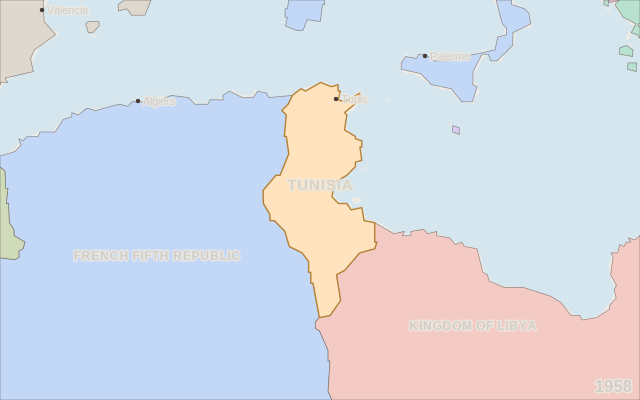
Its record opens in 1957, replacing the French protectorate of Tunisia.↓ When the borders dataset first draws it, in 1958, it held 151,700 km².↓

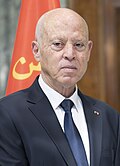
The record names 10 rulers in its line, covering 1956 – 2019, the median reign 2 years; 5 of 8 handovers were irregular.↓ Among them, Zine El Abidine Ben Ali, Habib Bourguiba and Beji Caid Essebsi are the best known.↓ The atlas files 35 rows under it, most of them people.↓

From Wikipedia’s article, retold · CC BY-SA 4.0

69 years

Longer than Bremen, shorter than the Azerbaijan Soviet Socialist Republic

152,000 km²

At its height in 1958 · about the size of Nepal

10 rulers

the President of Tunisia

3 wars and battles

More per century than 96% of states · 35 entries in all

Map: Tunisia in 1958, its borders in gold among its neighbours
Operation Wooden Leg, 19851987 Tunisian coup d'état, 1987Bardo National Museum attack, 20152015 Sousse attacks, 201519701980199020002010
Beside it on the map in 1958: French Fifth Republic, Kingdom of Libya, Italy, Francoist Spain, Morocco and Kingdom of Greece.How far it reached, year by year: its ground inside the borders Cliopatria draws (CC BY 4.0), measured on an equal-area grid; the map shows it at its largest, with the cities of the year.

The story

Four acts, 1957 – present

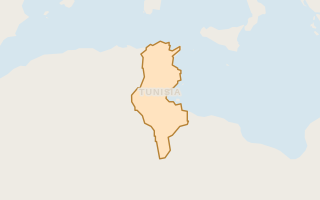
Tunisia in 2010, at the end of act II
II1987 – 2011152,000 → 152,000 km²

Ben Ali's rule

Zine El Abidine Ben Ali seizes power in the coup of 1987 and holds it until 2011. His Constitutional Democratic Rally stays fused with the government, and The Guardian calls Tunisia one of the Arab world's most modern yet repressive countries. In December 2010 a street vendor, Mohamed Bouazizi, sets himself on fire in protest.

Watch this act on the live map, from 1987
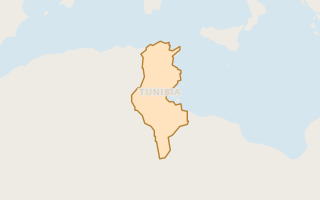
Tunisia in 2018, at the end of act III
III2011 – 2019152,000 → 152,000 km²

Revolution and democracy

Mass protests over unemployment, food prices, corruption and curbs on freedom follow; Ben Ali's rule ends in 2011, and the revolt inspires the Arab Spring. Moncef Marzouki becomes president, and in 2014 Beji Caid Essebsi becomes the first democratically elected president. Attacks hit the Bardo National Museum and Sousse in 2015.

Watch this act on the live map, from 2011

Before and after

Before it

Where it sits in time

3000 BCE2000 BCE1000 BCE110002000Beylik of Tunis: 1705 – 1881Kingdom of Tunisia: 1956 – 1957French protectorate of Tunisia: 1881 – 1956Tunisia: 1957 – 2026

Five thousand years, 3000 BCE to 2026; the state in gold, what it replaced or followed and what replaced or followed it in grey.

Its people

Lives across Tunisia

19401960198020002020
Statesmen and generalsAll its people on the timeline →

How it was governed

10 presidents

10 presidents on record, 1956 to 2019; a reign lasted 2 years at the median. Each bar is a reign, as long as it lasted.

Lamine Bey · 1956 – 1957 · left office aliveHabib Bourguiba · 1957 – 1987 · deposed, the article saysZine El Abidine Ben Ali · 1987 – 2011 · deposed, the article saysFouad Mebazaa · 2011 – 2011 · left office aliveMohamed Ghannouchi · 2011 – 2011 · resigned or stood down, the article saysMoncef Marzouki · 2011 – 2014 · no death date to read the end againstBeji Caid Essebsi · 2014 – 2019 · died in office of natural causesMohamed Ennaceur · 2019 – 2019 · no death date to read the end againstKais Saied · 2019 – … · still in office1960198020002020
How their terms ended, where it is known (7 of 9):Deposed or removed 2Died in office 1Left office alive 3In office 1Not on record 2
Every term, with how it ended and its source

Rulers

How 9 reigns ended - choose one to show only those

How they died, where the record says: died of natural causes 2.

RulerReignLengthHow it ended · sourceTo the ruler before
20th century · 3 reigns · 2 killed or removed
Lamine Bey · aged 751956 – 19571 yearleft office aliveread off the dates alone
Habib Bourguiba · aged 541957 – 198730 yearsdeposedread from the ruler's own article
Zine El Abidine Ben Ali · aged 511987 – 201124 yearsdeposedread from the ruler's own articledied of natural causes
21st century · 6 reigns
Fouad Mebazaa · aged 782011 – 2011under a yearleft office aliveread off the dates alone
Mohamed Ghannouchi · aged 702011 – 2011under a yearresignedread from the ruler's own article
Moncef Marzouki · aged 662011 – 20143 yearsending not on record
Beji Caid Essebsi · aged 882014 – 20195 yearsdied in officeWikidata's manner of deathdied of natural causes
Mohamed Ennaceur · aged 852019 – 2019under a yearending not on record
Kais Saied · aged 612019 – in officein office since 2019still in office

10 rulers, 9 with terms dated as terms, covering 1956 – 2019. Median reign 2 years. 5 of 8 handovers irregular - a killing, a deposition, a rival claimant, a rising or a coup beside it. A blank in the last column means no kin on record, which is coverage, never “unrelated”.

Heads of government

The line of Prime Minister of Tunisia, drawn and never measured: a cabinet is not a reign.

Tahar Ben Ammar1956 – 1956
Habib Bourguiba1956 – 1957
Bahi Ladgham1969 – 1970
Hédi Amara Nouira1970 – 1980
Mohammed Mzali1980 – 1986
Rachid Sfar1986 – 1987
Hédi Baccouche1987 – 1989
Zine El Abidine Ben Ali1987 – 1987
Hamed Karoui1989 – 1999
Mohamed Ghannouchi1999 – 2011
Beji Caid Essebsi2011 – 2011
Hamadi Jebali2011 – 2013
Ali Laarayedh2013 – 2014
Mehdi Jomaa2014 – 2015
Habib Essid2015 – 2016
Youssef Chahed2016 – 2020
Elyes Fakhfakh2020 – 2020
Hichem Mechichi2020 – 2021
Najla Bouden2021 – 2023
Ahmed Hachani2023 – 2024
Kamel Madouri2024 – 2025
Sara Zaafarani2025 – …

Flags and arms, in order

  • Flag of Tunisia (1959–1999)
    flag, to 1999Flag of Tunisia (1959–1999) · Public domain
  • Coat of arms of Tunisia
    coat of arms, from 1956Coat of arms of Tunisia · CC BY-SA 3.0 · FXXX
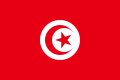
  • Flag of Tunisia
    flag, from 1999Flag of Tunisia · Public domain

Its world

Who else stood

Meanwhile, elsewhere

The best-known states of other regions that stood while it did; the band is Tunisia’s own years.

1960198020002020

How it compares

Among 3,073 states

Stood longer than 39% of 3,073 states
Tunisia · 69 yearsBremenAzerbaijan Soviet Socialist RepublicHow long it stood, among the states with a recorded end or still standing.
Held more ground at its peak than 54% of 1,464 states
Tunisia · 151,700 km²NepalUruguayThe most ground it held, among the states with a border in Cliopatria.
Had more wars on record per century than 96% of 3,073 states
Tunisia · 2.0Wars recorded per century, among the states, counting the wars the atlas hosts under each.

How it began

How did Tunisia begin?

What led to it, and what came of it

French protectorate of Tunisia · Linked · 1881 – 1956French protectorate of TunisiaTunisian independence · Linked · 1952 – 1956Tunisian independenceBeylik of Tunis · Linked · 1705 – 1881Beylik of TunisKingdom of Tunisia · Linked · 1956 – 1957Kingdom of TunisiaBattle of Carthage (698) · In the article · 698 · “From the conclusion of the Second Punic War in 202 BC, Carthage functioned as a client state of the Roman Republic for another 50 years. Following the Battle …”Battle of Carthage (698)Tunisia · 1957 – 2026Tunisia100015002000
in the articlelinked

Open the investigation: every row with its evidence, the conditions at the time, the theories condition by condition, and the succession analysed.

Its centuries in the record

1900 – 1999: 30 recorded — 2 wars and battles, 2 risings, regime changes and massacres, 26 other19002000 – 2099: 5 recorded — 1 wars and battles, 3 risings, regime changes and massacres, 1 other2000

Wars and battles in red, risings, coups and massacres beside them, everything else in grey, by the century each began in. A tall bar is partly a fact about Wikipedia: better-documented centuries hold more.

Each century’s own page:1900 – 19992000 – 2099

Keep exploring

Share this page
Copy link
Embed the map
Cite this page

How this page is made

Drawn from Wikidata (Q948, CC0), the opening and history of its English Wikipedia article retold by the atlas (CC BY-SA 4.0), borders from Cliopatria (CC BY 4.0), coast and rivers from Natural Earth, cities from Reba, Reitsma & Seto 2016 (CC BY 4.0), symbols from Wikimedia Commons, each under its own licence. Data built 2026-11-26 · Pastlas v2.47.1, by Oleh Voronko; the published atlas and its data are for non-commercial use.

How to read it

Areas are measured on an equal-area grid from borders simplified to about five kilometres. “c.” marks an approximate date, and a date known to the century is never printed to the year. Counts are what the atlas holds, and they follow Wikipedia’s coverage: a busy century is partly a fact about the record.

  • Still standing: the span runs to the year of the build, 2026.

Something wrong?

Tell us and name the entry. We fix the data, not just this page.

Report a problem