State · Sub-Saharan Africa

Belgian Congo

1908 – 1960 · 52 years

Came after Congo Free State

Belgium's colony in Central Africa, taken over from Leopold II's Congo Free State and run by state, missions and companies until independence.

Leopold II of Belgium had won recognition for the Congo Free State in 1885 and ruled it himself, but its violence and ruthless exploitation brought heavy diplomatic pressure, and in 1908 Belgium took the country over. The Belgian Congo was governed through a colonial trinity of state, missions and private companies, under one uniform native policy. After rapid urbanisation in the 1940s and 1950s, a broad and ever more radical movement won independence in 1960.

What the record holds

Belgian Congo began in 1908, replacing Congo Free State.↓ When the borders dataset first draws it, in 1909, it held 2.32 million km².↓

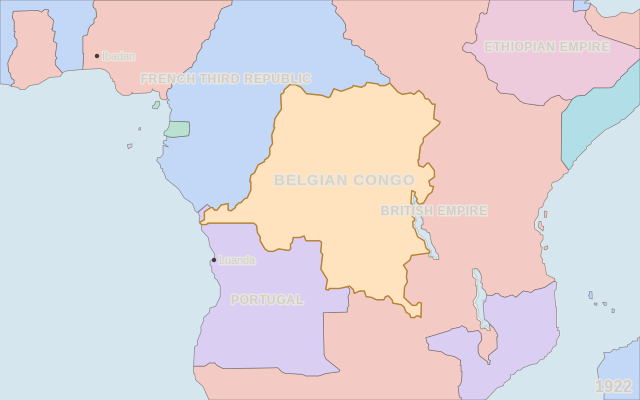
It reached its greatest extent in 1922: 2.37 million km².↓ The record names 4 rulers in its line, covering 1908 – 1960, the median reign 13 years; none of its 3 handovers was irregular.↓ The best known of them are Leopold II of Belgium, Albert I of Belgium and Leopold III of Belgium.↓ Of the 5 rows the atlas files under it, people are the largest group.↓

Its record closes in 1960, after 52 years.↑ Its end fits “Elite conflict”, every condition present.↓

From Wikipedia’s article, retold · CC BY-SA 4.0

Best known for

52 years

Longer than Austria-Hungary, shorter than Hungarians

2.37 million km²

At its height in 1922 · about the size of Algeria

4 rulers

the King

1 war or battle

More per century than 92% of states · 5 entries in all

Map: Belgian Congo in 1922, its borders in gold among its neighbours
19201930194019501960
Beside it on the map in 1922: British Empire, French Third Republic, Portugal, Ethiopian Empire, Italian Empire and Spain.How far it reached, year by year: its ground inside the borders Cliopatria draws (CC BY 4.0), measured on an equal-area grid; the map shows it at its largest, with the cities of the year.

The story

Two acts, 1908 – 1960

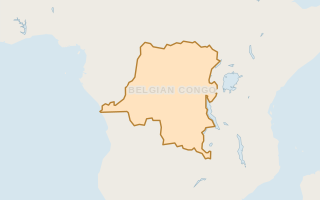
Belgian Congo in 1940, at the end of act I
I1908 – 1941

The colonial trinity

Belgium rules through state, missions and private companies. Belgian commercial interests come first: capital pours in, regions specialise, and the state helps companies break strikes. Chiefs are folded into a centralised hierarchy of administrative chiefdoms under a uniform native policy, unlike British indirect rule.

Watch this act on the live map, from 1908
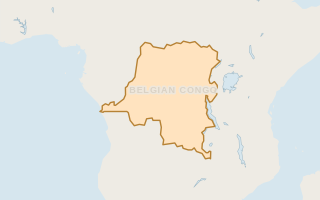
Belgian Congo in 1959, at the end of act II
II1941 – 19602.37 million → 2.37 million km²

Model colony to independence

Through the 1940s and 1950s cities swell, and development programmes aim to make it a model colony, raising a new middle class of Europeanised évolués. By the 1950s its wage labour force is twice that of any other African colony. A broad movement for independence grows ever more radical, riots shake Léopoldville in 1959, and independence comes in 1960.

Watch this act on the live map, from 1941

Before and after

Before it

Where it sits in time

3000 BCE2000 BCE1000 BCE110002000Congo Free State: 1885 – 1908Belgian Congo: 1908 – 1960

Five thousand years, 3000 BCE to 2026; the state in gold, what it replaced or followed and what replaced or followed it in grey.

How it was governed

4 kings

4 kings on record, 1908 to 1960; a reign lasted 13 years at the median. Each bar is a reign, as long as it lasted.

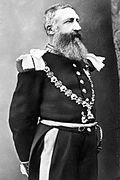
Leopold II of Belgium · 1908 – 1909 · no death date to read the end againstAlbert I of Belgium · 1909 – 1934 · no death date to read the end againstLeopold III of Belgium · 1934 – 1951 · abdicated, the article saysBaudouin of Belgium · 1951 – 1960 · no death date to read the end against191019201930194019501960
How their terms ended, where it is known (1 of 4):Deposed or removed 1Not on record 3
Every term, with how it ended and its source

Rulers

How 4 reigns ended - choose one to show only those

How they died, where the record says: died of natural causes 3 · died by accident 1.

RulerReignLengthHow it ended · sourceTo the ruler before
20th century · 4 reigns · 1 killed or removed
Leopold II of Belgium1908 – 19091 yearending not on recorddied of natural causes
Albert I of Belgium1909 – 193425 yearsending not on recorddied by accidentnephew or niece
Leopold III of Belgium1934 – 195117 yearsabdicatedread from the ruler's own articledied of natural causeschild
Baudouin of Belgium1951 – 19609 yearsending not on recorddied of natural causeschild

4 rulers, 4 with terms dated as terms, covering 1908 – 1960. Median reign 13 years. 0 of 3 handovers irregular - a killing, a deposition, a rival claimant, a rising or a coup beside it. A blank in the last column means no kin on record, which is coverage, never “unrelated”.

Flags and arms, in order

  • Greater Coat of Arms of the Belgian Congo
    coat of arms, undatedGreater Coat of Arms of the Belgian Congo · CC BY-SA 3.0 · Lesser coat of arms of Belgium.svg : Katepanomegas und Sodacan gemeinsam; Schild Kongo Fr…
  • Flag of the Congo Free State
    flag, undatedFlag of the Congo Free State · Public domain

Its world

Who else stood

Meanwhile, elsewhere

The best-known states of other regions that stood while it did; the band is Belgian Congo’s own years.

1900192019401960

How it compares

Among 3,073 states

Stood longer than 34% of 3,073 states
Belgian Congo · 52 yearsAustria-HungaryHungariansHow long it stood, among the states with a recorded end or still standing.
Held more ground at its peak than 93% of 1,464 states
Belgian Congo · 2,368,800 km²AlgeriaKazakhstanThe most ground it held, among the states with a border in Cliopatria.
Had more wars on record per century than 92% of 3,073 states
Belgian Congo · 1.0Wars recorded per century, among the states, counting the wars the atlas hosts under each.

Why it fell

Why did Belgian Congo fall?

Historians still argue. Here is what the atlas records about its last century:

1951

Leopold III of Belgium, deposed or removed in office

What led to it, and what came of it

Congo Free State · Linked · 1885 – 1908Congo Free StateBelgian Congo · 1908 – 1960Belgian Congo18801900192019401960
linked

Open the investigation: every row with its evidence, the conditions at the time, the theories condition by condition, and the succession analysed.

Theories that apply to its ending

  • Elite conflict

    Lachmann 2000 · Lachmann 2010

    Applies by its own logic: 2 of its 2 conditions held here (it needs all of them), and this is the kind of outcome it predicts — adverse regime change, unrest or the state's ending.

    • 2 or more elite groups in the regime's support, or a parliament met within 100 y — business elites, civil servants, the military (1960)
    • an elite group among the regime's opposition within 5 y, or an elite group left the regime's support over 10 y, or a monarch deposed or killed by others within 20 y, or overlapping reigns — rival claimants — within 20 y — the military (1960)

In the record

5 entries the atlas files under it, all in 1900 – 1999.

Keep exploring

Share this page
Copy link
Embed the map
Cite this page

How this page is made

Drawn from Wikidata (Q213510, CC0), the opening and history of its English Wikipedia article retold by the atlas (CC BY-SA 4.0), borders from Cliopatria (CC BY 4.0), coast and rivers from Natural Earth, cities from Reba, Reitsma & Seto 2016 (CC BY 4.0), symbols from Wikimedia Commons, each under its own licence. Data built 2026-11-26 · Pastlas v2.47.1, by Oleh Voronko; the published atlas and its data are for non-commercial use.

How to read it

Areas are measured on an equal-area grid from borders simplified to about five kilometres. “c.” marks an approximate date, and a date known to the century is never printed to the year. Counts are what the atlas holds, and they follow Wikipedia’s coverage: a busy century is partly a fact about the record.

Something wrong?

Tell us and name the entry. We fix the data, not just this page.

Report a problem