State · Europe

Prussia

1525 – 1947 · 422 years

Became Germany and Nazi Germany

A duchy cut from the Teutonic Order's lands that rose under the House of Hohenzollern to forge the German Empire.

Prussia was a German state on the North European Plain, born in 1525 when the Prussian part of the Teutonic Order's state became a secular duchy. Ruled for centuries by the House of Hohenzollern and enlarged by its army, it became a kingdom in 1701 and soon a great power, and in 1871 the core of the German Empire it had created. Stripped of power in 1932, it was abolished in 1947.

What the record holds

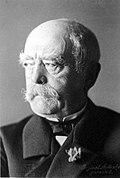
The record dates its beginning to 1525.↑ Its line counts 26 rulers, covering 1797 – 1945, the median reign 2 years; 2 of 11 handovers were irregular.↓ The best known of them are Otto von Bismarck, Hermann Göring and Franz von Papen.↓ Most of the 37 rows the atlas files under it are people.↓

It was replaced by Germany and Nazi Germany in 1947, 422 years after it began.↓

From Wikipedia’s article, retold · CC BY-SA 4.0

422 years

Longer than the British Empire, shorter than the Han dynasty

26 rulers

the Minister President of Prussia

11 wars and battles

More per century than 88% of states · 37 entries in all

Its borders aren’t on record

The borders dataset does not draw Prussia. The live map still shows where it stood among the states of its years.

Find it on the live map

The story

Five acts, 1525 – 1947

I1525 – 1618

A fief of the Polish crown

By the Treaty of Kraków in 1525, Albert I, Grand Master of the Teutonic Order, lays down that office and becomes Duke of Prussia, a vassal of the Polish king Zygmunt I the Old. Born to a junior line of the House of Hohenzollern, he turns Lutheran and makes the Order's lands secular.

Watch this act on the live map, from 1525
II1618 – 1701

Brandenburg and Prussia united

When Duke Albert Frederick dies without male heirs in 1618, Elector John Sigismund of Brandenburg, husband of his daughter Anna, inherits the duchy. Brandenburg-Prussia is a scatter of lands in Prussia, Brandenburg and the Rhineland, Cleves and Mark among them; the duchy remains a Polish fief until 1657.

Watch this act on the live map, from 1618
III1701 – 1806

A kingdom among the powers

Elector Frederick III raises the duchy to a kingdom in 1701 and is crowned Frederick I, though the emperor Leopold I lets him style himself only King in Prussia. Prussia soon joins the great powers; under Frederick the Great it gains a major voice in Europe, and the partitions of Poland of 1793 and 1795 add Polish land.

Watch this act on the live map, from 1701
IV1806 – 1871

Defeat, reform and unification

War with France in 1806 ends in a devastating defeat by Napoleon's troops. At the Congress of Vienna Prussia gains rich lands, the coal-rich Ruhr among them, and smaller states join its free trade area. Appointed Minister President in 1862, Otto von Bismarck leads it through three wars, against Denmark, Austria and France, that unify Germany.

Watch this act on the live map, from 1806
V1871 – 1947

Inside Germany, then abolished

Prussia dominates the empire, holding three-fifths of its territory and two-thirds of its people. The revolution of 1918 topples Wilhelm II, and nearly all the land Germany cedes under the Treaty of Versailles is Prussian. Franz von Papen's coup of 1932 empties it of power, and after defeat in 1945 Poland and the Soviet Union annex its east.

Watch this act on the live map, from 1871

Before and after

After it

Where it sits in time

3000 BCE2000 BCE1000 BCE110002000Germany: 1990 – 2026Nazi Germany: 1933 – 1945Prussia: 1525 – 1947

Five thousand years, 3000 BCE to 2026; the state in gold, what it replaced or followed and what replaced or followed it in grey.

Its people

Lives across Prussia

18001850190019502000
Statesmen and generalsWriters, artists and thinkersLived on after it endedAll its people on the timeline →

How it was governed

26 presidents

26 presidents on record, 1797 to 1945; a reign lasted 2 years at the median. Each bar is a reign, as long as it lasted.

Frederick William III · 1797 – 1840 · died in office, manner not recordedGottfried Ludolf Camphausen · 1848 – 1848 · left office aliveOtto von Bismarck · 1862 – 1890 · left office aliveLeo von Caprivi · 1890 – 1892 · left office aliveBotho zu Eulenburg · 1892 – 1894 · left office alivePaul Hirsch · 1918 – 1920 · left office aliveOtto Braun · 1921 – 1925 · left office aliveWilhelm Marx · 1925 – 1925 · left office aliveOtto Braun · 1925 – 1932 · left office aliveFranz von Papen · 1932 – 1932 · left office aliveKurt von Schleicher · 1932 – 1933 · killedHermann Göring · 1933 – 1945 · left office alive1600170018001900
How their terms ended, where it is known (12 of 12):Killed 1Died in office 1Left office alive 10
Every term, with how it ended and its source

Rulers

How 12 reigns ended - choose one to show only those

How they died, where the record says: died of natural causes 2 · killed 1 · died by suicide 1.

RulerReignLengthHow it ended · sourceTo the ruler before
18th century · 1 reign
Frederick William III · aged 271797 – 184043 yearsdied in officeread off the dates alone
19th century · 4 reigns
Gottfried Ludolf Camphausen · aged 451848 – 1848under a yearleft office aliveread off the dates alone
Otto von Bismarck · aged 471862 – 189028 yearsleft office aliveread off the dates alonedied of natural causes
Leo von Caprivi · aged 591890 – 18922 yearsleft office aliveread off the dates alonedied of natural causes
Botho zu Eulenburg · aged 611892 – 18942 yearsleft office aliveread off the dates alone
20th century · 7 reigns · 1 killed or removed
Paul Hirsch · aged 501918 – 19202 yearsleft office aliveread off the dates alone
Otto Braun · aged 491921 – 19254 yearsleft office aliveread off the dates alone
Wilhelm Marx · aged 621925 – 1925under a yearleft office aliveread off the dates alone
Otto Braun · aged 531925 – 19327 yearsleft office aliveread off the dates alone
Franz von Papen · aged 531932 – 1932under a yearleft office aliveread off the dates alone
Kurt von Schleicher · aged 501932 – 19331 yearkilled in officeWikidata's manner of death
Hermann Göring · aged 401933 – 194512 yearsleft office aliveread off the dates alonedied by suicide

26 rulers, 11 with terms dated as terms, covering 1797 – 1945. Median reign 2 years. 2 of 11 handovers irregular - a killing, a deposition, a rival claimant, a rising or a coup beside it. A blank in the last column means no kin on record, which is coverage, never “unrelated”.

The line also names 2 holders with a page of their own whose term the record gives no first year, so the table cannot place them: Prince Maximilian of Baden, Friedrich Ebert.

Flags and arms, in order

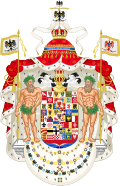
  • Coat of Arms of the Kingdom of Prussia 1873-1918
    coat of arms, undatedCoat of Arms of the Kingdom of Prussia 1873-1918 · CC BY-SA 4.0 · Glasshouse , using elements by Sodacan, Katepanomegas and Regicollis
  • Civil flag of Prussia 1701-1935
    flag, undatedCivil flag of Prussia 1701-1935 · Public domain
  • Civil flag of Prussia 1701-1935
    flag, 1701 – 1935Civil flag of Prussia 1701-1935 · Public domain
  • Flag of the Kingdom of Prussia (1803-1892)
    flag, 1803 – 1892Flag of the Kingdom of Prussia (1803-1892) · Attribution · Drawing created by David Liuzzo
  • Flag of Prussia (1892-1918)
    flag, 1892 – 1918Flag of Prussia (1892-1918) · Attribution · Drawing created by David Liuzzo
  • Flag of Prussia (1918–1933)
    flag, 1921 – 1921Flag of Prussia (1918–1933) · CC BY-SA 3.0 · TRAJAN 117 This W3C-unspecified vector image was created with Inkscape .
  • Dienstflagge Preußen 1933-35
    flag, 1933 – 1935Dienstflagge Preußen 1933-35 · Public domain

Its world

Rivals, and who else stood

Who it fought most

Wars and battles both took part in, on whichever side: the record names who took part, not who fought whom.

Meanwhile, elsewhere

The best-known states of other regions that stood while it did; the band is Prussia’s own years.

150016001700180019002000

How it compares

Among 3,073 states

Stood longer than 82% of 3,073 states
Prussia · 422 yearsBritish EmpireHan dynastyHow long it stood, among the states with a recorded end or still standing.
Had more wars on record per century than 88% of 3,073 states
Prussia · 0.5Wars recorded per century, among the states, counting the wars the atlas hosts under each.

Why it fell

Why did Prussia fall?

Historians still argue. Here is what the atlas records about its last century:

7

wars and battles in its last century, more than in any before it

1933

Kurt von Schleicher, killed in office

What led to it, and what came of it

Königsberg · Coincidence · 1255 – 1945KönigsbergPrussia · 1525 – 1947PrussiaGermany · Linked · 1990 – 2026Germany1400160018002000
linkedcoincidence

Open the investigation: every row with its evidence, the conditions at the time, the theories condition by condition, and the succession analysed.

Its centuries in the record

1500 – 1599: 0 recorded — 0 wars and battles, 0 risings, regime changes and massacres, 0 other15001600 – 1699: 3 recorded — 0 wars and battles, 0 risings, regime changes and massacres, 3 other16001700 – 1799: 9 recorded — 2 wars and battles, 0 risings, regime changes and massacres, 7 other17001800 – 1899: 16 recorded — 2 wars and battles, 0 risings, regime changes and massacres, 14 other18001900 – 1999: 9 recorded — 7 wars and battles, 1 risings, regime changes and massacres, 1 other1900

Wars and battles in red, risings, coups and massacres beside them, everything else in grey, by the century each began in. A tall bar is partly a fact about Wikipedia: better-documented centuries hold more.

Each century’s own page:1500 – 15991600 – 16991700 – 17991800 – 18991900 – 1999

Keep exploring

Share this page
Copy link
Cite this page

How this page is made

Drawn from Wikidata (Q38872, CC0), the opening and history of its English Wikipedia article retold by the atlas (CC BY-SA 4.0), symbols from Wikimedia Commons, each under its own licence. Data built 2026-11-26 · Pastlas v2.47.1, by Oleh Voronko; the published atlas and its data are for non-commercial use.

How to read it

Areas are measured on an equal-area grid from borders simplified to about five kilometres. “c.” marks an approximate date, and a date known to the century is never printed to the year. Counts are what the atlas holds, and they follow Wikipedia’s coverage: a busy century is partly a fact about the record.

  • ends in 1933 and 1947; the atlas draws the article's infobox.

Something wrong?

Tell us and name the entry. We fix the data, not just this page.

Report a problem