State · Americas and Oceania

Suriname

1975 – present · 51 years · still standing

Came after Suriname (Kingdom of the Netherlands)

South America's smallest country, a rainforest land and former Dutch colony long overshadowed by the soldier Dési Bouterse.

Suriname lies on South America's northern coast, its land mostly rainforest and half its people in the capital, Paramaribo. A Dutch plantation colony worked by enslaved Africans until 1863, it became independent on 25 November 1975. In 1980 sergeants led by Dési Bouterse seized power; his regime killed fifteen dissidents in the December murders of 1982 and fought Maroon rebels in a civil war. Bouterse later returned as elected president, from 2010 to 2020.

What the record holds

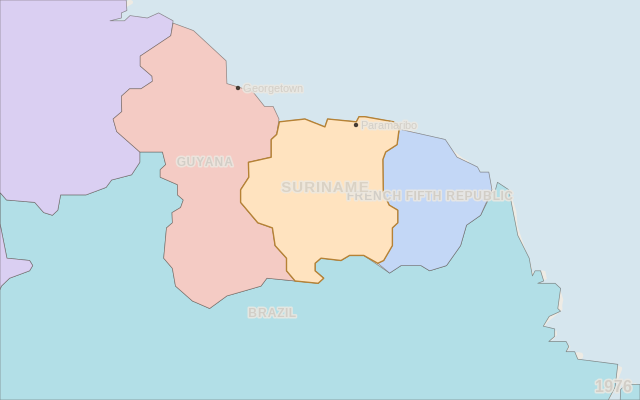
It was founded in 1975, replacing Suriname.↓ When the borders dataset first draws it, in 1976, it held 147,600 km².↓

Its line counts 10 rulers, covering 1975 – 2025, the median reign 5 years; 1 of 10 handovers was irregular.↓ The best known of them are Dési Bouterse, Chan Santokhi and Ronald Venetiaan.↓ Most of the 16 rows the atlas files under it are people.↓

From Wikipedia’s article, retold · CC BY-SA 4.0

51 years

Longer than the German Empire, shorter than Hungarians

148,000 km²

At its height in 1976 · about the size of Nepal

10 rulers

the President of Suriname

1 war or battle

More per century than 92% of states · 16 entries in all

Map: Suriname in 1976, its borders in gold among its neighbours
Surinamese Civil War, 1986 – 1992Moiwana massacre, 19861990 Surinamese coup d'état, 19901985199019952000200520102015
Beside it on the map in 1976: Brazil, Republic of Venezuela, Guyana and French Fifth Republic.How far it reached, year by year: its ground inside the borders Cliopatria draws (CC BY 4.0), measured on an equal-area grid; the map shows it at its largest, with the cities of the year.

The story

Three acts, 1975 – present

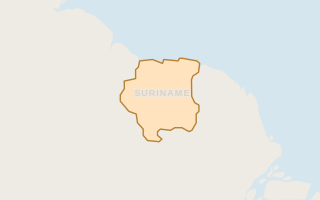
Suriname in 1979, at the end of act I
I1975 – 1980

A troubled independence

Johan Ferrier, the former governor, becomes president, with Henck Arron as prime minister. Nearly a third of the people have already left for the Netherlands, and politics slides into ethnic polarisation and corruption; Arron's party is accused of fraud in the 1977 elections.

Watch this act on the live map, from 1975
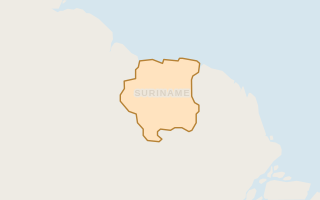
Suriname in 1990, at the end of act II
II1980 – 1991148,000 → 148,000 km²

The sergeants' regime

On 25 February 1980 sixteen sergeants led by Dési Bouterse overthrow Arron's government, and four counter-coups fail. On 7 December 1982 soldiers round up and murder the regime's critics. From 1986 the army fights Maroons loyal to Ronnie Brunswijk, and the Moiwana massacre follows. In 1990 Bouterse dismisses the ministers by telephone.

Watch this act on the live map, from 1980
III1991 – present

Elections and Bouterse's return

Bouterse's power wanes after the 1991 elections, and Ronald Venetiaan and Jules Wijdenbosch take turns as president. Elected president in 2010, Bouterse gains amnesty for the December murders in 2012, is re-elected in 2015 and is later convicted. Chan Santokhi follows him in 2020 and Jennifer Geerlings-Simons in 2025.

Watch this act on the live map, from 1991

Before and after

Before it

Where it sits in time

3000 BCE2000 BCE1000 BCE110002000Suriname (Kingdom of the Netherlands): 1954 – 1975Suriname: 1975 – 2026

Five thousand years, 3000 BCE to 2026; the state in gold, what it replaced or followed and what replaced or followed it in grey.

Its people

Lives across Suriname

192019401960198020002020
Statesmen and generalsAll its people on the timeline →

How it was governed

10 presidents

10 presidents on record, 1975 to 2025; a reign lasted 5 years at the median. Each bar is a reign, as long as it lasted.

Johan Ferrier · 1975 – 1980 · left office aliveHenk Chin A Sen · 1980 – 1982 · left office aliveFred Ramdat Misier · 1982 – 1988 · left office aliveRamsewak Shankar · 1988 – 1990 · no death date to read the end againstJohan Kraag · 1990 – 1991 · left office aliveRonald Venetiaan · 1991 – 1996 · left office aliveJules Wijdenbosch · 1996 – 2000 · left office aliveRonald Venetiaan · 2000 – 2010 · left office aliveDési Bouterse · 2010 – 2020 · left office aliveChan Santokhi · 2020 – 2025 · left office aliveJennifer Geerlings-Simons · 2025 – … · still in office19801990200020102020
How their terms ended, where it is known (10 of 11):Left office alive 9In office 1Not on record 1
Every term, with how it ended and its source

Rulers

How 11 reigns ended - choose one to show only those
RulerReignLengthHow it ended · sourceTo the ruler before
20th century · 8 reigns
Johan Ferrier · aged 651975 – 19805 yearsleft office aliveread off the dates alone
Henk Chin A Sen · aged 461980 – 19822 yearsleft office aliveread off the dates alone
Fred Ramdat Misier · aged 561982 – 19886 yearsleft office aliveread off the dates alone
Ramsewak Shankar · aged 511988 – 19902 yearsending not on record
Johan Kraag · aged 771990 – 19911 yearleft office aliveread off the dates alone
Ronald Venetiaan · aged 551991 – 19965 yearsleft office aliveread off the dates alone
Jules Wijdenbosch · aged 551996 – 20004 yearsleft office aliveread off the dates alone
Ronald Venetiaan · aged 642000 – 201010 yearsleft office aliveread off the dates alone
21st century · 3 reigns
Dési Bouterse · aged 652010 – 202010 yearsleft office aliveread off the dates alone
Chan Santokhi · aged 612020 – 20255 yearsleft office aliveread off the dates alone
Jennifer Geerlings-Simons · aged 722025 – in officein office since 2025still in office

10 rulers, 10 with terms dated as terms, covering 1975 – 2025. Median reign 5 years. 1 of 10 handovers irregular - a killing, a deposition, a rival claimant, a rising or a coup beside it. The violent-handover count is withheld: power changed hands so often that any rising falls beside one (exposure 0.90, limit 0.6). A blank in the last column means no kin on record, which is coverage, never “unrelated”.

Flags and arms, in order

  • Flag of Suriname
    flag, from 1975Flag of Suriname · Public domain
  • Coat of arms of Suriname
    coat of arms, from 1975Coat of arms of Suriname · Public domain

Its world

Who else stood

Meanwhile, elsewhere

The best-known states of other regions that stood while it did; the band is Suriname’s own years.

198020002020

How it compares

Among 3,073 states

Stood longer than 34% of 3,073 states
Suriname · 51 yearsGerman EmpireHungariansHow long it stood, among the states with a recorded end or still standing.
Held more ground at its peak than 53% of 1,464 states
Suriname · 147,600 km²BangladeshNepalThe most ground it held, among the states with a border in Cliopatria.
Had more wars on record per century than 92% of 3,073 states
Suriname · 1.0Wars recorded per century, among the states, counting the wars the atlas hosts under each.

How it began

How did Suriname begin?

What led to it, and what came of it

Suriname (Kingdom of the Netherlands) · Linked · 1954 – 1975Suriname (Kingdom of the Netherl…Suriname · 1975 – 2026Suriname1960198020002020
linked

Open the investigation: every row with its evidence, the conditions at the time, the theories condition by condition, and the succession analysed.

Its centuries in the record

1900 – 1999: 15 recorded — 1 wars and battles, 4 risings, regime changes and massacres, 10 other19002000 – 2099: 1 recorded — 0 wars and battles, 0 risings, regime changes and massacres, 1 other2000

Wars and battles in red, risings, coups and massacres beside them, everything else in grey, by the century each began in. A tall bar is partly a fact about Wikipedia: better-documented centuries hold more.

Each century’s own page:1900 – 19992000 – 2099

Keep exploring

Share this page
Copy link
Embed the map
Cite this page

How this page is made

Drawn from Wikidata (Q730, CC0), the opening and history of its English Wikipedia article retold by the atlas (CC BY-SA 4.0), borders from Cliopatria (CC BY 4.0), coast and rivers from Natural Earth, cities from Reba, Reitsma & Seto 2016 (CC BY 4.0), symbols from Wikimedia Commons, each under its own licence. Data built 2026-11-26 · Pastlas v2.47.1, by Oleh Voronko; the published atlas and its data are for non-commercial use.

How to read it

Areas are measured on an equal-area grid from borders simplified to about five kilometres. “c.” marks an approximate date, and a date known to the century is never printed to the year. Counts are what the atlas holds, and they follow Wikipedia’s coverage: a busy century is partly a fact about the record.

  • Still standing: the span runs to the year of the build, 2026.

Something wrong?

Tell us and name the entry. We fix the data, not just this page.

Report a problem