Jabukovac killings
atrocity · 27 July 2007
State · Europe
2006 – present · 20 years · still standing
Came after  Serbia and Montenegro and
 Republic of Serbia
A landlocked Balkan republic, independent again since its union with Montenegro dissolved, that still claims Kosovo as its own.
Serbia regained its sovereignty in June 2006, after Montenegro voted narrowly in May to leave their state union; the National Assembly named Serbia the union's legal successor. Two years later Kosovo's assembly proclaimed independence, which Serbia condemned and has never accepted. A landlocked Balkan republic of about 6.5 million people outside Kosovo, it has negotiated to join the European Union since 2014 while keeping to military neutrality.
Serbia began in 2006, replacing Serbia and Montenegro and the Republic of Serbia.↓ Its highest office was held by 15 rulers, covering 1997 – 2026; none of its 9 handovers was irregular.↓ Among them,  Aleksandar Vučić,
 Boris Tadić and
 Tomislav Nikolić are the best known.↓ The atlas files 19 rows under it, most of them people.↓
From Wikipedia’s article, retold · CC BY-SA 4.0
Best known for
20 years
Longer than the Weimar Republic, shorter than the Republic of Artsakh
15 rulers
the President of Serbia
Its borders aren’t on record
The borders dataset does not draw Serbia. The live map still shows where it stood among the states of its years.
Find it on the live mapThe story
The best-known wars, battles, risings and changes of regime the record files under it; a war within a war is folded into it.
atrocity · 27 July 2007
unrest · 10 October 2010
atrocity · 9 April 2013
treaty · 4 April 2019
unrest · 3 November 2024
The states the record files it as replacing or following, and those that replaced or followed it - Wikidata's own statements, each read from this state's side.
Serbia and Montenegro · replaces · 2003 – 2006Republic of Serbia · replaces · 1990 – 2006Five thousand years, 3000 BCE to 2026; the state in gold, what it replaced or followed and what replaced or followed it in grey.
Its people
One axis for everyone, so you can see who knew whom: the best-known, ordered by birth.
 Petar Stambolićpolitician1912 – 2007
 Dušan Čkrebićpolitician1927 – 2022
 Vojislav Koštunicapolitician1944 – present
 Mirko Cvetkovićpolitician1950 – present
 Slavica Đukić Dejanovićpresident1951 – present
 Tomislav Nikolićpresident1952 – present
 Boris Tadićpresident1958 – present
 Ivica Dačićpolitician1966 – present
 Aleksandar Vučićpresident1970 – present
 Miloš Vučevićpolitician1974 – present
 Ana Brnabićpresident1975 – present
How it was governed
15 presidents on record, 1997 to 2026. Each bar is a reign, as long as it lasted.
The line of President of Serbia - the office this state names as its head of state.
| Ruler | Reign | Length | How it ended · source | To the ruler before |
|---|---|---|---|---|
| 20th century · 1 reign | ||||
 Milan Milutinović · aged 55 | 1997 – 2002 | 5 years | left office aliveread off the dates alone | |
| 21st century · 9 reigns | ||||
 Nataša Mićić · aged 37 | 2002 – 2004 | 2 years | ending not on record | |
 Dragan Maršićanin · aged 54 | 2004 – 2004 | under a year | resignedread from the ruler's own article | |
 Vojislav Mihailović · aged 53 | 2004 – 2004 | under a year | ending not on record | |
 Predrag Marković · aged 49 | 2004 – 2004 | under a year | ending not on record | |
| Boris Tadić · aged 46 | 2004 – 2012 | 8 years | resignedWikidata's end cause on the term | |
| Slavica Đukić Dejanović · aged 61 | 2012 – 2012 | under a year | ending not on record | |
| Tomislav Nikolić · aged 60 | 2012 – 2017 | 5 years | resignedread from the ruler's own article | |
| Aleksandar Vučić · aged 47 | 2017 – 2026 | 9 years | resignedread from the ruler's own article | |
| Ana Brnabić · aged 51 | 2026 – in office | in office since 2026 | still in office | |
15 rulers, 10 with terms dated as terms, covering 1997 – 2026. Only 29 years of the line are dated - too short for a median. 0 of 9 handovers irregular - a killing, a deposition, a rival claimant, a rising or a coup beside it. The violent-handover count is withheld: power changed hands so often that any rising falls beside one (exposure 0.93, limit 0.6). A blank in the last column means no kin on record, which is coverage, never “unrelated”.
The line of Prime Minister of Serbia, drawn and never measured: a cabinet is not a reign.
 Zoran Đinđić | 2001 – 2003 |
 Žarko Korać | 2003 – 2003 |
 Zoran Živković | 2003 – 2004 |
 Vojislav Koštunica | 2004 – 2008 |
 Mirko Cvetković | 2008 – 2012 |
 Ivica Dačić | 2012 – 2014 |
| Aleksandar Vučić | 2014 – 2017 |
 Ana Brnabić | 2017 – 2024 |
| Ivica Dačić | 2017 – 2017 |
| Ivica Dačić | 2024 – 2024 |
 Miloš Vučević | 2024 – 2025 |
 Đuro Macut | 2025 – … |
Each symbol with the years its own statement gives; the timeline flies the one of the year on screen.
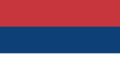


 Aleksandar Vučić9 yrsBoris Tadić8 yrsMilan Milutinović5 yrsTomislav Nikolić5 yrsNataša Mićić2 yrs
Its world
The best-known states of other regions that stood while it did; the band is Serbia’s own years.
 United StatesAmericas and Oceania
 MexicoAmericas and Oceania
 TurkeyMiddle East and North Africa
 JapanEast and Southeast Asia
 People's Republic of ChinaEast and Southeast Asia
 IndiaSouth Asia
 EgyptMiddle East and North Africa
 South AfricaSub-Saharan Africa
How it compares
Each column is a share of the states; gold is Serbia.
How it began
Serbia declared its independence on 5 June 2006, after 55.4 per cent of Montenegrin voters chose independence, ending the state union the two shared.
The investigation's own picture: 11 causes the record names and 0 results, the strongest six of each at their own years, joined to the state by the kind of claim - a recorded statement solid, the article's sentence dashed, a theory dash-dot.
Open the investigation: every row with its evidence, the conditions at the time, the theories condition by condition, and the succession analysed.
19 entries the atlas files under it, all in 2000 – 2099.
“Serbia”, Pastlas, a historical atlas, 2026-11-26. https://app.pastlas.com/state/serbia/
Drawn from Wikidata (Q403, CC0), the opening and history of its English Wikipedia article retold by the atlas (CC BY-SA 4.0), symbols from Wikimedia Commons, each under its own licence. Data built 2026-11-26 · Pastlas v2.47.1, by Oleh Voronko; the published atlas and its data are for non-commercial use.
Areas are measured on an equal-area grid from borders simplified to about five kilometres. “c.” marks an approximate date, and a date known to the century is never printed to the year. Counts are what the atlas holds, and they follow Wikipedia’s coverage: a busy century is partly a fact about the record.