State · Europe

Kingdom of Ireland

1542 – 1801 · 259 years

Came after Lordship of Ireland and Gaelic Ireland · became United Kingdom of Great Britain and Ireland

A kingdom in name, a dependency in fact: Ireland under English and then British monarchs, dominated by the Protestant Ascendancy until union.

The Crown of Ireland Act 1542 made Henry VIII of England King of Ireland, creating a kingdom formally equal to England but in practice its dependency, and from 1707 that of Great Britain. A viceroy, the Lord Lieutenant of Ireland, governed from Dublin Castle; by the late 17th century the Protestant Ascendancy held power, while the Catholic majority suffered under the penal laws. The Acts of Union 1800 joined it to the Kingdom of Great Britain on 1 January 1801.

What the record holds

The Kingdom of Ireland began in 1542, replacing the Lordship of Ireland and West Breifne.↓ The record names 15 rulers in its line, covering 1542 – 1801, the median reign 12 years; 2 of 14 handovers were irregular.↓ The best known of them are Elizabeth I, Henry VIII and Charles I of England.↓ Most of the 24 rows the atlas files under it are wars and battles.↓

In 1801, after 259 years, it was replaced by the United Kingdom of Great Britain and Ireland.↓

From Wikipedia’s article, retold · CC BY-SA 4.0

259 years

Longer than the Gupta Empire, shorter than the Qing dynasty

15 rulers

the King of Ireland

17 wars and battles

More per century than 89% of states · 24 entries in all

Its borders aren’t on record

The borders dataset does not draw the Kingdom of Ireland. The live map still shows where it stood among the states of its years.

Find it on the live map

The story

Four acts, 1542 – 1801

II1603 – 1660

Plantation and confederate war

James VI King of Scots inherits England and Ireland in 1603, and in 1606 he founds the Plantation of Ulster. The conquest ends with Catholic land seized for Protestant settlers. From 1641 the Irish Catholic Confederates hold most of Ireland until the Cromwellian conquest; the island is then ruled as part of a republic until 1660.

Watch this act on the live map, from 1603
III1660 – 1782

The Williamite settlement

The monarchy returns in 1660 under Charles II of England, and from 1661 the administration commands an Irish army. The brief reign of the Catholic James II leads to the Williamite War of 1689–1691, with battles at the Boyne and Aughrim; the Williamite victory strengthens the Protestant Ascendancy, and the Declaratory Act 1719 enshrines Ireland's dependence. Famine strikes in 1740–1741.

Watch this act on the live map, from 1660
IV1782 – 1801

Grattan's Parliament and union

The repeal of Poynings' Law in 1782 gives Ireland legislative independence, though executive power stays with Great Britain; the parliament is named after Henry Grattan. A French expedition arrives in 1796, and the Irish Rebellion of 1798, allied with the French, brings a push for union. The Acts of Union 1800 abolish the Irish Parliament.

Watch this act on the live map, from 1782

Before and after

Before it

After it

Where it sits in time

3000 BCE2000 BCE1000 BCE110002000Lordship of Ireland: 1171 – 1542Gaelic Ireland: 500 – 1603United Kingdom of Great Britain and Ireland: 1801 – 1927Kingdom of Ireland: 1542 – 1801

Five thousand years, 3000 BCE to 2026; the state in gold, what it replaced or followed and what replaced or followed it in grey.

Its people

Lives across the Kingdom of Ireland

167517001725175017751800
Writers, artists and thinkersScientists and explorersStatesmen and generalsLived on after it endedAll its people on the timeline →

How it was governed

15 kings

15 kings on record, 1542 to 1801; a reign lasted 12 years at the median. Each bar is a reign, as long as it lasted.

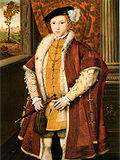
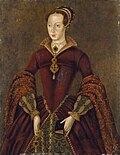
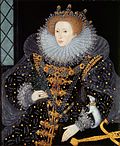
Henry VIII · 1542 – 1547 · died in office of natural causesEdward VI · 1547 – 1553 · died in office of natural causesLady Jane Grey · 1553 – 1553 · executedMary I · 1553 – 1558 · died in office of natural causesElizabeth I · 1558 – 1603 · died in office of natural causesJames VI and I · 1603 – 1625 · died in office of natural causesCharles I of England · 1625 – 1649 · executedCharles II of England · 1660 – 1685 · died in office of natural causesJames II of England · 1685 – 1688 · left office aliveMary II · 1689 – 1694 · left office aliveWilliam III of England · 1694 – 1702 · died by accidentAnne, Queen of Great Britain · 1702 – 1714 · died in office of natural causesGeorge I of Great Britain · 1714 – 1727 · died in office of natural causesGeorge II of Great Britain · 1727 – 1760 · died in office of natural causesGeorge III · 1760 – 1801 · left office alive155016001650170017501800
How their terms ended, where it is known (15 of 15):Killed 2Died in office 10Left office alive 3
Every term, with how it ended and its source

Rulers

How 15 reigns ended - choose one to show only those

How they died, where the record says: died of natural causes 12 · executed 2 · died by accident 1.

RulerReignLengthHow it ended · sourceTo the ruler before
16th century · 5 reigns · 1 killed or removed
Henry VIII · aged 511542 – 15475 yearsdied in officeWikidata's manner of deathdied of natural causes
Edward VI · aged 101547 – 15536 yearsdied in officeWikidata's manner of deathdied of natural causeschild
Lady Jane Grey · aged 161553 – 1553under a yearexecutedWikidata's manner of deathanother recorded relative
Mary I · aged 371553 – 15585 yearsdied in officeWikidata's manner of deathdied of natural causesanother recorded relative
Elizabeth I · aged 251558 – 160345 yearsdied in officeWikidata's manner of deathdied of natural causessibling
17th century · 6 reigns · 1 killed or removed
James VI and I · aged 371603 – 162522 yearsdied in officeWikidata's manner of deathdied of natural causes
Charles I of England · aged 251625 – 164924 yearsexecutedWikidata's manner of deathchild
Charles II of England · aged 301660 – 168525 yearsdied in officeWikidata's manner of deathdied of natural causeschild
James II of England · aged 521685 – 16883 yearsleft office aliveread off the dates alonedied of natural causessibling
Mary II · aged 271689 – 16945 yearsleft office aliveread off the dates alonedied of natural causeschild
William III of England · aged 441694 – 17028 yearsdied by accidentWikidata's manner of deathdied by accidentspouse
18th century · 4 reigns
Anne, Queen of Great Britain · aged 371702 – 171412 yearsdied in officeWikidata's manner of deathdied of natural causes
George I of Great Britain · aged 541714 – 172713 yearsdied in officeWikidata's manner of deathdied of natural causes
George II of Great Britain · aged 441727 – 176033 yearsdied in officeWikidata's manner of deathdied of natural causeschild
George III · aged 221760 – 180141 yearsleft office aliveread off the dates alonedied of natural causesgrandchild

15 rulers, 15 with terms dated as terms, covering 1542 – 1801. Median reign 12 years. 2 of 14 handovers irregular - a killing, a deposition, a rival claimant, a rising or a coup beside it. A blank in the last column means no kin on record, which is coverage, never “unrelated”.

Flags and arms, in order

  • Kingdom Ireland
    coat of arms, undatedKingdom Ireland · CC BY-SA 3.0 · Gisbwoy
  • Saint Patrick's Saltire
    flag, undatedSaint Patrick's Saltire · Public domain

Its world

Rivals, and who else stood

Who it fought most

Wars and battles both took part in, on whichever side: the record names who took part, not who fought whom.

Meanwhile, elsewhere

The best-known states of other regions that stood while it did; the band is the Kingdom of Ireland’s own years.

160017001800

How it compares

Among 3,073 states

Stood longer than 69% of 3,073 states
Kingdom of Ireland · 259 yearsGupta EmpireQing dynastyHow long it stood, among the states with a recorded end or still standing.
Had more wars on record per century than 89% of 3,073 states
Kingdom of Ireland · 0.8Wars recorded per century, among the states, counting the wars the atlas hosts under each.

Why it fell

Why did the Kingdom of Ireland fall?

Historians still argue. Here is what the atlas records about its last century:

What led to it, and what came of it

Gaelic Ireland · Linked · 450 – 1603Gaelic IrelandLordship of Ireland · Linked · 1171 – 1542Lordship of IrelandWest Breifne · Linked · 1256 – 1605West BreifneEast Breifne · Linked · 1256 – 1607East BreifneHouse of Tudor · Linked · 1485 – 1603House of TudorGrace O'Malley · Coincidence · 1539 – 1603Grace O'MalleyKingdom of Ireland · 1542 – 1801Kingdom of IrelandUnited Kingdom of Great Britain and Ireland · Linked · 1801 – 1927United Kingdom of Great Britain …50010001500
linkedcoincidence

Open the investigation: every row with its evidence, the conditions at the time, the theories condition by condition, and the succession analysed.

Its centuries in the record

1500 – 1599: 2 recorded — 2 wars and battles, 0 risings, regime changes and massacres, 0 other15001600 – 1699: 14 recorded — 12 wars and battles, 0 risings, regime changes and massacres, 2 other16001700 – 1799: 8 recorded — 3 wars and battles, 0 risings, regime changes and massacres, 5 other17001800 – 1899: 0 recorded — 0 wars and battles, 0 risings, regime changes and massacres, 0 other1800

Wars and battles in red, risings, coups and massacres beside them, everything else in grey, by the century each began in. A tall bar is partly a fact about Wikipedia: better-documented centuries hold more.

Each century’s own page:1500 – 15991600 – 16991700 – 17991800 – 1899

Keep exploring

Share this page
Copy link
Cite this page

How this page is made

Drawn from Wikidata (Q215530, CC0), the opening and history of its English Wikipedia article retold by the atlas (CC BY-SA 4.0), symbols from Wikimedia Commons, each under its own licence. Data built 2026-11-26 · Pastlas v2.47.1, by Oleh Voronko; the published atlas and its data are for non-commercial use.

How to read it

Areas are measured on an equal-area grid from borders simplified to about five kilometres. “c.” marks an approximate date, and a date known to the century is never printed to the year. Counts are what the atlas holds, and they follow Wikipedia’s coverage: a busy century is partly a fact about the record.

Something wrong?

Tell us and name the entry. We fix the data, not just this page.

Report a problem