State · East and Southeast Asia

Joseon

1392 – 1897 · 505 years

Came after Goryeo and Tamna · became Korean Empire

The Neo-Confucian kingdom of Korea, ruled from Seoul for five centuries, whose bureaucracy, language and etiquette shaped modern Korea.

Taejo of Joseon founded the kingdom in 1392 after the overthrow of Goryeo, and the next year moved its capital to what is now Seoul. Neo-Confucianism became the state's creed and Buddhism was pushed aside. Joseon saw the height of classical Korean culture and science, survived Japanese and Manchu invasions, and then enjoyed nearly two centuries of peace, before a rapid decline in the late 19th century ended with the Korean Empire in 1897.

What the record holds

It was founded in 1392, replacing Goryeo and Tamna.↓ Its borders are first mapped in 1395, around 208,100 km².↓ The Imjin War, 1592 – 1598, began with it holding 234,800 km² and ended with 203,300 km².↓

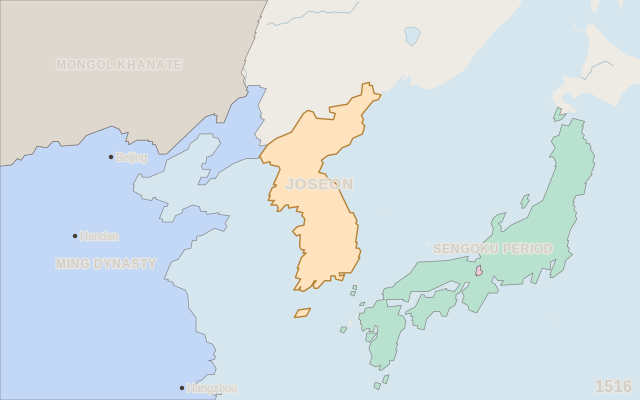
Its ground peaked in 1516 at 234,800 km².↓ Its highest office was held by 27 rulers, covering 1392 – 1897, the median reign 15 years; 2 of 25 handovers were irregular.↓ Among them, Sejong the Great, Taejo of Joseon and Gojong of Korea are the best known.↓ The atlas files 78 rows under it, people the largest group of them.↓

It was replaced by the Korean Empire in 1897, 505 years after it began.↓

From Wikipedia’s article, retold · CC BY-SA 4.0

505 years

Longer than Hittites, shorter than the Abbasid Caliphate

235,000 km²

At its height in 1516 · about the size of Romania

27 rulers

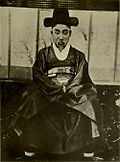
the king of Joseon Dynasty

30 wars and battles

More per century than 89% of states · 78 entries in all

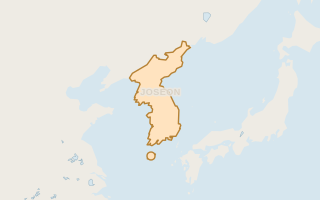
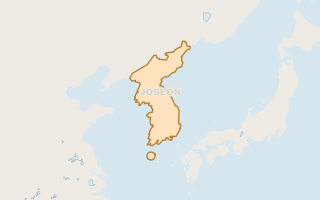
Map: Joseon in 1516, its borders in gold among its neighbours
Imjin War, 1592 – 1598: 234,800 km² → 203,300 km²Qing invasion of Joseon, 1636Japan–Korea Treaty of 1876, 1876Battle of the Yalu River (1894), 1894Tonghak Peasant Revolution, 1894 – 18951500160017001800
Beside it on the map in 1516: Ming dynasty, Sengoku period and Ashikaga shogunate.How far it reached, year by year: its ground inside the borders Cliopatria draws (CC BY 4.0), measured on an equal-area grid; the map shows it at its largest, with the cities of the year.

The story

Five acts, 1392 – 1897

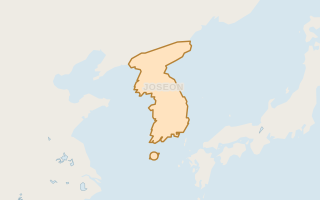
Joseon in 1494, at the end of act II
II1418 – 1495207,000 → 232,000 km²

Sejong and a golden age

Sejong the Great takes the throne in 1418, sends the Gihae Eastern Expedition against the pirates of Tsushima in 1419 and grants its daimyō trading rights by the Treaty of Gyehae in 1443. In 1455 Danjong's uncle Sejo seizes the throne and executes six loyal ministers. Seongjong's reign brings prosperity and a second cultural golden age.

Watch this act on the live map, from 1418
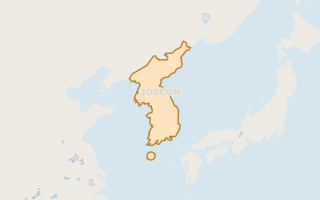
Joseon in 1636, at the end of act III
III1495 – 1637232,000 → 202,000 km²

Purges, factions and invasions

Yeonsangun's literati purges, from 1498 to 1506, open an age of bloody factional struggle between Easterners and Westerners. In 1592 Toyotomi Hideyoshi invades, and the war brings battles at Hansan Island, Myeongnyang and Noryang before it ends in 1598. Invasions by the Later Jin in 1627 and the Qing in 1636–1637 nearly topple the kingdom.

Watch this act on the live map, from 1495
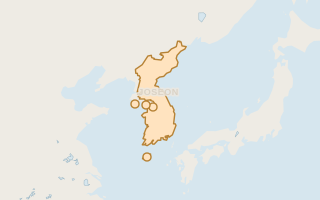
Joseon in 1799, at the end of act IV
IV1637 – 1800202,000 → 232,000 km²

Peace and Practical Learning

Nearly two centuries of peace follow. Silhak scholars press for reform of examinations, taxes and farming to rebuild the ravaged country, and Kim Yuk's reforms help both the treasury and the peasants. Later the Bukhak school urges learning from Qing and Western culture, admiring Chinese building techniques and brick. The era closes with Jeongjo's death in 1800.

Watch this act on the live map, from 1637
Joseon in 1896, at the end of act V
V1800 – 1897232,000 → 232,000 km²

In-law rule and the end

Under Sunjo royal in-laws take power, first the Noron and then the Andong Kim clan. Gojong takes the throne in 1863 with his father Heungseon Daewongun as regent, whose isolationism and persecution of Catholics bring a French campaign in 1866. Treaties with Japan, coups and the Tonghak Peasant Revolution of 1894 follow.

Watch this act on the live map, from 1800

Before and after

Before it

  • Tamna · replaces · 2337 BCE – 1404 CE
  • Goryeo · replaces · 918 – 1392

After it

Where it sits in time

3000 BCE2000 BCE1000 BCE110002000Tamna: 2337 BCE – 1404Goryeo: 918 – 1392Korean Empire: 1897 – 1910Joseon: 1392 – 1897

Five thousand years, 3000 BCE to 2026; the state in gold, what it replaced or followed and what replaced or followed it in grey.

Its people

Lives across Joseon

140016001800
Statesmen and generalsWriters, artists and thinkersLived on after it endedAll its people on the timeline →

How it was governed

27 kings

27 kings on record, 1392 to 1897; a reign lasted 15 years at the median. Each bar is a reign, as long as it lasted.

Taejo of Joseon · 1392 – 1398 · abdicatedJeongjong of Joseon · 1398 – 1400 · abdicatedTaejong of Joseon · 1400 – 1418 · abdicatedSejong the Great · 1418 – 1450 · died in office of natural causesMunjong of Joseon · 1450 – 1452 · died in office of natural causesDanjong of Joseon · 1452 – 1455 · abdicatedSejo of Joseon · 1455 – 1468 · abdicatedYejong of Joseon · 1468 – 1469 · died in office of natural causesSeongjong of Joseon · 1469 – 1495 · died in office of natural causesYeonsangun of Joseon · 1495 – 1506 · deposed or removedJungjong of Joseon · 1506 – 1544 · abdicatedInjong of Joseon · 1544 – 1545 · died in office of natural causesMyeongjong of Joseon · 1545 – 1567 · died in office of natural causesSeonjo of Joseon · 1567 – 1608 · died in office of natural causesGwanghaegun of Joseon · 1608 – 1623 · deposed or removedInjo of Joseon · 1623 – 1649 · died in office of natural causesHyojong of Joseon · 1649 – 1659 · died in office, manner not recordedHyeonjong of Joseon · 1659 – 1674 · died in office, manner not recordedSukjong of Joseon · 1674 – 1720 · died in office of natural causesGyeongjong of Joseon · 1720 – 1724 · died in office, manner not recordedYeongjo of Joseon · 1724 – 1776 · died in office of natural causesJeongjo of Joseon · 1776 – 1800 · died in office, manner not recordedSunjo of Joseon · 1800 – 1834 · died in office, manner not recordedHeonjong of Joseon · 1834 – 1849 · died in office of natural causesCheoljong of Joseon · 1849 – 1863 · died in office of natural causesGojong of Korea · 1863 – 1897 · left office alive14001500160017001800
How their terms ended, where it is known (26 of 26):Deposed or removed 8Died in office 17Left office alive 1
Every term, with how it ended and its source

Rulers

How 26 reigns ended - choose one to show only those

How they died, where the record says: died of natural causes 17 · died by suicide 1 · killed 1.

RulerReignLengthHow it ended · sourceTo the ruler before
14th century · 3 reigns · 3 killed or removed
Taejo of Joseon · aged 571392 – 13986 yearsabdicatedWikidata's end cause on the termdied of natural causes
Jeongjong of Joseon · aged 411398 – 14002 yearsabdicatedWikidata's end cause on the termchild
Taejong of Joseon · aged 331400 – 141818 yearsabdicatedWikidata's end cause on the termsibling
15th century · 7 reigns · 3 killed or removed
Sejong the Great · aged 211418 – 145032 yearsdied in officeWikidata's manner of deathdied of natural causeschild
Munjong of Joseon · aged 361450 – 14522 yearsdied in officeWikidata's manner of deathdied of natural causeschild
Danjong of Joseon · aged 111452 – 14553 yearsabdicatedWikidata's end cause on the termdied by suicidechild
Sejo of Joseon · aged 381455 – 146813 yearsabdicatedWikidata's end cause on the termdied of natural causes
Yejong of Joseon · aged 181468 – 14691 yeardied in officeWikidata's manner of deathdied of natural causeschild
Seongjong of Joseon · aged 121469 – 149526 yearsdied in officeWikidata's manner of deathdied of natural causesnephew or niece
Yeonsangun of Joseon · aged 191495 – 150611 yearsdeposedWikidata's end cause on the termdied of natural causeschild
16th century · 4 reigns · 1 killed or removed
Jungjong of Joseon · aged 181506 – 154438 yearsabdicatedWikidata's end cause on the termdied of natural causessibling
Injong of Joseon · aged 291544 – 15451 yeardied in officeWikidata's manner of deathdied of natural causeschild
Myeongjong of Joseon · aged 111545 – 156722 yearsdied in officeWikidata's manner of deathdied of natural causessibling
Seonjo of Joseon · aged 151567 – 160841 yearsdied in officeWikidata's manner of deathdied of natural causesnephew or niece
17th century · 5 reigns · 1 killed or removed
Gwanghaegun of Joseon · aged 331608 – 162315 yearsdeposedWikidata's end cause on the termdied of natural causeschild
Injo of Joseon · aged 281623 – 164926 yearsdied in officeWikidata's manner of deathdied of natural causesnephew or niece
Hyojong of Joseon · aged 301649 – 165910 yearsdied in officeread off the dates alonechild
Hyeonjong of Joseon · aged 181659 – 167415 yearsdied in officeread off the dates alonechild
Sukjong of Joseon · aged 131674 – 172046 yearsdied in officeWikidata's manner of deathdied of natural causeschild
18th century · 4 reigns
Gyeongjong of Joseon · aged 321720 – 17244 yearsdied in officeread off the dates alonechild
Yeongjo of Joseon · aged 301724 – 177652 yearsdied in officeWikidata's manner of deathdied of natural causessibling
Jeongjo of Joseon · aged 241776 – 180024 yearsdied in officeread off the dates alonegrandchild
Sunjo of Joseon · aged 101800 – 183434 yearsdied in officeread off the dates alonechild
19th century · 3 reigns
Heonjong of Joseon · aged 71834 – 184915 yearsdied in officeWikidata's manner of deathdied of natural causesgrandchild
Cheoljong of Joseon · aged 181849 – 186314 yearsdied in officeWikidata's manner of deathdied of natural causes
Gojong of Korea · aged 111863 – 189734 yearsleft office aliveread off the dates alonekilled

27 rulers, 26 with terms dated as terms, covering 1392 – 1897. Median reign 15 years. 2 of 25 handovers irregular - a killing, a deposition, a rival claimant, a rising or a coup beside it. A blank in the last column means no kin on record, which is coverage, never “unrelated”.

Flags and arms, in order

  • Flag of the king of Joseon
    flag, undatedFlag of the king of Joseon · Public domain
  • Coat of Arms of Joseon Korea
    coat of arms, undatedCoat of Arms of Joseon Korea · Public domain

Its world

Rivals, and who else stood

Who it fought most

Wars and battles both took part in, on whichever side: the record names who took part, not who fought whom.

  • JapanBattle of Myeongnyang6

Meanwhile, elsewhere

The best-known states of other regions that stood while it did; the band is Joseon’s own years.

140016001800

How it compares

Among 3,073 states

Stood longer than 86% of 3,073 states
Joseon · 505 yearsHittitesAbbasid CaliphateHow long it stood, among the states with a recorded end or still standing.
Held more ground at its peak than 62% of 1,464 states
Joseon · 234,800 km²LaosRomaniaThe most ground it held, among the states with a border in Cliopatria.
Had more wars on record per century than 89% of 3,073 states
Joseon · 0.6Wars recorded per century, among the states, counting the wars the atlas hosts under each.

Why it fell

Why did Joseon fall?

Historians still argue. Here is what the atlas records about its last century:

8

wars and battles in its last century

What led to it, and what came of it

Tamna · Linked · 2337 BCE – 1404TamnaGoryeo · Linked · 918 – 1392GoryeoMing dynasty · In the article · 1368 · “Following the emergence of the Ming dynasty, the royal court in Goryeo split into two conflicting factions, one favoring neutrality and the other wanting to r…”Ming dynastyChen Li · Coincidence · 1351 – 1408Chen LiMing Sheng · Coincidence · 1356 – 1393Ming ShengJoseon · 1392 – 1897JoseonKorean Empire · Linked · 1897 – 1910Korean Empire2000 BCE1000 BCE110002000
in the articlelinkedcoincidence

Open the investigation: every row with its evidence, the conditions at the time, the theories condition by condition, and the succession analysed.

Its centuries in the record

1300 – 1399: 4 recorded — 0 wars and battles, 0 risings, regime changes and massacres, 4 other13001400 – 1499: 7 recorded — 0 wars and battles, 0 risings, regime changes and massacres, 7 other14001500 – 1599: 28 recorded — 20 wars and battles, 0 risings, regime changes and massacres, 8 other15001600 – 1699: 7 recorded — 2 wars and battles, 0 risings, regime changes and massacres, 5 other16001700 – 1799: 3 recorded — 0 wars and battles, 0 risings, regime changes and massacres, 3 other17001800 – 1899: 29 recorded — 8 wars and battles, 5 risings, regime changes and massacres, 16 other1800

Wars and battles in red, risings, coups and massacres beside them, everything else in grey, by the century each began in. A tall bar is partly a fact about Wikipedia: better-documented centuries hold more.

Each century’s own page:1300 – 13991400 – 14991500 – 15991600 – 16991700 – 17991800 – 1899

Keep exploring

Share this page
Copy link
Embed the map
Cite this page

How this page is made

Drawn from Wikidata (Q28179, CC0), the opening and history of its English Wikipedia article retold by the atlas (CC BY-SA 4.0), borders from Cliopatria (CC BY 4.0), coast and rivers from Natural Earth, cities from Reba, Reitsma & Seto 2016 (CC BY 4.0), symbols from Wikimedia Commons, each under its own licence. Data built 2026-11-26 · Pastlas v2.47.1, by Oleh Voronko; the published atlas and its data are for non-commercial use.

How to read it

Areas are measured on an equal-area grid from borders simplified to about five kilometres. “c.” marks an approximate date, and a date known to the century is never printed to the year. Counts are what the atlas holds, and they follow Wikipedia’s coverage: a busy century is partly a fact about the record.

Something wrong?

Tell us and name the entry. We fix the data, not just this page.

Report a problem