The story
Its key moments
Where it sits in time
Five thousand years, 3000 BCE to 2026; the state in gold.
State · Europe
1335 – 1742 · 407 years
Its record opens in 1335.↑ The record names 46 rulers in its line, covering 1298 – 1799, the median reign 20 years; 13 of 26 handovers were irregular.↓ The best known of them are  Alexander Farnese,
 Charles Theodore, Elector of Bavaria and
 Pier Luigi Farnese.↓ Most of the 29 rows the atlas files under it are people.↓
Its own article says it was conquered by the King of Prussia, in 1742.↓
Best known for
407 years
Longer than Kyivan Rus', shorter than the British Empire
46 rulers
the duke
Its borders aren’t on record
The borders dataset does not draw the Duchies of Silesia. The live map still shows where it stood among the states of its years.
Find it on the live mapThe story
Five thousand years, 3000 BCE to 2026; the state in gold.
Its people
One axis for everyone, so you can see who knew whom: the best-known, ordered by birth.
 Casimir I of Warsawruler1320 – 1355
 Konrad III the Oldmonarch1350 – 1412
 William, Duke of Austriaduke1369 – 1406
 Frederick IV of Austriaduke1382 – 1439
 Sigismund, Archduke of Austriaduke1427 – 1496
 George, Duke of Saxonyduke1471 – 1539
 John Albert Iruler1526 – 1576
 Anna Sophia of Prussiaruler1527 – 1591
 Paolo Giordano I Orsiniduke1541 – 1585
 Christian, Duke of Brunswick-Lüneburgduke · bishop1566 – 1633
 Augustus the Elder, Duke of Brunswick-Lüneburgbishop1568 – 1636
 Adolphus Frederick IIduke1658 – 1708
 Adolphus Frederick IIIduke
 John Christian, Count Palatine of Sulzbachruler1700 – 1733
How it was governed
46 dukes on record, 1298 to 1799; a reign lasted 20 years at the median. Each bar is a reign, as long as it lasted.
The line of duke.
| Ruler | Reign | Length | How it ended · source | To the ruler before |
|---|---|---|---|---|
| 13th century · 1 reign | ||||
 Rudolf I of Saxe-Wittenberg · aged 18 | 1298 – 1356 | 58 years | died in officeread off the dates alone | |
| 14th century · 5 reigns | ||||
 Otto, Duke of Austria · aged 29 | 1330 – 1339 | 9 years | died in officeread off the dates alone | |
| Bagrat I of Imereti | 1330 – 1372 | 42 years | died in officeread off the dates alone | |
 Otto V of Bavaria · aged 3 | 1349 – 1351 | 2 years | left office aliveread off the dates alone | |
| Alexander I of Imereti · aged 22 | 1372 – 1387 | 15 years | left office aliveread off the dates alone | |
| William, Duke of Austria · aged 17 | 1386 – 1406 | 20 years | died in officeread off the dates alone | |
| 15th century · 4 reigns | ||||
| Frederick IV of Austria · aged 24 | 1406 – 1439 | 33 years | died in officeread off the dates alone | sibling |
 Antonio II Acciaioli · aged 89 | 1439 – 1441 | 2 years | died in officeread off the dates alone | |
| Sigismund, Archduke of Austria · aged 19 | 1446 – 1490 | 44 years | left office aliveread off the dates alone | |
| George, Duke of Saxony · aged 29 | 1500 – 1539 | 39 years | died in officeread off the dates alone | |
| 16th century · 7 reigns · 1 killed or removed | ||||
| Enrique Pérez de Guzmán, 4th Duke of Medina Sidonia · aged 13 | 1507 – 1513 | 6 years | died in officeread off the dates alone | |
 Guidobaldo II della Rovere · aged 24 | 1538 – — | no end recorded | ending not on record | |
 Pier Luigi Farnese · aged 42 | 1545 – 1547 | 2 years | killed in officeWikidata's manner of death | |
 Ottavio Farnese · aged 23 | 1547 – 1586 | 39 years | died in officeread off the dates alone | child |
| Paolo Giordano I Orsini · aged 19 | 1560 – 1585 | 25 years | died in officeread off the dates alone | |
 Alexander Farnese · aged 41 | 1586 – 1592 | 6 years | died in officeWikidata's manner of deathdied of natural causes | |
 Ranuccio I Farnese · aged 23 | 1592 – 1622 | 30 years | died in officeread off the dates alone | child |
| 17th century · 4 reigns | ||||
| Christian, Duke of Brunswick-Lüneburg · aged 45 | 1611 – 1633 | 22 years | died in officeread off the dates alone | |
 Charles Paris d'Orléans, Duke of Longueville · aged 14 | 1663 – 1672 | 9 years | died in officeread off the dates alone | |
| Gaspar Juan Pérez de Guzmán, 10th Duke of Medina Sidonia · aged 34 | 1664 – 1667 | 3 years | died in officeread off the dates alone | |
 Francesco Farnese · aged 16 | 1694 – 1727 | 33 years | died in officeread off the dates alone | |
| 18th century · 6 reigns | ||||
| Adolphus Frederick II · aged 43 | 1701 – 1708 | 7 years | died in officeread off the dates alone | |
| Adolphus Frederick III · aged 22 | 1708 – 1752 | 44 years | died in officeread off the dates alone | child |
 Ernst Ludwig II · aged 15 | 1724 – 1729 | 5 years | died in officeread off the dates alone | |
 Antonio Farnese · aged 48 | 1727 – 1731 | 4 years | died in officeread off the dates alone | |
 Charles Theodore, Elector of Bavaria · aged 9 | 1733 – 1799 | 66 years | died in officeread off the dates alone | |
 József Rákóczi · aged 34 | 1734 – — | no end recorded | ending not on record | |
46 rulers, 27 with terms dated as terms, covering 1298 – 1799. Median reign 20 years. 13 of 26 handovers irregular - a killing, a deposition, a rival claimant, a rising or a coup beside it. A blank in the last column means no kin on record, which is coverage, never “unrelated”.
The line also names one holder with a page of their own whose term the record gives no first year, so the table cannot place it: Ferdinando Gonzaga, Duke of Mantua.
Each symbol with the years its own statement gives; the timeline flies the one of the year on screen.
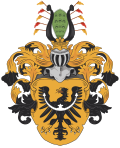
 Charles Theodore, Elector of Bavaria66 yrsRudolf I of Saxe-Wittenberg58 yrsAdolphus Frederick III44 yrsSigismund, Archduke of Austria44 yrs
Its world
The best-known states of other regions that stood while it did; the band is the Duchies of Silesia’s own years.
 Persian EmpireMiddle East and North Africa
 KathmanduSouth Asia
 Ottoman EmpireMiddle East and North Africa
 BruneiEast and Southeast Asia
 Ming dynastyEast and Southeast Asia
 Inca EmpireAmericas and Oceania
 Mughal EmpireSouth Asia
How it compares
Each column is a share of the states; gold is the Duchies of Silesia.
Why it fell
Historians still argue. Here is what the atlas records about its last century:
Conquered by King of Prussia, 1742. Read from the article's section “lead” by its grammar; the claim is only that the article says so.
Most of Silesia was annexed by the King of Prussia under the Treaty of Berlin in 1742.
One sentence of the English Wikipedia article, CC BY-SA 4.0.
Wars and battles in red, risings, coups and massacres beside them, everything else in grey, by the century each began in. A tall bar is partly a fact about Wikipedia: better-documented centuries hold more.
Each century’s own page:1300 – 13991400 – 14991500 – 15991600 – 16991700 – 1799
“Duchies of Silesia”, Pastlas, a historical atlas, 2026-11-26. https://app.pastlas.com/state/duchies-of-silesia/
Drawn from Wikidata (Q691981, CC0), symbols from Wikimedia Commons, each under its own licence, and one sentence of the article, quoted. Data built 2026-11-26 · Pastlas v2.47.1, by Oleh Voronko; the published atlas and its data are for non-commercial use.
Areas are measured on an equal-area grid from borders simplified to about five kilometres. “c.” marks an approximate date, and a date known to the century is never printed to the year. Counts are what the atlas holds, and they follow Wikipedia’s coverage: a busy century is partly a fact about the record.