State · East and Southeast Asia

Goguryeo

37 BCE – 668 CE · 705 years

Came after Buyeo · became Tang dynasty and Unified Silla

A Korean kingdom of the north and Manchuria, one of East Asia's great powers, whose shortened name gave English the word Korea.

Founded in 37 BCE, Goguryeo held the northern and central Korean peninsula and much of Manchuria, and at its peak most of the peninsula. With Paekche and Silla it made up the Three Kingdoms of Korea, and it ranked among East Asia's great powers. Worn down by long wars and torn by strife after Yŏn Kaesomun's death, it fell to a Silla–Tang alliance in 668. Its shortened name, Goryeo, is the source of the English 'Korea'.

What the record holds

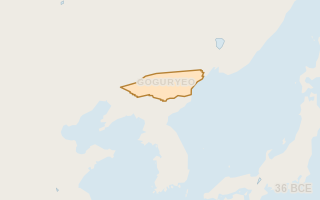
Its record opens in 37 BCE, replacing Buyeo.↓ In 36 BCE, the first year its borders are mapped, it covered 93,500 km².↓ Between the start and the end of the Goguryeo–Sui War, 598 – 614, it went from 360,100 km² to 307,200 km².↓

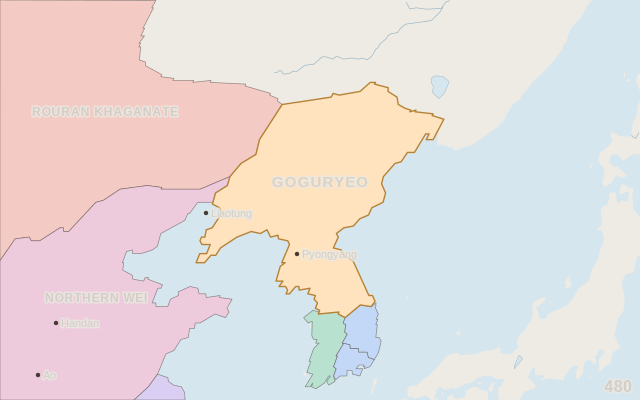
Its ground peaked in 480 at 408,400 km².↓ Its line counts 28 rulers, covering 37 BCE – 670, the median reign 22 years; 4 of 27 handovers were irregular.↓ The best known of them are Dongmyeong of Goguryeo, Gwanggaeto the Great and Jangsu of Goguryeo.↓ Most of the 31 rows the atlas files under it are people.↓

The Tang dynasty and Unified Silla replaced it in 668, after 705 years.↓

From Wikipedia’s article, retold · CC BY-SA 4.0

705 years

Longer than the Ottoman Empire, shorter than the House of Habsburg

408,000 km²

At its height in 480 · about the size of Morocco

28 rulers

the wang

3 wars and battles

More per century than 87% of states · 31 entries in all

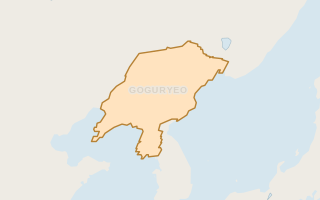
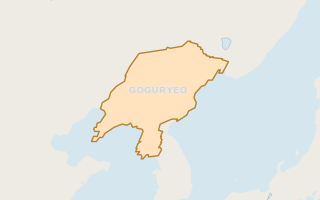
Map: Goguryeo in 480, its borders in gold among its neighbours
Goguryeo–Sui War, 598 – 614: 360,100 km² → 307,200 km²Battle of Ansi, 645Goguryeo–Tang War, 645 – 6681200400600
Beside it on the map in 480: Rouran Khaganate, Northern Wei, Baekje, Silla, Gaya confederacy and Southern Qi.How far it reached, year by year: its ground inside the borders Cliopatria draws (CC BY 4.0), measured on an equal-area grid; the map shows it at its largest, with the cities of the year.

The story

Five acts, 37 BCE – 668 CE

Goguryeo in 312, at the end of act II
II53 – 31394,300 → 134,000 km²

Centralization and the Wei wars

In 53 CE, under Taejodae, five local tribes become five centrally ruled districts, and the king takes charge of war and diplomacy. Goguryeo joins Cao Wei to destroy the Liaodong commandery in 238, then turns on Wei in 242 and suffers its counterattack. In 313 Micheon takes Lelang, ending four centuries of Chinese rule in the north.

Watch this act on the live map, from 53
Goguryeo in 530, at the end of act III
III313 – 531185,000 → 408,000 km²

The golden age

After setbacks under Gogukwon in the 4th century, Goguryeo reaches its golden age with Gwanggaeto the Great, from 391, and his son Jangsu. It rules three-quarters of the Korean peninsula, Seoul included, most of Manchuria and stretches of Inner Mongolia, and Gwanggaeto's era name, Yeongnak, claims equal standing with China's dynasties.

Watch this act on the live map, from 313
Goguryeo in 641, at the end of act IV
IV531 – 642408,000 → 360,000 km²

Faction, loss and the Sui war

Anjang is assassinated and aristocratic factions fight over the succession, while magistrates with private armies make themselves local rulers. The Tuchueh seize northern castles, and in 551 Paekche and Silla join to take the Han River valley. When the Sui dynasty reunifies China, Pyeongwon prepares for war, and the Goguryeo–Sui War follows.

Watch this act on the live map, from 531
Goguryeo in 667, at the end of act V
V642 – 668360,000 → 360,000 km²

Yŏn Kaesomun and the fall

In 642 the noble Yŏn Kaesomun kills King Yeongnyu and a hundred officials, enthrones Bojang and rules as Dae Magniji. War with Tang follows from 645, including the Battle of Ansi. When he dies in 666, his sons and younger brother fight over the succession, and in 668 a Silla–Tang alliance brings Goguryeo down.

Watch this act on the live map, from 642
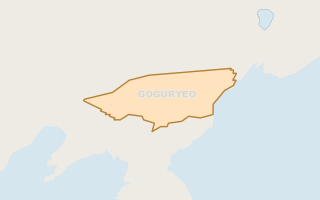
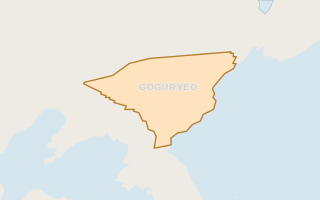
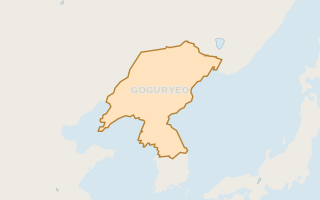
Goguryeo in 480, at its largestGoguryeo in 36 BCE, first mapped
The rise and the fall in one frame: drag across it from 36 BCE, first mapped at 93,500 km², to 480, at its largest at 408,400 km². Open the live map in 36 BCE or 480.

Before and after

Before it

  • Buyeo · replaces

After it

Where it sits in time

3000 BCE2000 BCE1000 BCE110002000Unified Silla: 668 – 892Tang dynasty: 618 – 907Goguryeo: 37 BCE – 668

Five thousand years, 3000 BCE to 2026; the state in gold, what it replaced or followed and what replaced or followed it in grey.

Its people

Lives across Goguryeo

1 CE200 CE400 CE600 CE
Statesmen and generalsLived on after it endedAll its people on the timeline →

How it was governed

28 wangs

28 wangs on record, 37 BCE to 670; a reign lasted 22 years at the median. Each bar is a reign, as long as it lasted.

Dongmyeong of Goguryeo · 37 BCE – 19 BCE · died in office, manner not recordedYuri of Goguryeo · 19 BCE – 18 · died in office, manner not recordedDaemusin of Goguryeo · 18 – 44 · died in office, manner not recordedMobon of Goguryeo · 48 – 53 · killed, the article saysTaejo of Goguryeo · 53 – 146 · left office aliveChadae of Goguryeo · 146 – 165 · killedSindae of Goguryeo · 165 – 179 · died in office, manner not recordedGogukcheon of Goguryeo · 179 – 197 · died in office, manner not recordedSansang of Goguryeo · 197 – 227 · died in office, manner not recordedDongcheon of Goguryeo · 227 – 248 · died in office of natural causesJungcheon of Goguryeo · 248 – 270 · died in office, manner not recordedSeocheon of Goguryeo · 270 – 292 · died in office, manner not recordedBongsang of Goguryeo · 292 – 300 · died by suicideMicheon of Goguryeo · 300 – 331 · died in office, manner not recordedGogugwon of Goguryeo · 331 – 371 · died in battleSosurim of Goguryeo · 371 – 384 · died in office, manner not recordedGogugyang of Goguryeo · 384 – 391 · died in office, manner not recordedGwanggaeto the Great · 391 – 413 · died in office of natural causesJangsu of Goguryeo · 413 – 491 · died in office of natural causesMunjamyeong of Goguryeo · 491 – 519 · died in office, manner not recordedAnjang of Goguryeo · 519 – 531 · died in office, manner not recordedAnwon of Goguryeo · 531 – 545 · died in office, manner not recordedYangwon of Goguryeo · 545 – 559 · died in office, manner not recordedPyeongwon of Goguryeo · 559 – 590 · died in office, manner not recordedYeongyang of Goguryeo · 590 – 618 · died in office, manner not recordedYeongnyu of Goguryeo · 618 – 642 · executedBojang of Goguryeo · 642 – 668 · left office aliveAnsŭng · 668 – 670 · no death date to read the end against1200400600
How their terms ended, where it is known (27 of 28):Killed 4Died in office 21Left office alive 2Not on record 1
Every term, with how it ended and its source

Rulers

How 28 reigns ended - choose one to show only those

How they died, where the record says: died of natural causes 4 · killed 1 · died by suicide 1 · died in battle 1 · executed 1.

RulerReignLengthHow it ended · sourceTo the ruler before
1st century BCE · 2 reigns
Dongmyeong of Goguryeo · aged 2137 BCE – 19 BCE18 yearsdied in officeread off the dates alone
Yuri of Goguryeo · aged 1919 BCE – 1837 yearsdied in officeread off the dates alonechild
1st century · 3 reigns · 1 killed or removed
Daemusin of Goguryeo · aged 1418 – 4426 yearsdied in officeread off the dates alonechild
Mobon of Goguryeo · aged 1848 – 535 yearskilledread from the ruler's own articlechild
Taejo of Goguryeo · aged 653 – 14693 yearsleft office aliveread off the dates alone
2nd century · 4 reigns · 1 killed or removed
Chadae of Goguryeo · aged 75146 – 16519 yearskilled in officeWikidata's manner of deathsibling
Sindae of Goguryeo · aged 76165 – 17914 yearsdied in officeread off the dates alonesibling
Gogukcheon of Goguryeo179 – 19718 yearsdied in officeread off the dates alonechild
Sansang of Goguryeo197 – 22730 yearsdied in officeread off the dates alonesibling
3rd century · 5 reigns
Dongcheon of Goguryeo · aged 18227 – 24821 yearsdied in officeWikidata's manner of deathdied of natural causeschild
Jungcheon of Goguryeo · aged 24248 – 27022 yearsdied in officeread off the dates alonechild
Seocheon of Goguryeo · aged 20270 – 29222 yearsdied in officeread off the dates alonechild
Bongsang of Goguryeo292 – 3008 yearsdied by suicideWikidata's manner of deathdied by suicidechild
Micheon of Goguryeo · aged 50300 – 33131 yearsdied in officeread off the dates alonenephew or niece
4th century · 4 reigns · 1 killed or removed
Gogugwon of Goguryeo331 – 37140 yearsdied in battleWikidata's manner of deathchild
Sosurim of Goguryeo371 – 38413 yearsdied in officeread off the dates alonechild
Gogugyang of Goguryeo · aged 34384 – 3917 yearsdied in officeread off the dates alonesibling
Gwanggaeto the Great · aged 17391 – 41322 yearsdied in officeWikidata's manner of deathdied of natural causeschild
5th century · 2 reigns
Jangsu of Goguryeo · aged 19413 – 49178 yearsdied in officeWikidata's manner of deathdied of natural causeschild
Munjamyeong of Goguryeo491 – 51928 yearsdied in officeread off the dates alonegrandchild
6th century · 5 reigns
Anjang of Goguryeo · aged 21519 – 53112 yearsdied in officeread off the dates alonechild
Anwon of Goguryeo · aged 30531 – 54514 yearsdied in officeread off the dates alonesibling
Yangwon of Goguryeo545 – 55914 yearsdied in officeread off the dates alonechild
Pyeongwon of Goguryeo · aged 58559 – 59031 yearsdied in officeread off the dates alonechild
Yeongyang of Goguryeo · aged 40590 – 61828 yearsdied in officeread off the dates alonechild
7th century · 3 reigns · 1 killed or removed
Yeongnyu of Goguryeo · aged 68618 – 64224 yearsexecutedWikidata's manner of deathsibling
Bojang of Goguryeo642 – 66826 yearsleft office aliveread off the dates alonedied of natural causesnephew or niece
Ansŭng668 – 6702 yearsending not on record

28 rulers, 28 with terms dated as terms, covering 37 BCE – 670. Median reign 22 years. 4 of 27 handovers irregular - a killing, a deposition, a rival claimant, a rising or a coup beside it. A blank in the last column means no kin on record, which is coverage, never “unrelated”.

Flags and arms, in order

  • Military Flag of Goguryeo
    flag, undatedMilitary Flag of Goguryeo · Public domain
  • Military Flag of Goguryeo (Ssangyeongchong)
    flag, undatedMilitary Flag of Goguryeo (Ssangyeongchong) · CC0
  • Military Flag of Goguryeo.svg (Tonggu No. 12)
    flag, undatedMilitary Flag of Goguryeo.svg (Tonggu No. 12) · CC0

Its world

Rivals, and who else stood

Who it fought most

Wars and battles both took part in, on whichever side: the record names who took part, not who fought whom.

Meanwhile, elsewhere

The best-known states of other regions that stood while it did; the band is Goguryeo’s own years.

1200400600

How it compares

Among 3,073 states

Stood longer than 93% of 3,073 states
Goguryeo · 705 yearsOttoman EmpireHouse of HabsburgHow long it stood, among the states with a recorded end or still standing.
Held more ground at its peak than 71% of 1,464 states
Goguryeo · 408,400 km²MoroccoJapanThe most ground it held, among the states with a border in Cliopatria.
Had more wars on record per century than 87% of 3,073 states
Goguryeo · 0.3Wars recorded per century, among the states, counting the wars the atlas hosts under each.

Why it fell

Why did Goguryeo fall?

Historians still argue. Here is what the atlas records about its last century:

2

wars and battles in its last century, more than in any before it

642

Yeongnyu of Goguryeo, killed in office

What led to it, and what came of it

Gojoseon · In the article · 2333 BCE · “The earliest record of the name of Goguryeo can be traced to geographic monographs in the Book of Han and is first attested as the name of one of the subdivis…”GojoseonGoguryeo · 37 BCE – 668GoguryeoUnified Silla · Linked · 668 – 892Unified SillaTang dynasty · Linked · 618 – 907Tang dynasty2000 BCE1000 BCE11000
in the articlelinked

Open the investigation: every row with its evidence, the conditions at the time, the theories condition by condition, and the succession analysed.

Its centuries in the record

100 BCE – 1 BCE: 2 recorded — 0 wars and battles, 0 risings, regime changes and massacres, 2 other100 BCE0 – 99: 5 recorded — 0 wars and battles, 0 risings, regime changes and massacres, 5 other0100 – 199: 1 recorded — 0 wars and battles, 0 risings, regime changes and massacres, 1 other100200 – 299: 5 recorded — 0 wars and battles, 0 risings, regime changes and massacres, 5 other200300 – 399: 6 recorded — 0 wars and battles, 0 risings, regime changes and massacres, 6 other300400 – 499: 1 recorded — 0 wars and battles, 0 risings, regime changes and massacres, 1 other400500 – 599: 7 recorded — 1 wars and battles, 0 risings, regime changes and massacres, 6 other500600 – 699: 4 recorded — 2 wars and battles, 0 risings, regime changes and massacres, 2 other600

Wars and battles in red, risings, coups and massacres beside them, everything else in grey, by the century each began in. A tall bar is partly a fact about Wikipedia: better-documented centuries hold more.

Each century’s own page:100 BCE – 1 BCE0 – 99100 – 199200 – 299300 – 399400 – 499500 – 599600 – 699

Keep exploring

Share this page
Copy link
Embed the map
Cite this page

How this page is made

Drawn from Wikidata (Q28370, CC0), the opening and history of its English Wikipedia article retold by the atlas (CC BY-SA 4.0), borders from Cliopatria (CC BY 4.0), coast and rivers from Natural Earth, cities from Reba, Reitsma & Seto 2016 (CC BY 4.0), symbols from Wikimedia Commons, each under its own licence. Data built 2026-11-26 · Pastlas v2.47.1, by Oleh Voronko; the published atlas and its data are for non-commercial use.

How to read it

Areas are measured on an equal-area grid from borders simplified to about five kilometres. “c.” marks an approximate date, and a date known to the century is never printed to the year. Counts are what the atlas holds, and they follow Wikipedia’s coverage: a busy century is partly a fact about the record.

Something wrong?

Tell us and name the entry. We fix the data, not just this page.

Report a problem