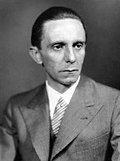
State · Europe

Gau Westmark

1925 – 1945 · 20 years

Came after French Third Republic and Bavaria · became Provisional Government of the French Republic and Rhineland-Palatinate

It was founded in 1925, replacing Bavaria.↓ Its highest office was held by 40 rulers, covering 1925 – 1945; 9 of 13 handovers were irregular.↓ Among them, Adolf Hitler, Joseph Goebbels and Hermann Göring are the best known.↓ The atlas files 35 rows under it, most of them people.↓

Continue reading

It was replaced by Rhineland-Palatinate, the Provisional Government of the French Republic and French occupation zone in Germany in 1945, 20 years after it began.↓

20 years

Longer than the Weimar Republic, shorter than the Republic of Artsakh

40 rulers

the Gauleiter

Its borders aren’t on record

The borders dataset does not draw Gau Westmark. The live map still shows where it stood among the states of its years.

Find it on the live map

The story

Its key moments

Before and after

Before it

  • Bavaria · replaces
  • Moselle · follows
  • Territory of the Saar Basin · follows
  • Free State of Oldenburg · follows
  • French Third Republic · follows · 1870 – 1940

After it

Where it sits in time

3000 BCE2000 BCE1000 BCE110002000French Third Republic: 1870 – 1940Provisional Government of the French Republic: 1944 – 1946Gau Westmark: 1925 – 1945

Five thousand years, 3000 BCE to 2026; the state in gold, what it replaced or followed and what replaced or followed it in grey.

Its people

Lives across Gau Westmark

188019001920194019601980
Statesmen and generalsLived on after it endedAll its people on the timeline →

How it was governed

40 gauleiters

40 gauleiters on record, 1925 to 1945. Each bar is a reign, as long as it lasted.

Friedrich Wambsganss · 1925 – 1926 · left office aliveRobert Heinrich Wagner · 1925 – 1945 · executedJosef Bürckel · 1926 – 1944 · died in office, manner not recordedJoseph Goebbels · 1926 – 1945 · died by suicideKarl Wahl · 1928 – … · no end recordedFriedrich Karl Florian · 1930 – 1945 · left office aliveAlbert Forster · 1930 – 1945 · ended by a named eventAdolf Hitler · 1933 – 1945 · died by suicideHermann Göring · 1933 – 1945 · left office aliveFranz Ritter von Epp · 1933 – 1945 · left office aliveKarl Gerland · 1938 – … · no end recordedOdilo Globocnik · 1938 – … · no end recordedEmil Stürtz · 1939 – … · no end recordedWilli Stöhr · 1944 – 1945 · left office alive19251930193519401945
a second row: a reign that began before the last had ended — rival claimants, or a shared throne
How their terms ended, where it is known (10 of 14):Killed 1Died in office 3Left office alive 6Not on record 4
Every term, with how it ended and its source

Rulers

How 14 reigns ended - choose one to show only those

How they died, where the record says: died by suicide 4 · executed 2.

RulerReignLengthHow it ended · sourceTo the ruler before
20th century · 14 reigns · 1 killed or removed
Friedrich Wambsganss · aged 391925 – 19261 yearleft office aliveread off the dates alone
Robert Heinrich Wagner · aged 301925 – 194520 yearsexecutedWikidata's manner of death
Josef Bürckel · aged 311926 – 194418 yearsdied in officeread off the dates alone
Joseph Goebbels · aged 291926 – 194519 yearsdied by suicideWikidata's manner of deathdied by suicide
Karl Wahl · aged 361928 – —no end recordedending not on record
Friedrich Karl Florian · aged 361930 – 194515 yearsleft office aliveread off the dates alone
Albert Forster · aged 281930 – 194515 yearsended by an eventWikidata's end cause on the termexecuted
Adolf Hitler · aged 441933 – 194512 yearsdied by suicideWikidata's manner of deathdied by suicide
Hermann Göring · aged 401933 – 194512 yearsleft office aliveread off the dates alonedied by suicide
Franz Ritter von Epp · aged 651933 – 194512 yearsleft office aliveread off the dates alone
Karl Gerland · aged 331938 – —no end recordedending not on record
Odilo Globocnik · aged 341938 – —no end recordedending not on recorddied by suicide
Emil Stürtz · aged 471939 – —no end recordedending not on record
Willi Stöhr · aged 411944 – 19451 yearleft office aliveread off the dates alone

40 rulers, 14 with terms dated as terms, covering 1925 – 1945. Only 20 years of the line are dated - too short for a median. 9 of 13 handovers irregular - a killing, a deposition, a rival claimant, a rising or a coup beside it. The violent-handover count is withheld: power changed hands so often that any rising falls beside one (exposure 1.00, limit 0.6). A blank in the last column means no kin on record, which is coverage, never “unrelated”.

Flags and arms, in order

  • Reichsadler Deutsches Reich (1935–1945)
    coat of arms, undatedReichsadler Deutsches Reich (1935–1945) · Public domain
  • Flag of Germany (1935–1945)
    flag, 1933 – 1945Flag of Germany (1935–1945) · Public domain

Its world

Who else stood

Meanwhile, elsewhere

The best-known states of other regions that stood while it did; the band is Gau Westmark’s own years.

1920193019401950

How it compares

Among 3,073 states

Stood longer than 22% of 3,073 states
Gau Westmark · 20 yearsWeimar RepublicRepublic of ArtsakhHow long it stood, among the states with a recorded end or still standing.

Why it fell

Why did Gau Westmark fall?

Historians still argue. Here is what the atlas records about its last century:

1945

Robert Heinrich Wagner, killed in office

What led to it, and what came of it

Bavaria · Linked · 1919BavariaMoselle · Linked · 1790MoselleFrench Third Republic · Linked · 1870 – 1940French Third RepublicFree State of Oldenburg · Linked · 1918 – 1946Free State of OldenburgAdolf Hitler's rise to power · Linked · 1919 – 1933Adolf Hitler's rise to powerTerritory of the Saar Basin · Linked · 1920 – 1935Territory of the Saar BasinGau Westmark · 1925 – 1945Gau WestmarkFrench occupation zone in Germany · Linked · 1945 – 1955French occupation zone in GermanyProvisional Government of the French Republic · Linked · 1944 – 1946Provisional Government of the Fr…Rhineland-Palatinate · Linked · 1946Rhineland-Palatinate1800185019001950
linked

Open the investigation: every row with its evidence, the conditions at the time, the theories condition by condition, and the succession analysed.

In the record

35 entries the atlas files under it, all in 1900 – 1999.

Keep exploring

Share this page
Copy link
Cite this page

How this page is made

Drawn from Wikidata (Q2114827, CC0), symbols from Wikimedia Commons, each under its own licence. Data built 2026-11-26 · Pastlas v2.47.1, by Oleh Voronko; the published atlas and its data are for non-commercial use.

How to read it

Areas are measured on an equal-area grid from borders simplified to about five kilometres. “c.” marks an approximate date, and a date known to the century is never printed to the year. Counts are what the atlas holds, and they follow Wikipedia’s coverage: a busy century is partly a fact about the record.

Something wrong?

Tell us and name the entry. We fix the data, not just this page.

Report a problem