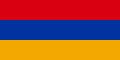
State · Middle East and North Africa

Armenian Soviet Socialist Republic

1920 – 1991 · 71 years

Came after Transcaucasian Socialist Federative Soviet Republic and Socialist Soviet Republic of Armenia · became Armenia

Soviet Armenia, the Second Republic of Armenia, which grew from a farming hinterland into an industrial centre and ended in independence.

The Armenian Soviet Socialist Republic was born on 29 November 1920, when the short-lived First Republic of Armenia was Sovietised; historians call it the Second Republic of Armenia. Governed from Yerevan by the Communist Party of Armenia, it formed part of the TSFSR until 1936. In its 71 years its population almost quadrupled, swelled by genocide survivors and their descendants, and a largely agricultural land became an important industrial centre.

What the record holds

The Armenian Soviet Socialist Republic began in 1920, replacing the Transcaucasian Socialist Federative Soviet Republic.↓ The record names 14 rulers in its line, covering 1920 – 1991, the median reign 3.5 years; none of its 13 handovers was irregular.↓ Among them, Karen Demirchyan, Aghasi Khanjian and Anton Kochinyan are the best known.↓ The atlas files 24 rows under it, most of them people.↓

In 1991, after 71 years, it was replaced by Armenia.↓ One theory of why states fall has every condition present at its end: “Demographic-structural breakdown”.↓

From Wikipedia’s article, retold · CC BY-SA 4.0

71 years

Longer than the Soviet Union, shorter than Jammu and Kashmir

14 rulers

the First Secretary of the Armenian Communist Party

Its borders aren’t on record

The borders dataset does not draw the Armenian Soviet Socialist Republic. The live map still shows where it stood among the states of its years.

Find it on the live map

The story

Four acts, 1920 – 1991

I1920 – 1936

Sovietisation and the NEP

Soviet rule arrives in 1920. In 1921 Lenin sends Alexander Miasnikian to govern with a lighter hand, and the New Economic Policy brings stability: Alexander Tamanian begins his plan for Yerevan, and Garegin Nzhdeh's revolt in Zangezur is defeated. Under Stalin farms are forcibly collectivised, and in 1936 Beria has First Secretary Aghasi Khanjian assassinated in Tiflis.

Watch this act on the live map, from 1920
II1936 – 1953

Purge, war and homecoming

Khanjian's killing opens the Great Purge in Armenia. In the Great Patriotic War the Wehrmacht never reaches the South Caucasus, but hundreds of thousands of Armenians serve and nearly half do not return. Stalin then invites the diaspora home, and between 1946 and 1948 about a hundred and fifty thousand Armenians arrive. Grigory Arutinov leads the party.

Watch this act on the live map, from 1936
III1953 – 1988

Thaw and remembrance

After Stalin's death in 1953, the Khrushchev Thaw and Anastas Mikoyan's urging let Armenians reaffirm their national identity. Under Leonid Brezhnev, thousands march in Yerevan on 24 April 1965 for the 50th anniversary of the genocide, and a memorial rises on Tsitsernakaberd hill in 1967. Anton Kochinyan and then Karen Demirchyan lead the party.

Watch this act on the live map, from 1953
IV1988 – 1991

The Karabakh movement

Glasnost and perestroika embolden the Armenians of the NKAO, whose Supreme Soviet votes on 20 February 1988 to unite with Armenia; rallies in Yerevan grow into the Karabakh movement. The republic declares sovereignty on 23 August 1990, refuses to take part in the union referendum of March 1991 and votes for independence that September.

Watch this act on the live map, from 1988

Before and after

Before it

After it

  • Armenia · replaced by · 1991 – present

Where it sits in time

3000 BCE2000 BCE1000 BCE110002000Transcaucasian Socialist Federative Soviet Republic: 1922 – 1936Armenia: 1991 – 2026Armenian Soviet Socialist Republic: 1920 – 1991

Five thousand years, 3000 BCE to 2026; the state in gold, what it replaced or followed and what replaced or followed it in grey.

Its people

Lives across the Armenian Soviet Socialist Republic

190019502000
Statesmen and generalsLived on after it endedAll its people on the timeline →

How it was governed

14 secretaries

14 secretaries on record, 1920 to 1991; a reign lasted 3.5 years at the median. Each bar is a reign, as long as it lasted.

Gevorg Alikhanyan · 1920 – 1921 · left office aliveAshot Hovhannisian · 1922 – 1927 · left office aliveHaykaz Kostanyan · 1928 – 1930 · left office aliveAghasi Khanjian · 1930 – 1936 · died by suicideAmatuni Amatuni · 1936 – 1937 · left office aliveGrigory Arutinov · 1937 – 1953 · left office aliveSuren Tovmasyan · 1953 – 1960 · left office aliveYakov Zarobyan · 1960 – 1966 · left office aliveAnton Kochinyan · 1966 – 1974 · left office aliveKaren Demirchyan · 1974 – 1988 · left office aliveSuren Arutyunyan · 1988 – 1990 · left office aliveVladimir Movsisyan · 1990 – 1990 · left office aliveStepan Pogosyan · 1990 – 1991 · left office aliveAram G. Sargsyan · 1991 – 1991 · no death date to read the end against1920194019601980
How their terms ended, where it is known (13 of 14):Died in office 1Left office alive 12Not on record 1
Every term, with how it ended and its source

Rulers

How 14 reigns ended - choose one to show only those

How they died, where the record says: died by suicide 1 · killed 1.

RulerReignLengthHow it ended · sourceTo the ruler before
20th century · 14 reigns
Gevorg Alikhanyan · aged 231920 – 19211 yearleft office aliveread off the dates alone
Ashot Hovhannisian · aged 351922 – 19275 yearsleft office aliveread off the dates alone
Haykaz Kostanyan · aged 311928 – 19302 yearsleft office aliveread off the dates alone
Aghasi Khanjian · aged 291930 – 19366 yearsdied by suicideWikidata's manner of deathdied by suicide
Amatuni Amatuni · aged 361936 – 19371 yearleft office aliveread off the dates alone
Grigory Arutinov · aged 371937 – 195316 yearsleft office aliveread off the dates alone
Suren Tovmasyan · aged 431953 – 19607 yearsleft office aliveread off the dates alone
Yakov Zarobyan · aged 521960 – 19666 yearsleft office aliveread off the dates alone
Anton Kochinyan · aged 531966 – 19748 yearsleft office aliveread off the dates alone
Karen Demirchyan · aged 421974 – 198814 yearsleft office aliveread off the dates alonekilled
Suren Arutyunyan · aged 491988 – 19902 yearsleft office aliveread off the dates alone
Vladimir Movsisyan · aged 571990 – 1990under a yearleft office aliveread off the dates alone
Stepan Pogosyan · aged 581990 – 19911 yearleft office aliveread off the dates alone
Aram G. Sargsyan · aged 421991 – 1991under a yearending not on record

14 rulers, 14 with terms dated as terms, covering 1920 – 1991. Median reign 3.5 years. 0 of 13 handovers irregular - a killing, a deposition, a rival claimant, a rising or a coup beside it. The violent-handover count is withheld: power changed hands so often that any rising falls beside one (exposure 0.82, limit 0.6). A blank in the last column means no kin on record, which is coverage, never “unrelated”.

Formal heads of state and heads of government

The line of Chairman of the Council of Ministers of the Armenian SSR, drawn and never measured: a cabinet is not a reign.

Hamo Ohanjanyan1920 – 1920
Simon Vratsian1920 – 1920
Sargis Hambardzumyan1925 – 1928
Abraham Guloyan1935 – 1937
Sargis Hambardzumyan1937 – 1937
Aghasi Sargsyan1943 – 1946
Aghasi Sargsyan1946 – 1947
Sahak Karapetyan1947 – 1952
Anton Kochinyan1952 – 1966
Badal Muradyan1966 – 1972
Grigor Arzumanyan1972 – 1976
Fadey Sargsyan1977 – 1989
Vladimir Markaryants1989 – 1990
Vazgen Manukyan1990 – 1990

Flags and arms, in order

  • Flag of the Armenian Soviet Socialist Republic (1922)
    flag, to 1922Flag of the Armenian Soviet Socialist Republic (1922) · CC BY-SA 2.5 · Vectorization by Pacha Tchernof from The album of the RSFSR glags and foregn countires Fl…
  • Flag of the Armenian Soviet Socialist Republic (1922-1937)
    flag, 1922 – 1937Flag of the Armenian Soviet Socialist Republic (1922-1937) · CC0
  • Flag of the Armenian Soviet Socialist Republic (1937–1940)
    flag, 1937 – 1940Flag of the Armenian Soviet Socialist Republic (1937–1940) · Public domain
  • Emblem of the Armenian Soviet Socialist Republic (1937–1990), Emblem of Armenia (1990–1992)
    coat of arms, from 1937Emblem of the Armenian Soviet Socialist Republic (1937–1990), Emblem of Armenia (1990–1992) · Public domain
  • Flag of the Armenian Soviet Socialist Republic (1940–1952)
    flag, 1940 – 1952Flag of the Armenian Soviet Socialist Republic (1940–1952) · Public domain
  • Flag of the Armenian Soviet Socialist Republic (1952–1990)
    flag, 1952 – 1990Flag of the Armenian Soviet Socialist Republic (1952–1990) · Public domain
  • Flag of Armenia
    flag, from 1990Flag of Armenia · Public domain

Its world

Who else stood

Meanwhile, elsewhere

The best-known states of other regions that stood while it did; the band is the Armenian Soviet Socialist Republic’s own years.

19201940196019802000

How it compares

Among 3,073 states

Stood longer than 40% of 3,073 states
Armenian Soviet Socialist Republic · 71 yearsSoviet UnionJammu and KashmirHow long it stood, among the states with a recorded end or still standing.

Why it fell

Why did the Armenian Soviet Socialist Republic fall?

Historians still argue. Here is what the atlas records about its last century:

How it ended, as its article says

Replaced. Read from the article's section “lead” by its grammar; the claim is only that the article says so.

It became part of the Transcaucasian Socialist Federative Soviet Republic (TSFSR) along with neighboring Georgia and Azerbaijan, which comprised one of the four founding republics of the Soviet Union.

One sentence of the English Wikipedia article, CC BY-SA 4.0.

What led to it, and what came of it

Socialist Soviet Republic of Armenia · Linked · 1920 – 1936Socialist Soviet Republic of Arm…Georgy Malenkov · In the article · 1902 · “In response, in September 1937, he sent Georgy Malenkov, Mikhail Litvin [ru], and later Anastas Mikoyan to oversee a purge of the Communist Party of Armenia.”Georgy MalenkovDrastamat Kanayan · Coincidence · 1883 – 1956Drastamat KanayanArmenian Soviet Socialist Republic · 1920 – 1991Armenian Soviet Socialist RepublicArmenia · Linked · 1991 – 2026Armenia190019502000
in the articlelinkedcoincidence

Open the investigation: every row with its evidence, the conditions at the time, the theories condition by condition, and the succession analysed.

Theories that apply to its ending

  • Demographic-structural breakdown

    Goldstone 1991 · Turchin & Nefedov 2009

    Applies by its own logic: 2 of its 3 conditions held here (it needs 2), and this is the kind of outcome it predicts — unrest, adverse regime change or the state's ending.

    • overlapping reigns — rival claimants — within 20 y, or 3 or more changes of ruler within 20 y, or 2 or more reigns of two years or less within 20 y, or a monarch deposed or killed within 20 y — handovers 5; shortReigns 3
    • a war the state is fighting, still under way, or a war the state fought, ended within 10 y — warOngoing

In the record

24 entries the atlas files under it, all in 1900 – 1999.

Keep exploring

Share this page
Copy link
Cite this page

How this page is made

Drawn from Wikidata (Q132856, CC0), the opening and history of its English Wikipedia article retold by the atlas (CC BY-SA 4.0), symbols from Wikimedia Commons, each under its own licence, and one sentence of the article, quoted. Data built 2026-11-26 · Pastlas v2.47.1, by Oleh Voronko; the published atlas and its data are for non-commercial use.

How to read it

Areas are measured on an equal-area grid from borders simplified to about five kilometres. “c.” marks an approximate date, and a date known to the century is never printed to the year. Counts are what the atlas holds, and they follow Wikipedia’s coverage: a busy century is partly a fact about the record.

  • ends in 1922 and 1991; the atlas draws the article's infobox.

Something wrong?

Tell us and name the entry. We fix the data, not just this page.

Report a problem