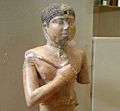
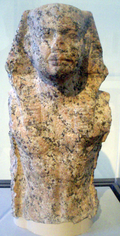
State · Middle East and North Africa

Old Kingdom of Egypt

2707 – 2216 BCE · 491 years

Came after Early Dynastic Period of Egypt · became First Intermediate Period of Egypt

Egypt's age of the pyramid builders, when its kings ruled as living gods and raised the monuments of Saqqara and Giza.

Called the Age of the Pyramids, the Old Kingdom of Egypt spanned c. 2700 BCE to c. 2200 BCE. Djoser and his architect Imhotep began building in stone at Saqqara; Sneferu perfected the pyramid, and Khufu, Khafre and Menkaure raised those at Giza. Ruling from Memphis, the king became a living god with absolute power. Egypt reached its first sustained peak of civilisation before royal power waned and the First Intermediate Period began.

What the record holds

The Old Kingdom of Egypt began in 2707 BCE, after the Early Dynastic Period of Egypt.↓ Its highest office was held by 53 rulers, covering 2690 BCE – 2180 BCE, the median reign 10 years; 2 of 21 handovers were irregular.↓ Among them, Djoser, Khafre and Sneferu are the best known.↓ In 2216 BCE, after 491 years, it was followed by the First Intermediate Period of Egypt.↓

From Wikipedia’s article, retold · CC BY-SA 4.0

491 years

Longer than the Etruscan civilization, shorter than Scythians

53 rulers

the Pharaoh

Its borders aren’t on record

The borders dataset does not draw the Old Kingdom of Egypt. The live map still shows where it stood among the states of its years.

Find it on the live map

The story

Four acts, 2707 – 2216 BCE

I2707 – 2613 BCE

Djoser and the Step Pyramid

Djoser of the Third Dynasty orders the Step Pyramid at Saqqara, the necropolis of Memphis, and his vizier Imhotep is credited with building in stone. Once-independent states become nomes under the king, their old rulers made governors or tax collectors, and Egyptians see the king as Horus incarnate.

Watch this act on the live map, from 2707 BCE
II2613 – 2494 BCE

The great pyramid builders

Royal power peaks under the Fourth Dynasty. Sneferu holds land from Libya to the Sinai Peninsula and Nubia, where a settlement at Buhen lasts two centuries, and builds three pyramids, beginning at Meidum. Khufu, Khafre and Menkaure then raise the pyramids at Giza.

Watch this act on the live map, from 2613 BCE
III2494 – 2345 BCE

Sun temples of the Fifth Dynasty

Userkaf opens the Fifth Dynasty as the cult of the sun god Ra grows, and effort shifts from pyramid complexes to sun temples at Abusir. His son Sahure sends an expedition to Punt; Neferirkare Kakai adds the prenomen to the royal titulary, and two short reigns follow.

Watch this act on the live map, from 2494 BCE
IV2345 – 2216 BCE

Nubian campaigns and decline

The Sixth Dynasty peaks under Pepi I and Merenre I, with trade, mining and quarrying expeditions, campaigns deep into Nubia and at least five expeditions into Canaan. Then royal power gradually yields to the nomarchs, regional governors outside the royal family whose posts become hereditary, and the First Intermediate Period follows.

Watch this act on the live map, from 2345 BCE

Before and after

Before it

After it

Where it sits in time

3000 BCE2000 BCE1000 BCE110002000Early Dynastic Period of Egypt: 3100 BCE – 2686 BCEFirst Intermediate Period of Egypt: 2181 BCE – 2055 BCEOld Kingdom of Egypt: 2707 BCE – 2216 BCE

Five thousand years, 3000 BCE to 2026; the state in gold, what it replaced or followed and what replaced or followed it in grey.

How it was governed

53 pharaohs

53 pharaohs on record, 2690 BCE to 2180 BCE; a reign lasted 10 years at the median. Each bar is a reign, as long as it lasted.

Khasekhemwy · 2690 BCE – 2690 BCE · no death date to read the end againstDjoser · 2686 BCE – 2649 BCE · no death date to read the end againstKhaba · 2670 BCE – 2670 BCE · no death date to read the end againstSekhemkhet · 2650 BCE – 2650 BCE · no death date to read the end againstHuni · 2636 BCE – … · no end recordedSneferu · 2613 BCE – 2589 BCE · no death date to read the end againstDjedefre · 2580 BCE – 2570 BCE · left office aliveBikheris · 2570 BCE – 2570 BCE · no death date to read the end againstKhafre · 2570 BCE – 2530 BCE · died in office, manner not recordedThamphthis · 2500 BCE – 2500 BCE · no death date to read the end againstUserkaf · 2500 BCE – 2490 BCE · died in office, manner not recordedSahure · 2490 BCE – 2475 BCE · died in office, manner not recordedNeferirkare Kakai · 2475 BCE – 2465 BCE · died in office, manner not recordedShepseskare Isi · 2465 BCE – 2460 BCE · died in office, manner not recordedNeferefre · 2460 BCE – 2455 BCE · died in office, manner not recordedNyuserre Ini · 2458 BCE – … · no end recordedDjedkare Isesi · 2410 BCE – 2380 BCE · died in office, manner not recordedUnas · 2375 BCE – 2350 BCE · died in office, manner not recordedTeti · 2318 BCE – 2300 BCE · died in office, manner not recordedPepi I Meryre · 2295 BCE – 2250 BCE · died in office, manner not recordedMerenre Nemtyemsaf I · 2250 BCE – 2245 BCE · died in office, manner not recordedPepi II Neferkare · 2245 BCE – 2180 BCE · the term ends after the recorded death2700 BCE2600 BCE2500 BCE2400 BCE2300 BCE
a second row: a reign that began before the last had ended — rival claimants, or a shared throne
How their terms ended, where it is known (12 of 22):Died in office 11Left office alive 1Not on record 10
Every term, with how it ended and its source

Rulers

54 terms are shared from Ancient Egypt, Fourth Dynasty of Egypt and Fifth Dynasty of Egypt.

How 22 reigns ended - choose one to show only those
RulerReignLengthHow it ended · sourceTo the ruler before
27th century BCE · 6 reigns
Khasekhemwy · from the line of Ancient Egypt2690 BCE – 2690 BCEunder a yearending not on record
Djoser2686 BCE – 2649 BCE37 yearsending not on recordchild
Khaba · from the line of Ancient Egypt2670 BCE – 2670 BCEunder a yearending not on record
Sekhemkhet · from the line of Ancient Egypt2650 BCE – 2650 BCEunder a yearending not on record
Huni · from the line of Ancient Egypt2636 BCE – —no end recordedending not on record
Sneferu · from the line of Fourth Dynasty of Egypt2613 BCE – 2589 BCE24 yearsending not on record
26th century BCE · 3 reigns
Djedefre · from the line of Ancient Egypt · aged 312580 BCE – 2570 BCE10 yearsleft office aliveread off the dates alonegrandchild
Bikheris · from the line of Ancient Egypt2570 BCE – 2570 BCEunder a yearending not on record
Khafre · from the line of Ancient Egypt · aged 422570 BCE – 2530 BCE40 yearsdied in officeread off the dates alone
25th century BCE · 8 reigns
Thamphthis · from the line of Ancient Egypt2500 BCE – 2500 BCEunder a yearending not on record
Userkaf · from the line of Ancient Egypt · aged 1012500 BCE – 2490 BCE10 yearsdied in officeread off the dates alone
Sahure · from the line of Ancient Egypt · aged 1112490 BCE – 2475 BCE15 yearsdied in officeread off the dates alone
Neferirkare Kakai · from the line of Ancient Egypt2475 BCE – 2465 BCE10 yearsdied in officeread off the dates alonechild
Shepseskare Isi · from the line of Ancient Egypt2465 BCE – 2460 BCE5 yearsdied in officeread off the dates alonegrandchild
Neferefre · from the line of Ancient Egypt · aged 202460 BCE – 2455 BCE5 yearsdied in officeread off the dates aloneparent
Nyuserre Ini · from the line of Ancient Egypt2458 BCE – —no end recordedending not on recordsibling
Djedkare Isesi · from the line of Ancient Egypt · aged 912410 BCE – 2380 BCE30 yearsdied in officeread off the dates alone
24th century BCE · 2 reigns
Unas · from the line of Ancient Egypt2375 BCE – 2350 BCE25 yearsdied in officeread off the dates alonechild
Teti · from the line of Ancient Egypt · aged 332318 BCE – 2300 BCE18 yearsdied in officeread off the dates alonein-law
23rd century BCE · 3 reigns
Pepi I Meryre · from the line of Ancient Egypt · aged 1062295 BCE – 2250 BCE45 yearsdied in officeread off the dates alonechild
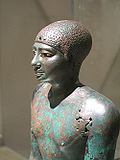
Merenre Nemtyemsaf I · from the line of Ancient Egypt · aged 12250 BCE – 2245 BCE5 yearsdied in officeread off the dates alonechild
Pepi II Neferkare · from the line of Ancient Egypt · aged 562245 BCE – 2180 BCE65 yearsdates disagreeread off the dates alonechild

53 rulers, 22 with terms dated as terms, covering 2690 BCE – 2180 BCE. Median reign 10 years. 2 of 21 handovers irregular - a killing, a deposition, a rival claimant, a rising or a coup beside it. A blank in the last column means no kin on record, which is coverage, never “unrelated”.

Its world

Who else stood

Meanwhile, elsewhere

The best-known states of other regions that stood while it did; the band is the Old Kingdom of Egypt’s own years.

2600 BCE2400 BCE2200 BCE

How it compares

Among 3,073 states

Stood longer than 85% of 3,073 states
Old Kingdom of Egypt · 491 yearsEtruscan civilizationScythiansHow long it stood, among the states with a recorded end or still standing.

Why it fell

Why did the Old Kingdom of Egypt fall?

Historians still argue. Here is what the atlas records about its last century:

What led to it, and what came of it

Early Dynastic Period of Egypt · Linked · 3100 BCE – 2686 BCEEarly Dynastic Period of EgyptOld Kingdom of Egypt · 2707 BCE – 2216 BCEOld Kingdom of EgyptFirst Intermediate Period of Egypt · Linked · 2181 BCE – 2055 BCEFirst Intermediate Period of Egypt3000 BCE2800 BCE2600 BCE2400 BCE2200 BCE
linked

Open the investigation: every row with its evidence, the conditions at the time, the theories condition by condition, and the succession analysed.

Keep exploring

Share this page
Copy link
Cite this page

How this page is made

Drawn from Wikidata (Q177819, CC0), the opening and history of its English Wikipedia article retold by the atlas (CC BY-SA 4.0). Data built 2026-11-26 · Pastlas v2.47.1, by Oleh Voronko; the published atlas and its data are for non-commercial use.

How to read it

Areas are measured on an equal-area grid from borders simplified to about five kilometres. “c.” marks an approximate date, and a date known to the century is never printed to the year. Counts are what the atlas holds, and they follow Wikipedia’s coverage: a busy century is partly a fact about the record.

Something wrong?

Tell us and name the entry. We fix the data, not just this page.

Report a problem