Ruler · 2401 – 2250 BCE
Pepi I Meryre
Lived 2401 – 2250 BCE. Pharaoh of Ancient Egypt, 2295 BCE – 2250 BCE; also in the line of Old Kingdom of Egypt and Sixth Dynasty of Egypt.
Open in the atlas
Open Pepi I Meryre in the atlas
The article, every line they sat in, and the map in their years.
- Analyse the succession of Ancient Egypt: every reign, how each ended, and the numbers over them
For the full story, the article on Wikipedia (CC BY-SA 4.0); this page holds what the record says of the reign.
- Lived
- 2401 BCE – 2250 BCE
- 151 years
- In office
- 45 years
- one reign
- Lines
- 3
- states
- Left it
- died in office
- read off the dates alone
Pharaoh
Ancient Egypt · the 42nd of 268 dated reigns · 4001 BCE – 30 BCE


 Pepi I Meryre2295 BCE – 2250 BCE
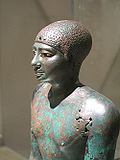


Reigned 2295 BCE – 2250 BCE · 45 years · came to it aged 106
- Came to it
- the child of the ruler before, on record
- Left it
- died in officeread off the dates alone: the term ends in 2250 BCE, the year they died
Also in the line of Old Kingdom of Egypt (20th of 22, read from the line of Ancient Egypt) and Sixth Dynasty of Egypt (2nd of 4).
The reign in its line
At 45 years, it is the 9th longest of the 240 dated reigns in the line of Ancient Egypt, of 268 the line names. It began 5 years after the reign of  Teti ended.
 Merenre Nemtyemsaf I followed in the year it ended. It began at the age of 106; the median over the 144 reigns of the line whose holder’s birth is on record is 46.
Ruling at the same time
Rulers of other states whose reigns overlap 2295 BCE – 2250 BCE: the best known of each region, best known first.
 Sargon of Akkad, Akkadian Empire 2334 BCE – 2279 BCE
 Naram-Sin of Akkad, Akkadian Empire 2255 BCE – 2218 BCE
Open in the atlas: Pepi I Meryre in the atlas · the succession of Ancient Egypt
States of the Middle East and North Africa, and every state with a page.
Wikidata Q269265 (CC0) · the reigns from Wikidata's P39 terms, the rulers' own articles read by grammar (sentences quoted above, CC BY-SA 4.0) and Kokkonen & Sundell where they code the line · data built 2026-11-26 · Pastlas v2.47.1, by Oleh Voronko. The published atlas and its data are for non-commercial use.