State · East and Southeast Asia

Hokuzan

1314 – 1416 · 102 years

Became Ryukyu Kingdom

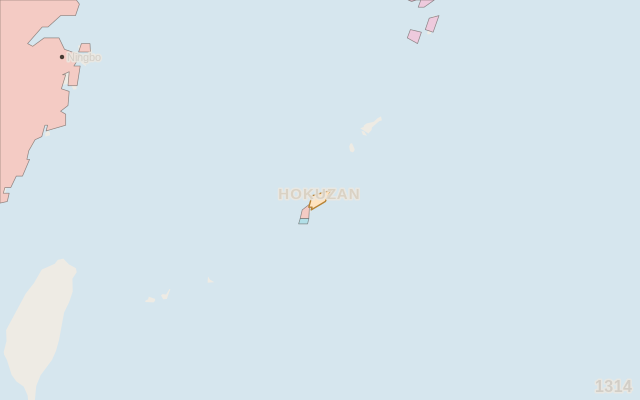
Its record opens in 1314.↑ Its borders are first mapped in 1314, around 1,300 km².↓

Continue reading

The Ryukyu Kingdom replaced it in 1416, after 102 years.↓ Its end fits “Dynastic cycle and the decay of group feeling”, every condition present.↓

102 years

Longer than Nizhny Novgorod, shorter than the Maurya Empire

1,300 km²

At its height in 1314

Map: Hokuzan in 1314, its borders in gold among its neighbours
13201340136013801400
Beside it on the map in 1314: Yuan dynasty, Kamakura shogunate, Chūzan and Nanzan.How far it reached, year by year: its ground inside the borders Cliopatria draws (CC BY 4.0), measured on an equal-area grid; the map shows it at its largest, with the cities of the year.

The story

Its key moments

Before and after

After it

Where it sits in time

3000 BCE2000 BCE1000 BCE110002000Ryukyu Kingdom: 1429 – 1879Hokuzan: 1314 – 1416

Five thousand years, 3000 BCE to 2026; the state in gold, what it replaced or followed and what replaced or followed it in grey.

Its world

Who else stood

Meanwhile, elsewhere

The best-known states of other regions that stood while it did; the band is Hokuzan’s own years.

130013251350137514001425

How it compares

Among 3,073 states

Stood longer than 47% of 3,073 states
Hokuzan · 102 yearsNizhny NovgorodMaurya EmpireHow long it stood, among the states with a recorded end or still standing.
Held more ground at its peak than 3% of 1,464 states
Hokuzan · 1,300 km²BahrainLuxembourgThe most ground it held, among the states with a border in Cliopatria.

Why it fell

Why did Hokuzan fall?

Historians still argue. Here is what the atlas records about its last century:

What led to it, and what came of it

Hokuzan · 1314 – 1416HokuzanRyukyu Kingdom · Linked · 1429 – 1879Ryukyu Kingdom140016001800
linked

Open the investigation: every row with its evidence, the conditions at the time, the theories condition by condition, and the succession analysed.

Theories that apply to its ending

  • Dynastic cycle and the decay of group feeling

    Ibn Khaldun 1377 · Turchin & Nefedov 2009

    Applies by its own logic: the condition it names held here, and this is the kind of outcome it predicts — adverse regime change or the state's ending.

    • the state 90 to 160 years old — ageBand 102

Keep exploring

Share this page
Copy link
Embed the map
Cite this page

How this page is made

Drawn from Wikidata (Q55523, CC0), borders from Cliopatria (CC BY 4.0), coast and rivers from Natural Earth, cities from Reba, Reitsma & Seto 2016 (CC BY 4.0). Data built 2026-11-26 · Pastlas v2.47.1, by Oleh Voronko; the published atlas and its data are for non-commercial use.

How to read it

Areas are measured on an equal-area grid from borders simplified to about five kilometres. “c.” marks an approximate date, and a date known to the century is never printed to the year. Counts are what the atlas holds, and they follow Wikipedia’s coverage: a busy century is partly a fact about the record.

Something wrong?

Tell us and name the entry. We fix the data, not just this page.

Report a problem