Ruler · 1874 – 1920
Nasrullah Khan (emir of Afghanistan)
Lived 1874 – 1920; monarch. Emir of Afghanistan of  Emirate of Afghanistan, 1919.
Wikidata's English label: Nasrullah Khan.
Open in the atlas
Open Nasrullah Khan (emir of Afghanistan) in the atlas
The article, every line they sat in, and the map in their years.
- Analyse the succession of Emirate of Afghanistan: every reign, how each ended, and the numbers over them
For the full story, the article on Wikipedia (CC BY-SA 4.0); this page holds what the record says of the reign.
- Lived
- 1874 – 1920
- 46 years
- Lines
- 1
- Emirate of Afghanistan
Emir of Afghanistan
Emirate of Afghanistan · the 16th of 17 dated reigns · 1823 – 1926


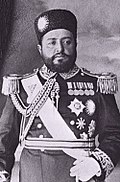
 Nasrullah Khan (emir of Afghanistan)1919

Reigned 1919 · under a year
- Came to it
- seized powerthe sibling of the ruler before, on record
- Left it
- ending not on recordnothing on record: no death date to read the end against
Using this opportunity, he immediately seized control of the treasury at Kabul and staged a coup against his uncle.
The reign in its line
At under a year, it is the joint 15th longest of the 17 dated reigns in the line of the Emirate of Afghanistan. It began in the year the reign of  Habibullah Khan ended.
 Amanullah Khan followed in the year it ended.
Ruling at the same time
Rulers of other states whose reigns overlap 1919: the best known of each region, best known first.
 Woodrow Wilson,
 United States 1913 – 1921
 George V,
 British Raj 1910 – 1936
 Gabriele D'Annunzio,
 Italian Regency of Carnaro 1919 – 1920
 Józef Piłsudski,
 Second Polish Republic 1918 – 1922
 Mehmed VI,
 Ottoman Empire 1918 – 1922
 Emperor Taishō,
 Empire of Japan 1912 – 1926
 13th Dalai Lama,
 Tibet 1912 – 1933
 Vajiravudh,
 Rattanakosin Kingdom 1910 – 1925
Open in the atlas: Nasrullah Khan (emir of Afghanistan) in the atlas · the succession of Emirate of Afghanistan
Wikidata Q983049 (CC0) · the reigns from Wikidata's P39 terms, the rulers' own articles read by grammar (sentences quoted above, CC BY-SA 4.0) and Kokkonen & Sundell where they code the line · data built 2026-11-26 · Pastlas v2.47.1, by Oleh Voronko. The published atlas and its data are for non-commercial use.