City-state · Middle East and North Africa

Lagash

2501 – 2001 BCE · 500 years

A Sumerian city-state whose kings fought Umma and Elam, and whose ruler Gudea left the longest known text in Sumerian.

Lagash was an ancient city-state north-west of where the Euphrates and Tigris meet, east of Uruk, in what is now Iraq. Its state joined three cities, Lagash, Girsu and Nina; Girsu, with the E-ninnu temple of the god Ningirsu, was its religious centre. Its rulers, absent from the Sumerian King List, made it a leading power of the Early Dynastic period, and after Akkadian rule Gudea brought it riches before it became a province of Ur.

What the record holds

Its record opens in the 26th century BCE.↑ The record names 13 rulers in its line, covering 2460 BCE – 2110 BCE, the median reign 5 years; 1 of 12 handovers was irregular.↓ Among them, Gudea, Urukagina and Eannatum are the best known.↓ The atlas files 13 rows under it, most of them people.↓ It ended in 2001 BCE, 500 years after it began.↑

From Wikipedia’s article, retold · CC BY-SA 4.0

500 years

Longer than Scythians, shorter than the Abbasid Caliphate

13 rulers

the king

Its borders aren’t on record

The borders dataset does not draw Lagash. The live map still shows where it stood among the states of its years.

Find it on the live map

The story

Three acts, 2501 – 2001 BCE

I2501 – 2300 BCE

The first dynasty of Lagash

Ur-Nanshe builds temples and claims victory over Ur and Umma; his son Akurgal rules briefly. Akurgal's son Eannatum makes Lagash a major power, defeating Elam, Urua, Umma and Ur. Entemena adds to its strength. The last of the line, Urukagina, is remembered for reforms, perhaps the first known legal code.

Watch this act on the live map, from 2501 BCE
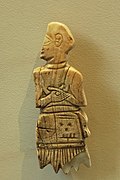
II2300 – 2201 BCE

Under Akkad and after

Sargon of Akkad, conquering Sumer c. 2300 BCE, lays waste the land from Lagash to the sea, and his son Rimush must retake it from rebels amid mass slaughter. The second dynasty begins under Akkadian control; Puzur-Mama declares Lagash independent after Shar-Kali-shari dies, and with the fall of Akkad, Ur-Ningirsu I wins full independence.

Watch this act on the live map, from 2300 BCE
III2201 – 2001 BCE

Gudea and the empire of Ur

Under Gudea Lagash enjoys independence, riches and power while the Gutians fill the gap Akkad left. He builds and restores temples and campaigns east against Anshan and Elam; the Gudea cylinders found at Girsu hold the longest known Sumerian text. Ur-Nammu of Ur slays Nam-mahani, the dynasty's last ruler, and Lagash becomes the richest province of Ur's empire.

Watch this act on the live map, from 2201 BCE

Where it sits in time

3000 BCE2000 BCE1000 BCE110002000Lagash: 2501 BCE – 2001 BCE

Five thousand years, 3000 BCE to 2026; the state in gold.

Its people

Lives across Lagash

Notable figures

How it was governed

13 kings

13 kings on record, 2460 BCE to 2110 BCE; a reign lasted 5 years at the median. Each bar is a reign, as long as it lasted.

Akurgal · 2460 BCE – 2460 BCE · no death date to read the end againstEannatum · 2450 BCE – 2450 BCE · no death date to read the end againstEnannatum I · 2425 BCE – 2425 BCE · no death date to read the end againstEnannatum II · 2400 BCE – 2400 BCE · no death date to read the end againstEntemena · 2400 BCE – 2400 BCE · no death date to read the end againstEnentarzi · 2400 BCE – 2384 BCE · no death date to read the end againstLugalanda · 2384 BCE – 2378 BCE · deposed, the article saysUrukagina · 2378 BCE – 2368 BCE · no death date to read the end againstUr-Baba · 2164 BCE – 2144 BCE · no death date to read the end againstGudea · 2144 BCE – 2124 BCE · no death date to read the end againstUr-Ningirsu II · 2124 BCE – 2119 BCE · no death date to read the end againstUr-gar · 2119 BCE – 2113 BCE · no death date to read the end againstNam-mahani · 2113 BCE – 2110 BCE · no death date to read the end against2500 BCE2400 BCE2300 BCE2200 BCE2100 BCE
How their terms ended, where it is known (1 of 13):Deposed or removed 1Not on record 12
Every term, with how it ended and its source

Rulers

How 13 reigns ended - choose one to show only those
RulerReignLengthHow it ended · sourceTo the ruler before
25th century BCE · 3 reigns
Akurgal2460 BCE – 2460 BCEunder a yearending not on record
Eannatum2450 BCE – 2450 BCEunder a yearending not on recordchild
Enannatum I2425 BCE – 2425 BCEunder a yearending not on recordsibling
24th century BCE · 5 reigns · 1 killed or removed
Enannatum II2400 BCE – 2400 BCEunder a yearending not on recordgrandchild
Entemena2400 BCE – 2400 BCEunder a yearending not on recordparent
Enentarzi2400 BCE – 2384 BCE16 yearsending not on record
Lugalanda2384 BCE – 2378 BCE6 yearsdeposedread from the ruler's own article
Urukagina2378 BCE – 2368 BCE10 yearsending not on record
22nd century BCE · 5 reigns
Ur-Baba2164 BCE – 2144 BCE20 yearsending not on record
Gudea2144 BCE – 2124 BCE20 yearsending not on recordin-law
Ur-Ningirsu II2124 BCE – 2119 BCE5 yearsending not on recordchild
Ur-gar2119 BCE – 2113 BCE6 yearsending not on record
Nam-mahani2113 BCE – 2110 BCE3 yearsending not on record

13 rulers, 13 with terms dated as terms, covering 2460 BCE – 2110 BCE. Median reign 5 years. 1 of 12 handovers irregular - a killing, a deposition, a rival claimant, a rising or a coup beside it. A blank in the last column means no kin on record, which is coverage, never “unrelated”.

Its world

Who else stood

Meanwhile, elsewhere

The best-known states of other regions that stood while it did; the band is Lagash’s own years.

2400 BCE2200 BCE2000 BCE

How it compares

Among 3,073 states

Stood longer than 86% of 3,073 states
Lagash · 500 yearsScythiansAbbasid CaliphateHow long it stood, among the states with a recorded end or still standing.

Why it fell

Why did Lagash fall?

Historians still argue. Here is what the atlas records about its last century:

Its centuries in the record

2600 BCE – 2501 BCE: 3 recorded — 0 wars and battles, 0 risings, regime changes and massacres, 3 other2600 BCE2500 BCE – 2401 BCE: 3 recorded — 0 wars and battles, 0 risings, regime changes and massacres, 3 other2500 BCE2400 BCE – 2301 BCE: 1 recorded — 0 wars and battles, 0 risings, regime changes and massacres, 1 other2400 BCE2300 BCE – 2201 BCE: 2 recorded — 0 wars and battles, 0 risings, regime changes and massacres, 2 other2300 BCE2200 BCE – 2101 BCE: 3 recorded — 0 wars and battles, 0 risings, regime changes and massacres, 3 other2200 BCE2100 BCE – 2001 BCE: 0 recorded — 0 wars and battles, 0 risings, regime changes and massacres, 0 other2100 BCE

Wars and battles in red, risings, coups and massacres beside them, everything else in grey, by the century each began in. A tall bar is partly a fact about Wikipedia: better-documented centuries hold more.

Each century’s own page:2600 BCE – 2501 BCE2500 BCE – 2401 BCE2400 BCE – 2301 BCE2300 BCE – 2201 BCE2200 BCE – 2101 BCE2100 BCE – 2001 BCE

Keep exploring

Share this page
Copy link
Cite this page

How this page is made

Drawn from Wikidata (Q207330, CC0), the opening and history of its English Wikipedia article retold by the atlas (CC BY-SA 4.0). Data built 2026-11-26 · Pastlas v2.47.1, by Oleh Voronko; the published atlas and its data are for non-commercial use.

How to read it

Areas are measured on an equal-area grid from borders simplified to about five kilometres. “c.” marks an approximate date, and a date known to the century is never printed to the year. Counts are what the atlas holds, and they follow Wikipedia’s coverage: a busy century is partly a fact about the record.

Something wrong?

Tell us and name the entry. We fix the data, not just this page.

Report a problem