State · 1550 – 1070 BCE
New Kingdom of Egypt
A state of 1550 – 1070 BCE — 480 years in the Middle East and North Africa. The atlas records 3 things within it — wars and battles 2 · people 1. Its line of rulers holds 68 people, 32 with dated terms.
- Wikidata's English label: Egyptian Empire.
For the full story, the article on Wikipedia (CC BY-SA 4.0); this page holds what the record says of the state.
- Stood
- 480 years
- 1550 BCE – 1070 BCE
- Rulers
- 68
- the Pharaoh
- Most ground
- 710,100 km²
- in 1400 BCE
- Within it
- 3
- recorded rows
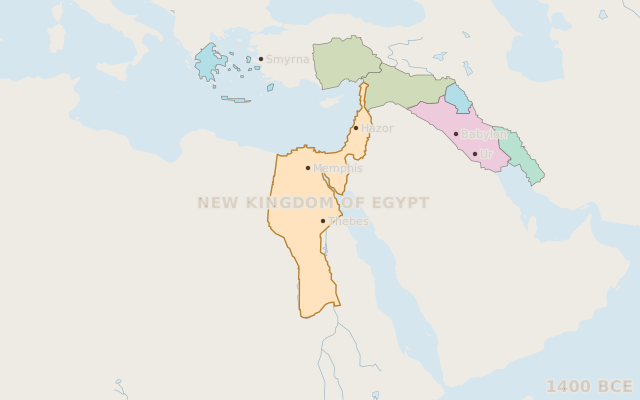
1400 BCE · at its largest · 710,100 km²
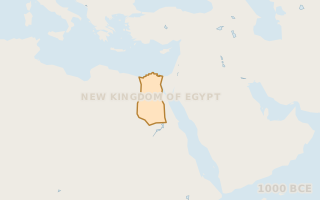
1000 BCE · last mapped · 341,200 km²
Where it sits in time
Five thousand years, 3000 BCE to 2026; the state in gold.
Rulers
Read from the state’s own English article and its rulers’ articles, where Wikidata names no ruler.
66 terms are shared from [object Object].
| Ruler | Reign | Length | How it ended · source | To the ruler before |
|---|---|---|---|---|
| Ahmose I | 1525 BCE – 1525 BCE | under a year | ending not on record | |
| Thutmose I · from the line of Ancient Egypt | 1499 BCE – 1489 BCE | 10 years | the term ends after the recorded deathread off the dates alone | |
| Thutmose II · from the line of Ancient Egypt | 1489 BCE – 1479 BCE | 10 years | died in office, manner not recordedread off the dates alone | child |
| Hatshepsut · from the line of Ancient Egypt | 1479 BCE – 1457 BCE | 22 years | the term ends after the recorded deathread off the dates alone | sibling |
| Thutmose III · from the line of Ancient Egypt | 1479 BCE – 1425 BCE | 54 years | died in office, manner not recordedread off the dates alone | nephew or niece |
| Amenhotep II · from the line of Ancient Egypt | 1425 BCE – 1399 BCE | 26 years | the term ends after the recorded deathread off the dates alone | child |
| Thutmose IV · from the line of Ancient Egypt | 1399 BCE – 1389 BCE | 10 years | the term ends after the recorded deathread off the dates alone | child |
| Amenhotep III · from the line of Ancient Egypt | 1389 BCE – 1349 BCE | 40 years | the term ends after the recorded deathread off the dates alone | child |
| Akhenaten · from the line of Ancient Egypt | 1349 BCE – 1333 BCE | 16 years | the term ends after the recorded deathread off the dates alone | child |
| Smenkhkare · from the line of Ancient Egypt | 1337 BCE – 1336 BCE | 1 year | left office aliveread off the dates alone | sibling |
| Neferneferuaten · from the line of Ancient Egypt | 1336 BCE – 1329 BCE | 7 years | the term ends after the recorded deathread off the dates alone | |
| Tutankhamun · from the line of Ancient Egypt | 1333 BCE – 1324 BCE | 9 years | died in office of natural causesWikidata's manner of death | |
| Ay · from the line of Ancient Egypt | 1324 BCE – 1320 BCE | 4 years | the term ends after the recorded deathread off the dates alone | |
| Horemheb · from the line of Ancient Egypt | 1320 BCE – 1291 BCE | 29 years | the term ends after the recorded deathread off the dates alone | |
| Ramesses I · from the line of Ancient Egypt | 1291 BCE – 1289 BCE | 2 years | the term ends after the recorded deathread off the dates alone | |
| Seti I · from the line of Ancient Egypt | 1289 BCE – 1279 BCE | 10 years | died in office, manner not recordedread off the dates alone | child |
| Ramesses II · from the line of Ancient Egypt | 1279 BCE – 1212 BCE | 67 years | the term ends after the recorded deathread off the dates alone | child |
| Merneptah · from the line of Ancient Egypt | 1212 BCE – 1202 BCE | 10 years | the term ends after the recorded deathread off the dates alone | child |
| Amenmesse · from the line of Ancient Egypt | 1202 BCE – 1198 BCE | 4 years | the term ends after the recorded deathread off the dates alone | child |
| Seti II · from the line of Ancient Egypt | 1199 BCE – 1193 BCE | 6 years | the term ends after the recorded deathread off the dates alone | sibling |
| Siptah · from the line of Ancient Egypt | 1196 BCE – 1190 BCE | 6 years | the term ends after the recorded deathread off the dates alone | child |
| Tausret · from the line of Ancient Egypt | 1190 BCE – 1188 BCE | 2 years | the term ends after the recorded deathread off the dates alone | |
| Setnakhte · from the line of Ancient Egypt | 1190 BCE – 1186 BCE | 4 years | died in office, manner not recordedread off the dates alone | |
| Ramesses III · from the line of Ancient Egypt | 1186 BCE – 1154 BCE | 32 years | the term ends after the recorded deathread off the dates alone | child |
| Ramesses IV · from the line of Ancient Egypt | 1154 BCE – 1148 BCE | 6 years | the term ends after the recorded deathread off the dates alone | child |
| Ramesses V · from the line of Ancient Egypt | 1148 BCE – 1143 BCE | 5 years | the term ends after the recorded deathread off the dates alone | child |
| Ramesses VI · from the line of Ancient Egypt | 1143 BCE – 1135 BCE | 8 years | the term ends after the recorded deathread off the dates alone | |
| Ramesses VII · from the line of Ancient Egypt | 1135 BCE – 1128 BCE | 7 years | the term ends after the recorded deathread off the dates alone | child |
| Ramesses VIII · from the line of Ancient Egypt | 1128 BCE – 1127 BCE | 1 year | the term ends after the recorded deathread off the dates alone | |
| Ramesses IX · from the line of Ancient Egypt | 1127 BCE – 1107 BCE | 20 years | the term ends after the recorded deathread off the dates alone | nephew or niece |
| Ramesses X · from the line of Ancient Egypt | 1107 BCE – 1103 BCE | 4 years | the term ends after the recorded deathread off the dates alone | child |
| Ramesses XI | 1077 BCE – 1077 BCE | under a year | ending not on record | child |
68 rulers, 32 with terms dated as terms, covering 1525 BCE – 1077 BCE. Median reign 7.5 years. 6 of 31 handovers irregular - a killing, a deposition, a rival claimant, a rising or a coup beside it. A blank in the last column means no kin on record, which is coverage, never “unrelated”.
Ground held, by year
km² inside its borders as the borders dataset draws them, measured on an equal-area grid; a step series, held between the years the dataset maps.
637,100 km² in 1500 BCE, 637,200 km² in 1070 BCE; at its largest 710,100 km² in 1400 BCE. Cliopatria, CC BY 4.0.
What happened within it, by century
Every row the atlas hosts under this state, by the century it began in: wars and battles in red, risings, regime changes and massacres beside them, everything else in grey. A tall bar is a century the record is full for, which is partly a fact about Wikipedia.
1400 BCE – 1301 BCE1 row
- Aaron · religious leader · 1396 – 1274 BCE
1200 BCE – 1101 BCE2 rows · 2 wars and battles
- Battle of the Delta · battle · 1178 BCE
- Battle of Djahy · battle · 1178 BCE
Among all states
Each measure against the states that carry it, never against all of them: a bar is the share of those states below this one.
- How long it stood480 years
stood longer than 85% of 3,187 states with a recorded end or still standing.
- The most ground it held710,100 km²
held more ground at its peak than 80% of 1,465 states with a border in Cliopatria.
- Wars recorded per centurynone
had more wars on record per century than 44% of 3,187 states, counting the wars the atlas hosts under each.
- How long a reign lasted, at the median8 years
had longer reigns, at the median, than 29% of 967 states whose dated line can carry a median.
- Rulers on record68
has more rulers on record than 99% of 1,968 states with a line of rulers.
Open in the atlas
- On the timeline, 1598 BCE – 1022 BCE, with everything that stood beside it.
- On the map in 1400 BCE, live: scrub the year and watch its borders move.
- Investigate it: what led to it, what came of it, and its succession analysed.
Wikidata Q180568 (CC0) · borders Cliopatria, CC BY 4.0 · coast and rivers Natural Earth · data built 2026-10-06 · Pastlas v2.9.1, by Oleh Voronko. The published atlas and its data are for non-commercial use.