State · 2025 – 609 BCE
Assyria
A state of 2025 – 609 BCE — 1,416 years in the Middle East and North Africa. It replaced Neo-Hittite states. The atlas records 81 things within it — wars and battles 1 · people 80. Its line of rulers holds 135 people, 67 with dated terms.
- Wikidata's English label: Assyrian Empire.
For the full story, the article on Wikipedia (CC BY-SA 4.0); this page holds what the record says of the state.
- Stood
- 1,416 years
- 2025 BCE – 609 BCE
- Rulers
- 135
- the King of Assyria
- Most ground
- 599,200 km²
- in 1220 BCE
- Within it
- 81
- recorded rows
- Symbol
- 1
- on record, with years
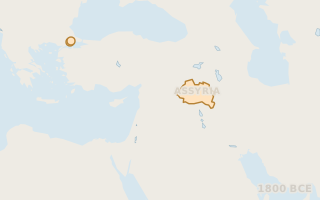
1800 BCE · first mapped · 77,200 km²
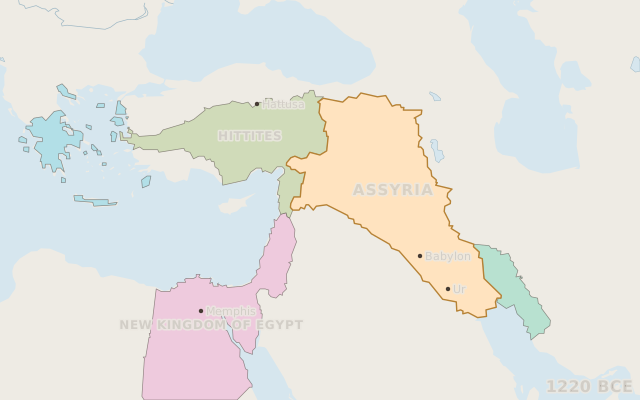
1220 BCE · at its largest · 599,200 km²
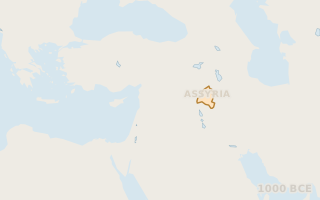
1000 BCE · last mapped · 25,500 km²
Where it sits in time
Five thousand years, 3000 BCE to 2026; the state in gold, what it replaced or followed and what replaced or followed it in grey.
Before and after
The states the record files it as replacing or following, and those that replaced or followed it - Wikidata's own statements, each read from this state's side.
Before it
- Neo-Hittite states · replaces · 1201 – 701 BCE
Rulers
The line of King of Assyria.
11 terms are shared from [object Object],[object Object].
| Ruler | Reign | Length | How it ended · source | To the ruler before |
|---|---|---|---|---|
| Puzur-Ashur I | 2026 BCE – 1951 BCE | 75 years | the term ends after the recorded deathread off the dates alone | |
| Shalim-ahum | 1901 BCE – 1901 BCE | under a year | ending not on record | child |
| Shamshi-Adad I | 1810 BCE – 1777 BCE | 33 years | left office aliveread off the dates alone | |
| Rimush of Assyria | 1751 BCE – 1751 BCE | under a year | ending not on record | |
| Mut-Ashkur | 1730 BCE – 1720 BCE | 10 years | the term ends after the recorded deathread off the dates alone | |
| Adasi | 1720 BCE – 1701 BCE | 19 years | ending not on record | |
| Bel-bani | 1700 BCE – 1692 BCE | 8 years | ending not on record | child |
| Libaya | 1690 BCE – 1674 BCE | 16 years | ending not on record | |
| Šarma-Adad I. | 1673 BCE – 1662 BCE | 11 years | ending not on record | |
| Iptar-Sin | 1662 BCE – 1650 BCE | 12 years | the term ends after the recorded deathread off the dates alone | |
| Erishum III | 1598 BCE – 1586 BCE | 12 years | ending not on record | |
| Shamshi-Adad II | 1585 BCE – 1580 BCE | 5 years | the term ends after the recorded deathread off the dates alone | |
| Puzur-Ashur III | 1503 BCE – 1479 BCE | 24 years | the term ends after the recorded deathread off the dates alone | |
| Enlil-nasir I | 1479 BCE – 1466 BCE | 13 years | the term ends after the recorded deathread off the dates alone | child |
| Nur-ili | 1466 BCE – 1454 BCE | 12 years | the term ends after the recorded deathread off the dates alone | child |
| Ashur-shaduni | 1455 BCE – 1455 BCE | under a year | deposed, the article saysread from the ruler's own article | child |
| Ashur-rabi I | 1453 BCE – 1435 BCE | 18 years | the term ends after the recorded deathread off the dates alone | |
| Ashur-nadin-ahhe I | 1435 BCE – 1420 BCE | 15 years | deposed, the article saysread from the ruler's own article | child |
| Enlil-Nasir II | 1420 BCE – 1414 BCE | 6 years | the term ends after the recorded deathread off the dates alone | sibling |
| Ashur-nirari II | 1414 BCE – 1407 BCE | 7 years | the term ends after the recorded deathread off the dates alone | child |
| Ashur-bel-nisheshu | 1407 BCE – 1398 BCE | 9 years | the term ends after the recorded deathread off the dates alone | |
| Ashur-nadin-ahhe II | 1400 BCE – 1391 BCE | 9 years | the term ends after the recorded deathread off the dates alone | |
| Ashur-rim-nisheshu | 1398 BCE – 1391 BCE | 7 years | the term ends after the recorded deathread off the dates alone | parent |
| Ashur-uballit I · from the line of Middle Assyrian Empire | 1363 BCE – 1328 BCE | 35 years | ending not on record | |
| Enlil-nirari · from the line of Middle Assyrian Empire | 1327 BCE – 1308 BCE | 19 years | ending not on record | child |
| Arik-den-ili | 1307 BCE – 1296 BCE | 11 years | the term ends after the recorded deathread off the dates alone | child |
| Adad-nirari I | 1295 BCE – 1264 BCE | 31 years | the term ends after the recorded deathread off the dates alone | child |
| Shalmaneser I · from the line of Middle Assyrian Empire | 1273 BCE – 1244 BCE | 29 years | ending not on record | child |
| Tukulti-Ninurta I | 1234 BCE – 1198 BCE | 36 years | the term ends after the recorded deathread off the dates alone | child |
| Ashur-nadin-apli · from the line of Middle Assyrian Empire | 1206 BCE – 1203 BCE | 3 years | ending not on record | child |
| Ashur-nirari III · from the line of Middle Assyrian Empire | 1202 BCE – 1197 BCE | 5 years | ending not on record | |
| Ashur-nadin-apli | 1196 BCE – 1193 BCE | 3 years | the term ends after the recorded deathread off the dates alone | |
| Enlil-kudurri-usur · from the line of Middle Assyrian Empire | 1196 BCE – 1192 BCE | 4 years | ending not on record | sibling |
| Ashur-nirari III | 1193 BCE – 1187 BCE | 6 years | the term ends after the recorded deathread off the dates alone | |
| Ninurta-apal-Ekur · from the line of Middle Assyrian Empire | 1191 BCE – 1179 BCE | 12 years | ending not on record | |
| Enlil-kudurri-usur | 1187 BCE – 1182 BCE | 5 years | the term ends after the recorded deathread off the dates alone | |
| Ashur-dan I | 1179 BCE – 1133 BCE | 46 years | the term ends after the recorded deathread off the dates alone | |
| Mutakkil-Nusku | 1134 BCE – 1133 BCE | 1 year | the term ends after the recorded deathread off the dates alone | child |
| Ninurta-tukulti-Ashur | 1133 BCE – 1133 BCE | under a year | the term ends after the recorded deathread off the dates alone | sibling |
| Ashur-resh-ishi I | 1133 BCE – 1115 BCE | 18 years | the term ends after the recorded deathread off the dates alone | nephew or niece |
| Ninurta-tukulti-Ashur · from the line of Middle Assyrian Empire | 1132 BCE – 1132 BCE | under a year | ending not on record | |
| Mutakkil-Nusku · from the line of Middle Assyrian Empire | 1132 BCE – 1132 BCE | under a year | ending not on record | sibling |
| Tiglath-Pileser I | 1114 BCE – 1076 BCE | 38 years | died in office, manner not recordedread off the dates alone | grandchild |
| Asharid-apal-Ekur | 1076 BCE – 1074 BCE | 2 years | died in office, manner not recordedread off the dates alone | child |
| Ashur-bel-kala | 1075 BCE – 1056 BCE | 19 years | died in office, manner not recordedread off the dates alone | sibling |
| Shamshi-Adad IV | 1054 BCE – 1050 BCE | 4 years | the term ends after the recorded deathread off the dates alone | sibling |
| Ashurnasirpal I | 1050 BCE – 1031 BCE | 19 years | the term ends after the recorded deathread off the dates alone | child |
| Ashur-nirari IV | 1019 BCE – 1013 BCE | 6 years | died in office, manner not recordedread off the dates alone | grandchild |
| Ashur-rabi II | 1013 BCE – 972 BCE | 41 years | died in office, manner not recordedread off the dates alone | |
| Ashur-resh-ishi II | 972 BCE – 967 BCE | 5 years | died in office, manner not recordedread off the dates alone | child |
| Ashur-dan II | 935 BCE – 912 BCE | 23 years | the term ends after the recorded deathread off the dates alone | grandchild |
| Adad-nirari II | 911 BCE – 891 BCE | 20 years | died in office, manner not recordedread off the dates alone | child |
| Tukulti-Ninurta II | 891 BCE – 884 BCE | 7 years | the term ends after the recorded deathread off the dates alone | child |
| Ashurnasirpal II | 884 BCE – 859 BCE | 25 years | died in office, manner not recordedread off the dates alone | child |
| Shalmaneser III | 859 BCE – 824 BCE | 35 years | died in office, manner not recordedread off the dates alone | child |
| Shamshi-Adad V | 824 BCE – 811 BCE | 13 years | left office aliveread off the dates alone | child |
| Adad-nirari III | 811 BCE – 783 BCE | 28 years | died in office, manner not recordedread off the dates alone | child |
| Shalmaneser IV | 783 BCE – 773 BCE | 10 years | left office aliveread off the dates alone | child |
| Ashur-dan III | 773 BCE – 755 BCE | 18 years | left office aliveread off the dates alone | sibling |
| Ashur-nirari V | 755 BCE – 745 BCE | 10 years | died in office, manner not recordedread off the dates alone | sibling |
| Tiglath-Pileser III | 745 BCE – 727 BCE | 18 years | died in office, manner not recordedread off the dates alone | sibling |
| Shalmaneser V | 727 BCE – 722 BCE | 5 years | died in office, manner not recordedread off the dates alone | child |
| Sargon II | 722 BCE – 705 BCE | 17 years | died in office, manner not recordedread off the dates alone | sibling |
| Sennacherib | 705 BCE – 681 BCE | 24 years | killedWikidata's manner of death | child |
| Aššur-nādin-šumi · from the line of Neo-Assyrian Empire | 700 BCE – 694 BCE | 6 years | ending not on record | child |
| Esarhaddon | 681 BCE – 669 BCE | 12 years | died in office, manner not recordedread off the dates alone | sibling |
| Ashurbanipal | 669 BCE – 631 BCE | 38 years | died in office, manner not recordedread off the dates alone | child |
| Kandalanu · from the line of Neo-Assyrian Empire | 647 BCE – 627 BCE | 20 years | ending not on record | |
| Aššur-etil-ilāni | 631 BCE – 627 BCE | 4 years | died in office, manner not recordedread off the dates alone | |
| Sîn-šumu-līšir | 627 BCE – 626 BCE | 1 year | the term ends after the recorded deathread off the dates alone | |
| Sîn-šar-iškun | 627 BCE – 612 BCE | 15 years | died in office, manner not recordedread off the dates alone | |
| Ashur-uballit II | 612 BCE – 609 BCE | 3 years | ending not on record | child |
135 rulers, 67 with terms dated as terms, covering 2026 BCE – 609 BCE. Median reign 12 years. 18 of 71 handovers irregular - a killing, a deposition, a rival claimant, a rising or a coup beside it. A blank in the last column means no kin on record, which is coverage, never “unrelated”.
Ground held, by year
km² inside its borders as the borders dataset draws them, measured on an equal-area grid; a step series, held between the years the dataset maps.
77,200 km² in 1775 BCE, 25,500 km² in 925 BCE; at its largest 515,300 km² in 1125 BCE. Cliopatria, CC BY 4.0.
Flag or arms
Each symbol with the years its own statement gives; the timeline flies the one of the year on screen.

emblem, undatedAshur symbol Nimrud · Public domain
What happened within it, by century
Every row the atlas hosts under this state, by the century it began in: wars and battles in red, risings, regime changes and massacres beside them, everything else in grey. A tall bar is a century the record is full for, which is partly a fact about Wikipedia.
2100 BCE – 2001 BCE3 rows
- Erishum I · ruler · 2001 – 1901 BCE
- Puzur-Ashur I · ruler · 2051 – 1970 BCE
- Ilu-shuma · ruler · 2001 BCE
2000 BCE – 1901 BCE5 rows
- Sargon I · ruler · 1901 BCE
- Ikunum · ruler · 1901 BCE
- Puzur-Ashur II · ruler · 1901 – 1802 BCE
- Naram-Sin of Assyria · ruler · 1901 BCE
- Naram-Sin of Eshnunna · ruler · 1901 – 1801 BCE
1900 BCE – 1801 BCE7 rows
- Shamshi-Adad I · ruler · 1860 – 1776 BCE
- Ishme-Dagan I · ruler · 1801 BCE
- Mut-Ashkur · ruler · 1801 BCE
- Ashur-dugul · ruler · 1801 – 1761 BCE
- Ibal-pi-el II · ruler · 1801 – 1762 BCE
- Assuraplaidin · ruler · 1801 BCE
- Nasir-Sin · ruler · 1801 – 1701 BCE
1800 BCE – 1701 BCE3 rows
1700 BCE – 1601 BCE9 rows
- Puzur-Ashur III · ruler · 1601 – 1501 BCE
- Enlil-nasir I · ruler · 1601 – 1501 BCE
- Nur-ili · ruler · 1601 – 1501 BCE
- Shamshi-Adad III · ruler · 1601 – 1501 BCE
- Shamshi-Adad II · ruler · 1601 BCE
- Ashur-shaduni · ruler · 1601 – 1501 BCE
- Ashur-nirari I · ruler · 1601 BCE
- Puzur-Sin · ruler · 1639 – 1628 BCE
and 1 more in the atlas.
1600 BCE – 1501 BCE7 rows
- Ashur-nadin-ahhe II · ruler · 1501 – 1401 BCE
- Ashur-bel-nisheshu · ruler · 1501 – 1401 BCE
- Ashur-rim-nisheshu · ruler · 1501 – 1401 BCE
- Ashur-nadin-ahhe I · ruler · 1501 BCE
- Ashur-rabi I · ruler · 1501 BCE
- Enlil-Nasir II · ruler · 1501 BCE
- Ashur-nirari II · ruler · 1501 BCE
1500 BCE – 1401 BCE7 rows
- Shalmaneser I · ruler · 1401 – 1301 BCE
- Adad-nirari I · ruler · 1401 – 1274 BCE
- Ashur-uballit I · ruler · 1401 – 1318 BCE
- Arik-den-ili · ruler · 1401 – 1361 BCE
- Eriba-Adad I · ruler · 1401 – 1366 BCE
- Enlil-nirari · ruler · 1401 – 1307 BCE
- Akizzi · ruler · 1401 BCE
1400 BCE – 1301 BCE6 rows
- Tukulti-Ninurta I · ruler · 1301 BCE
- Ninurta-apal-Ekur · ruler · 1301 – 1201 BCE
- Ashur-nirari III · ruler · 1301 – 1201 BCE
- Ashur-nadin-apli · ruler · 1301 – 1201 BCE
- Ashur-dan I · ruler · 1301 – 1201 BCE
- Enlil-kudurri-usur · ruler · 1301 – 1201 BCE
1300 BCE – 1201 BCE7 rows · 1 wars and battles
- Tiglath-Pileser I · ruler · 1201 – 1076 BCE
- Ashur-bel-kala · ruler · 1201 – 1056 BCE
- Ashur-resh-ishi I · ruler · 1201 BCE
- Asharid-apal-Ekur · ruler · 1201 – 1074 BCE
- Ninurta-tukulti-Ashur · ruler · 1201 BCE
- Mutakkil-Nusku · ruler · 1201 BCE
- Battle of Nihriya · battle · 1237 BCE
1200 BCE – 1101 BCE7 rows
- Shalmaneser II · ruler · 1101 – 1019 BCE
- Ashurnasirpal I · ruler · 1101 – 1061 BCE
- Ashur-rabi II · ruler · 1101 – 972 BCE
- Ashur-resh-ishi II · ruler · 1101 – 967 BCE
- Shamshi-Adad IV · ruler · 1101 BCE
- Ashur-nirari IV · ruler · 1101 – 1013 BCE
- Eriba-Adad II · ruler · 1101 – 1061 BCE
1100 BCE – 1001 BCE5 rows
- Ashurnasirpal II · ruler · 1001 – 859 BCE
- Tukulti-Ninurta II · ruler · 1001 – 901 BCE
- Tiglath-Pileser II · ruler · 1001 – 935 BCE
- Ashur-dan II · ruler · 1001 – 961 BCE
- Abgar II · ruler · 1001 – 53 BCE
1000 BCE – 901 BCE6 rows
- Shalmaneser III · ruler · 901 – 824 BCE
- Adad-nirari III · ruler · 901 – 783 BCE
- Shamshi-Adad V · ruler · 901 – 810 BCE
- Shammuramat · ruler · 901 – 801 BCE
- Ashur-dan III · ruler · 901 – 754 BCE
- Shalmaneser IV · ruler · 901 – 772 BCE
900 BCE – 801 BCE2 rows
- Ashur-nirari V · ruler · 801 – 745 BCE
- Naqiʾa · ruler · 801 – 668 BCE
800 BCE – 701 BCE6 rows
- Sennacherib · ruler · 745 – 681 BCE
- Sargon II · ruler · 765 – 705 BCE
- Sîn-šar-iškun · ruler · 701 – 612 BCE
- Aššur-etil-ilāni · ruler · 701 – 627 BCE
- Sîn-šumu-līšir · ruler · 701 – 627 BCE
- Arda-Mulissu · ruler · 701 BCE
700 BCE – 601 BCE1 row
- Ashurbanipal · ruler · 685 – 631 BCE
Among all states
Each measure against the states that carry it, never against all of them: a bar is the share of those states below this one.
- How long it stood1,416 years
stood longer than 99% of 3,187 states with a recorded end or still standing.
- The most ground it held599,200 km²
held more ground at its peak than 77% of 1,465 states with a border in Cliopatria.
- Wars recorded per centurynone
had more wars on record per century than 44% of 3,187 states, counting the wars the atlas hosts under each.
- How long a reign lasted, at the median12 years
had longer reigns, at the median, than 41% of 967 states whose dated line can carry a median.
- Rulers on record135
has more rulers on record than 100% of 1,968 states with a line of rulers.
What led to it, and what came of it
The investigation's own picture: 1 cause the record names and 0 results, the strongest six of each at their own years, joined to the state by the kind of claim - a recorded statement solid, the article's sentence dashed, a theory dash-dot.
Open the investigation: every row with its evidence, the conditions at the time, the theories condition by condition, and the succession analysed.
Open in the atlas
- On the timeline, 2167 BCE – 467 BCE, with everything that stood beside it.
- On the map in 1220 BCE, live: scrub the year and watch its borders move.
- Investigate it: what led to it, what came of it, and its succession analysed.
Wikidata Q41137 (CC0) · borders Cliopatria, CC BY 4.0 · coast and rivers Natural Earth · symbols from Wikimedia Commons, each credited above · data built 2026-10-06 · Pastlas v2.9.1, by Oleh Voronko. The published atlas and its data are for non-commercial use.